Romullo Baratto

Romullo Baratto is an architect with a PhD from FAUUSP and Managing Editor of ArchDaily. He previously coordinated the editorial team of the 11th São Paulo Architecture Biennial and served as Managing Editor of ArchDaily Brasil, where he led the platform to win the FNA Award—the first time the honor was granted to a media outlet. He collaborated on the editing of the book "Concrete Jungle", published by gestalten, and has curated architecture exhibitions in Brazil, Chile, Denmark, and Italy, as well as delivered lectures and moderated debates in Spain, the United States, and Portugal. His doctoral thesis investigates the urban landscapes of São Paulo through cinema. His work spans academic research and editorial practice, communicating architecture through texts, interviews, lectures, curatorship, and photography. Follow him on Instagram @romullobf.

BROWSE ALL FROM THIS AUTHOR HERE

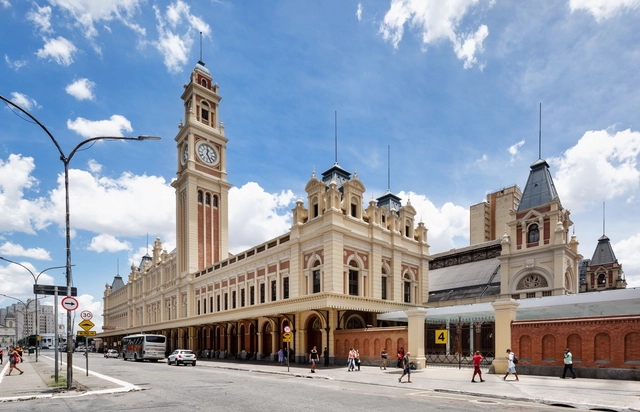
LEED-certified and featuring reclaimed wood, the Museum of the Portuguese Language will reopen in July

The Museum of the Portuguese Language will reopen on July 31, rebuilt after the fire that struck it in December 2015. One of the first museums entirely dedicated to a language, located in the historic Luz Station in the city with the largest Portuguese-speaking population in the world, the museum celebrates the language as a founding element of Brazilian culture. Through interactive experiences, audiovisual content, and immersive environments, visitors are taken on a journey into the history and diversity of the language spoken by 261 million people worldwide. The official opening ceremony on July 31 will be streamed live on the museum's social media channels.
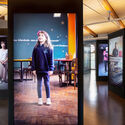
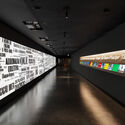
LEED-certified and featuring reclaimed wood, the Museum of the Portuguese Language will reopen in July - 1 的图像 4LEED-certified and featuring reclaimed wood, the Museum of the Portuguese Language will reopen in July - 2 的图像 4LEED-certified and featuring reclaimed wood, the Museum of the Portuguese Language will reopen in July - 3 的图像 4LEED-certified and featuring reclaimed wood, the Museum of the Portuguese Language will reopen in July - 4 的图像 4LEED-certified and featuring reclaimed wood, the Museum of the Portuguese Language will reopen in July - More Images+ 8

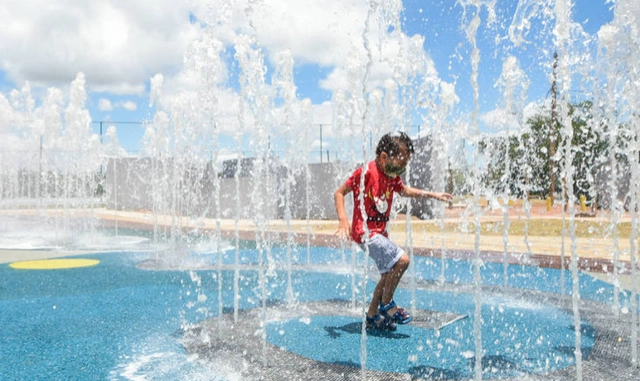
Urban95: An initiative promoting child-friendly cities already includes 24 Brazilian municipalities

As of July, 11 new Brazilian cities will join the Urban95 initiative. In total, 24 cities in Brazil have already committed to creating and strengthening actions focused on early childhood in public spaces, data management, programs, and services, ensuring these initiatives are transformed into public policies.

Urban95 begins with the following question: "If you were 95 cm tall (the average height of a three-year-old child), what would you do differently in the city?" With this vision in mind, the proposal is to design and implement urban transformation and service policies. The goal is to build cities that are good for children and, consequently, for everyone. 

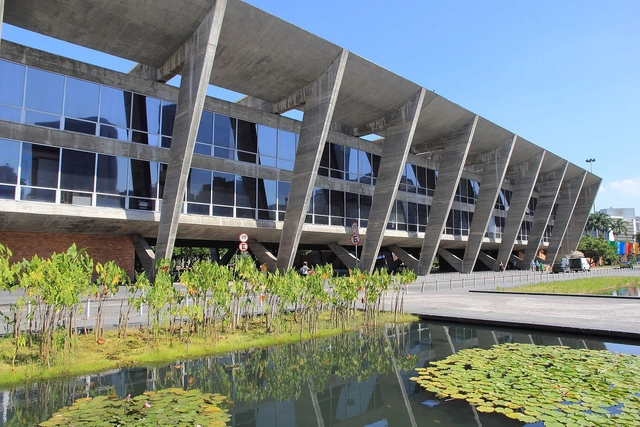
Leading names in world architecture gather to debate the future of cities at UIA2021RIO

Professionals and students from several countries are about to participate in an unprecedented way in the world's largest architecture and urbanism event. The main program of the 27th World Congress of Architects (UIA2021RIO), which was scheduled to take place in July 2020 in Rio de Janeiro and postponed due to the coronavirus pandemic, begins on Sunday, July 18, in a 100% digital format for the first time in history. Through July 22, attendees will watch lectures by twenty of the most prominent names in global architecture and roundtables with more than one hundred internationally award-winning architects, as well as paper presentations, cultural activities, and awards. Since March, nearly 90,000 people from over 180 countries have been following the preparatory panels—an absolute record in the more than 70-year history of the event, which is held every three years by the International Union of Architects (UIA).

Japan's Art Islands: The Work of Tadao Ando in Naoshima

Subscriber Access | 

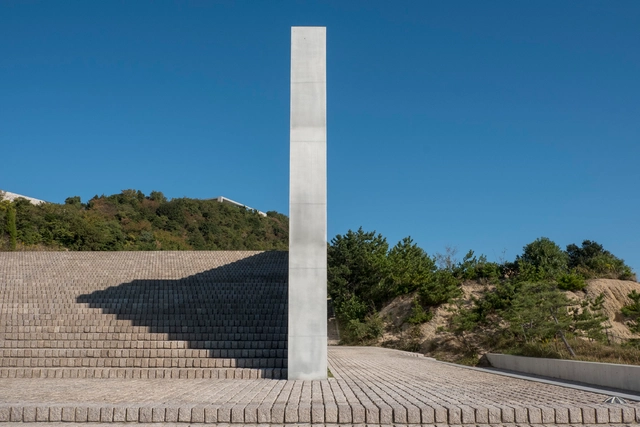
Few places in the world have so many cultural and artistic facilities as the islands of Naoshima, Teshima, and Inujima, in Japan's Seto Inland Sea. Eighteen museums, galleries, and installations make up the Benesse Art Site Naoshima, a project idealized by billionaire businessman Soichiro Fukutake in the 1980s.

At the time, Fukutake invited none other than architect Tadao Ando to design the Benesse House Museum on the island of Naoshima, which went beyond an economic reboot to create a simpler, slower way of life - evidently for those who can afford it - far removed from the Japanese megacities.

Japan's Art Islands: The Work of Tadao Ando in Naoshima - Image 1 of 4Japan's Art Islands: The Work of Tadao Ando in Naoshima - Image 2 of 4Japan's Art Islands: The Work of Tadao Ando in Naoshima - Image 3 of 4Japan's Art Islands: The Work of Tadao Ando in Naoshima - Image 4 of 4Japan's Art Islands: The Work of Tadao Ando in Naoshima - More Images+ 43

6th {CURA} Award open to students and young architects takes Lina Bo Bardi as its theme

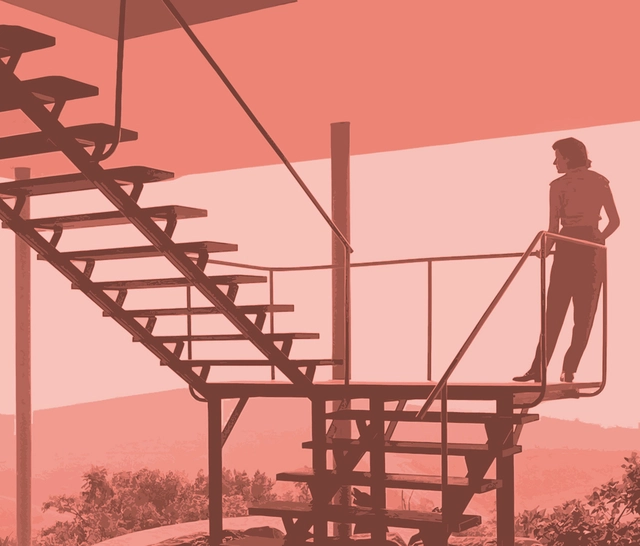
The 6th {CURA} Award continues the practice of holding idea competitions with themes aligned with current discussions on architecture, the city, and society, aiming to deepen the debate on contemporary Brazil. In 2021, the curatorial team of the 17th Venice Architecture Biennale awarded a posthumous Golden Lion for Lifetime Achievement to Lina Bo Bardi (1914-1992), Brazil's most prominent architect—who, despite being born in Rome, became a naturalized Brazilian citizen in 1953. The initiative also celebrates the release of the book Lina: Uma Biografia by Francesco Perrotta-Bosch, published by Todavia.

To celebrate the award and honor Lina and her incredible work, the theme of the 6th {CURA} Award is Lina Bo Bardi.

18 Exhibitions Designed by OMA

Subscriber Access | 

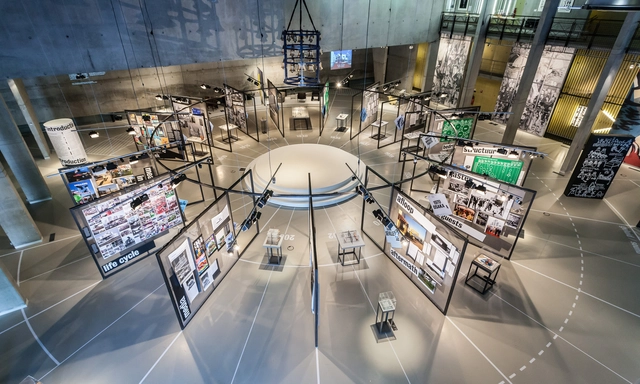
Among the most renowned and well-established offices in the world, OMA - Office for Metropolitan Architecture, founded in the 1970s by Rem Koolhaas, Elia Zenghelis, Madelon Vriesendorp, and Zoe Zenghelis, is definitely part of the pantheon of the most famous. Curiously, although it receives large commissions and has already built several emblematic works in different countries, the office is often associated with an approach that is less focused on architectural design, going beyond the strict limits of the disciplinary field and encompassing other areas of practice.

18 Exhibitions Designed by OMA - 1 的图像 418 Exhibitions Designed by OMA - 2 的图像 418 Exhibitions Designed by OMA - 3 的图像 418 Exhibitions Designed by OMA - 4 的图像 418 Exhibitions Designed by OMA - More Images+ 14

Álvaro Siza's New Steel Frame Watchtower for Ecotourism in Portugal

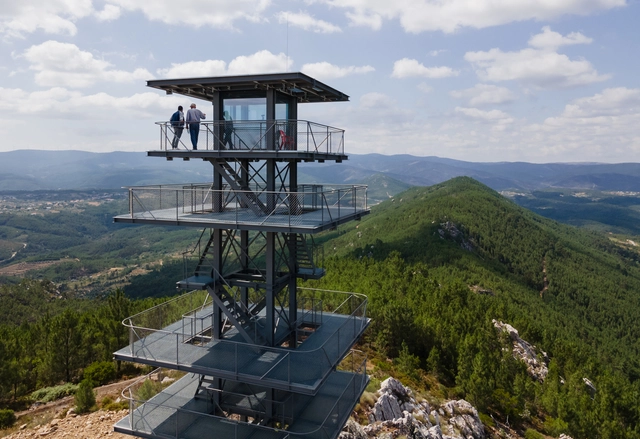
Álvaro Siza's latest project in Portugal is a 16-meter high watchtower built with a lightweight steel structure featuring photovoltaic panels on the roof. This project is very different from most of Siza's works, both in terms of scale and materials. The watchtower is located in Serra das Talhadas, in the municipality of Proença-a-Nova, and is part of a larger project comprising several structures dedicated to ecotourism in the area, including the still unbuilt Miradouro do Zebro.

Álvaro Siza's New Steel Frame Watchtower for Ecotourism in Portugal - Image 1 of 4Álvaro Siza's New Steel Frame Watchtower for Ecotourism in Portugal - Image 2 of 4Álvaro Siza's New Steel Frame Watchtower for Ecotourism in Portugal - Image 3 of 4Álvaro Siza's New Steel Frame Watchtower for Ecotourism in Portugal - Image 4 of 4Álvaro Siza's New Steel Frame Watchtower for Ecotourism in Portugal - More Images+ 8

Ricardo Bak Gordon talks about the Coach Museum, designed with Paulo Mendes da Rocha and MMBB

Subscriber Access | 

No País dos Arquitectos is a podcast created by Sara Nunes, who also runs the architectural film production company Building Pictures. The podcast aims to showcase the professionals, projects, and stories behind landmark contemporary Portuguese architecture. With just over 10 million inhabitants, Portugal is a highly compelling country in this professional field, and its architectural output far exceeds what its population or territorial scale would suggest.

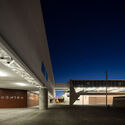
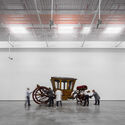
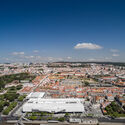
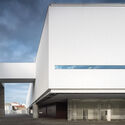
In this week's episode, Sara talks with architect Ricardo Bak Gordon about the design of the National Coach Museum in Lisbon, developed in partnership with Paulo Mendes da Rocha and the office MMBB Arquitetos. Listen to the interview and read the transcript of the conversation below:

Ricardo Bak Gordon talks about the Coach Museum, designed with Paulo Mendes da Rocha and MMBB - Image 1 of 4Ricardo Bak Gordon talks about the Coach Museum, designed with Paulo Mendes da Rocha and MMBB - Image 2 of 4Ricardo Bak Gordon talks about the Coach Museum, designed with Paulo Mendes da Rocha and MMBB - Image 3 of 4Ricardo Bak Gordon talks about the Coach Museum, designed with Paulo Mendes da Rocha and MMBB - Image 4 of 4Ricardo Bak Gordon talks about the Coach Museum, designed with Paulo Mendes da Rocha and MMBB - More Images+ 4

Experimentation and Collaboration in Architecture: Interview with Cristina Veríssimo and Diogo Burnay

Subscriber Access | 

No País dos Arquitectos é um podcast criado por Sara Nunes, responsável também pela produtora de filmes de arquitetura Building Pictures, que tem como objetivo conhecer os profissionais, os projetos e as histórias por trás da arquitetura portuguesa contemporânea de referência. Com pouco mais de 10 milhões de habitantes, Portugal é um país muito instigante em relação a este campo profissional, e sua produção arquitetônica não faz jus à escala populacional ou territorial.

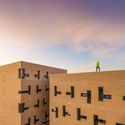
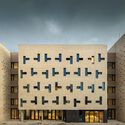
No episódio desta semana, Sara conversa com os arquitetos Cristina Veríssimo e Diogo Burnay sobre o projeto da Residência Universitária do campus da Ajuda na Universidade de Lisboa. Ouça a entrevista e leia a transcrição da conversa, a seguir:

Experimentation and Collaboration in Architecture: Interview with Cristina Veríssimo and Diogo Burnay - Image 1 of 4Experimentation and Collaboration in Architecture: Interview with Cristina Veríssimo and Diogo Burnay - Image 2 of 4Experimentation and Collaboration in Architecture: Interview with Cristina Veríssimo and Diogo Burnay - Image 3 of 4Experimentation and Collaboration in Architecture: Interview with Cristina Veríssimo and Diogo Burnay - Image 4 of 4Experimentation and Collaboration in Architecture: Interview with Cristina Veríssimo and Diogo Burnay - More Images+ 3

13th São Paulo International Architecture Biennial and Vitruvius launch a call for papers, drawings, and projects

The 13th São Paulo International Architecture Biennale and the Vitruvius portal have launched Preâmbulo, an open call for articles, essays, drawings, and projects reflecting on the central theme of the 13th Biennale—Reconstruction—and its five thematic axes: democracy, bodies, memory, information, and ecology. Submissions are open until June 30.

Conceived by IABsp, the 13th edition of the Biennale, scheduled for 2022, uses the idea of Reconstruction to spark debates addressing the challenges arising from the crisis caused by the Covid-19 pandemic. It considers reflections and proposals pointing toward innovative social practices and urban-architectural arrangements, as well as the possibilities that emerge in this new scenario.

PNAM’21 - National Wood Architecture Award: last days to register

Applications are now open for the National Wood Architecture Award, PNAM’21. Submissions for this prestigious Portuguese architecture award are open until June 30, 2021. Held biennially, PNAM aims to encourage and promote Portuguese forest reserves through innovation, enhancement, circularity, and the promotion and use of wood and wood-derived products in buildings.

Scientists Create First Global Atlas of Urban Microorganisms

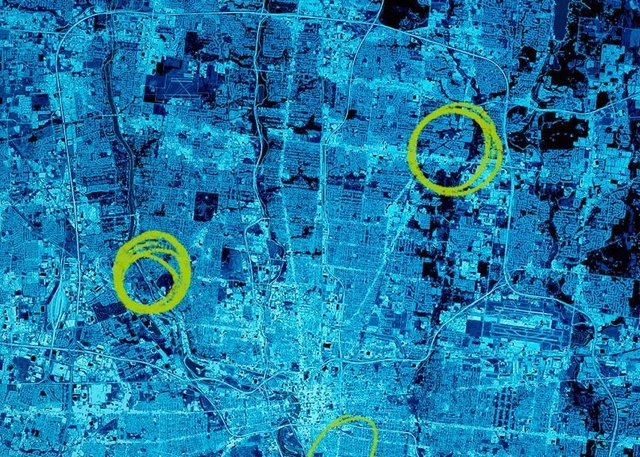
“If you gave me your shoe, I could tell you with about 90% accuracy the city in the world from which you came,” says Christopher Mason, Ph.D., a professor at Weill Cornell Medicine in New York, NY, co-author of the first global atlas of urban microorganisms. The study, carried out by the international Metagenomics and Metadesign of Subways and Urban Biomes (MetaSUB) consortium, creates a map of the microbiome of some of the largest cities in the world.

Portugal Explores the Democratic Role of Public Space at the Venice Biennale 2021

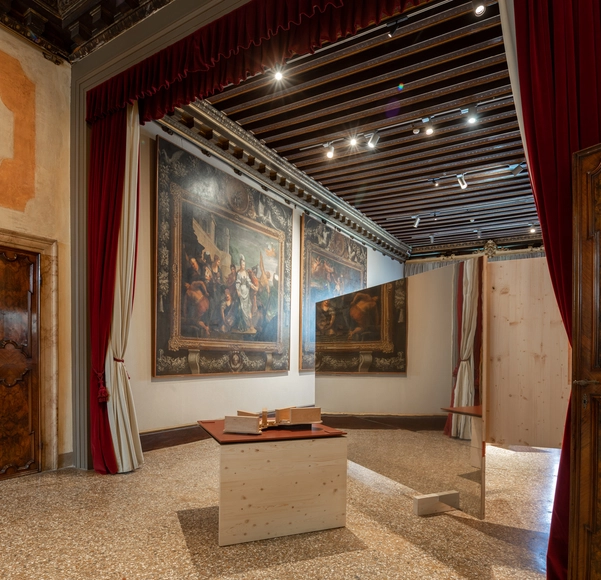
In Conflict, the Portuguese Official Representation at the 17th Architecture International Exhibition La Biennale di Venezia, 2021, is co-curated by Carlos Azevedo, João Crisóstomo, and Luís Sobral of depA architects, and Miguel Santos. The exhibition addresses public spaces as arenas of conflict, understood as the action of opposing forces translated as dissension. In Conflict responds directly to the question 'How will we live together?' posed by Hashim Sarkis, curator of the Biennale Architettura, and is based on seven architectural processes involving collective dwellings that were the subjects of broad media coverage and public involvement.

Portugal Explores the Democratic Role of Public Space at the Venice Biennale 2021 - Image 1 of 4Portugal Explores the Democratic Role of Public Space at the Venice Biennale 2021 - Image 2 of 4Portugal Explores the Democratic Role of Public Space at the Venice Biennale 2021 - Image 3 of 4Portugal Explores the Democratic Role of Public Space at the Venice Biennale 2021 - Image 4 of 4Portugal Explores the Democratic Role of Public Space at the Venice Biennale 2021 - More Images+ 10

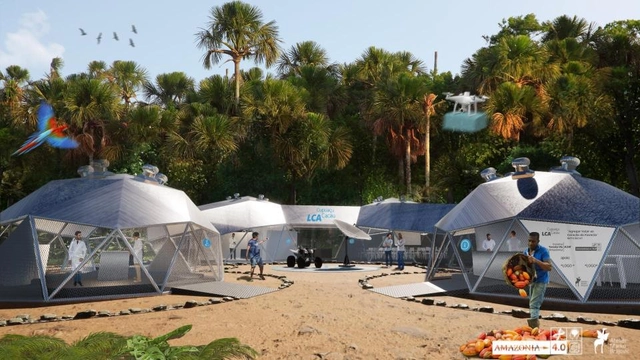
Atelier Marko Brajovic develops a project in the Amazon that explores the potential of biophilia and the fourth industrial revolution

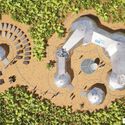
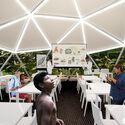
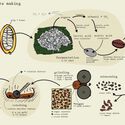
Known for projects situated at the intersection of research, design, biomimicry, and sustainability, Atelier Marko Brajovic recently developed a proposal for the Amazon Creative Laboratories, a series of biospheres composed of geodesic structures inspired by the internal geometry of the cacao fruit. The project aligns with the premises and goals of the Amazon 4.0 initiative, which aims to combine the economic potential of Amazonian socio-biodiversity with the new technologies and opportunities emerging from the Fourth Industrial Revolution.

Atelier Marko Brajovic develops a project in the Amazon that explores the potential of biophilia and the fourth industrial revolution - Image 1 of 4Atelier Marko Brajovic develops a project in the Amazon that explores the potential of biophilia and the fourth industrial revolution - Image 2 of 4Atelier Marko Brajovic develops a project in the Amazon that explores the potential of biophilia and the fourth industrial revolution - Image 3 of 4Atelier Marko Brajovic develops a project in the Amazon that explores the potential of biophilia and the fourth industrial revolution - Image 4 of 4Atelier Marko Brajovic develops a project in the Amazon that explores the potential of biophilia and the fourth industrial revolution - More Images+ 7

Brazilian Houses: 25 Residences Built in the Northeast Region

Subscriber Access | 

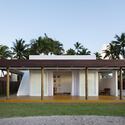
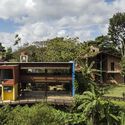
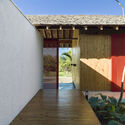
With over 56 million inhabitants spread across nine states, Brazil's Northeast region features a coastline of approximately three thousand kilometers, stretching from the Parnaíba Delta in Piauí to the south of Bahia. Internationally renowned for its beaches—which truly live up to their reputation—the region is as culturally diverse as it is geographically vast, showcasing rich cultural expressions, of which architecture is an integral part.

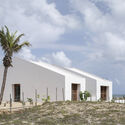
In this article, we celebrate the most ubiquitous of architectural typologies—the house—through examples built in the states of Alagoas, Bahia, Ceará, Pernambuco, Piauí, Rio Grande do Norte, and Sergipe. These projects demonstrate exquisite care regarding their surroundings and material choices, while also defying stereotypes and clichés often associated with architecture in northeastern Brazil. 

Brazilian Houses: 25 Residences Built in the Northeast Region - Image 1 of 4Brazilian Houses: 25 Residences Built in the Northeast Region - Image 2 of 4Brazilian Houses: 25 Residences Built in the Northeast Region - Image 3 of 4Brazilian Houses: 25 Residences Built in the Northeast Region - Image 4 of 4Brazilian Houses: 25 Residences Built in the Northeast Region - More Images+ 21

Debris of the Past and Possible Futures: Interview with Carlos Alberto Maciel on the Brazilian Pavilion at the Venice Biennale

Subscriber Access | 

When selected by the Biennale di Venezia to direct the 17th International Architecture Exhibition, Hashim Sarkis challenged national curators to answer an urgent and far from easy question: how will we live together? Neither he, nor the curators, nor indeed anyone, expected what was to come. After a year and a half of a global pandemic, the question takes on new meanings, opening up further implications that far exceed anything the organizers could have previously envisioned.

Against this backdrop of global uncertainty, and informed by a country deeply marked by social inequality, Utopias of Common Lifethe title of the Brazilian contribution developed by Arquitetos Associados in collaboration with visual designer Henrique Penha – seeks to establish a dialogue between the modern past and a possible (and better) future for Brazilian cities. We had the opportunity to speak with architect Carlos Alberto Maciel about the exhibition that will occupy the Brazilian Pavilion at the Venice Architecture Biennale. Read the interview below:

"We understand architecture as culture": interview with Goma Oficina

Subscriber Access | 
"We understand architecture as culture": interview with Goma Oficina - Featured Image
Gife Pavilion. Photo © Rafaela Netto

Groups and collectives working on the fringes of the architectural discipline are, fortunately, increasingly common. However, few strive to expand the boundaries of the profession across as many different fronts as Goma Oficina, from São Paulo, currently composed of Ana David, André Stefanini, André Bonani, Christian Salmeron, João Wallig, Fernando Banzi, Guilherme Tanaka, Lauro Rocha, Maria Cau Levy, Paula Marujo, Victoria Braga, and Vitor Pena.

Understanding architecture as culture in its broadest sense, Goma has been working since 2010 on projects located in a loosely defined territory, characterized by transdisciplinarity and overlaps between different fields. Their most recent work includes exhibitions, books, research, debates, installations, and models spanning the areas of architecture, graphic design, photography, and art.

"We understand architecture as culture": interview with Goma Oficina - Imagen 1 de 4"We understand architecture as culture": interview with Goma Oficina - Imagen 2 de 4"We understand architecture as culture": interview with Goma Oficina - Imagen 3 de 4"We understand architecture as culture": interview with Goma Oficina - Imagen 4 de 4We understand architecture as culture: interview with Goma Oficina - More Images+ 6

"Architecture has to sing, it has to move": An Interview with Carlos Castanheira

Subscriber Access | 

No País dos Arquitectos is a podcast created by Sara Nunes, who is also responsible for the architectural film production company Building Pictures. The podcast aims to profile the professionals, projects, and stories behind leading contemporary Portuguese architecture. With just over 10 million inhabitants, Portugal is a highly fascinating country in this professional field, and its architectural production far outstrips its population or territorial scale.

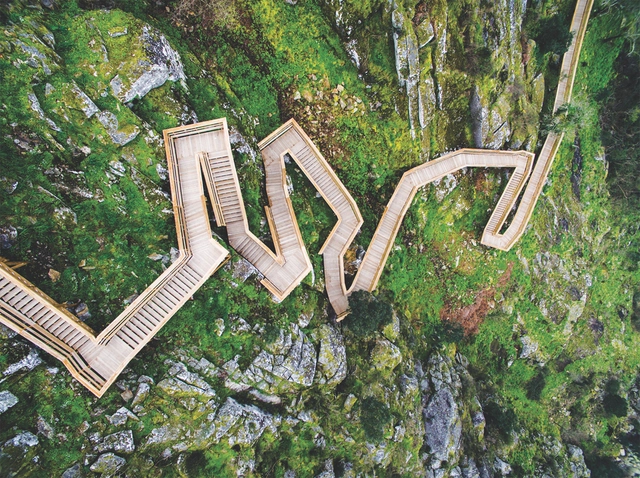
In its first episode, Sara spoke with architect João Luís Carrilho da Graça about his Lisbon Cruise Terminal, and then welcomed João Mendes Ribeiro for a conversation on heritage, adaptive reuse, and landscape architecture, centered on the rehabilitation of the Coimbra Botanical Garden greenhouse. The third episode featured architect Inês Lobo and focused on the Public Library and Regional Archive of Angra do Heroísmo. Below, you can listen to and read the conversation from the fourth episode, with Carlos Castanheira about the Treetop Walk project.

"Architecture has to sing, it has to move": An Interview with Carlos Castanheira - Image 1 of 4"Architecture has to sing, it has to move": An Interview with Carlos Castanheira - Image 2 of 4"Architecture has to sing, it has to move": An Interview with Carlos Castanheira - Image 3 of 4"Architecture has to sing, it has to move": An Interview with Carlos Castanheira - Image 4 of 4Architecture has to sing, it has to move: An Interview with Carlos Castanheira - More Images+ 9