Romullo Baratto is an architect with a PhD from FAUUSP and Managing Editor of ArchDaily. He previously coordinated the editorial team of the 11th São Paulo Architecture Biennial and served as Managing Editor of ArchDaily Brasil, where he led the platform to win the FNA Award—the first time the honor was granted to a media outlet. He collaborated on the editing of the book "Concrete Jungle", published by gestalten, and has curated architecture exhibitions in Brazil, Chile, Denmark, and Italy, as well as delivered lectures and moderated debates in Spain, the United States, and Portugal. His doctoral thesis investigates the urban landscapes of São Paulo through cinema. His work spans academic research and editorial practice, communicating architecture through texts, interviews, lectures, curatorship, and photography. Follow him on Instagram @romullobf.
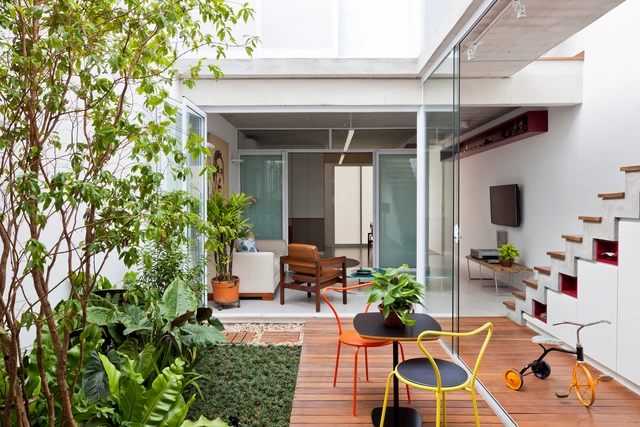
Urban densification and the demand for urban land have, among other things, led to a reduction in lot sizes in cities. Large parcels of land once destined for single-family homes have made way for multi-family buildings that, depending on their location, feature commercial establishments and services on their ground floors. Building a house in major urban centers is no easy task, largely due to the scarcity of available plots, or their reduced dimensions when they can be found.
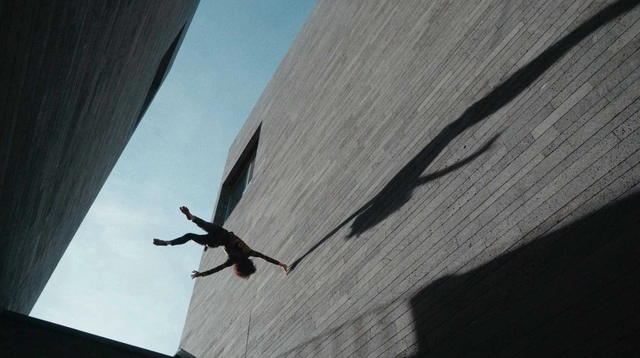
The 8th edition of the Arquiteturas Film Festival, taking place from June 1 to 6 in Lisbon, explores the theme “Bodies Out of Space” through an exploration of the social construction of space, connected by a thread running through its own narratives of domination. These are also narratives of identity, which is often stripped away or forced to represent our bodies.
Each year, the festival is dedicated to presenting documentaries, fiction, animation, and experimental films relevant to promoting contemporary Portuguese architecture both nationally and internationally. The 2021 edition is no different, structured around three distinct pillars: the official selection, the competition program, and the guest country program.
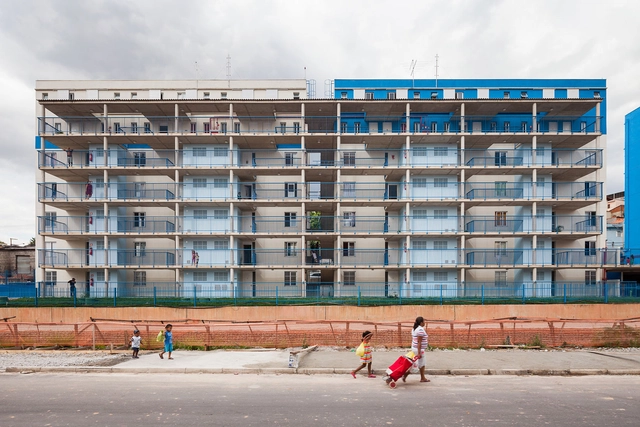
Gathering innovative, sustainable architectural designs for social housing that enable a reduction in energy consumption is the objective of the National Competition of Architectural Ideas for Energy Efficiency in Social Housing, launched this Monday (15) by the German governmental cooperation agency Deutsche Gesellschaft für Internationale Zusammenarbeit (GIZ) GmbH. Applications are open until April 26.
The Brazilian Center for Steel Construction (CBCA) has opened registration for the "14th CBCA Architecture Student Competition 2021," open to university students across Brazil. This year, the competition addresses the current context of the COVID-19 pandemic, with the theme "Health and Well-being." Consequently, students are tasked with presenting projects that offer efficient solutions, emphasizing the correct and appropriate use of steel in both conceptual and architectural design, as well as in technological and construction aspects.
For the fifth time, we are giving our readers the responsibility of recognizing and awarding the projects that have made the greatest impact on the profession through the ArchDaily Brasil Building of the Year 2021 Award. By voting, you become part of an unbiased network of jurors recognizing the most relevant projects of the past year.
Over the next three weeks, the collective intelligence of our readers will filter through hundreds of projects from Portuguese-speaking countries – Brazil, Portugal, Mozambique, Angola, Guinea-Bissau, East Timor, Equatorial Guinea, Macau, Cape Verde, and São Tomé and Príncipe – published in 2020, selecting the best built works in the Portuguese-speaking world.
From hundreds of works published in 2020, readers will choose their favorites, with the 15 most-voted projects moving on to the second stage of the Award.
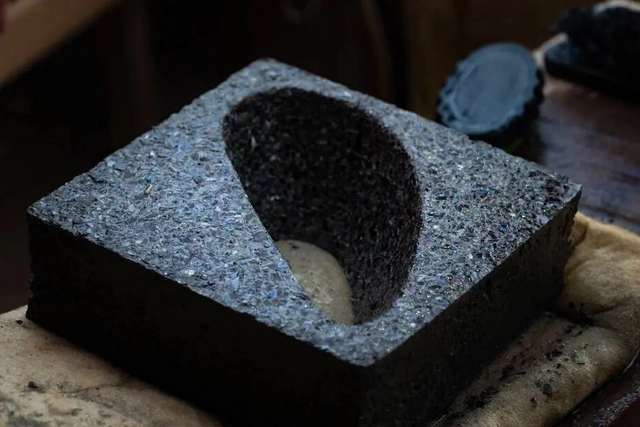
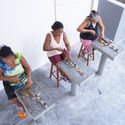
Considered an intangible cultural heritage by the State Council of Culture (CEC) of Alagoas, the sururu is a mollusk whose harvesting is the main source of income for several communities in the state. Around the Mundaú lagoon alone, in Maceió, five communities living below the poverty line produce approximately 300 tons of sururu shells annually—a massive amount of waste that previously had no use and ended up in the Alagoas capital's landfills.
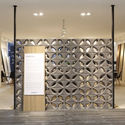
Recognizing its significant economic and social engagement potential, designers Marcelo Rosenbaum, Adriana Benguela, and Rodrigo Ambrósio developed the Cobogó da Mundaú project, which incorporates sururu harvesting waste into the manufacturing of architectural screen blocks.
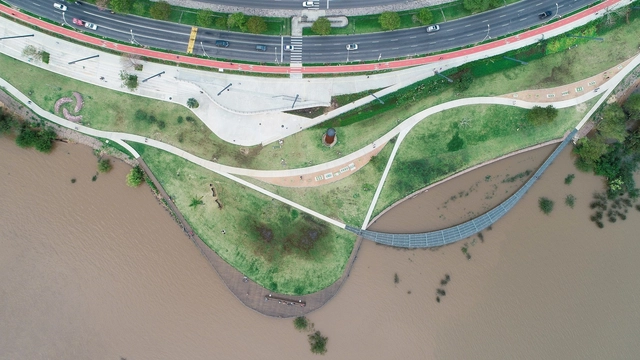
Linear parks exist in many different contexts - along riversides, coastal areas, or inserted in the urban fabric - and represent a very particular type of public space that evokes the idea of a vector and, consequently, the sense of movement. However, they can provide more than just activities and programs associated with mobility, proving to be an appealing solution to the lack of spaces for leisure, contemplation, and relaxation in the most varied urban situations.
Below, we have gathered 12 examples of linear parks built in different parts of the world, illustrated by photographs and floor plans.
Urban resilience was put to the test as the pandemic swept quickly and drastically through cities. Limiting movement, contact, and access to public spaces was the most effective strategy for containing the virus. However, the city's infrastructure, compounded by a lack of emergency public policies, proved far from resilient. This vulnerability was exposed as a large portion of the population was forced to continue commuting long distances on public transit to work in essential services, and as the physical and mental health of residents suffered from a lack of access to safe spaces for physical activity—underscoring the city's precarious supply of public spaces.
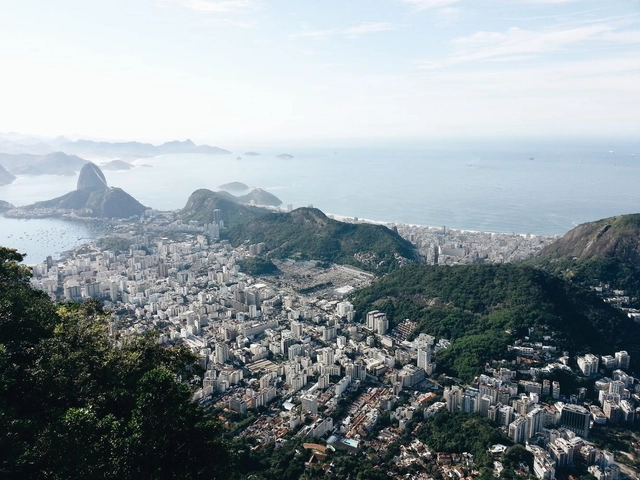
The 27th World Congress of Architects UIA2021RIO will be a hybrid event, featuring virtual sessions starting in March, and in-person activities from July 18 to 22 in Rio de Janeiro, broadcast live online to congress participants worldwide.
The first UIA2021RIO World Architects Week, featuring digital content, will take place from March 22 to 25. During this week, the content will be free to access; afterward, it will only be available to registered Congress participants. The theme chosen to open UIA2021RIO in March is one of the most pressing global concerns today: social vulnerabilities and inequalities.
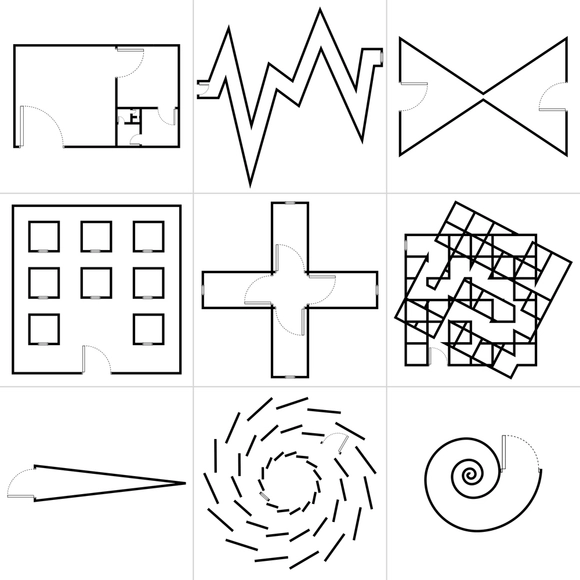
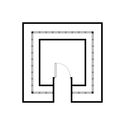
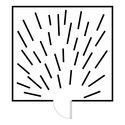
Moradas is a visual-literary project initiated in 2020 by Rafael Baldam, using illustrations based on floor plans and short texts to reflect on domestic space and the act of dwelling. At the beginning of quarantine, the architect and poet began contemplating the domestic sphere, anticipating that it would become a permanent backdrop for the coming months—a reality that indeed materialized and, as of February 2021, still persists.
The Federal University of Rio de Janeiro (UFRJ), through its Library and Information System (SiBI), has conducted a detailed survey of academic publishers across Brazil's leading universities, compiling a list of 2,650 titles available for free download.
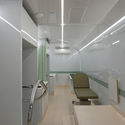
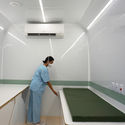
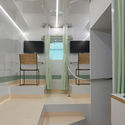
Developed by the Brazilian studio Democratic Architects, the O-SI - Immediate Health Bus (Ônibus de Saúde Imediata) was conceived by designers and doctors focused on creating a modular platform to provide public healthcare services in a modern, safe, and efficient way, based on cutting-edge technology and contemporary concepts of mobile healthcare, sustainable reuse, and social inclusion.
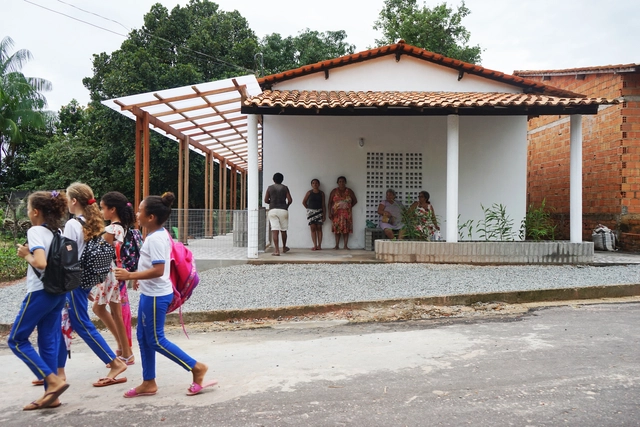
Renovation and Expansion of the Babassu Flour House. Serra - MA, February 2020. Photo by Noelia Monteiro
It is easier said than done, and when it comes to the practice of architecture—an activity heavily conditioned by countless external factors—this statement carries even more weight. Few professionals are willing to help solve problems in remote, relatively isolated communities facing social and environmental vulnerabilities. However, this is precisely the focus of Noelia Monteiro, an Argentine architect working in Brazil who, along with Christian Teshirogi, founded Estúdio Flume in 2015.
Developing projects alongside multidisciplinary teams that include professionals from architecture, engineering, social sciences, geology, and anthropology, the architect's approach is, nonetheless, deeply personal. In fact, it requires a significant degree of community engagement, bringing people close to the design process from the very beginning to completion. The results of this practice have been recognized with major national awards, and more recently, ArchDaily selected Noelia for its list of Best New Practices of 2020.
In celebration of São Paulo's 467th anniversary, street artist Criola gifted the Liberdade neighborhood with a massive mural. Produced in partnership with Instagrafite, the work was funded by a special edition of the Street Art Museum (MAR) and prompts a deep reflection and reclaiming of a long history as a stronghold of Black resistance in the city, starting with the neighborhood's very name.
In 2017, Escola da Cidade—through its Seminar on Culture and Contemporary Reality course, then coordinated by Professor José Guilherme Pereira—welcomed anthropologist and PhD in Social Sciences Manuela Carneiro da Cunha to discuss the history, spatialization, and daily life of Indigenous peoples in Brazil, highlighting issues from not only a cultural standpoint, but also a legal and environmental one.
Jesuit-Guarani Missions Trail in Rio Grande do Sul. Photo by Halley Pacheco de Oliveira, via Wikipedia. License CC BY-SA 3.0
Iphan has announced the winners of the 33rd edition of the Rodrigo Melo Franco de Andrade Award (2020 Rodrigo Award). The 12 selected initiatives will each receive R$ 20,000 in funding from the National Institute of Historic and Artistic Heritage, while five others were recognized with honorable mentions. Organized by the institute, the awards program has been held since 1987 and is the largest in the field of Cultural Heritage in the country, recognizing exemplary initiatives of excellence.
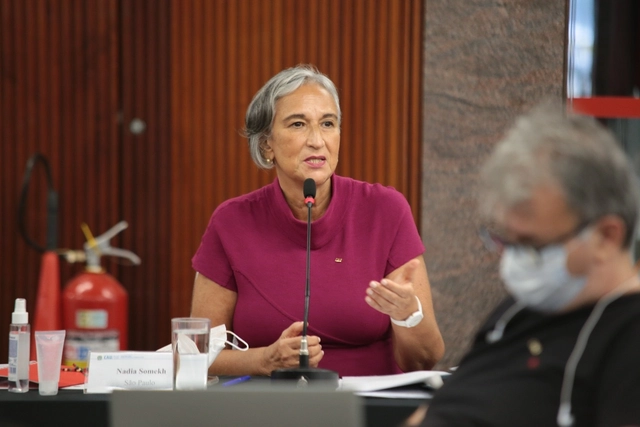
Architect and urban planner Nadia Somekh, from São Paulo, was elected today as president of the Council of Architecture and Urbanism of Brazil (CAU/BR) for the 2021-2023 term. This is the first time a woman has held the position. The selection was decided by secret ballot among the 28 federal councilors, with Somekh receiving 19 votes. In her management plan, Nadia Somekh states that “the country's current situation and the ongoing threat to representative professional organizations demand a dual approach.”

.jpg?1547216045 "Pirajá House / Estúdio BRA. Photo: © Maíra Acayaba")


















.jpg?1611255930&format=webp&width=640&height=580)