Romullo Baratto is an architect with a PhD from FAUUSP and Managing Editor of ArchDaily. He previously coordinated the editorial team of the 11th São Paulo Architecture Biennial and served as Managing Editor of ArchDaily Brasil, where he led the platform to win the FNA Award—the first time the honor was granted to a media outlet. He collaborated on the editing of the book "Concrete Jungle", published by gestalten, and has curated architecture exhibitions in Brazil, Chile, Denmark, and Italy, as well as delivered lectures and moderated debates in Spain, the United States, and Portugal. His doctoral thesis investigates the urban landscapes of São Paulo through cinema. His work spans academic research and editorial practice, communicating architecture through texts, interviews, lectures, curatorship, and photography. Follow him on Instagram @romullobf.
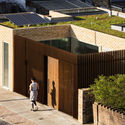
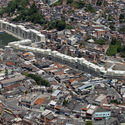
Favelas are an established reality in São Paulo, Brazil, housing more than 10% of the city's population. Within these communities, housing is a critical issue, due to both its inherent social dynamics and the poor environmental quality of indoor spaces—primarily caused by the overexposure of building envelopes to the sun and inefficient openings for ventilation. Against this backdrop, the project develops simple, replicable strategies to retrofit self-built housing based on the local climate.
Two buildings in Brasília's Plano Piloto have received the CAU/DF Seal – Architecture of Brasília 2020, and another six will receive it in the coming days. Launched in August of this year by the Council of Architecture and Urbanism of the Federal District, the seal aims to recognize the historical value of Brasília's non-monumental buildings and their designers, as well as to promote building maintenance and conservation best practices that have preserved the architectural language of the Modern Movement.
"The streets think; they have ideas, philosophy, and religion. As such, they are born, they grow, they change character, and, eventually, they die." Drawing from this quote by João do Rio in Alma Encantadora das Ruas, Guilherme Wisnik talks with Luiz Antonio Simas about street cultures through the concepts of terreirização and corporeality, viewing cities as spaces that are daily contested, tensioned, enchanted, and disenchanted.
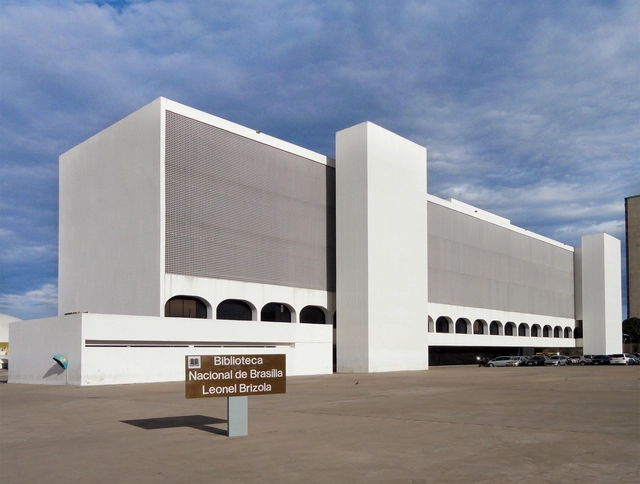
Leonel Brizola Nacional Library. Picture via Wikipedia, user Daderot, licensed under CC0
The Leonel Brizola National Library, designed by Oscar Niemeyer —a building that integrates the Cultural Complex of the Republic, a cultural center located along the Eixo Monumental, in the city of Brasília, Brazil— is covered in cracks. The lack of preventive maintenance has caused several cracks throughout the building, according to an article published in the newspaper Metrópoles.
The cracks were identified by local firefighters on November 19th and have spread all over the building, especially on the walls of the elevator machine room and the roof. The library receives an average of 102,000 visitors per year, and the building administration has been notified of the problem. An inspection was carried out to determine whether there is any structural damage to the building.
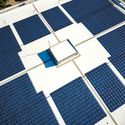
The government of Espírito Santo announced last week the launch of the GERAR Program, which aims to triple investments in distributed solar photovoltaic generation and expand incentives for renewable sources. Supported by the Brazilian Association of Photovoltaic Solar Energy (ABSOLAR), the program demonstrates the state's commitment to its targets for reducing pollutant emissions and combating the climate crisis.
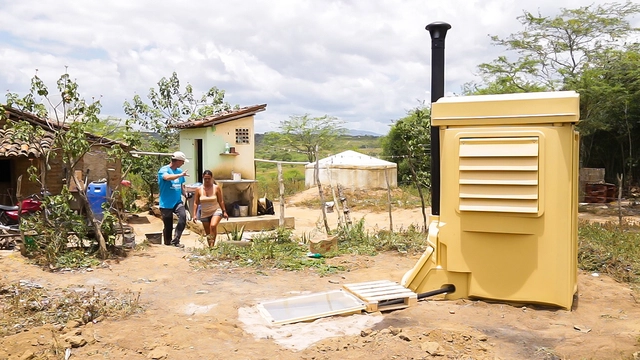
According to the 2018 National Sanitation Information System, 25.8% of the population in Northeast Brazil lacks access to water and 72% has no connection to the sewage network. “Now tell me, how am I supposed to have a bathroom at home under these conditions?” This was the question that robbed Vera of her sleep and peace of mind.
Vera lives in the small community of Riacho das Almas (PE), and her story is similar to those of thousands of families living in the rural areas of the semi-arid Northeast. Where access to water is scarce and basic sanitation is practically nonexistent, the use of traditional bathrooms—equipped with faucets, showers, and flushing toilets—is uncommon in the region. Consequently, families like Vera's and many others rely on improvised outdoor spaces for their needs: the "aveloz bathroom."
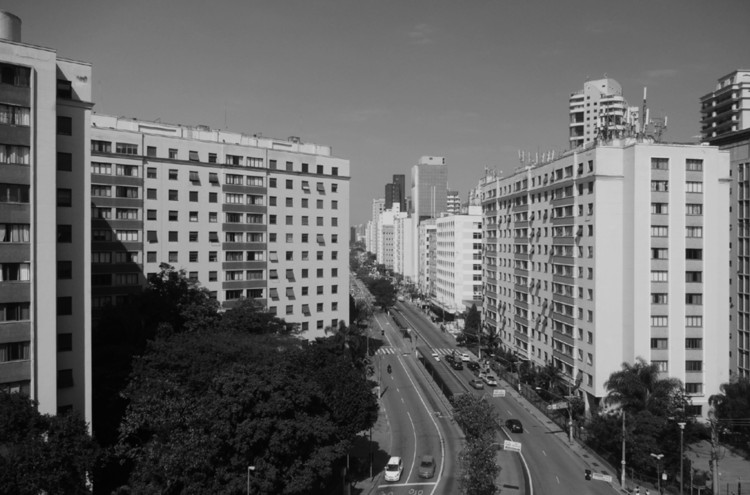
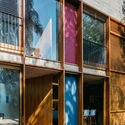
The history of collective housing has been the focus of the research group PC3 - Pensamento Crítico e Cidade Contemporânea (Critical Thinking and the Contemporary City), at FAUUSP, coordinated by professors Leandro Medrano and Luiz Recamán. Through the Cadernos de Habitação Coletiva (Collective Housing Notebooks) — developed under a cooperation agreement between researchers from FAUUSP and ETSAM-UPM in Madrid — the group explores the most significant examples of this housing typology in Brazil.
According to the group's platform, "the main objective of the Cadernos de Habitação Coletiva has been to build a comprehensive database, organized by decade, that includes the most relevant Brazilian collective housing buildings, both designed and built." Below, we highlight eight collective housing experiments built in São Paulo between the 1930s and 1960s, studied in detail by CHC and featured in individual articles here on ArchDaily.
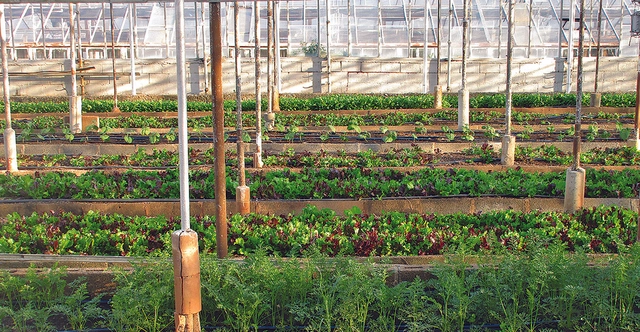
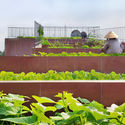
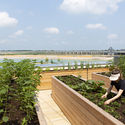
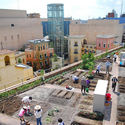
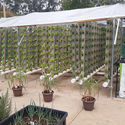
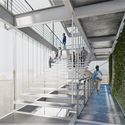
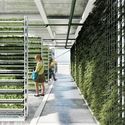
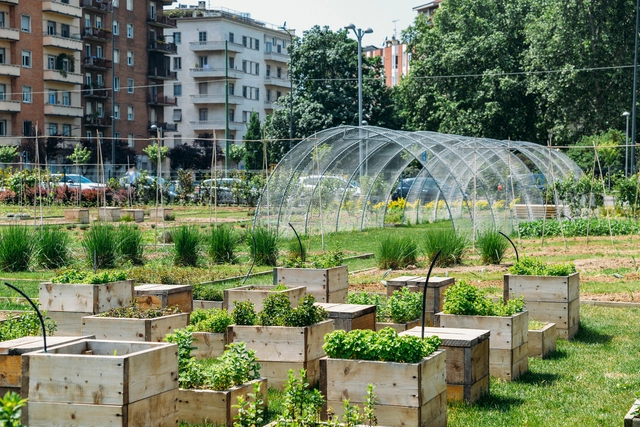
The Metropolitan Region of São Paulo (RMSP) has nearly 22 million inhabitants, representing about 10% of Brazil's total population. To feed this massive population, tons of food supplies arrive in the metropolis daily from different parts of the country. However, a new study by Instituto Escolhas shows that, with certain measures, it is possible to supply this entire population with locally grown vegetables.
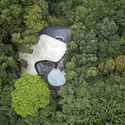
The Tomie Ohtake Institute, with support from AkzoNobel, announced today the three winning projects of the seventh edition of the Tomie Ohtake Institute AkzoNobel Architecture Award. A total of 246 submissions were received from 14 Brazilian states and the Federal District. The selected projects, which will also be featured in a catalog, include works located in Amazonas, Bahia, Ceará, Goiás, Minas Gerais, Rio de Janeiro, Santa Catarina, São Paulo, and King George Island in Antarctica.
The selection was made by a jury composed of architects Diego Mauro, Elisabete França, Fernando Túlio, Juliana Braga, and Pedro Varella. The announcement, made via video on the Institute's social media channels, also marks the opening of the exhibition featuring the 13 selected projects in this seventh edition.
On November 20 — Black Consciousness Day — the city of São Paulo inaugurated a statue honoring Joaquim Pinto de Oliveira, an enslaved 18th-century Black architect known as Tebas. Located in Praça Clóvis Beviláqua, on the eastern side of Praça da Sé in the city center, the sculpture was designed and developed by visual artist Lumumba Afroindígena and architect Francine Moura.
The work aims to cement Tebas's legacy, showcase his sophisticated technical output for the era, and, above all, provoke reflection on the historical significance of Black territorial presence in the city center, which has been fragmented over the centuries.
What would happen if we abandoned the modern epistemology that separates “us” from “others”? What would art history look like without this restrictive separation? Many other, non-disenchanted worlds coexist with ours. Other cosmopolitics can offer us less exclusionary views of life and relationships, unearthing previously unsuspected futures.
Guilherme Wisnik talks with Renata Marquez, a professor at the UFMG School of Architecture and Design and co-editor of Piseagrama magazine. Holding a PhD in Geography and a postdoc in Anthropology, she researches curatorial practices, theory, and criticism at the intersection of art, architecture, geography, and anthropology.
Geared toward Latin American architecture students, the Acero Prize aims to promote and encourage initiatives that complement pedagogical models, fostering innovative architectural ideas that use steel as a raw material. This year's edition, themed "Sustainable Cities and Communities," awarded first place to a team of two Brazilian students from FAUUSP.
“Architecture that does not touch the ground” is the name of the proposal developed by Augusto Longarine and Luiz Sakata, advised by Professor Luciano Margotto. With the same project, they won the 13th CBCA Competition (Brazilian Center for Steel Construction), the national stage preceding the Alacero competition. See the project below, accompanied by the project description written by the students.
"The world is highly polarized." This is a phrase we have all heard recently. While this is an undeniable fact, there have been times when the planet was just as, if not more, polarized than it is today. In particular, the period between the end of World War II and the early 1990s was marked by intense tension between the capitalist and socialist blocs, leaving deep marks on many countries and societies. The dismantling of the latter, symbolically represented by the fall of the Berlin Wall, dissipated the tension but did not eradicate communism, which remains the political system in several countries today.
There are currently six countries under a communist regime: China, North Korea, Cuba, Laos, Vietnam, and Transnistria. Despite differences in their economic systems—China, for example, has an economy considered mixed by some experts, with regions regulated by a capitalist market system—these countries also clearly present social, cultural, and geographical particularities that are reflected in their cities and architecture.
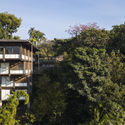
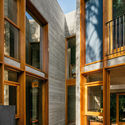
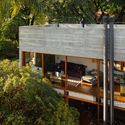
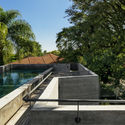
Casa 239, designed by the São Paulo-based office UNA Arquitetos, has been selected as a finalist for the Pan-American Prize of the 2020 Quito Architecture Biennial. The only Brazilian project on the extensive shortlist, it was led by architects Fernanda Barbara and Fabio Valentim, now partners at UNA barbara e valentim, and is competing for the final award in the Single-Family Housing category.
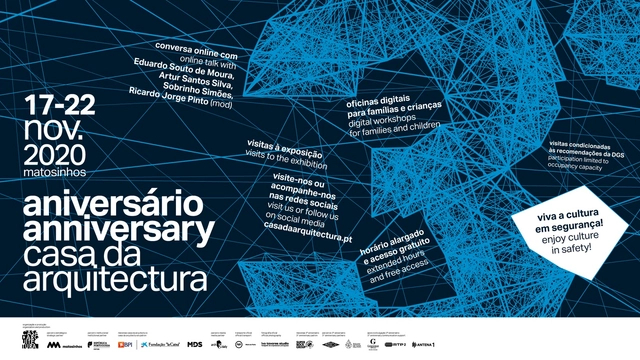
Casa da Arquitectura – Centro Português de Arquitectura is celebrating its 3rd anniversary starting November 17 at the Quarteirão da Real Vinícola in Matosinhos. The program features free admission to the exhibition through November 22, alongside online content available on its social media channels.
In light of the current state of emergency and in compliance with strict safety measures, the Casa will remain open with free admission from November 17 to 22, featuring extended and adjusted operating hours.
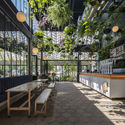
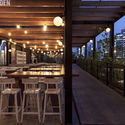
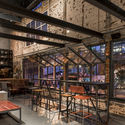
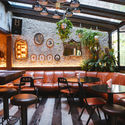
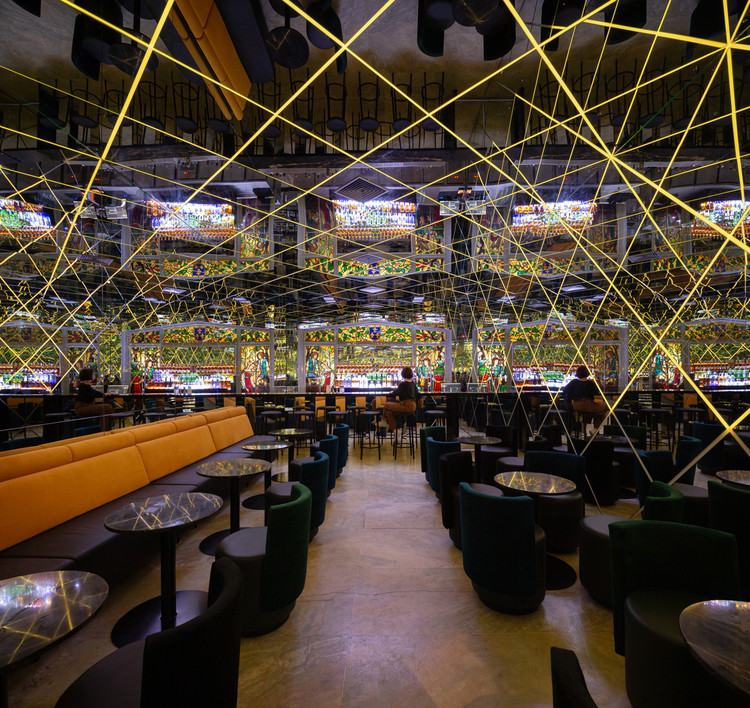
São Paulo has a vibrant nightlife, either by nature or due to the lack of other attractions, offering as many possibilities as its population of more than 12 million people. Therefore, bars have become the favorite spots for residents from all over the city, living in the east, west, north, and south.
We have selected a few projects of bars already published in ArchDaily that represent a sample of this bohemian architecture that so many inhabitants of São Paulo are used to – an architecture that is all about remodeling, socializing, gathering, and bonding in intimate spaces.
Earlier this month, the Observatory of Innovations for Sustainable Cities was launched. The project aims to gather information, proposals, and concrete examples of municipal initiatives and public policies that help improve people's quality of life and strengthen the environment. The initiative is a partnership between the Ministry of Science, Technology, and Innovations (MCTI), the United Nations Environment Programme (UNEP), and the Center for Strategic Studies and Management (CGEE).