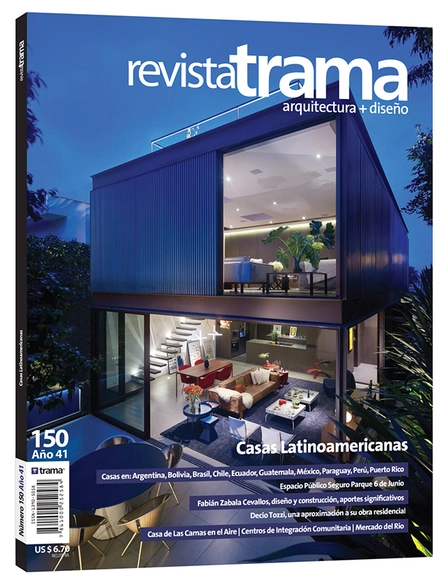
Residential spaces conceived by architects in private practice address diverse social segments. By engaging with the substance of architecture, their formation and realization transcend individual cases, coalescing into a valuable experience.
Residential spaces conceived by architects in private practice address diverse social segments. By engaging with the substance of architecture, their formation and realization transcend individual cases, coalescing into a valuable experience.
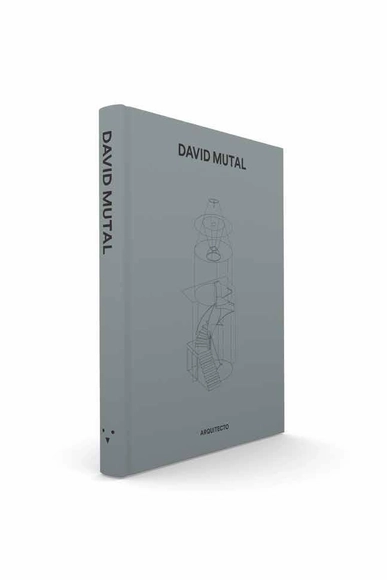
Ediciones Pichoncito and the real estate firm Morada present their latest publication, titled David Mutal Arquitecto. The book features a photographic compendium of the work of one of the most prominent contemporary Peruvian architects, who has been recognized, among other honors, with the 2012 Hexágono de Plata for the Hotel B project and the 2015 Premio Casas from Grupo Editorial Cosas for the Residencial Santa Rosa project. The architect also received First Place in the Commercial Category at the Peruvian Architecture Biennial (2018).
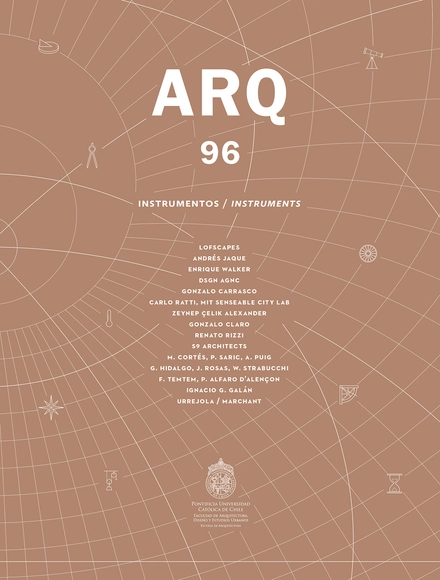
This issue of ARQ presents a broad critical discussion on the supposed neutrality of instruments. This emphasis is evident in the conversation between Andrés Jaque and Enrique Walker, in the texts by Zeynep Çelik Alexander, Ignacio G. Galán, and Gonzalo Carrasco, as well as in the debate surrounding the Promotion Law, which seeks to support architecture produced in Chile through a legal instrument. Furthermore, it explores a territory where architecture can make a contribution: the creation of instruments.
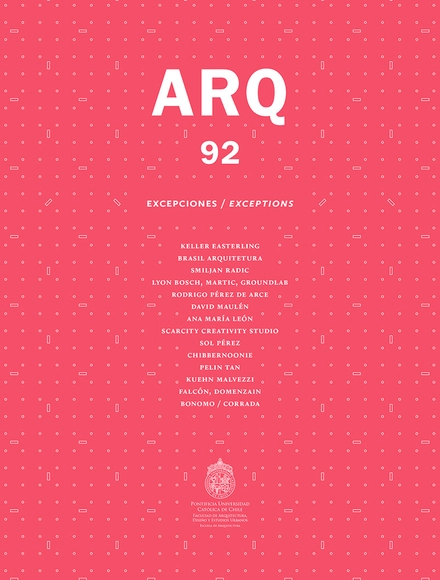
It was Vasari who, in the 16th century, accustomed us to reading the history of architecture through the careers of great artists—exceptional figures whose talent elevated various art forms to the superior state we still recognize today by Vasari’s own term: the Renaissance. It is not difficult to identify in this the seeds of a way of writing history—and, by extension, of understanding the very tradition of architecture—based on so-called "masters," figures whose oeuvre defines the range of possibilities within an institutionalized system of knowledge we commonly call a "discipline."
Does everything really deserve to be published and preserved? Or perhaps we publish out of an anxiety to insert ourselves into a larger history, with the vague hope that the future will take notice of what we do today? The excess of publications must be weighed against the mathematical impossibility that everything is worthwhile. Naturally, this includes us. In this age of suspicion, as defined by Boris Groys, criticism—and above all, self-criticism—is an intellectual duty. This is the spirit that frames this 100th issue of ARQ. For despite the urge to celebrate, we could not help but ask ourselves: what are we celebrating? Mere survival?
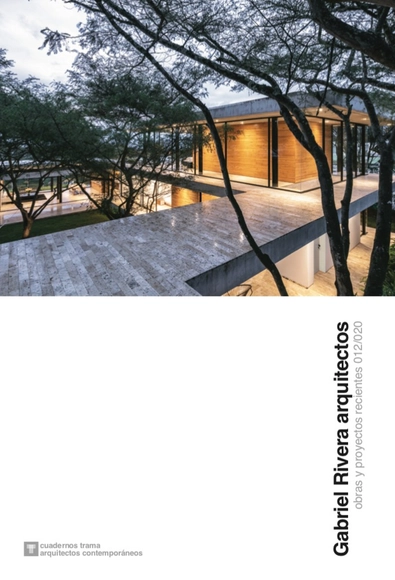
Gabriel Rivera views architecture as the experience of dwelling—as the architect's response to user needs, site conditions, and the built or natural environment. Architecture as experience and as a reflection of the self; a search for joy, clarity, and calm. Architecture that serves as an experience for the senses, defined by materiality and ideas; it is the pursuit of life's flow, a human design act with a purpose and a rationale, always born from reflection on ways of dwelling, being, feeling, and living to uncover its motivating meaning. Architecture that acts as an extension of its inhabitants and a reflection of the architect. Architecture that seeks to restore our essence and reconnect us with our own nature. Life flows, and we must flow with it; for Gabriel Rivera, this translates into an architectural duality: stillness and movement. It involves understanding the void around which everything is built and organized—a void understood as space and as a possibility for introspection—alongside the flow, the freedom of movement, of coming and staying.
Acoustics as a science encompasses various areas of human knowledge. It is a discipline present in all human activity, including the field of architecture.
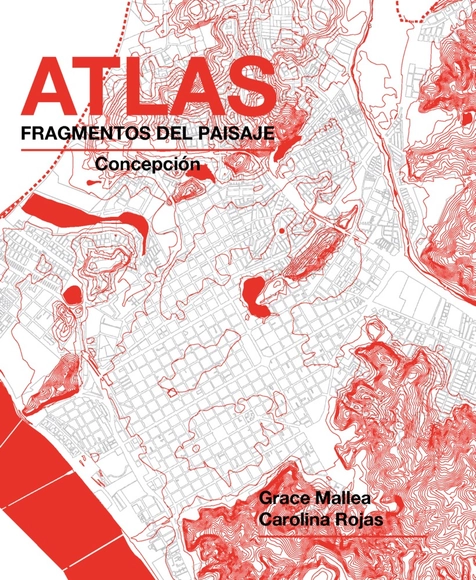
This Atlas aims to document and illustrate, through a graphic record, the characteristics of the landscape agents that compose the ecosystems of the Concepción region, their conservation status, and the fragmentation effects caused by various territorial transformation dynamics.
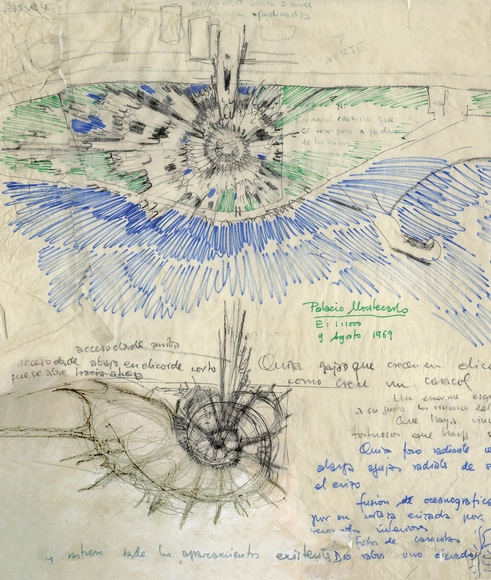
Ediciones Asimétricas, in collaboration with the Fernando Higueras Foundation, the ICO Foundation, the ICO Museum, and the Ministry of Public Works, has published the 2nd edition of the catalog Fernando Higueras. Desde el origen.

Selling bricks and exposing architectural avant-garde is an audiovisual archive project developed by Pablo Ibáñez Ferrera and Antonio Giráldez López since 2018. To date, it has taken the form of an Instagram feed (@kellycorbusier) and a publication. Selling bricks captures avant-garde architecture and cases of particular relevance featured in urban music videos in Spain.
No era has built as much or had to accommodate as large a population as ours. Furthermore, no other era has had so many architects. Today, everything seems to be massive: catastrophes, hunger, wealth, migration, production, trends, or cities.
While infrastructure is a prerequisite for any modern notion of "civilization," we rarely notice how much we depend on it. Perhaps the fact that we only interact with its interfaces makes it go unnoticed, to the point that we only remember its existence when it fails or when, at the end of the month, we have to pay the bill.
This issue of ARQ attempts to articulate the complexity of the concept of "value."
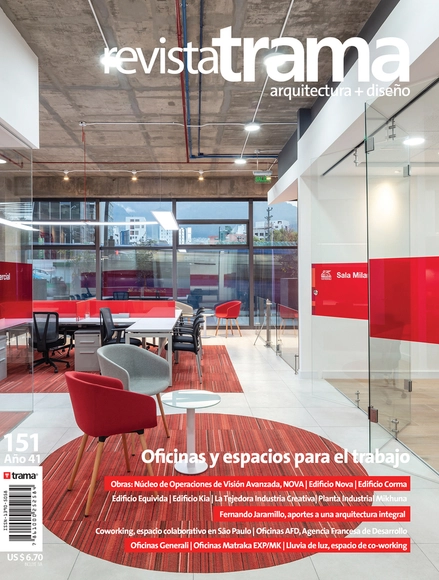
Trama Magazine 151: Offices and Workspaces
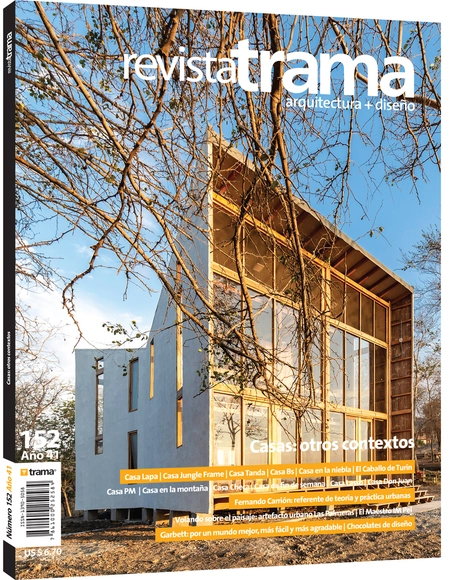
In special locations where the landscape, topography, and views are fundamental, the design of these houses prioritizes these elements in their volumetric conception, siting, spatiality, and language. The work draws from local architectural traditions, materials, and construction systems, while maintaining a free-spirited approach to combining them—without hesitation—with contemporary and urban materials. This creates a unique interrelation between past and present, tradition and modernity, in harmony with the site. In terms of volumetry and morphology, the focus is on contextual harmony: an appropriate scale that does not compete with its surroundings, and a spatiality that embraces the landscape while allowing the gaze to flow toward both near and distant views. The organization is free from prejudices regarding conventional function and form, appealing to the contrast between opposites in elements, planes, and textures—smoothness and rusticity. At times, the work is dense with a variety of components, materials, and textures; at others, it is subtle, highlighting guiding elements; and in some cases, it resorts to the utmost spatial, constructive, and formal simplicity. Seeking energy and resource efficiency, the orientation of these solitary structures plays an important role in achieving climate-related comfort. Far from urban densities, explorations, recycling, and experimentation are amplified.

High-Rise Buildings: Multiple Typologies
As both a problem and a design tool, the reference has been a recurring theme in architecture. Furthermore, recent discussions regarding copyright have brought this notion back to the forefront, necessitating a conceptual update, which serves as the focus of this 95th issue of ARQ.
Mindful of our mission to promote new territories of knowledge, in this issue of ARQ, we have focused on presenting architectural explorations of new grounds—whether through projects, essays, or research—publishing a range of readings and critical inquiries into a subject that, despite its age, is far from exhausted.