Award-winning architect Nicolas Valencia is the former Head of Editorial at ArchDaily, leading a global editorial team ---- @nicolasvalencia.cl | nicolasvalencia.cl | hellonicolasvalencia@gmail.com
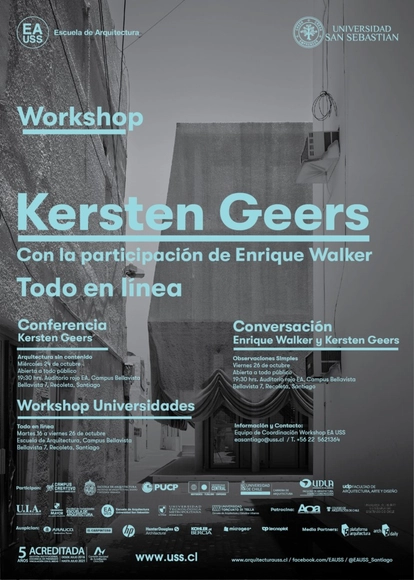
Universidad San Sebastián (Chile) has invited Belgian architect Kersten Geers, an international reference for his professional and academic practice, to lead the third edition of the EA USS Workshop in Santiago. Geers will also participate in a series of debates with participants, a conversation with the prominent architect and academic Enrique Walker, and a keynote lecture presenting his work and reflections on the discipline.
In this context, Chilean and Latin American universities are invited to join the experience by participating with teams composed of five undergraduate students and one or two faculty advisors.
The Faculty of Architecture at TU Delft (Netherlands) will offer a new online course on the edX digital platform, focusing on urban challenges in emerging countries.
Titled “Rethink the City: New Approaches to Global and Local Urban Challenges,” the course aims to address urban challenges in emerging countries, offering a new perspective to understand and analyze the Global South. Accordingly, the curriculum is structured around three thematic pillars: “Spatial Justice,” “Housing Provision and Management,” and “Urban Resilience.”
Tejiendo La Calle is an open-participation project. It consists of creating sunshades using an XXL crochet technique, which are installed in the streets of Valverde de La Vera during the town's cultural week and August festivities. We began in 2013 and continue to work on the project today.
The resulting installation helps express the local identity and serves as a medium for the intentions and desires of the project's participants. It welcomes visitors and helps create a celebratory atmosphere. The pieces function as sunshades during the day and are illuminated at night, lighting the way to the town square, the main meeting point during the festivities.
Supertrama is a public art program in Extremadura, Spain, that promotes artistic experimentation rooted in specific environments, their urban (or rural) configuration, architecture, historical memory, and social fabric. The program fosters cultural growth across the Extremaduran territory in collaboration with architects, artists, and creatives working in the field of public art.
Chile's Ministry of Housing and Urbanism has launched an ideas competition to design the "Paseo del Mar," a new public space at the Barón Pier, located directly on the coastline of the city of Valparaíso.
"The Barón Pier has shaped the history of Valparaíso and Chile. This site served as the engine of the country's railway industry throughout much of the 19th and 20th centuries. However, these grounds no longer possess their former vitality and have been abandoned over time. In the 21st century, the residents of Valparaíso want this area to reclaim its place in the history of the port and in their daily lives, but transformed into a major public space," the ministry explains in the competition guidelines.
Videos
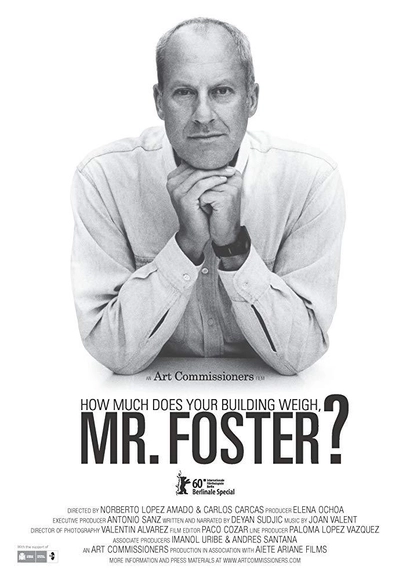
'How Much Does Your Building Weigh, Mr. Foster?' (2010). Image
In conjunction with the 15th Madrid Architecture Week, the Norman Foster Foundation presents Architecture on Screen, a film series curated by the foundation for Sala Equis in the Spanish capital.
Since the early 20th century, both architecture and film have found ways to express new ideas and develop avant-garde languages. Avant-garde movements, such as Futurism, established a close link between art, film, and architecture. As seen in the drawings of Sant'Elia, they convey the concept of the industrial city, moving trains, and buildings inspired by hydroelectric power plants, using the machine as a metaphor.
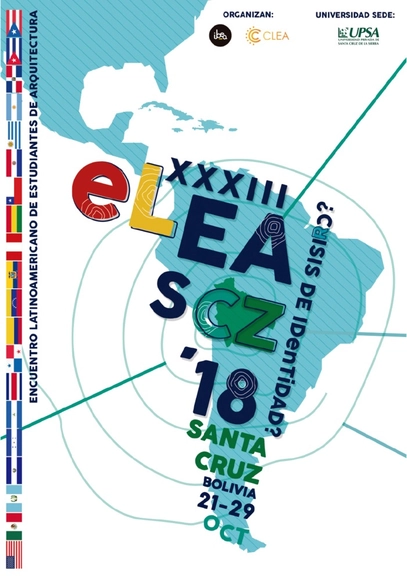
For the first time in Bolivia, the city of Santa Cruz will host the XXXIII ELEA—Latin American Architecture Students Meeting—an annual event organized by the Latin American Coordinator of Architecture Students (CLEA) in conjunction with IBEA (Bolivian Integration of Architecture Students). ArchDaily will be there to cover it on the ground!
Under the theme "Identity Crisis?", Santa Cruz will welcome architecture students from across Latin America from October 21 to 29, 2018. Participants will engage in workshops, lectures, discussions, and cultural activities at the Faculty of Architecture, Design, and Urbanism of the Universidad Privada de Santa Cruz de la Sierra (UPSA), fostering a generation committed to "solving the social problems of our region through our profession."
Keynote speakers at the XXXIII ELEA will include Jorge Lobos (Chile/Denmark), Carlos García Vázquez (Spain), Iván Cartes (Chile), Víctor Hugo Limpias (Bolivia), Ariel Jacubovich (Argentina), Roberto Ameneiro (Spain), Susana López (Mexico), Colectivo MU (Colombia), Colectivo Arrabal (Mexico), Néstor Ortega Méndez (Mexico), Lilian Roig (Bolivia), Irma Quiroz (Bolivia), Jorge López (Mexico), and Federico Escobar (Bolivia), among others.
It is a truism to say that doctors do not constantly question their discipline or organize large events to debate what medicine is. Yet, architects do. And we never reach an agreement.
This reflection, in the words of Mario Marchant—director of the Chilean journal Materia Arquitectura—is doubly relevant when it comes to architectural theory, the central theme of the 16th edition of the biannual print publication from the Universidad San Sebastián School of Architecture.
In this issue, guest editor Gabriela García de Cortázar has chosen to sidestep the cliché ("what is theory?") and centers the articles on the question "where is theory?"—a less open-ended inquiry that nonetheless invites multiple responses depending on the interpretation: where it is practiced, where it is published, and where it finds its space within architecture.
Today, October 1st, marks World Architecture Day. To celebrate in style, ArchDaily invites you to tune in to our live broadcasts of our special programming.
Seven architects from Chile, Mexico, and Venezuela will visit our offices in Santiago and Mexico City to discuss their key projects and share their architectural vision. Follow the live broadcasts on the Instagram accounts of Plataforma Arquitectura and ArchDaily México.
We invite you to participate in the first National Meeting of Future Urbanists (ENUM), to be held on October 8 and 9 at the Faculty of Architecture and Urbanism of the University of Chile. This meeting is organized by graduates of the Master of Urbanism program and sponsored by the Postgraduate Department and the Postgraduate School of the Faculty of Architecture and Urbanism at the same institution.
Videos
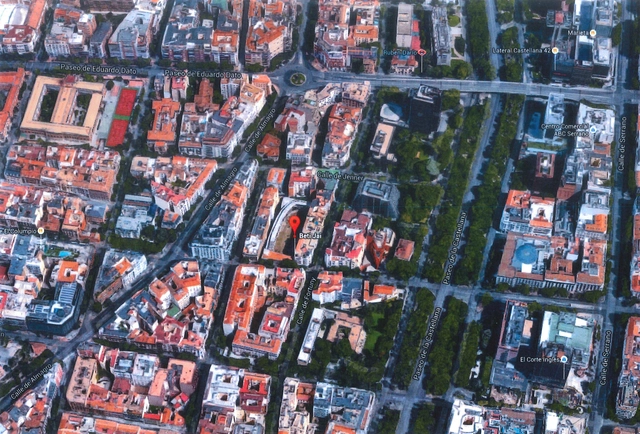
Ubicación de Beti Jai en Madrid. Image Cortesía de COAM
The Madrid City Council, in collaboration with the Official College of Architects of Madrid (COAM), has launched a competition for the adaptation and rehabilitation of the historic Beti Jai fronton (always party in Basque) in the Spanish capital.
This former sports facility for Basque pelota, which seats 4,000 spectators, was designed by Joaquín de Rucoba and inaugurated in 1894. It served various purposes after 1918, when it ceased to function exclusively as a sports venue, until it was completely abandoned in 1989. In 2015, the Madrid City Council acquired the site, following concerns over its uncertain future raised by local organizations such as Madrid, Ciudadanía y Patrimonio.
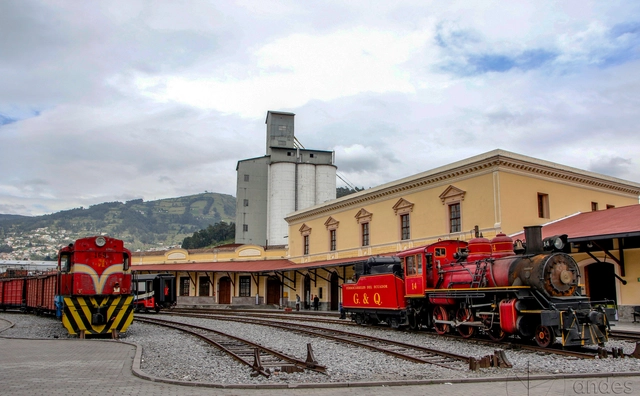
The Municipality of Quito, through the Metropolitan Institute of Urban Planning (IMPU) and the Pichincha Architects Association (CAE-P), invites architects, urban planners, and other professionals to participate in a competition aimed at the urban renewal of the railway corridor in southern Quito.
This competition seeks to reimagine the corridor, which currently only serves the tourist train, and whose spatial, environmental, economic, and social potential remains untapped. Consequently, the competition encourages the development of proposals that integrate and acknowledge this historic infrastructure within the city, highlighting its potential as an inclusive and connective public space. The goal is to create gathering spaces and incorporate facilities, retail, and services that enhance the current use and character of each sector. Participants may even rethink the role of this corridor for various urban functions, regardless of whether the train remains in operation. The corridor spans approximately 13 kilometers and traverses areas with a significant diversity of dynamics, land uses, and levels of urban consolidation.
The Norman Foster Foundation is offering students from around the world the opportunity to participate in the upcoming Urban Mobility workshop, which will take place at the Foundation's headquarters in Madrid, Spain, from September 17 to 21, 2018.
Since the late 19th and mid-20th centuries, the monorail has been a staple of science fiction's visions of the urban future. Beyond the Space Age aesthetic, its implementation is relatively affordable and rapid when compared to the cost, time, and impact of underground subway systems. Surprisingly, there are few operational examples, and those currently in use are often conceived in isolation from other urban needs.
For its fourth exhibition cycle, Espacio Odeón has invited Alejandro Martín Maldonado and Estudio Altiplano to serve as curators. They have chosen to launch an architecture competition that examines the spatial conditions of Odeón, along with its history, present, and future.
This competition invites any individual or collective—regardless of age, discipline, nationality, gender, or political affiliation—to submit architectural proposals. We are seeking submissions that consider the building's current state in programmatic, heritage, urban, and economic terms. We invite you to envision alternative futures and new directions, and to submit proposals that radically question the spatial condition of Odeón, the contingency of the void, and the potential of its ruins.
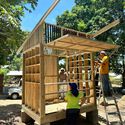
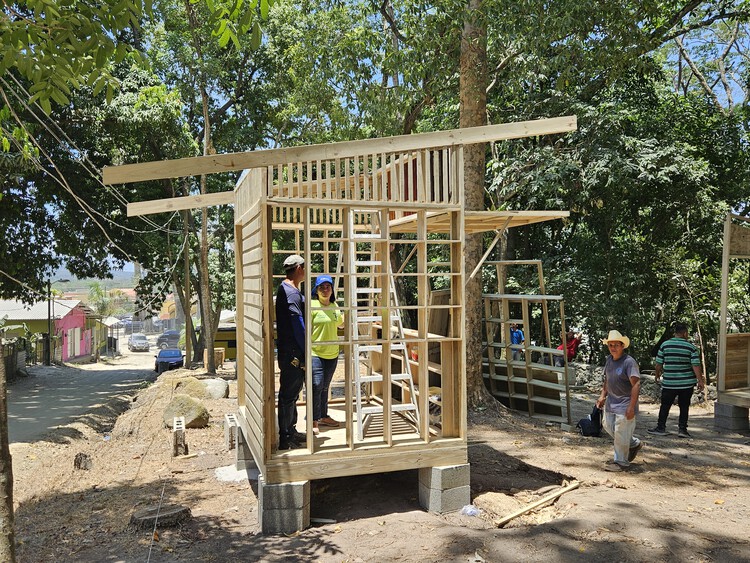
It is eight in the morning, and the car's dashboard display reads 36°C on the streets of San Pedro Sula, Honduras. The sky is almost clear: an intense blue with a few bright, drifting clouds. The air conditioning in the cars—all with tinted windows—makes you forget that upon stepping out, the warm, humid air will immediately weigh on your shoulders and break a sweat.
Puerto Cortés on the Caribbean coast is too far away for a quick dip, but in the neighborhood of Armenta, the eponymous river flows almost silently down from the Sierra del Merendón, running from west to east through gray stones. On the northern bank, tall, leafy trees along the upper edge of the ravine shade a long, dry, and dusty plaza, while thick, exposed roots give texture to the ground. The sun is less punishing.
Suzhou Museum of Imperial Kiln Brick. Image Cortesía de Jiakun Architects
The Pritzker Prize is the most important award in the field of architecture, awarded to a living architect whose built work "has produced consistent and significant contributions to humanity through the art of architecture." The Prize rewards individuals, not offices, as happened in 2000 (when the jury selected Rem Koolhaas instead of his firm OMA) or in 2016 (with Alejandro Aravena selected instead of ELEMENTAL); however, the Prize can also be awarded to multiple individuals working together, as was the case in 2001 (Herzog & de Meuron), 2010 (Kazuyo Sejima and Ryue Nishizawa from SANAA), and 2017 (Rafael Aranda, Carme Pigem, and Ramon Vilalta from RCR Arquitectes).
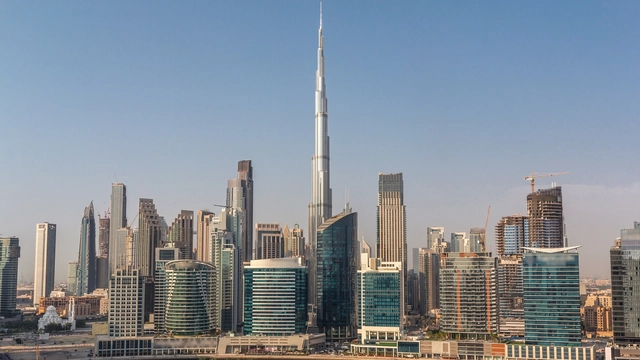
Humanity has become obsessed with breaking its limits, creating new records only to break them again and again. In fact, our cities’ skylines have always been defined by those in power during every period in history. At one point churches left their mark, followed by public institutions and in the last few decades, it's commercial skyscrapers that continue to stretch taller and taller.
The Council on Tall Buildings and Urban Habitat (CTBUH) has developed its own system for classifying tall buildings, stating that the Burj Khalifa (828 m.) is the world’s tallest building right now. Read on for the 25 tallest buildings in the world today.
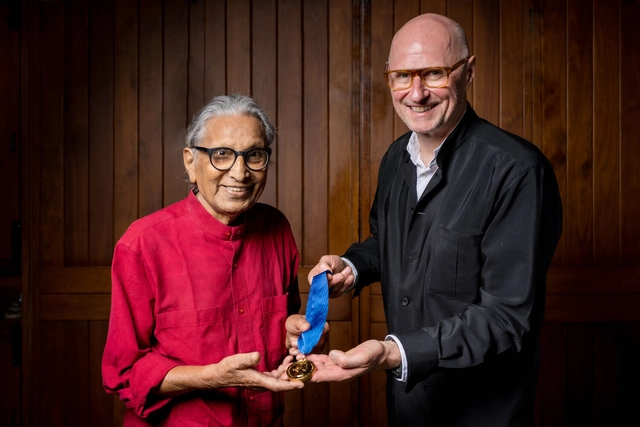
Recognized as the UK’s highest honor for architecture, the RIBA Royal Gold Medal for Architecture is approved personally by Her Majesty The Queen and is given to a person or group of people who have had a significant influence "either directly or indirectly on the advancement of architecture.", according to the organization. In 2024, the recognition was awarded for the first time to an African Woman, to the Ghanaian-Scottish architect, academic, and curator Lesley Lokko.