Content Editor at ArchDaily Mexico. Architect by UNAM (2018). Her interests focus on exploring the relationship of the body with architecture through dance. She has collaborated with different international choreographers who explore dance and architecture as an event. Twitter / Instagram: @monicarellano_
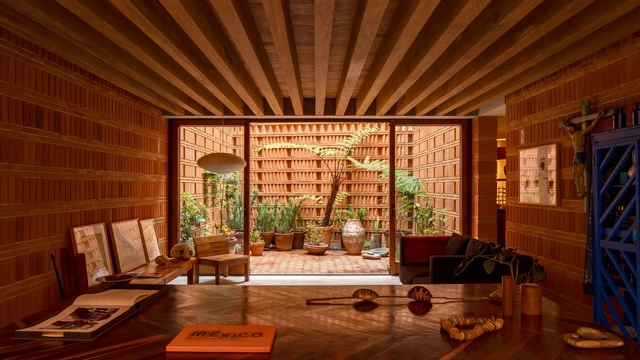
Iturbide Studio / Taller de Arquitectura Mauricio Rocha + Gabriela Carrillo. Image
Today, the awards of the French Academy of Architecture were presented at the House of Architecture, Paris 10th. During the ceremony, around forty laureates representing the world of architecture were recognized with various awards. Each year, these awards honor professionals from the fields of architecture, education, and research, the newest generation of architecture graduates, and the vast world of construction. This is an opportunity for the Academy to recognize those who stand out in the architectural field.
On Friday, May 7, the winning proposal of the second "Imagining Machines" (Máquinas Imaginantes) open call was announced. The initiative invited architects, researchers, and writers to reflect on "machines" of the past and present operating within architecture as tools for social analysis and production. The open call accepted both real and speculative projects, incorporating installations, historical documents, archival material, performance formats, and publications that engaged with the creation of imagining machines.
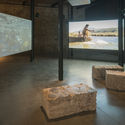
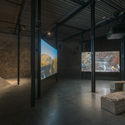
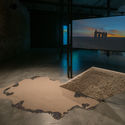
The International Art Exhibition of the Venice Biennale opened its 58th edition on May 11, 2019, at the Sale d'Armi in the Arsenale in Venice, and will run through November 24. At this world-renowned event, Mexico presented its contribution to the national pavilions with Acts of God by artist Pablo Vargas Lugo. Curated by Magalí Arriola, the project seeks to establish a dialogue with the curatorial concept of the Biennale Arte 2019, May You Live in Interesting Times, to examine how we value our actions, the connections we establish between the natural world and geological time, and to question the origins of our moral choices and inherited values, such as the idea of redemption.
The presence of Mexican architecture on the global scene is increasingly evident and strengthened by the ambassador architects who constantly represent Mexico in international events and exhibitions. Within these samples, you are able to see a constant concern to show contemporary values that denote a sense of responsibility, reinventing their own identity with the urgency of addressing current challenges.
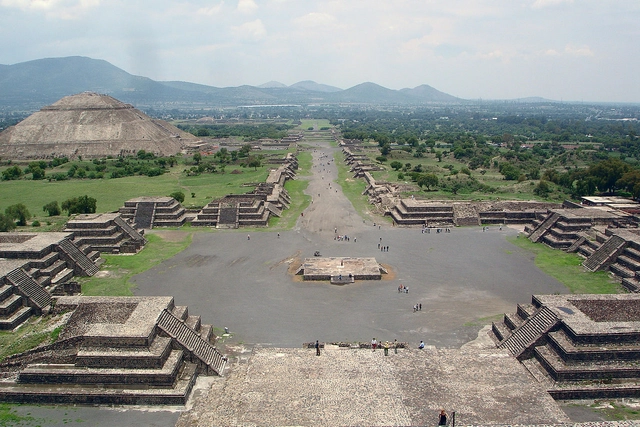
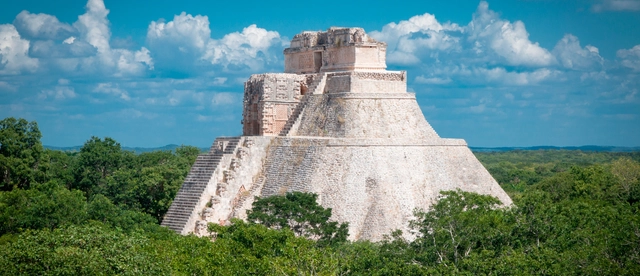
According to a statement published on the UNESCO page, the UNESCO World Heritage List is a legacy of monuments and sites of great natural and cultural wealth that belongs to all of humanity. The Sites inscribed on the World Heritage List fulfill a function of milestones on the planet, of symbols of the awareness of States and peoples about the meaning of those places and emblems of their attachment to collective property, as well as of the transmission of that heritage to future generations.
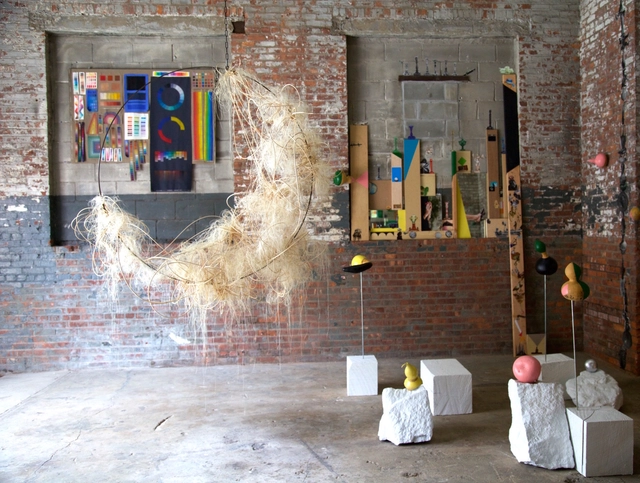
On May 31, the art gallery The Chimney presented “Twilight Chorus,” a group exhibition co-curated with guadalajara90210, a Mexican organization directed by Alma Saladin. The exhibition features works by Mexican artists Héctor Jiménez Castillo, Mariana Garibay Raeke, Ilana Harris-Babou, Circe Irasema, Mario Navarro, and Marco Rountree.
The General Conference of the United Nations Educational, Scientific and Cultural Organization, at its 17th meeting held in Paris from October 17 to November 21, 1972, arose from the need to identify part of the priceless and irreplaceable of the nations, noting that cultural heritage and natural heritage are increasingly threatened with destruction, not only because of the traditional causes of deterioration but also because of the evolution of social and economic life that aggravates them with phenomena of alteration or destruction even more fearsome.
According to a statement published on the UNESCO page, the UNESCO World Heritage List is a legacy of monuments and sites of great natural and cultural wealth that belongs to all of humanity. The Sites inscribed on the World Heritage List fulfill a function of milestones on the planet, of symbols of the awareness of States and peoples about the meaning of those places and emblems of their attachment to collective property, as well as the transmission of that heritage to future generations.
The XI Ibero-American Biennial of Architecture and Urbanism (XI BIAU) recently announced the 210 selected projects for its upcoming edition, which will take place for the first time in Asunción this October.
The winners of the Panorama of Works Award will be chosen from this shortlist, which includes the following 18 Mexican projects:
No physical barrier separates Veracruz and Boca del Río; yet, despite being adjacent municipalities, they remain deeply distinct. On one hand lies the historic city of Veracruz, the gateway to the Americas for the Old World; on the other lies Boca del Río, a young city with greater economic influence. The Port of Veracruz serves as a tangible landmark that weaves this contrasting urban tapestry together, extending from north to south with sweeping views of the Gulf of Mexico to connect these two urban centers.
The National Academy of Architecture is a non-profit civil association whose primary objective is to study, promote, and recognize contemporary architecture, as well as to acknowledge, honor, and reward the outstanding performance of architects. The association has local chapters across various states of the Mexican Republic. It invites architects to join its ranks who, through the high caliber of their professional careers, have contributed to the advancement of architecture, the arts, and culture.
Ciudad Juárez is an industrial city located on the northern border with the United States, specifically bordering the city of El Paso, Texas. Over the years, Juárez's economy has been dominated by the ‘maquiladora’ assembly industry, and the city was once considered one of the most violent in the world due to a wave of crime between 2008 and 2012. In response to these conditions, in 2014, a group of friends from Ciudad Juárez, Chihuahua, eager to contribute to their city's resilience and recovery, came together to discuss and pitch ideas for reclaiming streets, plazas, and parks through sociocultural projects and public space interventions, ultimately giving rise to Nómada Laboratorio Urbano.
On Wednesday, June 5, SOM and Arquine will host a panel discussion on architecture and engineering collaborations to celebrate the final week of "SOM: Art + Engineering + Architecture," an exhibition presented at the historic Colegio de San Ildefonso in Mexico City. The exhibition is presented in collaboration with MEXTRÓPOLI, an architecture and urbanism festival organized by Arquine.
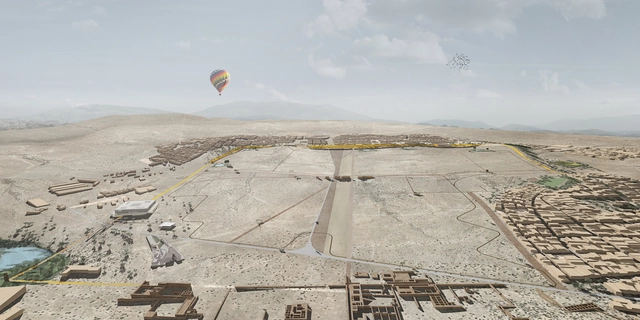
As part of the celebrations for the Bicentennial of Peru's Independence, the Ministry of Culture, the Municipality of Lima, and Grupo Centenario announced an international architecture and landscaping competition to design a metropolitan park along the perimeter of the Pachacamac Sanctuary in the Lurín district of Lima. The competition sought to encourage reflection on Lima's relationship with its historical and landscape heritage, as the Sanctuary houses some of the most important structures of the national archaeological heritage, spanning more than fifteen centuries of human occupation.
The construction company GAYA and SCI-Arc, one of the world's most prestigious architecture schools, have awarded David Aizenman the inaugural “GAYA Talent Scholarship” to study architecture in Los Angeles, starting this August.
SCI-Arc, considered one of the most cutting-edge architecture schools not only in the United States but globally, is dedicated to finding radically new answers to the real-world needs and aspirations of today. The school comprises 500 students and 80 faculty members, who work together in a flexible, non-hierarchical environment to challenge established norms, create, explore, and push the boundaries of architecture.
Mexico City, considered one of the largest and most populous urban areas in the world, is in fact the largest city in the Americas and the Spanish-speaking world. Given this vast footprint, its immense population has led to sprawling peripheral settlements, highlighting the urgent need for a denser, more inclusive city. Various factors—such as the abandonment of downtown buildings following historic earthquakes like the one in 1985, compounded by a lack of basic habitability—have drawn the attention of diverse actors. Through clear, targeted interventions, they seek to restore a cohesive urban fabric that empowers residents to reclaim their city.
Rozana Montiel, alongside Werner Sobek, Ersen Gürsel, Ammar Khammash, and Jorge Lobos, has won the Global Award for Sustainable Architecture 2019. The award ceremony will take place on May 13 in Paris, France.
The Bubble Creation is a collection presented by Herman Miller at the MAIA gallery, located in Mexico City's Roma neighborhood. The exhibition brought together 14 Nelson Bubble Lamps—one of the brand's most recognized products—reimagined by Mexican architects, designers, and interior designers.
.jpg?1560267104&format=webp&width=640&height=580)




















_13.53.37.jpg?1559156040&format=webp&width=640&height=580)