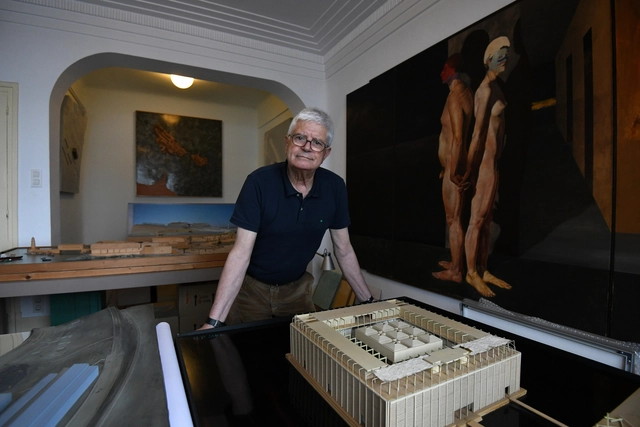
César Portela, an architect born in Pontevedra in 1937, has been awarded the Gold Medal of Architecture, one of the most prestigious distinctions in Spain's architectural profession. Established by the Superior Council of Colleges of Architects of Spain (CSCAE) in 1981, this award recognizes individuals and institutions whose work enriches architectural practice.
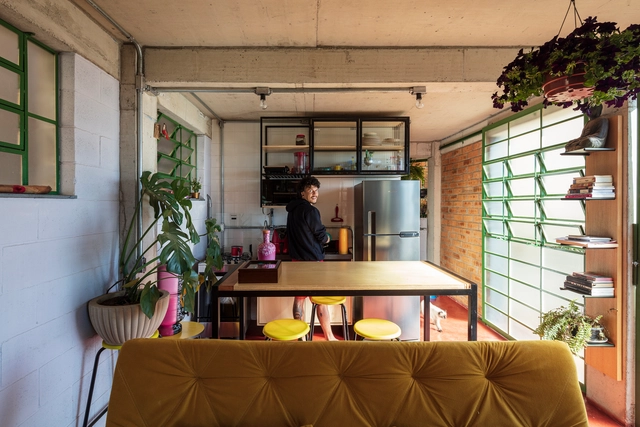
Housing is not just the place where we live. It is a reflection of our society, our culture, and our aspirations. It is a space that influences our quality of life, our health, and our well-being. And in a world changing at an unprecedented pace—where technology advances by leaps and bounds, population grows, and resources become scarce—it is crucial to reflect on how we inhabit our homes and how we can make them better.
Throughout the month of April, ArchDaily opened up the debate on the topic of contemporary housing. We extended an invitation to our readers to join the discussion on its current state and future. After reviewing an immense number of comments and opinions from construction professionals, students, and architecture enthusiasts alike, we were surprised to find a strong consensus: above all, contemporary housing speaks as much to adaptability, innovation, and diversity as it does to real estate speculation, a lack of adequate public policies, and economic inequality. Read the main viewpoints in detail below.
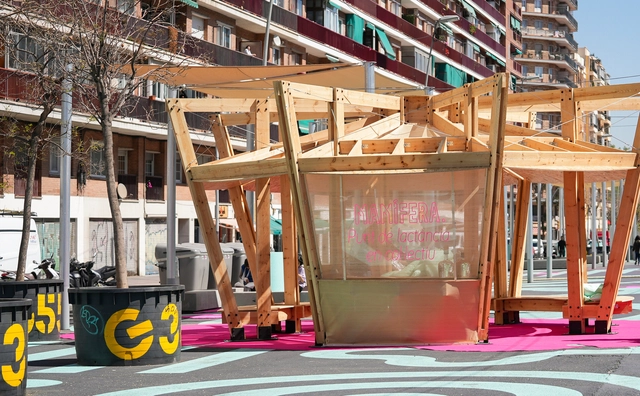
From April 20 to 30, the second edition of the Model: Festival d'Arquitectures de Barcelona took place, debuting a new theme, Radical Empathy, and a new location, the surroundings of the new Parque de las Glorias. This year, managed by the Fundació Mies van der Rohe, the event turned the city into a laboratory of experimentation and dissemination of architectural and urban thought, providing an opportunity to rethink new models and new imaginations of the city.
During the 10 days of the festival, 5 temporary installations were presented as a tool to build a more sustainable, fraternal, and fair city. Among the proposals, we could find a breastfeeding area designed by Equal Saree, the roof of a parking lot transformed into a mushroom structure by Harrison Atelier, and a surface that provides information about the benefits and disadvantages of the city's air created by Daryan Knoblauch, among others. At the same time, a series of 4 digital architectures and augmented realities were added, incorporating new experiences and technologies.
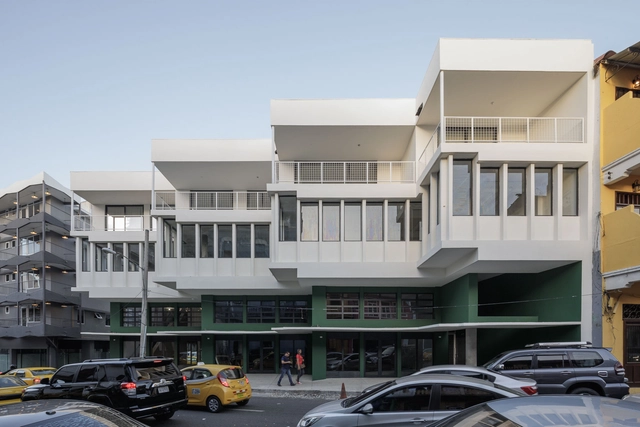
The city of Panama has been experiencing an architectural rebirth. Buildings that have become outdated and deteriorated over time are now being renovated, restored, and modernized - and one of the main offices carrying out this task is Sketch, an architecture studio that defines itself as "energetic, multidisciplinary, and a firm believer that design should be both smart and fun."
Their renovation and remodeling projects, such as the STEPS Dance Academy, the DiabloRosso Gallery, and the mixed-use building La Moderna, are clear indications of this transformative spirit that revolves around efficiency and relevance. Learn about these projects in detail below.
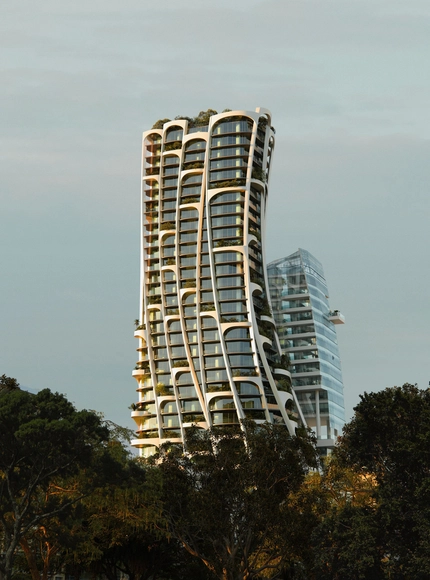
The architecture firm MAD Architects, based in Beijing, China, has presented the design of its first project in South America, the mixed-use "Qondesa" tower in Quito, Ecuador, which will soon become the tallest building in the city.
The Ministry of Transport, Mobility and Urban Agenda (Mitma) revealed in November 2022 the winning proposal for the curation and exhibition design of the Spanish Pavilion at the 18th edition of the Venice Architecture Biennale, which will take place from May 21 to November 26, 2023. Developed by Eduardo Castillo Vinuesa and Manuel Ocaña, "Foodscapes" focuses on the biennale's theme "The Laboratory of the future", by choosing as the object of its research the architecture related to the food production, distribution, and consumption chain, from the domestic to the territorial level.
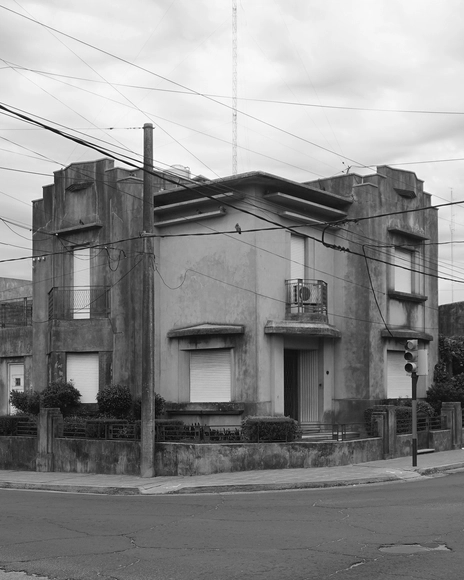
Alejo Martínez, one of the main builders of Argentine modernity, turned the city of Concordia into a reference of the South American modernist movement. His extensive work on houses, such as Casa Péndola Díaz from 1925, Casa Marcone from 1928, or Casa Camaño from 1930, "changed the typology of the 'chorizo' house to compact housing, where straight volumes stand out, staggered from each other, and with terraces".
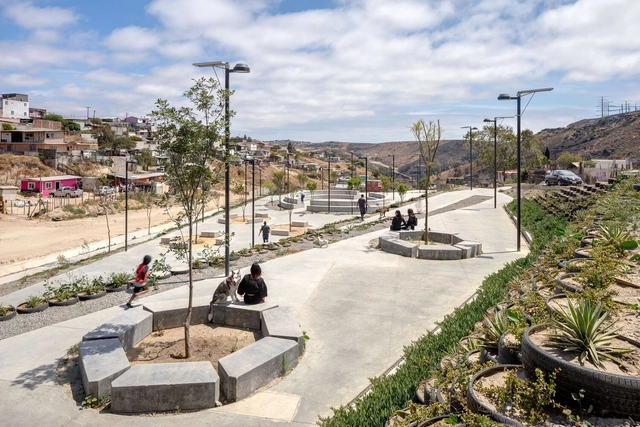
Xicoténcatl Stream Park / Taller Capital. Photograph: Rafael Gamo. Image via "Ecological Design: Strategies for the Vulnerable City: Green Infrastructures and Public Space in Latin America and the Caribbean". IDB
Mar del Plata is an obligatory reference to the Argentine modern movement. At the same time, it is the setting for many architectural classics that have been victims of neglect for years.
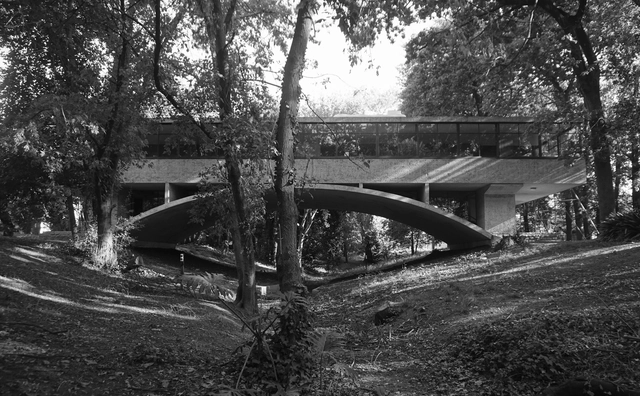
Magalí Marazzo, director of the municipality's Department of Works and Urban Planning and member of the National Monuments Commission, has taken charge of the situation by completing the restoration project of a paradigmatic work of 20th-century architecture: The House on the River.
A week ago, we announced the 15 finalist projects for the 2023 Building of the Year Award—a recognition of the best architecture in Spanish. Our expert jury—that is, you, our readers—selected an initial shortlist of 15 projects from nearly 1,000 works of architecture built across Latin America and Spain, before proceeding to a final vote that resulted in 3 projects representing the very best of the architecture that inspires us, defines us, and leaves its mark.
Today, the winners of the 2023 ODA are finally revealed!
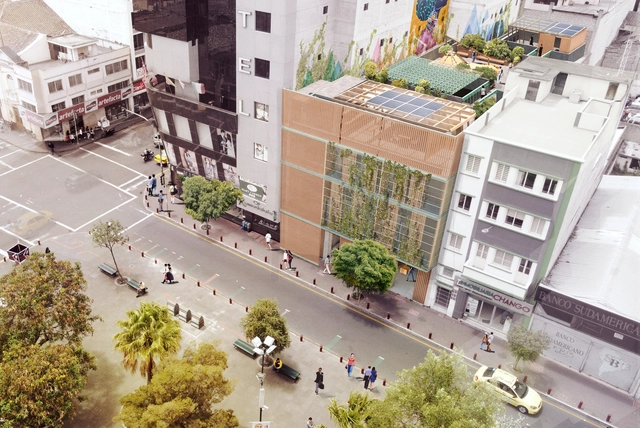
RAMA Estudio has won a competition organized by the Ecuadorian Ministry of Urban Development and Housing (Miduvi) to transform public buildings into social housing. "Casa Cevallos" seeks to give a new face to the Miduvi Tungurahua building, located in front of the Cevallos Park in Ambato, Ecuador, incorporating 16 apartments for 45 inhabitants through 7 adaptable typologies.
Reflecting on contemporary housing is perhaps one of the most compelling and relevant undertakings of our time. In a rapidly changing world—where technology advances at a breakneck pace, populations grow, and resources become increasingly scarce—it is vital to reconsider how we live and how we can do so better.
From fire in caves to street lighting in cities, lighting has evolved steadily alongside technological advancements—and in recent years, it has begun to change even more significantly due to a growing awareness of its impact on the environment and human health. Today, automated LEDs are commonplace in workspaces and homes, improving both energy efficiency and well-being and comfort. Meanwhile, public squares and streets are increasingly integrating sensors and software configurations to enhance safety and mobility. With the global urban population projected to reach 68% by 2050, urban lighting will undoubtedly become an even more critical factor to consider.
However, to make the most of these opportunities, we must view lighting as part of a holistic vision and work together to create better solutions. What does the future of lighting look like? We posed this question to our readers. After reviewing a vast number of comments and opinions from construction professionals, students, and architecture enthusiasts alike, it was surprising to find so much common ground and shared visions. There is a clear consensus on the importance of going a step beyond the status quo without increasing light pollution—while being more mindful of all living things. Discover the main perspectives below.
Today is the day to meet the finalists of ODA2023, the award celebrating the best architecture in the Spanish-speaking world. Our expert jury—you, the readers—has selected 15 of your favorite projects from nearly 1,000 architectural works built across Latin America and Spain.
Now in its fifteenth year, this award has become a true tradition. It is an open invitation to all our readers to recognize the projects published in 2022 that inspired them and that represent the identity of their local contexts in a globalized planet—shaping how architecture is made in Latin America and Spain within an increasingly heterogeneous and multicultural world.
INES Centro de innovación / Pezo von Ellrichshausen. Image Cortesía de Pezo von Ellrichshausen
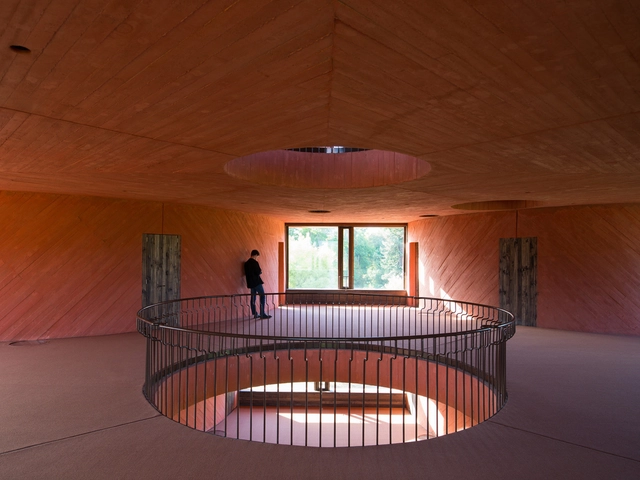
While colors can accentuate architectural designs, there is no single color that is "best". The choice depends on the style and purpose of the architecture, as well as the effect you want to create. However, colors that contrast with predominant tones can help highlight important details - and yes: red tones here can create an intense visual contrast.
To showcase the outstanding work coming out of Latin American and Spanish universities, at the beginning of this year we launched an open call inviting architecture students to submit their final graduation projects completed in 2022. After thoroughly evaluating the 157 submissions received, our editorial team shortlisted 30 projects and ultimately selected 10 that demonstrate deep critical thinking in addressing their proposed challenges.
From fire in prehistoric caves to street lighting in smart cities, lighting has evolved steadily alongside technological advancements. In recent years, however, it has begun to transform even more significantly in terms of design and functionality, driven by a growing awareness of its impact on the environment and human health.
In December 2022, the Government of the Republic of Costa Rica launched an architectural and urban ideas competition for the area where the first phase of Ciudad Gobierno will be developed—an urban renewal project in downtown San José that aims to transform nearly four city blocks of the capital with office, retail, and public spaces.
At the end of February 2023, the winning proposal was announced from among 28 submitted designs to serve as a model for the building complex that will house 18 public institutions west of Plaza González Víquez. Designed by Venezuela-based Micucci Arquitectos Asociados, the winning project is titled "Metropolitan Civic Park."