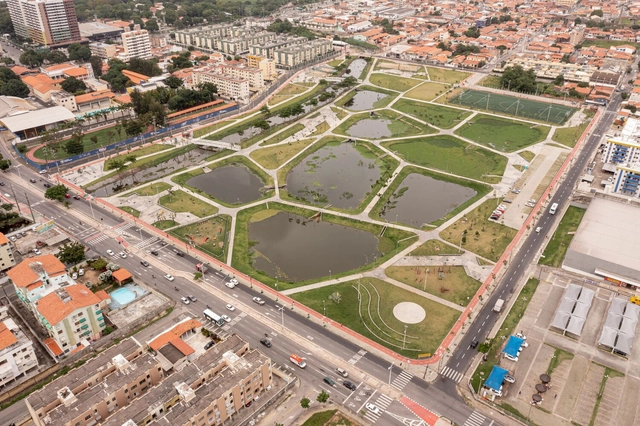
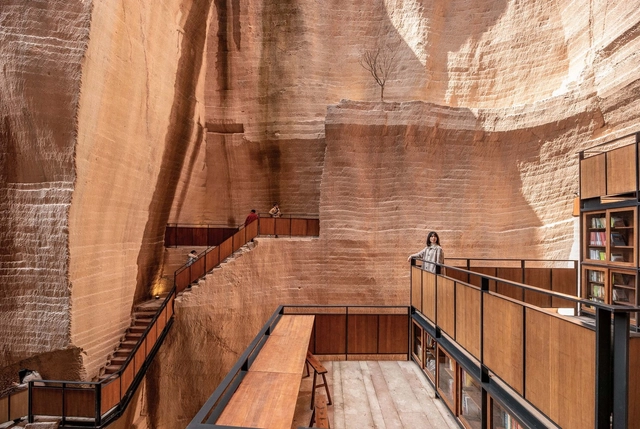
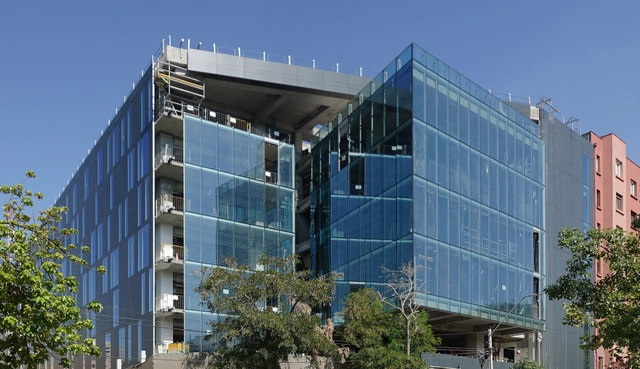
This year, we celebrate the fifteenth edition of our Obra del Año (Building of the Year) award: the highest recognition in the Spanish-speaking architectural world, with winners selected by public vote. Starting today, Thursday, March 9, you and all of our readers will be responsible for choosing the projects built during 2022 that inspired us and now faithfully represent the identity of our local contexts.
From April 20 to 30, Barcelona will once again host the Model Festival, an event that aims to transform the city into a platform for emerging architectural and design talent, as well as global thought leaders. Founded in 2022 by the Ajuntament de Barcelona and managed this year by the Fundació Mies van der Rohe, the festival aims to create a space of exploration and inspiration for all citizens, turning the city's streets into a laboratory for architectural and urban experimentation and dissemination. It will once again feature the artistic direction of Eva Franch i Gilabert, alongside a broad team of architects, curators, and more than 50 local institutions and organizations selected through an open call.
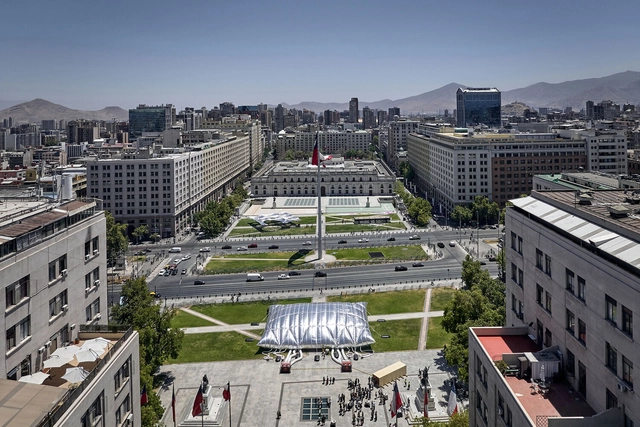
After the interruption of the 2019 edition due to the Social crisis in Chile, the Chilean Architecture Biennial returned to Santiago in January 2023 under the theme of 'Vulnerable Habitats', addressing issues such as "the emergence of the housing deficit in a context in which slums, informality, and illegal land takeovers have increased in recent years" and "the vulnerability and deterioration of public spaces; the urgent protection of tangible heritage; and environmental vulnerability in a context of a climate crisis."
From fire in prehistoric caves to public lighting in smart cities, illumination has constantly evolved alongside technological advancements. In recent years, however, it has begun to shift even more significantly in terms of design and functionality, driven by a growing awareness of its impact on the environment and human health.
"Traducciones: la utopía y el vacío performativo", seleccionado entre los mejores proyectos de estudiantes del 2021. Image Cortesía de Juan Manuel Sandoval Perdomo
The academic output of architecture in Ibero-America is vast and valuable; therefore, we believe it is necessary to launch a new call for entries to showcase the best final degree projects that have emerged from these programs.
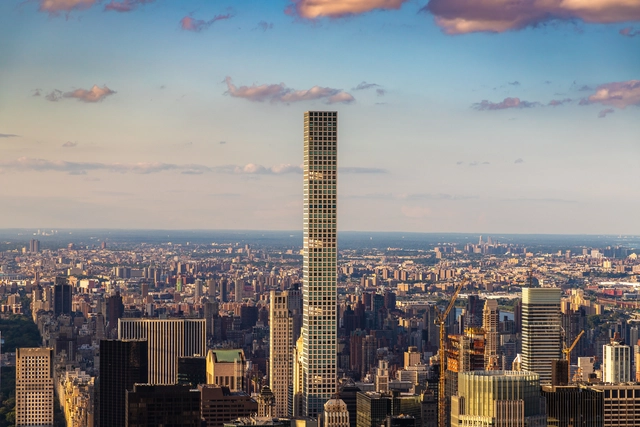
Panoramic view of 432 Park Avenue Condominiums, designed by Viñoly, in New York City, United States. Image via Shutterstock / Sergii Figurnyi
The world of architecture is mourning the death of the renowned Uruguayan-American architect, Rafael Viñoly, who passed away at the age of 78. With more than half a century of experience in the profession, Viñoly was known for his bold and imposing designs that were built in various cities around the world.
There is a clear reason why the circular economy is becoming increasingly central to debates on architecture and urbanism: the global population living in cities is projected to reach 68% by 2050. The environmental challenge will be significant as the demand for natural resources, such as materials and energy, increases, and circularity seems to offer key opportunities to mitigate this impact.
How can we move toward this more sustainable model in our cities? We posed this question to our readers. After reviewing a vast number of comments and opinions from construction professionals, students, and architecture enthusiasts alike, it was surprising to find such a strong consensus on policies and programs that promote responsible consumption and cross-sector collaboration.
While the architecture and construction industry has been advancing in new fields for years, it remains one of the most lagging in terms of automation and efficiency. And indeed, while many of these innovations never progress past the experimental stage, we face a sobering reality: the sector is one of the largest producers of pollutants and waste worldwide. How can we reverse this trend?
With 55% of the world's population living in cities, the concept of circular economy is increasingly prominent in discussions on architecture and urbanism. The goal of circularity is to reduce the environmental impact of the current production and consumption model through the efficient use of material resources and waste reduction. But how can this idea actually be applied to cities?
Francisco Cadau received the highest award at the recent Buenos Aires 2022 International Architecture Biennial. A recognition of his genuine trajectory that, from technique and materiality, consistently manages to position his favorite location on the map: The city of Campana on the edge of the Parana River in Argentina. His works in this place, such as House of Sieves or Damero Building, are references when it comes to thinking about project models where "construction and technology constitute the ideas themselves".
On February 15, 2023, the Living Places / Simon Architecture Prize 2023 award ceremony was held in Barcelona. An initiative by Simon, with the support of the Fundació Mies van der Rohe, the prize seeks to recognize excellence in architecture from the perspective of the inhabitant. In fact, "it distinguishes those works which strengthen the ability of adaptability of spaces to reach comfort and well-being to its residents".
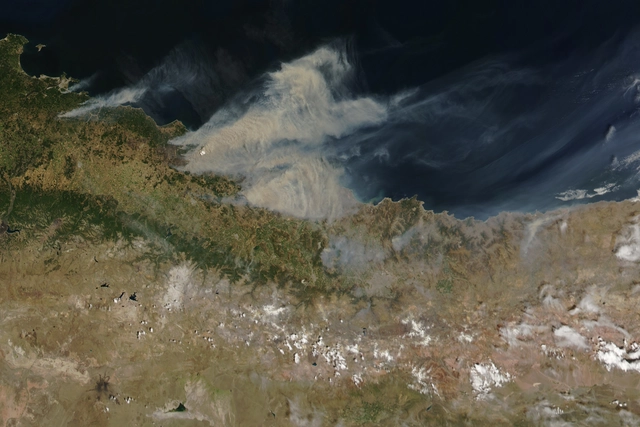
Satellite image of the wildfires in south-central Chile in 2017. Image via Wikimedia. Author: NASA images by Jeff Schmaltz, LANCE/EOSDIS Rapid Response. Public Domain
This February began with social media ablaze following wildfires in central and southern Chile. This has become a recurring concern in recent years due to their scale and frequency. To date, nearly 3,000 affected individuals and almost 1,100 destroyed homes have been reported across various areas of Ñuble, Biobío, and La Araucanía, according to data compiled by the news outlet La Tercera.
The concept of the circular economy is increasingly prominent in discussions on architecture and urbanism—especially as cities are home to around 55% of the world's population and continue to grow. The goal of circularity is to reduce the environmental impact of current production and consumption models through the efficient use of material resources and waste reduction. But how can this idea actually be implemented in cities?
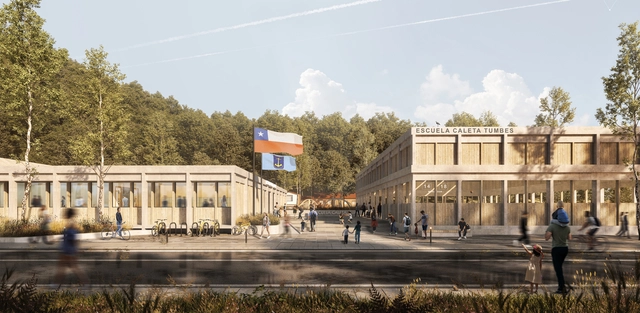
The community of Caleta Tumbes in the commune of Talcahuano, a few kilometers from Concepción, suffered severe damage from the 2010 Chile earthquake and tsunami. Nearly a decade later, the local municipality launched a public tender for the opportunity to rebuild one of the most affected structures, the F-495 School.
The winning project was designed by the firm 6280 Arquitectos, led by Pablo Arellano and Patricio Lopetegui. Below, the team describes the proposal in their own words.
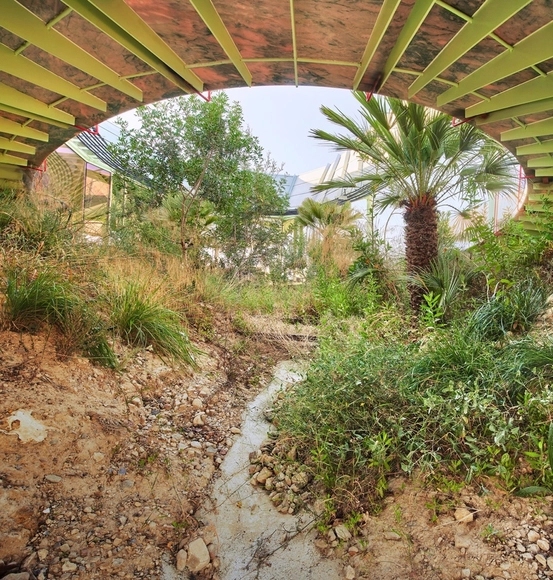
This February 2 marks another World Wetlands Day, held under the theme revitalize and restore degraded wetlands. The 2023 theme highlights that "if done correctly, these sites can offer the same benefits as the original natural wetland."
If the last pandemic year was a perfect occasion to reflect and debate on wellness and digitalization, this 2022 was a tremendous opportunity to deepen and comment on some other of the most pressing issues in architecture: from carbon neutral construction to the democratization of design. Along this line, with each of the different topics that ArchDaily develops each month, we asked an open question for you -our dear readers- to actively join in with the contribution of your experiences and knowledge.
After reading and compiling a huge number of messages received, from construction professionals, students, and architecture enthusiasts, it is time to present a summary of the main positions on each topic. Thank you very much for your opinions and we look forward to your comments for 2023!
Vicuña Mackenna 20 (VM20), located steps from the Baquedano Metro station in the heart of Santiago, is a new project by the University of Chile. It aims both to become a hub for artistic and cultural outreach and to impact the public space recovery plan in the capital's central area.
Chile is looking to reactivate and add new cable car projects to address urban mobility in its cities. At the end of January 2023, economist and politician Carlos Montes, the current Minister of Housing and Urban Development, alongside Carlos Ponce, director of the Santiago Metropolitan Park, officially presented the new Pío Nono Cable Car project. Currently under construction, this one-kilometer, three-station line—to be named Zoológico Nacional, Chile Nativo, and Plaza México—aims to provide an alternative transport option to the summit of San Cristóbal Hill.