Belén Maiztegui

BROWSE ALL FROM THIS AUTHOR HERE

Open House Buenos Aires 2020: Live Architecture Tours

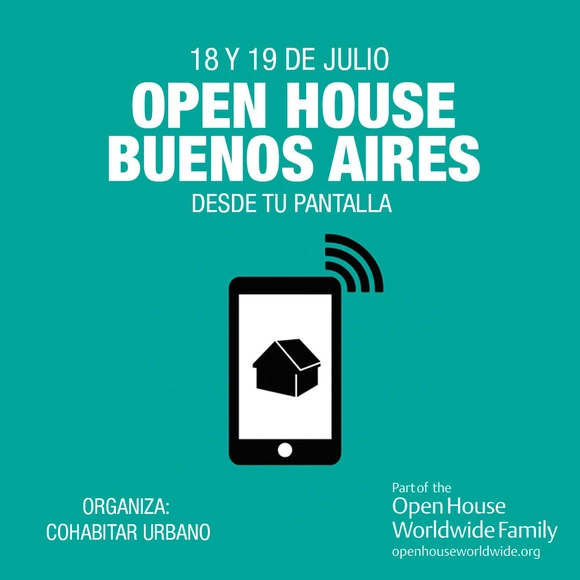
Starting Saturday, July 18, you can tour some of the works included in the Open House Buenos Aires catalog directly from your screen. The virtual festival will open the doors of 16 buildings across the city, guided via streaming by their architects and residents. From your screen, you will be able to discover, learn about, and reflect on various issues surrounding the city and its contemporary and historic heritage. The live tours will begin at 11:00 AM on the Open House YouTube channel and will follow a pre-established schedule.

Sound Maps of Latin America: Alternative Cartographies for Understanding the Territory

Subscriber Access | 

Mapas Sonoros is a project by the Usted no está aquí Archive that documents Latin American cities and towns in a non-traditional way. Functioning as a “map of maps,” the website compiles more than 40 independent sites with sound archives from countries such as Argentina, Bolivia, Brazil, Chile, Colombia, Costa Rica, Ecuador, Mexico, Peru, and Uruguay, creating a comprehensive log of georeferenced audio documents that offer an alternative way to map and understand Latin America.

La Carcova Educational Park: Universities Join Forces for a Collective Social Project in Argentina

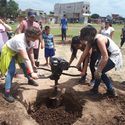
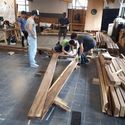
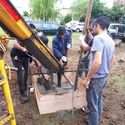
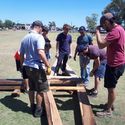
La Carcova Educational Park: Universities Join Forces for a Collective Social Project in Argentina - Image 1 of 4La Carcova Educational Park: Universities Join Forces for a Collective Social Project in Argentina - Image 2 of 4La Carcova Educational Park: Universities Join Forces for a Collective Social Project in Argentina - Image 3 of 4La Carcova Educational Park: Universities Join Forces for a Collective Social Project in Argentina - Image 4 of 4La Carcova Educational Park: Universities Join Forces for a Collective Social Project in Argentina - More Images+ 21

The La Carcova Educational Park project is defined as an ongoing, long-term collaborative effort, initiated by the creation of a university network united by a common goal in a specific territory with many unmet basic needs.

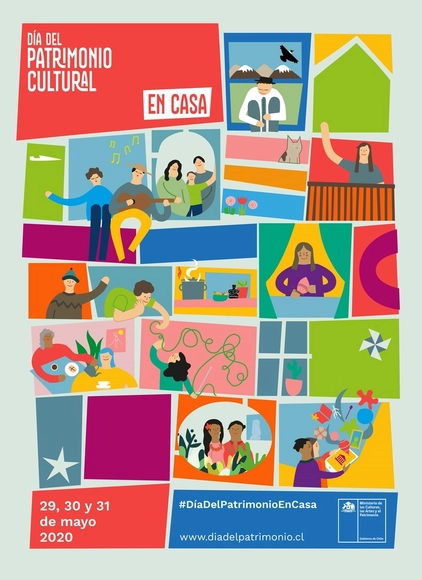
Heritage Day in Chile from home: the 2020 edition will be held virtually

Chile's Cultural Heritage Day is an annual event that offers the general public the opportunity to discover and enjoy the country's cultural, historical, and architectural heritage. Established in 1999, Cultural Heritage Day is a tradition spanning over 20 years, which in recent editions has brought together more than a million people across the country to share, learn, and marvel at the heritage and cultural activities organized specifically for the occasion.

Open House Buenos Aires 2020 will be held virtually

Open House Buenos Aires 2020 will be held virtually - Imagen 2 de 4
Cortesía de Open House Buenos Aires

The eighth edition of the international architecture festival in Buenos Aires will take place on the weekend of July 18 and 19, featuring a revamped format to adapt to the current situation and bring architecture to citizens during this atypical 2020. Virtually, Open House Buenos Aires will open the doors to 16 examples of the city's architecture, which will be presented through live streams conducted by their architects and those who inhabit their spaces. From your screen, you will be able to discover, learn about, and reflect on various themes surrounding the city and its contemporary and historical heritage.

InHouse: Open House Rosario offers virtual tours in response to COVID-19

InHouse: Open House Rosario offers virtual tours in response to COVID-19 - Imagem 1 de 4
Cortesía de Open House Rosario

Due to the widely known circumstances surrounding the COVID-19 virus, the annual Open House Rosario festival will not take place as originally planned. In compliance with government mandates for mandatory preventive social isolation, the non-profit organization OHACHE has decided to transform the 2020 edition of the event into "In House," offering virtual tours of buildings throughout the city of Rosario on May 9th and 10th. Thanks to the generosity of the residents whose homes were scheduled to open their doors for this edition, people from around the world will have the opportunity to explore these spaces through short videos and "step inside" for a while via Open House Rosario’s social media channels and YouTube.

Between Art and Architecture: A Pictorial Look at the Work of Lina Bo Bardi

Between Art and Architecture: A Pictorial Look at the Work of Lina Bo Bardi - Featured Image
Cortesía de Luciana Levinton

"Today, the digital era is profoundly transforming the ways in which architecture and its spaces are represented. Virtual models and digital renders offer a hyper-realistic representation, yet they should not be confused with reality; they are, almost always, a non-naive manipulation of it. How can we return to appreciating architecture in its message and transcendent poetics?" With this question, architect Martín Marcos—director of the Museum of Decorative Art in Buenos Aires—inaugurates the exhibition "After Architecture," an exploration by Luciana Levinton into the existing relationship between architectural and pictorial language, focused on the work of architect Lina Bo Bardi.

Chacarita Moderna: An exhibition exploring the history and styles of the Buenos Aires Cemetery

The Alianza Francesa de Buenos Aires invites you to explore the sixth pantheon of the Chacarita Cemetery through the exhibition Chacarita Moderna, developed by Atelier Escala and led by French architects Léa Namer and Elsa Dupont.

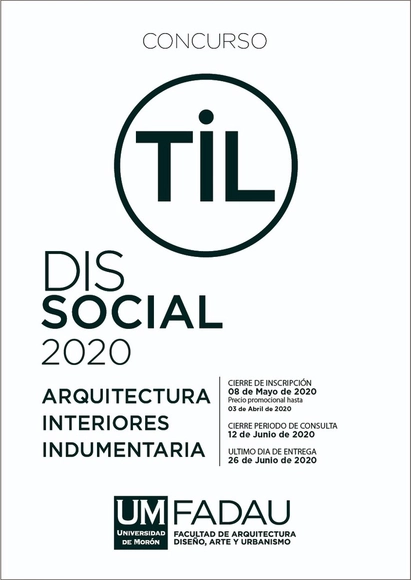
TiL 2020 Competition for architecture and design students from Latin America, Spain, Italy, and Portugal

The Latin American Integration Workshop (TiL), established in 2009 by the Faculty of Architecture, Design, Art, and Urbanism at the University of Morón with the support of over one hundred architecture schools in Latin America and partners in Spain, Italy, and Portugal, has opened the call for entries for the sixth edition of the TiL Competition, aimed at architecture and design students from around the world.

Open talks via streaming with David Barragán and Manuel Cervantes Céspedes

Open talks via streaming with David Barragán and Manuel Cervantes Céspedes - 2 的图像 4
Cortesía de UM FADAU

In anticipation of the Latin American Architecture Congress—an annual event hosted by the University of Morón that seeks to create a space for exchange and reflection among architecture professionals, academics, and students from across Latin America, Spain, and Portugal—the UMFADAU (Faculty of Architecture, Design, Art, and Urbanism at the University of Morón), in collaboration with its various departments and faculty, is hosting a series of open streaming lectures featuring prominent figures from the worlds of architecture and design.

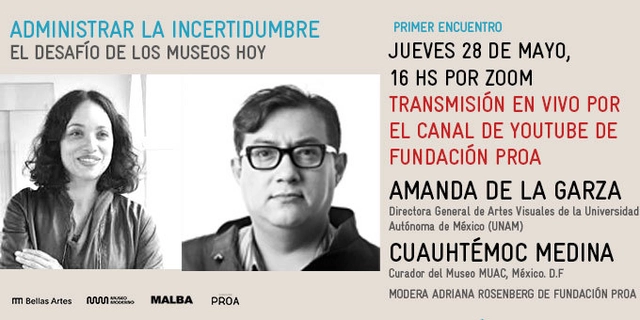
The challenge for museums today: virtual encounters to rethink cultural spaces

Aiming to open spaces for reflection on the perspectives of the cultural sector in the current context, four museums and institutions from Argentina—the Museo Nacional de Bellas Artes, the Museo de Arte Moderno de Buenos Aires, MALBA, and PROA—have joined forces to organize a series of virtual meetings featuring prominent cultural representatives from Latin America and the Spanish-speaking world.

Verdi: Showcasing Colombian Craftsmanship and Textile Tradition

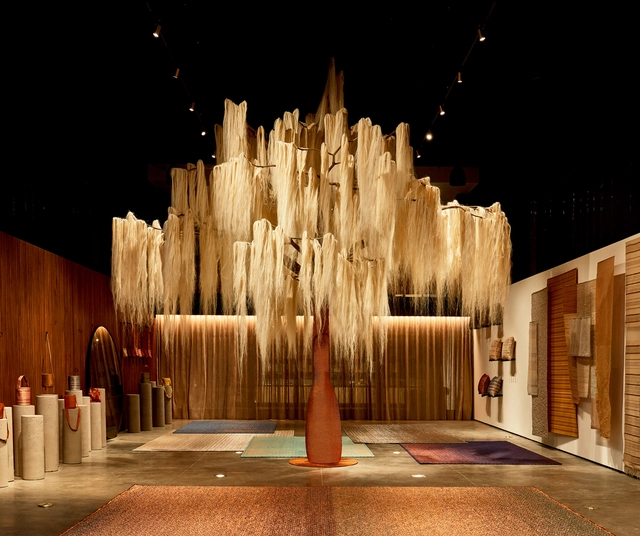
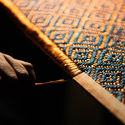
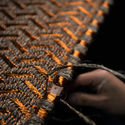
Verdi: Showcasing Colombian Craftsmanship and Textile Tradition - Imagen 1 de 4Verdi: Showcasing Colombian Craftsmanship and Textile Tradition - Imagen 2 de 4Verdi: Showcasing Colombian Craftsmanship and Textile Tradition - Imagen 3 de 4Verdi: Showcasing Colombian Craftsmanship and Textile Tradition - Imagen 4 de 4Verdi: Showcasing Colombian Craftsmanship and Textile Tradition - More Images+ 24

Built in collaboration with the architecture firm Colette Studio, the showroom for Verdi, a textile studio from Colombia, Bogotá, invites visitors to immerse themselves in a phenomenological experience that bridges textile tradition and contemporary industry. The exhibition space is not only designed with the studio's moving family and cultural legacy in mind, but also reflects the company's belief that exceptional, sustainable craftsmanship is one of today's ultimate luxuries.

8 Houses That Defined Modern Architecture in Argentina

Subscriber Access | 

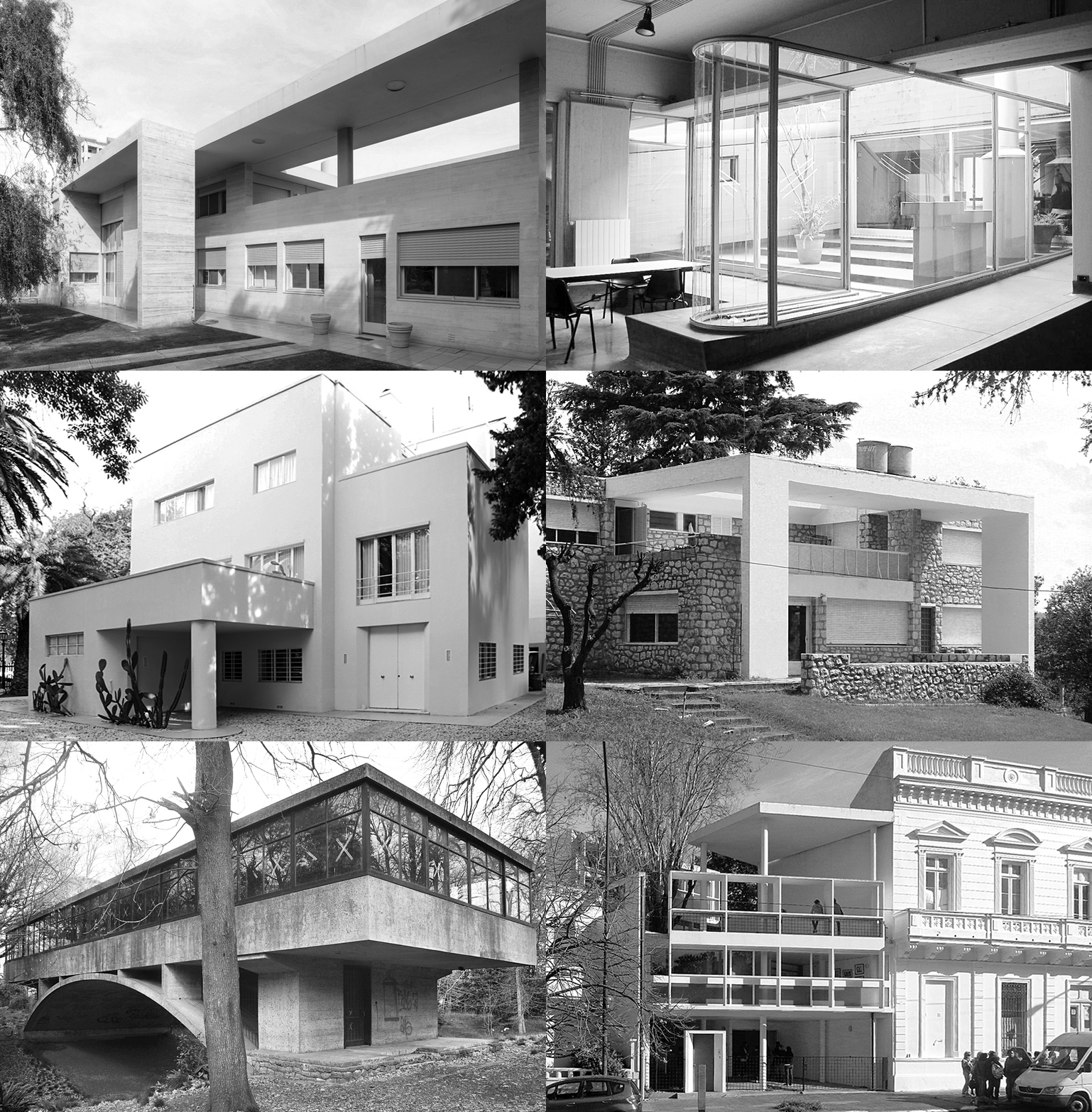
Modernism played an undeniable role in the renewal of architectural ideals, contributing a new attitude toward understanding new ways of living, construction techniques, and aesthetics, marking profound changes in the general perception of the world. In Argentina, while it is complex to define modern architectural production periodically, it is possible to mention some architects who began, starting in the 1920s, to engage with these ideas. The intellectual contributions and architectural creations of Alejandro Virasoro, Alberto Prebisch, Ernesto Vautier, Fermín Beretervide, Wladimiro Acosta, Alejo Martinez, Antonio and Carlos Vilar, Juan Kurchan, Jorge Ferrari Hardoy, Antonio Bonet, Abel López Chas, Eduardo Catalano, Eduardo Sacriste, and Amancio Williams, among others, often included original approaches associated with new modes of thought, manifesting an architecture resulting from the analysis of the local and regional conditions of their cities.

Integrating the Past: Contemporary Projects that Preserve Preexisting Façades

Subscriber Access | 

Operating in urban environments often requires us to make decisions regarding pre-existing structures. The increase in city density has directly impacted the availability of space for developing new and independent constructions, sparking debates about what stance to take toward built heritage that has become obsolete—either due to deterioration or because it no longer meets the functional needs of the contemporary population. In cases where buildings have seriously deteriorated or new projects differ greatly from the spatial possibilities an old building can offer, preserving only the façade—as an exterior envelope, almost like a superficial element—can be seen as a partial solution that allows for the preservation, in part, of the urban character of a structure if it holds some public or cultural value. The controversy arises, certainly, from the lack of relationship or connection between the transformed interior and the preserved exterior.

Cultural Centers, Museums, and Galleries: Ancient Buildings Transformed into Art Spaces in Latin America

Many buildings often fall into disuse due to our cities' constant economic, social, and technological changes. The programmatic inconsistency of current times demands great versatility and adaptability from our infrastructures, increasingly leading projects to become uninhabited, and left to abandonment and decay.

Next, we present a series of 20 Latin American projects in which old warehouses, homes, prisons, mills, and markets were recovered and transformed into Cultural Centers, Museums, and Galleries.

Public Waterfront Pools: 10 Aquatics Facilities Bordering Rivers and Oceans

Subscriber Access | 
Public Waterfront Pools: 10 Aquatics Facilities Bordering Rivers and Oceans  - Featured Image
Piscinas en Leça de Palmeira / Alvaro Siza. Image © Fernando Guerra | FG+SG

At first glance, building a pool right beside another body of water seems a little redundant. After all, why would someone choose to swim in a pool when they have a river or ocean to enjoy? However, for people with limited mobility and younger more inexperienced swimmers, natural bodies of water can prove both daunting and dangerous. Pools not only provide a controlled, secure space for them to enjoy aquatic activities, they also provide a connection with the surrounding landscape.

Beersheba: Brutalist Architecture in the Middle of the Desert

Subscriber Access | 
Beersheba: Brutalist Architecture in the Middle of the Desert - Image 15 of 4
Negev Brigade Monument - Dani Karavan (1963-1968). Image © Stefano Perego

Located 108 kilometers to the south of Tel Aviv, Beersheba (Be'er Sheva) is one of Israel's oldest cities. Although in existence since biblical times, military campaigns and occupations have seen it destroyed and rebuilt throughout the centuries, resulting in the juxtaposition of various time periods and cultures that can be seen throughout the city. One of Beersheba's principal transformations happened during the population boom of the 1950s sparked by the formation of the State of Israel in 1948. To keep up with the need for housing, the government rebuilt and expanded the city, which soon transformed from a small military outpost of 4,000 people to a vibrant urban center in the middle of the Negev Desert.

Beersheba: Brutalist Architecture in the Middle of the Desert - Featured ImageBeersheba: Brutalist Architecture in the Middle of the Desert - Image 1 of 4Beersheba: Brutalist Architecture in the Middle of the Desert - Image 2 of 4Beersheba: Brutalist Architecture in the Middle of the Desert - Image 3 of 4Beersheba: Brutalist Architecture in the Middle of the Desert - More Images+ 11

Courtyards in Peruvian Houses: 10 Projects and their Floor Plans

Subscriber Access | 

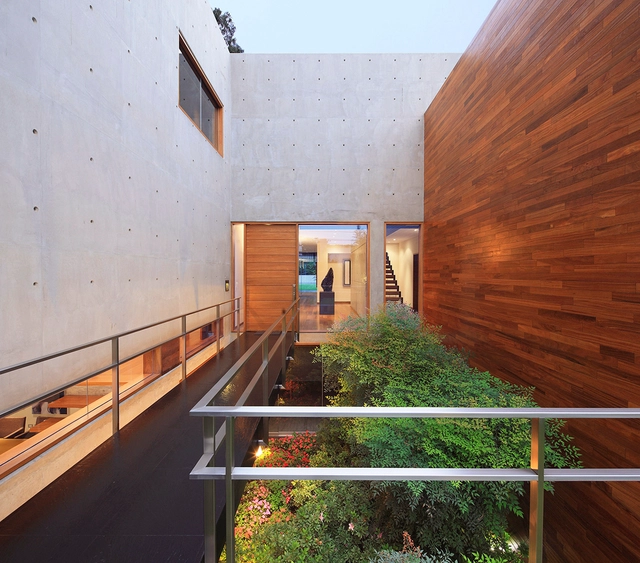
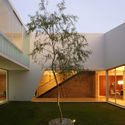
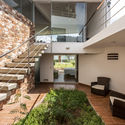
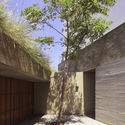
With the exception of some areas, within the three principal regions of Peru--coastal, mountain, and rainforest--the climate is characterized as tropical or subtropical and the differences in summer and winter temperatures is minimal, rarely reaching beyond 15 °C and 27 °C. This mild climate has thinned the line between exterior and interior spaces, a fact evident in the region's architecture. 

Courtyards in Peruvian Houses: 10 Projects and their Floor Plans - Image 1 of 4Courtyards in Peruvian Houses: 10 Projects and their Floor Plans - Image 2 of 4Courtyards in Peruvian Houses: 10 Projects and their Floor Plans - Image 3 of 4Courtyards in Peruvian Houses: 10 Projects and their Floor Plans - Image 4 of 4Courtyards in Peruvian Houses: 10 Projects and their Floor Plans - More Images+ 16