At a time when we only have room for immediate priorities, many designers in our discipline work detached from the actual context where their projects will be built. Yet, some still dedicate the time and passion to experience these realities firsthand and build hand-in-hand with the users.
Below, you can explore the interviews conducted with these renowned figures of the Colombian architectural scene, several of whom were winners or received honorable mentions at the XXVII BICAU.
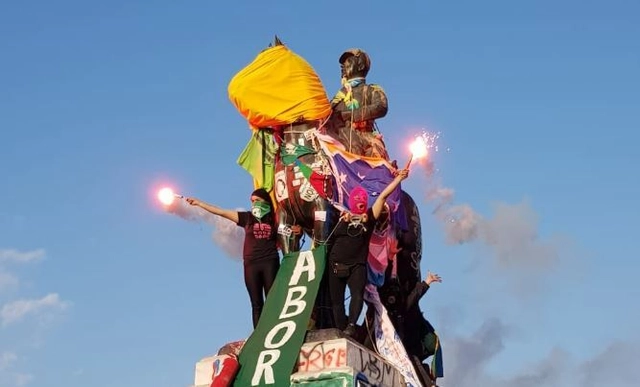
For over 80 days of protest, our streets and buildings have been covered daily in slogans, posters, illustrations, and an endless array of visual material referencing the social demands of a country that claims to have awakened from a 30-year slumber. Meanwhile, public monuments throughout Chile are being tagged, altered, destroyed, or removed from their original sites, becoming a primary target for protesters—or, as the newspaper El Mercurio1 puts it, for “vandals.”
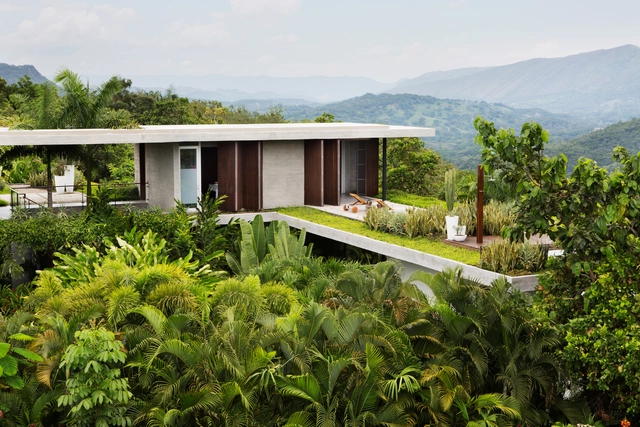
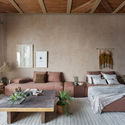
Colombia boasts an immense variety of thermal zones that create breathtaking landscapes and dreamlike natural environments. Its flora and fauna vary distinctly depending on region, altitude, and humidity. For architectural practices designing Colombian homes, the natural context is a constant source of inspiration, ranging from incorporating vegetation as interior architectural elements to framing nearby landscapes. When designing spatial perception—whether from within or without—nature is an undeniable component of these projects.
1:1 Proyectos sobre los territorios del Perú is a book by Peter Seinfeld and Felipe Ferrer that summarizes their students' work over more than seven years.
https://www.archdaily.com/1123873/student-projects-at-a-1-1-scale-to-learn-about-the-different-territories-of-peruArchDaily Team
Tools developed for woodworking, along with new production, milling, and treatment techniques, have gradually yielded highly diverse, high-quality products in various sizes, strengths, tones, shapes, and colors. These advancements have allowed wood, as a resource, to meet a wide range of construction needs, serving as structural support, building envelopes, cladding, or furniture in a vast number of architectural projects.
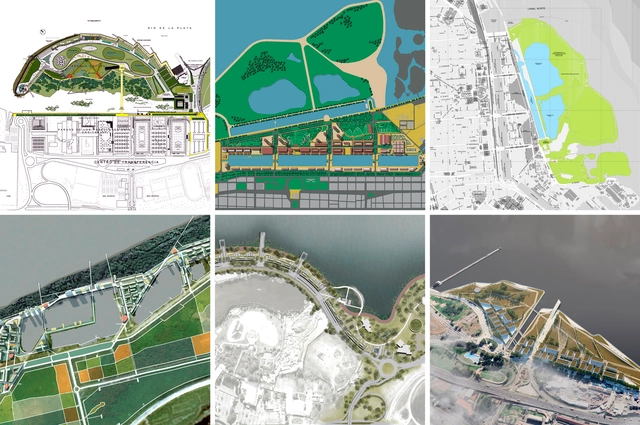
The recent controversy surrounding a bill that would permit the privatization and subsequent development of reclaimed waterfront land along the Río de la Plata in Buenos Aires, Argentina, has prompted renewed engagement with metropolitan infrastructure and regional planning issues. It has also sparked reflection on the role of society in urban planning, reopening debates over the transformation of the city's waterfront.
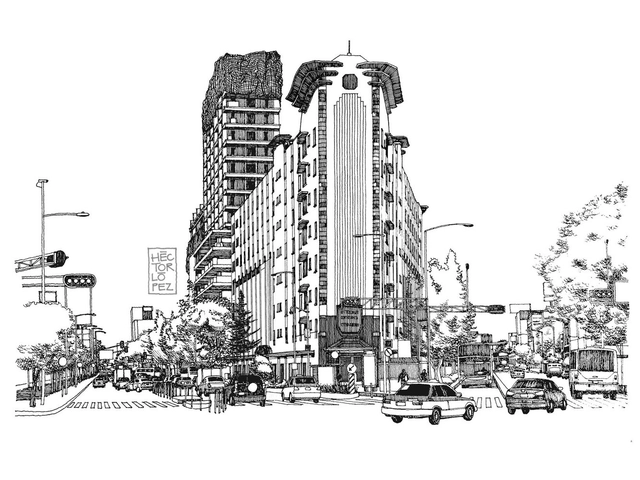
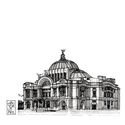
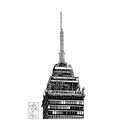
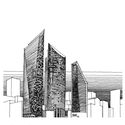
Croquis CDMX is an initiative led by Héctor López, founded eight years ago to foster and strengthen the connections between the eye, the brain, and the hand. The project seeks to portray life in Mexico City through freehand sketches. While architectural education is geared toward training professionals to design and construct buildings, Héctor—who studied at the Faculty of Architecture of the National Autonomous University of Mexico—views university education as “the axis of all elements: I already knew how to draw, and in school I became interested in construction, history, and theory. That was where drawing became disciplined. I would encourage students to draw, regardless of whether they think they can or not, because you discover things that you don't understand when drawing with software.”
Without a doubt, 2020 was a year defined by transformation and new paradigms. For the first time in more than a century since the Spanish Flu, we faced a pandemic that drove us into complete isolation inside our homes. Within the field of interior design, lockdowns forced millions of people worldwide to rethink their personal relationship with the home and its various spaces. In Brazil, despite a surge in renovations and furniture sales, the segment faced initial downturns. Nevertheless, the construction sector's Gross Domestic Product (GDP) is projected to grow by 3.8% in 2021, according to data from the Civil Construction Industry Syndicate (Sinduscon-SP) and the Getulio Vargas Foundation (FGV) published on the Época Negócios website.
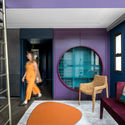
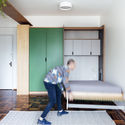
Analyzing the Brazilian interior design projects published in recent months, combined with our daily curatorial experience, we have mapped out 22 trends pointing toward the future of interior design in Brazil for 2021 and beyond. To provide a coherent overview, we have divided our selection into five major conceptual categories: Colors; Finishes and Surfaces; Spatial Integration; Efficiency and Space Saving; and Repurposed Construction Materials in Interiors. Read on below:
In 2018, a flexible and ephemeral space was erected in Mexico City's Alameda Central, demonstrating the luminosity and plastic versatility of joining 2,500 water jugs to form a conical blue oasis. Today, this pavilion is located within the Huerto Urbano Roma Verde, where it has hosted various events and activities, shedding the transience and impermanence that originally defined its essence.
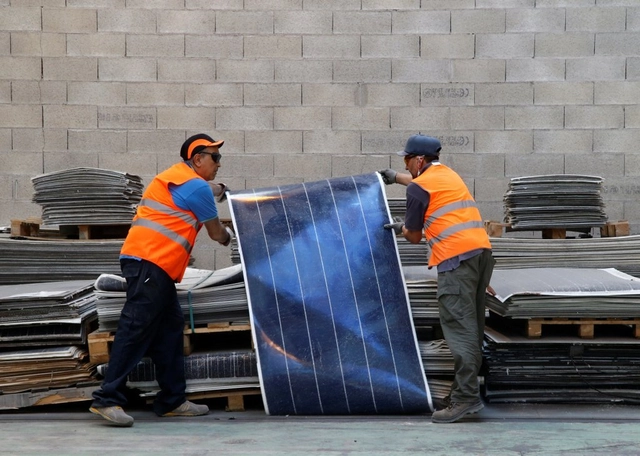
Photo: Jean-Paul Pelissier | Reuters. Via CicloVivo
Whenever we think of solar panels, the concept of sustainability immediately comes to mind. They are undoubtedly an effective solution for generating renewable energy; however, what few people realize is that solar panels are incredibly difficult to recycle. While this drawback should not discourage their adoption in buildings and solar power plants, it underscores that sustainability must remain a constant focus for these products, even after they stop working.
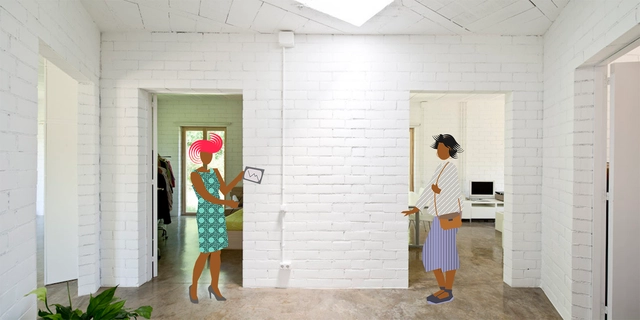
Have you ever had to convince your friends or family that an exposed brick wall can be more interesting than a plastered surface painted white? Or that exposed building systems can offer major advantages when it comes to maintenance? These are recurring scenarios in the professional lives of architects and design firms.
Vacío is a temporary intervention that seeks to redefine the boundaries and experience of the space in which it is located. It is crucial to understand the environmental impact of ephemeral projects. To construct this void, we used four floating curtains made of repurposed sheets of paper collected from other architecture firms, bathed in indigo to erase the drawings, texts, and prints of their previous life. The installation's lightness allows the airflow to constantly reshape the defined geometry of the prism. Inside, the space mutates and interacts with visitors, almost compelling them to move as the floating sheets seem to breathe.
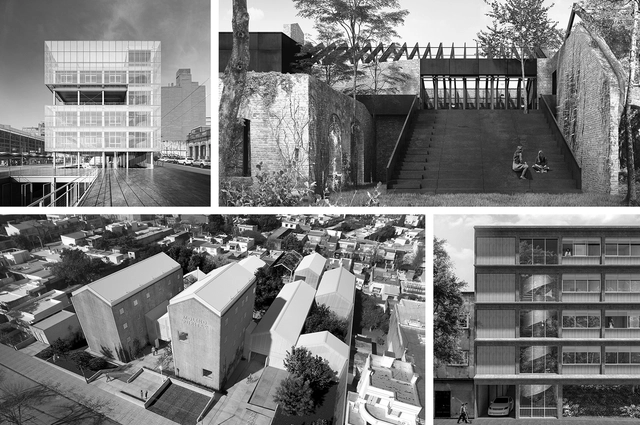
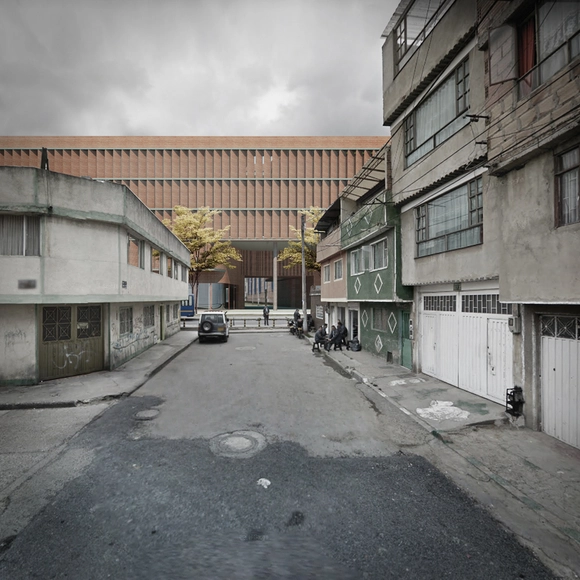
The year 2019 was one of the most prolific for public design competitions in Bogotá, particularly within the education sector. Recently, the results of the public architectural preliminary design competition for the Hipotecho School were announced, with the winning proposal submitted by the joint team of AR-AR (Martínez Arquitectura) + Fiallo Atelier + MEC arquitectura.
Cortesía de Facultad de Arquitectura y Diseño de la Pontificia Universidad Javeriana
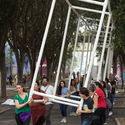
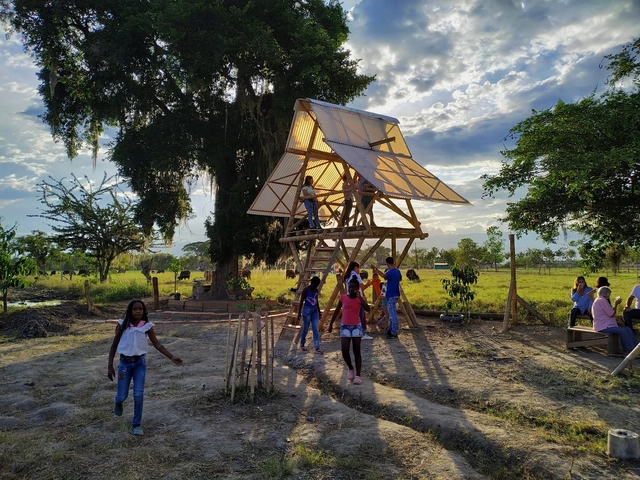
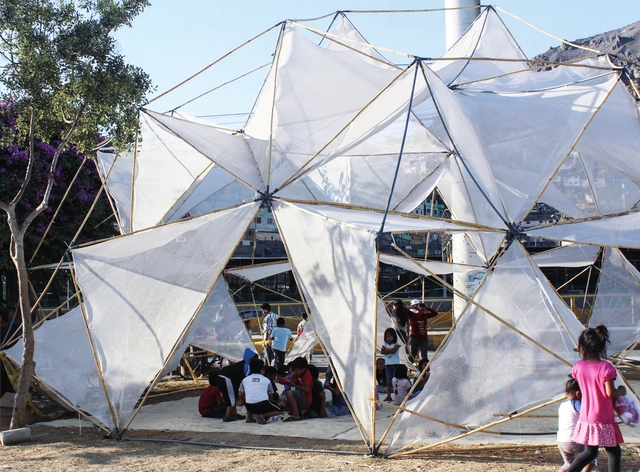
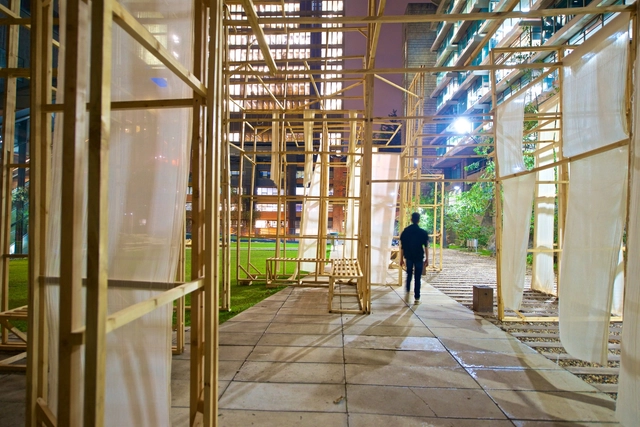
Academic architectural practice must push students and faculty toward constant adaptation and exploration. First-semester students at the Pontificia Universidad Javeriana built an intervention of ephemeral architecture using wood as a structural material in the arts building (prior to the state of emergency). This gave future architects the academic experience of hands-on construction during their very first semester in the department.
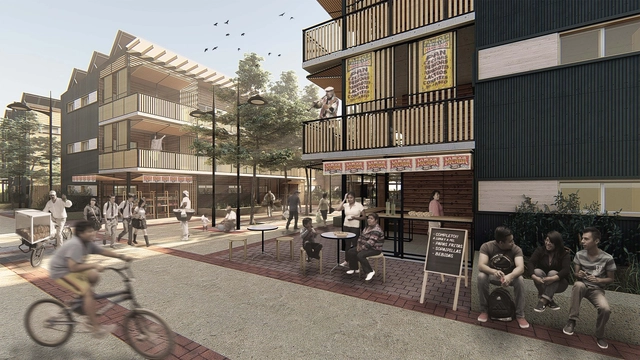
Designed and built by the team from Universidad Mayor, a sustainable social housing project featuring productive and commercial spaces was named the winner of Construye Solar 2019, the third edition of the Chilean competition organized by Ruta Solar.
https://www.archdaily.com/1123568/discover-the-winning-sustainable-social-housing-projects-of-construye-solar-2019ArchDaily Team
Peripheria Films shares a documentary that explores "the exploitation of territory, the private occupation of public space, the representation and construction of identity through postcards and souvenirs, the conversion of architectural heritage into a product and the city into a brand, and the touristification of historic centers."
Podcasts are a relatively recent medium in Brazil, but they are on the rise and growing rapidly in popularity. A survey by the Deezer platform showed that podcast consumption in Brazil grew by 67% in 2019. Far from a passing fad, this format is being used for entertainment, information, and even as a pedagogical resource for educators.
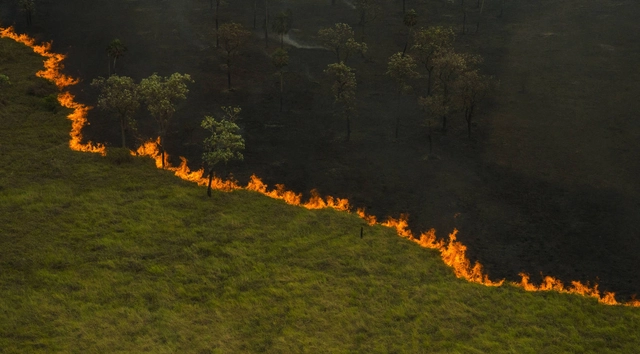
Among the wide variety of topics available, many shows have fostered debates about the environment, especially regarding the Amazon—considered one of humanity's most valuable natural heritages and the largest natural reserve on the planet.
To showcase Uruguay's valuable academic output, we launched an open call inviting readers in the country to submit their final thesis projects.
Out of a total of 65 submissions, the editorial team—comprising Fabian Dejtiar (Managing Editor of ArchDaily en Español); Mónica Arellano (Editor, ArchDaily México); Santiago Baraya (Editor, ArchDaily Colombia); and Belén Maiztegui (Editor, ArchDaily Argentina)—selected six. The highlighted projects are those that addressed specific challenges, their chosen form, and their representation through critical, austere, and efficient thinking. We valued proposals that not only delivered the best possible architecture through a simple design suited to its context, program, and users, but also paid close attention to human scale, mediation, and new ways of approaching architecture in cities.
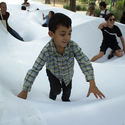
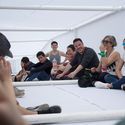
Horizontal Monuments is a participatory intervention carried out at Plaza Juárez in Guadalajara, Mexico. The project began with the construction of a 1:1 scale replica of the obelisk located in the plaza, placed on the ground and shifting its materiality, turning this monument into a malleable and accessible object. This shift sparked a central question: what should be done with it? This question triggered a series of discussions that transformed into actions; students and local community members gathered to give voice and form to the ideas emerging from the transformation of the object. The work was conceived as an educational project to imagine alternative models of monuments capable of addressing the demands and possibilities of specific sites. Its development led to a series of collective actions described below.
https://www.archdaily.com/1123752/horizontal-monuments-a-participatory-intervention-in-guadalajara-mexicoArchDaily Team
Students from the Barcelona School of Architecture are organizing a live-streamed architecture lecture series, featuring both local and international guests, to reflect on quarantine, confinement, freedom, repression, and viruses.
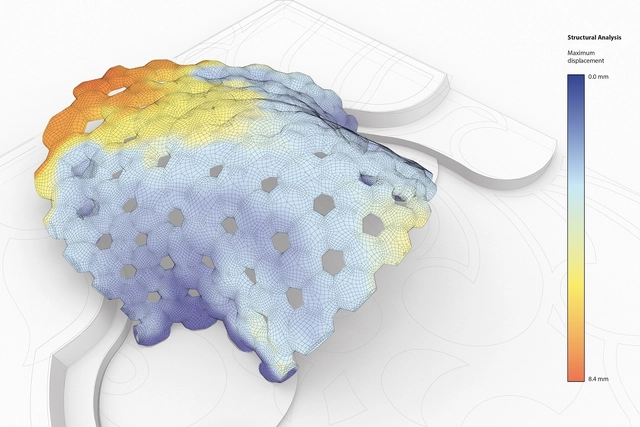
Structural analysis. Image Courtesy of Oliver Krieg
When we think of architectural visualization, sketches, drawings, and 3D renderings usually come to mind. This association is natural, as "visualization" is typically equated with imagining a project before it is built—whether to validate aesthetic and functional decisions or to communicate concepts to clients unfamiliar with technical drawings. However, beyond superficial elements like materials, layouts, textures, and colors, architects must also address highly technical, invisible factors that directly impact a building's performance.
We may still have a long way to go when it comes to addressing the diversity of flora and fauna in urban habitats, yet it is incredible how fast, easy—and even fun—the architecture that makes this possible can be.
In practice, how are we promoting spaces for animals and plants in our cities?
The following article proposes rethinking architecture in social housing in Colombia. Natalia Carrero Rojas and Pablo González delve into the subject as educators and through their practice 57Uno, where they constantly balance high-quality housing with real estate viability.
https://www.archdaily.com/1123726/57uno-strategies-for-the-design-of-sustainable-social-housing-in-colombiaNatalia Carrero Rojas y Pablo González
_13.46.17.jpg?1606762006&format=webp&width=640&height=580)








Palma_Vacío-8.jpg?1607984631 "© Luis Young")


.jpg?1600432189 "© Shutterstock")