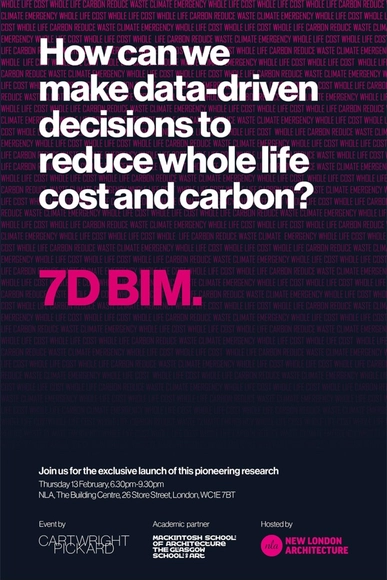
As we embark on a new decade, discussions surrounding the sustainability and longevity of our buildings have reached fever pitch, particularly within the context of the UK’s commitment to a 2050 target of carbon neutrality and a 33% reduction in whole life cost by 2025.
On February 11, join d.talks for a conversation about storytelling and inclusion. At Let’s Talk About . . . Togetherness, our guest speakers will highlight the importance of stories in community building: Passed down over time, stories help shape people’s relationship to a place, to build community upon understanding and empathy . . . but, What happens when stories go missing, and some perspectives remain under the radar?
We connect with our built environment through stories, most of which are passed down over time. Join us on November 19 for an exploration on how stories go missing, or how some perspectives remain below the radar. Community is built upon understanding and empathy. What changes as we bring different stories together?
Los Angeles is a privatized city that has historically lacked public open space, ranking 66th in the country. Within its 4,751 square miles sprawl, there are too few places for people to congregate and recreate, especially along light rail and bus rapid transit lines, which offer a new way to experience the city.
Join design talks (d.talks) in a discussion on the role of design in an often overlooked topic: waste. In two generations, we’ve shifted from refillable glass bottles to single-use packaging. Serial replacement has become invisible. Our city has reduced tonnes of waste entering the landfill with recycling and composting options. If we envisioned a future of zero-waste, what’s left to be done?
A public event at Harvard GSD examines the lower sky as a site of mobility
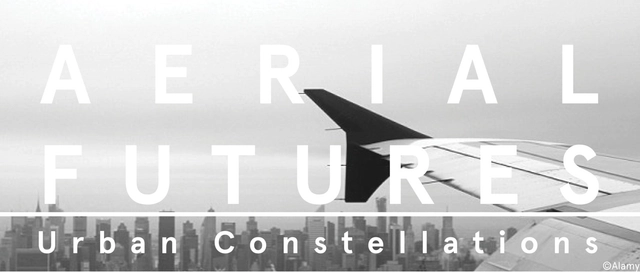
Increasing congestion and advances in autonomous technology are set to transform how we move around our cities. Many are now looking to the sky — the third dimension — as an expansive space for new kinds of mobility. Autonomous flying vehicles, such as cargo drones and flying taxis, have the capacity to disrupt how we move goods and passengers around urban space. Responding to these real-world changes, AERIAL FUTURES: The Third Dimension examines Urban Air Mobility (UAM), asking how scalable and on-demand UAM models could reduce road traffic, pollution, accidents and the strain on existing public transport networks. Within these opportunities are also challenges to overcome: noise, community acceptance, safety, cyber security and seamless integration with existing aircraft operations.
A public event will be held to kick off World Space Week at AIA Houston on the evening of Thursday, Oct 4 as part of the AERIAL FUTURES: The Next Frontier think tank taking place in Houston between Oct 4-5, 2018.
The MAK Center for Art and Architecture in Los Angeles, in partnership with Skidmore, Owings & Merrill LLP (SOM), is hosting a panel discussion on the intersection of art, engineering, and architecture. Set in the beautiful outdoor courtyard of the historic Schindler House in West Hollywood, the event brings together a variety of experts to discuss historical and contemporary positions regarding this theme.
Multiple-airport cities present new challenges for passengers and urban dwellers who often struggle to navigate their aerial infrastructure. The fragmentation of airports in a single city, frequently owned and operated by different governing bodies, can lead to unpredictable and even confusing experiences. With seven airports in its metro area, New York City offers a perfect case study to reimagine airports as a choreographed urban ecosystem, which relies as much on architecture and urban planning as it does on technology and data-driven design. A panel of experts will discuss challenges and opportunities for the future of New York City’s aerial infrastructure, drawing from the think tank’s focus on urban design and digital interfaces.
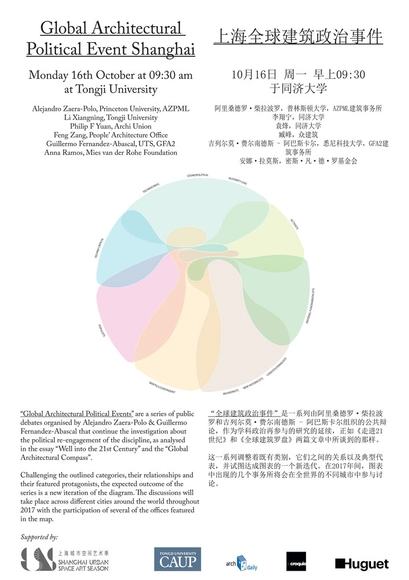
“Global Architectural Political Events” are a series of public debates organised by Alejandro Zaera-Polo & Guillermo Fernandez-Abascal that continue the investigation about the political re-engagement of the discipline, as analysed in the essay “Well into the 21st Century” and the “Global Architectural Compass”.
With Thom Mayne and Wolf D. Prix, on the occasion of the exhibition Houston: Genetic City. Envisioning a Future Post-Industry, Post-Oil, Post-Sprawl at Aedes Architecture Forum.
The panel discussion takes a close look at the specific urban condition, typology and development of the City of Houston. Together with Pritzker Prize-winning architect Thom Mayne of Morphosis and Wolf D. Prix of Coop Himmelb(l)au – both visionaries and provocateurs in the field of architecture and urbanism – the panel critically discusses Houston’s unique evolving urban form. In addition to the soon to be third most populous and most sprawling city in the US, Houston also completely lacks zoning regulations and thereby allows for unusual development patterns that can react quickly to changing market conditions. This opens up immense opportunities beyond conventional city planning for the urban revival of Houston, as much as it puts the city at the stake of commercial developers. The panel aims to explore questions raised by the specific regional urban condition of Houston also against the backdrop of a wider global narrative in contemporary urban planning and renewal.
Turncoats is a series of punchy debates that aims to turn the typical architectural discussion format on its head. Founded on the premise that mainstream architectural discourse is often so boringly well-mannered as to be “like watching dog owners compliment each other’s pooches,” Turncoats aims to ditch the platitudes and archi-jargon for a punchy, playful and provocative exchange of ideas that allows people to speak more freely and take more risks. Conceived in London and operating now in multiple cities, Turncoats New York launches with a bang on 13 June, addressing the topic Buildings Don’t Matter.
What is the place of the museum in the modern city? What role does architecture play? How can these buildings be effectively interpreted?
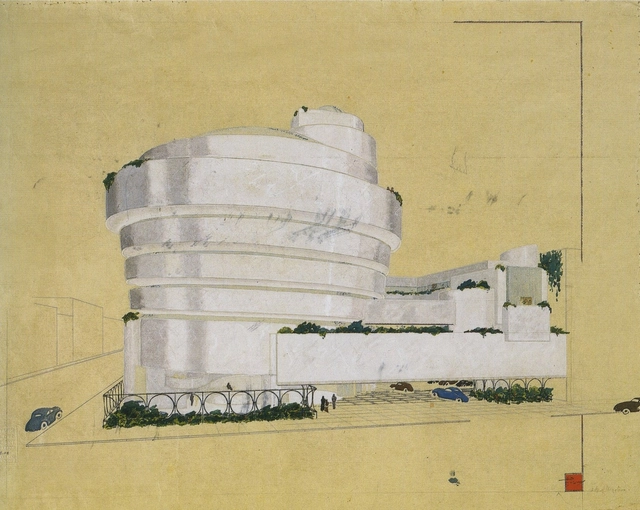
Frank Lloyd Wright’s design for the Guggenheim Museum in Manhattan broke with all existing conventions, setting a new standard for the postwar art museum and, together with the Museum of Modern Art, firmly establishing the city of New York as the cultural capital of the 20th century. A decade later, the significance of this new architectural genre was not lost on Georges Pompidou when he commissioned the cultural center that would eventually carry his name—and launch the successful careers of its architects, Renzo Piano and Richard Rogers—hoping that it would position Paris as New York’s cultural rival.
In celebration of Women's History Month, The National Building Museum features a special program, Architects Across Generations. Beverly Willis, artist, architecture and philanthropist, joins architect and CEO of Marshall Moya Design, Paola Moya, for a cross-generational conversation on how architecture has evolved in the past half-century, what lies ahead, and the pressing issues practicing architects and design entrepreneurs face today. Aileen Kwun, author of Twenty over Eighty: Conversations on a Lifetime in Architecture and Design, moderates. On the heels of global Women's Marches, the achievements of women are top of mind, especially during Women's History Month. Here, women who represent two different generations speak to inspirations, challenges and opportunities.
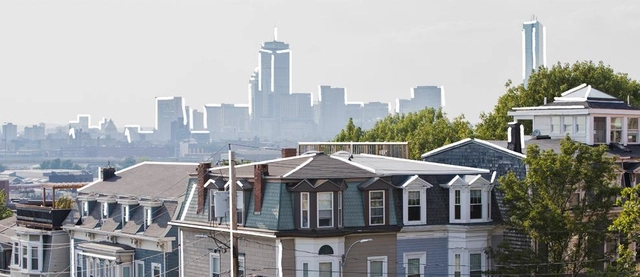
Image: South Boston, modified. Credit: Mike Lawrie.
How can market-rate housing be built that meets the needs of real Bostonians? Without abandoning the small, historic scale of Boston neighborhoods, how can new housing projects both optimize construction costs and meet unit goals for a growing population?