UIA (Urban Intensity Architect) Container Housing by SH Corporation. Photo by: Kyungsub Shin
The expansion of non-stop processes of twenty-first-century capitalism has accelerated the proliferation of digital sharing platforms for the exchange of goods, information, and spaces. Today, apartments, cars, work-spaces, and all kinds of services can be exchanged, opening the possibilities for new understandings of the city. But the promises of the so-called “sharing economies” come along with controversies around the unequal consequences of such a process.
Completed in January 1977, Richard Rogers’s and Renzo Piano’s Centre Georges Pompidou was initially received skeptically by critics, but the public soon embraced Beaubourg as an essential—and well loved—Paris institution. Francesco Dal Co’s lively intellectual biography, Centre Pompidou: Renzo Piano, Richard Rogers, and the Making of a Modern Monument (Nov. 29, Yale University Press) explores the Pompidou’s history and the reasons for its success, from its genesis as a politically calculated response to the turbulent 1968 student protests to the role played by architects in its construction, as well as the historical influences and the engineering solutions that inform its design. As Dal Co reveals, a key reason for the Centre Pompidou’s lasting significance lies in its ability to channel architectural memory, connecting it powerfully to Paris’s historic urban fabric.
Contemporary Aerial View of Oficina Maria Elena. Chile. Photo by Ignacio Infante.
Transnational projects for resource extraction have motivated the development of massive infrastructural corridors. The strategic siting of mining towns, petrochemical encampments, and industrial developments aims to integrate vast geographical and political entities. These experiments promise to advance economic development on a national scale, but their influence on regional and urban constructs tests the agency of architecture and planning at smaller scales.
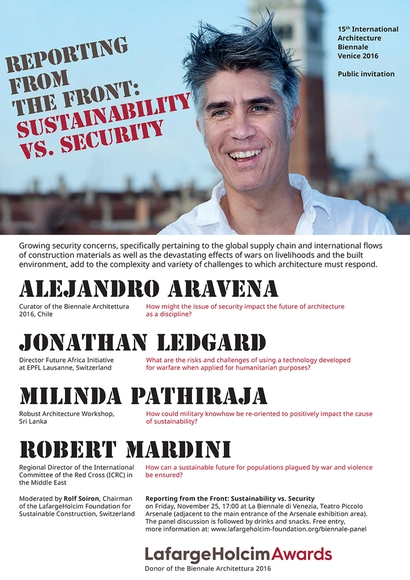
Based on his experience in curating the 15th International Architecture Exhibition of La Biennale di Venezia 2016 in Venice, the Chilean architect Alejandro Aravena inspired the LafargeHolcim Foundation for Sustainable Construction to organize a debate on sustainability and security. Framed as one of this year Architecture Biennale’s discussions, the event will foreground topics that were raised in the context of the exhibition “Reporting from the Front” and expose them to “real life reports” from the forefront of architecture and related disciplines.
Curious to know how AR is used for more than just gaming? Join Augment, Blippar and Samsung Accelerator Wednesday, November 2nd for a panel discussion on AR Beyond Pokemon Go!
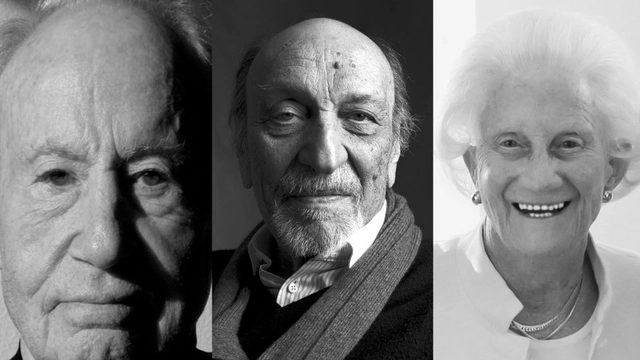
Chee Pearlman, journalist, conference creator, and design curator at TED Conferences moderates a conversation between design critic Ralph Caplan, graphic designer Milton Glaser, and architect Beverly Willis on the heritage of the design profession and its eventual legacy within the ecological, social, and service spheres, at the Solomon R. Guggenheim Museum.
Join us at Midori House in London’s Marylebone for this live edition of Section D, Monocle 24’s weekly design radio show. Opinionated guests from the worlds of typography, graphic design, journalism and architecture join Section D host Josh Fehnert to reflect on their careers and London’s status as a design city and offer some resolution on that age-old question: "What is good design?"
Augmented reality has always been said to become the monster of the two realities between VR and AR, with the caveat that AR had to navigate adoption. Surprisingly, it’s gone from a distant innovation to being used frequently on a daily basis.
If you’ve seen someone eagerly glued to their smartphone while walking, with airy music playing in the background, then they’re likely playing Pokemon Go. The app that launched this summer has everyone using their phones like metal detectors and the fandom is growing by the second.
Join us for Harnessing the Full Potential of Modern Dimensional Stone: An evening of tapas and education about Stone from Spain!
Since man first figured out how to dig a hole, we have been harvesting the natural treasures of the earth and using stone for our buildings and arts. With such a long history, it’s easy to forget how much research, innovation and technology infuses the stone industry - breathing new life into the possibilities provided by this material that is millions of years old.
Videos
San Mateo Wastewater Treatment Plant Competition Finalist - Perkins+Will San Francisco
Our urban environment is in constant flux brought on by changes in economies and climate change. Issues of adaptation and resiliency are increasingly more relevant to all design disciplines. Jim Wasley and Jennifer Cooper-Sabo will discuss their design projects and research related to managing stormwater, revitalizing brownfields, and assessing climate change risk and adaptation in the Great Lakes and Bay Area regions.
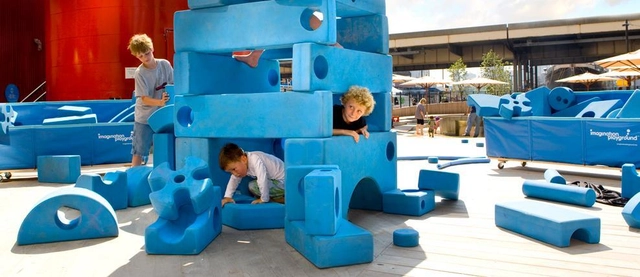
Image: Imagination Playground, New York, the Rockwell Group. Photo credit: Chris Amaral.
Kick start your playful summer with a panel discussion about the impact of design on childhood development! Inspired by BSA Space’s new exhibition, Extraordinary Playscapes, an array of unique panelists will consider ways to prevent barriers of play in urban areas. The conversation will delve into how play is related to design, psychology, parenting, architecture, and development while highlighting the role of designers in a more playful future. After the talk, participants will enjoy light refreshments and exclusive access to the exhibition.
Part II: Tuesday, July 19th Storefront for Art and Architecture 97 Kenmare Street, New York
Moderated by Eva Franch i Gilabert and Beatrice Galilee
Manifesto Series: In Our Time – The Sharing Movement, is a two-part series presented by Storefront for Art and Architecture and The Metropolitan Museum of Art. How will today’s sharing movement affect the way we work, move, build, and produce new ideas and knowledge?
On July 25, 1916, New York City enacted the nation’s first comprehensive zoning code. Intended as an innovative tool to guide urban growth, the law continues to play a central role in shaping our city a century later. On the centenial anniversary of the first Zoning Resolution, the Museum of the City of New York and The Municipal Art Society co-present an in-depth examination of the law – with an eye towards the future. We will ask: how can zoning better serve contemporary objectives and address the major challenges – physical, economic, and social – facing our city today? The event will begin with a historical account of the origins of zoning and major changes enacted since 1916 followed by an overview of the current zoning proposals. A panel of experts will then discuss the challenges and potential improvements to zoning for the century to come.
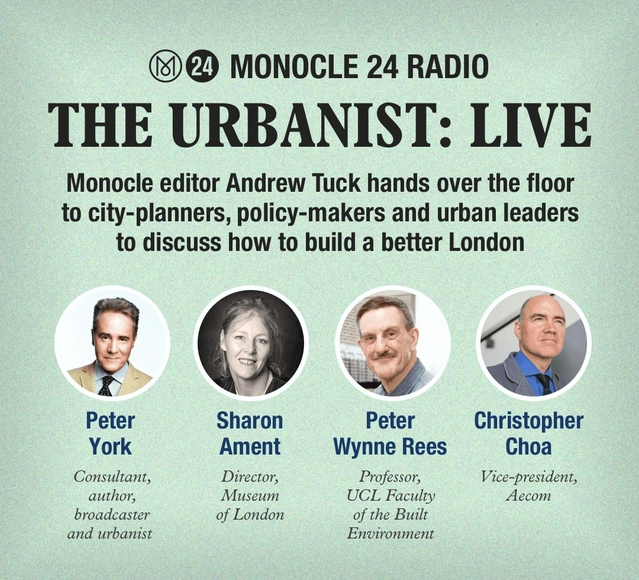
Join us for this special live episode of The Urbanist at our Marylebone HQ, where Monocle editor Andrew Tuck hands over the floor to city-planners, policy-makers and urban leaders to discuss how to build a better London. How would you fix the capital? We’ll look at transport, culture, housing, business, the night-time economy and much more. Be part of the debate following the election of the city’s new mayor.
why? Today we are in the midst of a paradox: although fast, web-based media seems to threaten the very existence of slow architecture media, the amount of p.o.p. magazines has increased in the last few years. Furthermore, and discarding arguments about fast consumption of information, some editorial projects aimed at a slow and attentive audience have managed to succeed in the middle of a huge flow of information. It seems that once the novelty of fast media has decreased, p.o.p. architecture magazines have regained the space they once had. However, are they the same kind of magazines we once knew? How can we explain the fact that an old format may stay alive against all odds? Is it stubbornness, nostalgia, or is it something else? The reasons behind this paradox are what we would like to discuss and explore in this session.
Jeff Whittington, Executive Producer and Host for KERA 90.1 Will Moderate "Economics and Architecture" for Dallas Architecture Forum
Dallas Architecture Forum, a non-profit organization dedicated to providing public education about architecture, design and the urban environment, will continue its 2015-2016 Panel Discussion Series on Tuesday, May 10, 2016 with “Economics and Architecture” moderated by Jeff Whittington, Executive Producer and Host at KERA 90.1.
Architectural disAssociation - A reflection on the state of the education of architecture at the AA. Open discussion inviting everyone with an opinion of the school - students, tutors and alumni alike to retrospectively reflect on the state of the AA's unit system and speculate the possible future of its education. This discussion will have no panel as it is an open floor discussion.
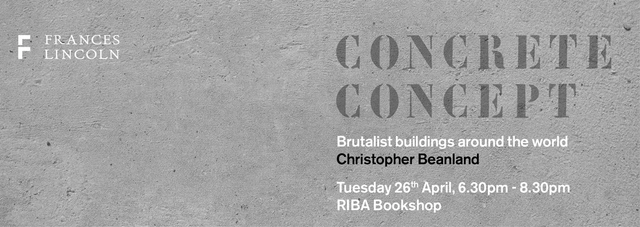
Concrete Concept: Brutalist Buildings Around the World by Christopher Beanland. Published by Taylor & Francis
Author of "ConcreteConcept: Brutalist Buildings Around the World" Christopher Beanland will take us on a journey through some of the most iconic as well as some of the unknown treasures of Brutalist architecture around the world. Why were they built, what do they mean and how are they seen today? Are some of the things we'll get to find out about some of the Brutalist Beasts featured inside Beanland's new book.








![P.O.P. [Published on Paper] A Talk of Slow Architecture Media - Featured Image](https://snoopy.archdaily.com/images/archdaily/media/images/573b/7f1c/e58e/ce0d/e400/0001/slideshow/normal_POP.jpg?1463516953&format=webp&width=640&height=580)