Architecture is realized through design. Professionals who face a blank canvas and fill it with lines that express desire, technique, and beauty know the many challenges inherent in this task. The act of designing involves a complex web of references, knowledge, and culture. Therefore, when we share a project, we know that more than simply showcasing a building, we are telling a story and inspiring the public. In its eleven years of existence, ArchDaily Brasil has published more than 23,000 projects, recognizing the importance of each one and how they help transform visions through what they propose—influencing not only local architecture but also bringing this discussion and inventiveness to the entire world.
As architects, we understand the importance of knowledge sharing for our industry, and with the internet, we saw an opportunity to guide the traditional format of architectural publishing toward its natural evolution. It was a passionate and instinctive effort that ultimately converged with the forces shaping our new global context as we entered the era of megacities and the global urban population grew exponentially. Understanding this scenario shaped our mission: to provide inspiration, knowledge, and tools for architects—and everyone involved in the process—to face the challenges of our built environment.
Forecasts for the future are alarming—at least, that is what the recently published 2021 IPCC report from the Intergovernmental Panel on Climate Change (a UN body) shows. According to the document, human-induced climate change is irrefutable and will worsen in the coming decades without concerted efforts to reverse the trend, warning that warming of 1.5°C to 2°C will be surpassed in the very near future.
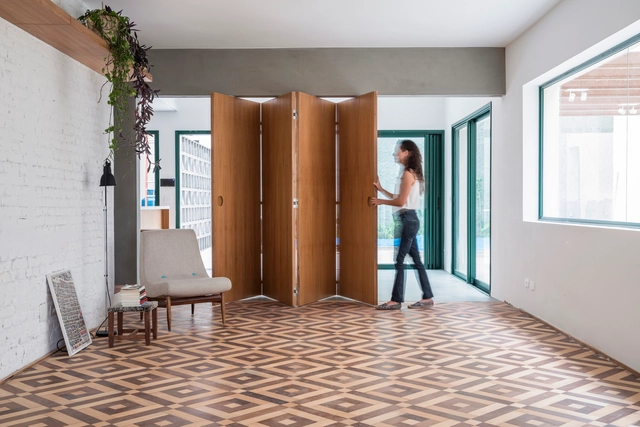
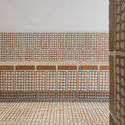
The choice of finishes is crucial to a project's overall quality, both for its aesthetic impact and its budget implications. Often, designers opt for modular flooring—materials installed in individual pieces—which requires a clear layout logic. This article explores different flooring patterns and how they can be applied to various materials.
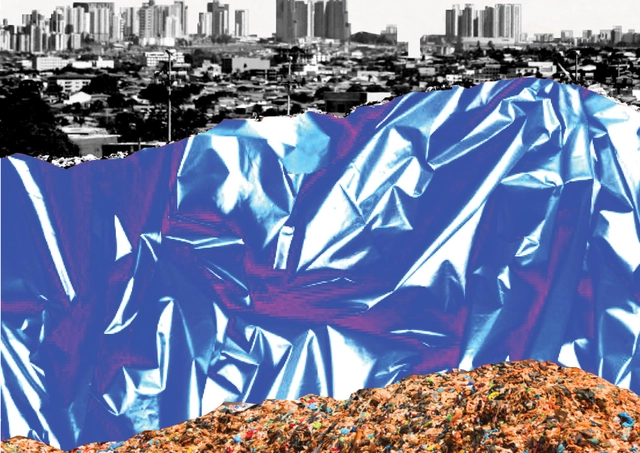
We have long been accustomed to environmental education campaigns—indeed, more recent generations have even had school lessons on the subject. The concept is simple and thoroughly drilled into our minds: Reduce, Reuse, and Recycle. Yet, for some reason, most people still fail to follow the straightforward recommendation of sorting the waste we discard daily: organics (which can be repurposed as compost), dry recyclables, and finally, refuse (non-recyclable waste) that inevitably ends up directly in landfills.
When a portion of the street is dedicated to parking, a decision is made to privatize one of the city's most valuable assets. From bike lanes and dedicated bus corridors to wider sidewalks, parklets, or even mixed-traffic lanes, the range of uses more beneficial to the public is vast. Now more than ever, we must rethink mobility for the sake of more prosperous and inclusive cities. Charging for metered parking is an excellent place to start.
Public transit, cycling, and walking are the most sustainable options for urban mobility. Yet, while bus systems languish amid a lack of funding and falling ridership, and cyclists and pedestrians face precarious infrastructure, cities invest substantial resources in road maintenance—and still reserve a significant portion for drivers to store a private asset.
https://www.archdaily.com/1128144/charging-more-for-street-parking-can-promote-transportation-equityJúlia Hartmann Mozetic, Guillermo Petzhold, Francisco Pasqual, Virginia Tavares e Fernando Corrêa
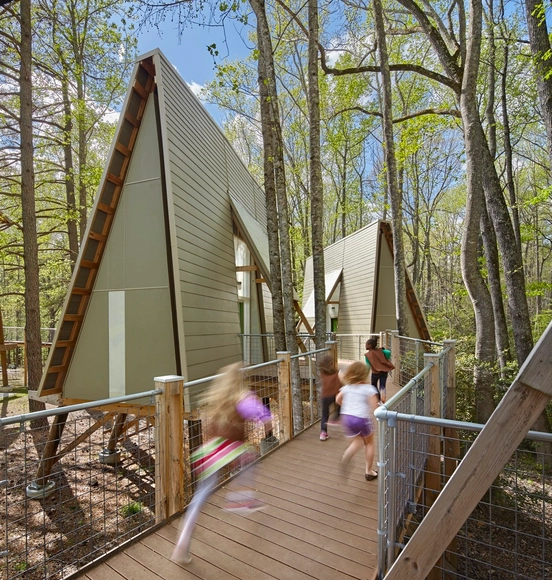
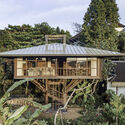
On September 21, the world celebrates Arbor Day, a date aimed at raising awareness about environmental conservation. During childhood, we establish relationships with nature that become deeply rooted in our imagination, eventually evolving to influence architectural design. We have selected 22 projects of various uses that draw inspiration from our relationship with nature and this shared imagination.
Over 60 years ago, Brasília emerged from the Brazilian interior. Developed in a desolate cerrado between 1956 and 1960, the city that replaced Rio de Janeiro as the nation's capital was a joint creation of urban planner Lúcio Costa and architect Oscar Niemeyer.
With its winged shape, Brasília became a powerful symbol, representing one of the purest embodiments of the hope, splendor, and ingenuity of 20th-century architecture.
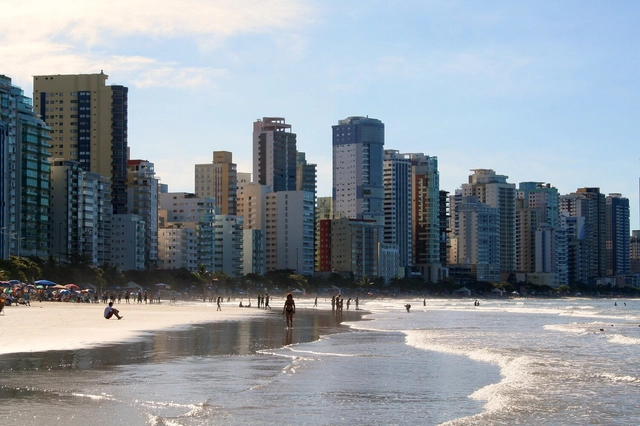
Balneário Camboriú, Santa Catarina. City with 5 of the 10 tallest buildings in Brazil. Photo by: carlosoliveirareis on VisualHunt
What do you think about building more highways to reduce traffic congestion? If you follow the debate on urban policy, you probably already have the answer on the tip of your tongue: building more lanes doesn't improve traffic! The more highways, the more cars!
Building roads encourages more people to drive. With more paved lanes at their disposal, more people are willing to swap public transit for the convenience of a personal car. Residents might seek housing further away, assuming they can quickly drive to work.
Water tanks are vital components of any building due to their role in the health, safety, and comfort of occupants. Their primary function is to guarantee supply regardless of temporary municipal water cuts, making them increasingly essential during times of water crises.
The 2021 Intergovernmental Panel on Climate Change (IPCC) report left many of us wondering whether the world can indeed keep global warming below 1.5°C, the threshold scientists consider safe to avoid the most dangerous impacts of climate change. New research from WRI and Climate Analytics shows that G20 countries, which account for about 75% of global greenhouse gas emissions, can steer the world toward this goal – if they significantly increase their ambition.
https://www.archdaily.com/1128227/ambitious-climate-action-by-g20-countries-could-limit-global-warming-to-degrees-cJamal Srouji, Taryn Fransen e David Waskow
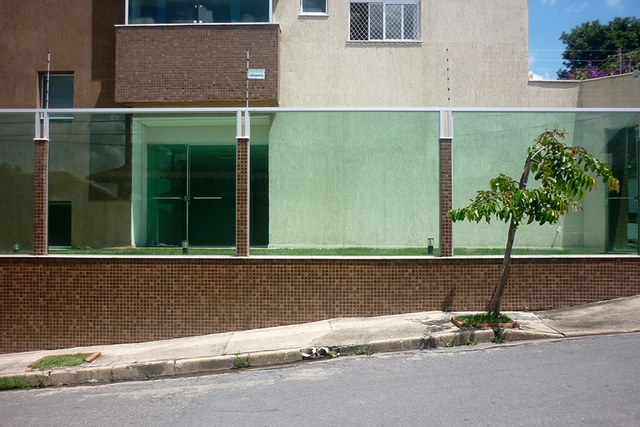
Walls are one of the main problems in our cities. The ultimate physical manifestation of division, they strip away the sense of community on our streets, turning a walk down the sidewalk into an empty, monotonous, and insecure experience. "Eyes on the street" are essential for urban life, particularly in a society as violent as Brazil's.
Why do our cities have so many walls? The real estate sector is usually blamed—the perpetual villain for those who confuse cause and effect. In reality, however, even older homes rely on them.
Concurso como Prática: A Presença da Arquitetura Paranaense is the title of the documentary featured in the eponymous exhibition on view at the Oscar Niemeyer Museum (MON) until December 12th. Available on YouTube, the feature-length film produced and directed by architects Isabela Maria Fiori and Luiz Gustavo Singeski, in collaboration with Felipe Santos Gomes, presents a comprehensive overview of the participation and awards won by teams from Paraná in architectural competitions.
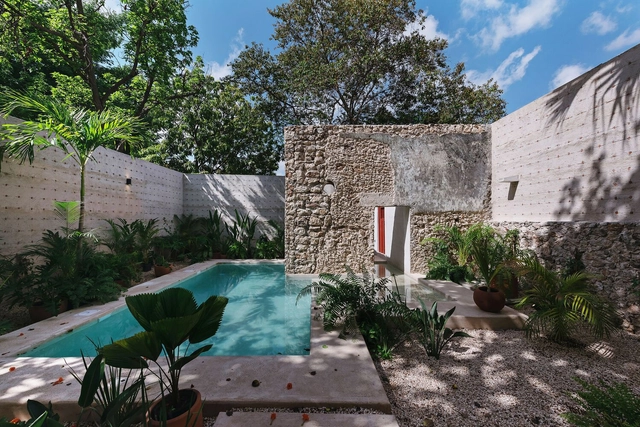
Residential swimming pools have become a staple in housing developments and private homes, particularly in regions where warm weather prevails for most of the year. Sun, shade, and cool water call for a landscape design that fosters harmony in these spaces.
The search for more efficient and sustainable modes of transportation in urban centers has been gaining ground in several cities worldwide. With the pandemic, the benefits of cycling have been proven, and many municipalities have invested in bike lanes and incentives to keep people pedaling, even after the lifting of COVID-19 restrictions.
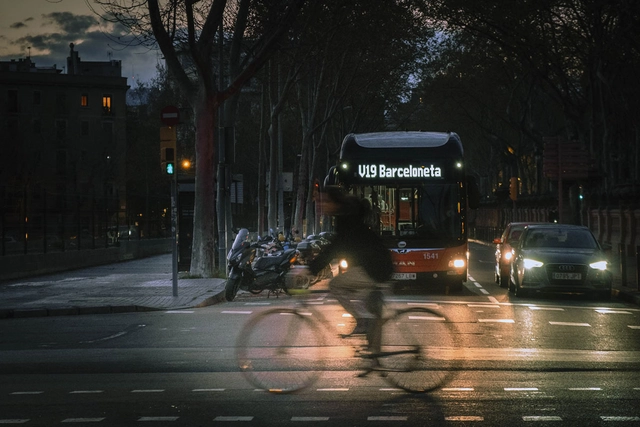
The use of public transit, another alternative that is more sustainable than private vehicles, becomes safer as vaccination efforts progress. In Barcelona, to further encourage people to abandon their cars—especially older ones—the city administration is offering a free three-year transit pass to residents who get rid of their old vehicles.
Returning safely to the streets is beginning to emerge as a new reality for a society that reinvented itself in the face of the Covid-19 pandemic. But what should this renewed experience of public space look like? Are our cities truly prepared to welcome children, adults, women, families, and all social groups? Spurred by these questions, Gabriela Callejas, co-founder of Cidade Ativa, advocates for the “City of Yes”—an approach focused on all people that places the family, in its most diverse configurations, at the center of urban design decisions and municipal investments.
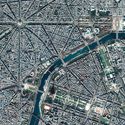
Aare River, Bern, Switzerland. Created by @dailyoverview Source imagery: @maxartechnologies
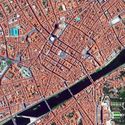
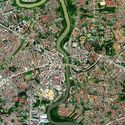
The Thames, the Danube, the Seine, the Nile, the Hudson—all of these names immediately evoke specific cities. This is because discussing the history of urban planning inherently means exploring the relationship between the city and the river, as waterways are fundamental natural elements around which many cities were founded. This is primarily due to the utilitarian nature of water bodies, which, in addition to defining—and consequently protecting—cities, provided water supply and served to transport raw materials and goods. The river, therefore, functioned as an urban backbone, fostering activity along its banks and driving economic and social development.
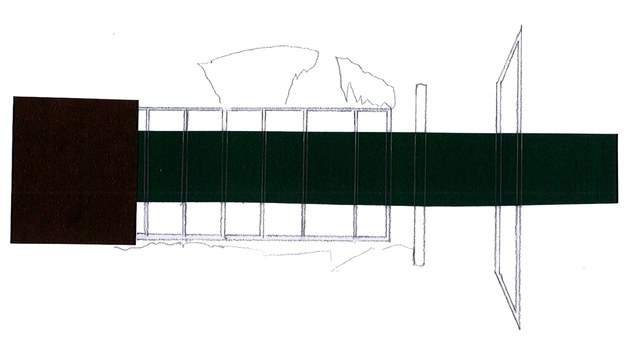
Tests of the acrylic's reflections on the Pavilion's projected landscape. These reflections can be a way to reframe familiar images. Image: Author's own
A manifesto invariably anticipates a work. It comes first, as a way of publishing it and disseminating it to a larger audience. Furthermore, a manifesto invariably "post-sees" another manifesto. It rereads a work so as to rewrite it, adapting it to its own theories.
With the crisis of an entire ideology, the postwar period was highly fertile for architectural theory. Journals published a wide variety of manifestos with surprising frequency. Indeed, these texts illustrate architectural debates far more effectively than built projects from the same period. After all, as the name itself suggests, publications were primarily responsible for making ideas public, especially since actualizing them as projects was often impossible. It was these journals, therefore, that fostered the debates, enabling constant ideological shifts within the architectural field.