Opened in August 2017 and setting attendance records, Sesc 24 de Maio—the second-to-last branch of the network to open, succeeded by Sesc Avenida Paulista—was designed by Paulo Mendes da Rocha in partnership with the office MMBB Arquitetos, who retrofitted a former department store, remodeling its interior spaces within the existing structure and creating a new central structure to support the rooftop swimming pool.
From the Fundación Arquia Blog, architect Raúl García García invites us to explore the creative process of Álvaro Siza—one of the leading figures of 20th and early 21st-century architecture—through his sketches.
https://www.archdaily.com/1113968/alvaro-siza-the-draftsman-of-dreamsRaúl García García
As the annual graduation season arrives worldwide, we recognize that among the various ways to learn architecture, nothing is more direct than a hands-on design-build project. It offers a firsthand look at how different materials form structures, how those structures respond to compression and tension, and how the process of construction shapes the final outcome. In recent years, architecture schools have increasingly embraced opportunities for students to build, producing work that ranges from small-scale temporary interventions and pavilions to permanent structures, each with its own unique character.
To demonstrate that exceptional architecture can emerge from an educational environment, ArchDaily has issued an open call for student work for four consecutive years, inviting submissions of student-built projects completed over the past year. ArchDaily’s four localized platforms—English, Chinese, Spanish, and Portuguese—are now accepting submissions for our fourth annual selection of the "Best Student Design-Build Projects," which will be featured and shared with our global audience.
https://www.archdaily.com/1113969/global-call-outstanding-student-build-projectsJoanna Wong
Just as architectural elements—floors, walls, and ceilings—shape and define built space, plant elements are also capable of shaping open spaces across large, medium, and small scales, from parks to residential gardens, acting as spatial structure. According to Benedito Abbud, "Landscape design is the only artistic expression that engages all five human senses. While architecture, painting, sculpture, and other visual arts rely heavily on sight alone, landscape design also engages smell, hearing, taste, and touch, providing a rich sensory experience by combining the most diverse and comprehensive perceptual experiences. The more a garden can stimulate all the senses, the better it fulfills its role."
To offer practical insights for landscape design projects, we have published a series of articles on the topic. In the first post, we discussed planes, clearings, and tree layouts, while the second covered trees, shrubs, grass, and groundcovers in open spaces. In this article, we will focus on shrubs, grasses, groundcovers, and paving.
Paseo de Plátanos Orientales. Image Cortesía de Cynthia Marimán Ramos - Roberto Astete
Established in 1900 following a 19-hectare afforestation effort spearheaded by the Ministry of Public Works and the Intendency of Santiago, Parque Forestal is located on the northern edge of the city's historic center, making it one of Santiago's first linear parks.
Designed by French landscape architect George Dubois, the project revitalized the surrounding urban edges, successfully integrating the Mapocho River and its previously chaotic banks, while providing the city with a new green lung for urban recreation.
When Walter Gropius founded his famous school of design and art in 1919, the Bauhaus, he envisioned it as a place open to "any person of good repute, regardless of age or sex." A space where there would be "no difference between the beautiful sex and the stronger sex."
This idea challenged a society in which women were demanding access to spaces previously barred to them. While the artistic education women received at the time was confined to the intimacy of their homes, they were welcomed at Gropius's school, and their applications accepted. So much so that the number of women who enrolled exceeded that of men.
Following the election, the new government has already begun to announce several changes to its ministries. Among these is the elimination of the Ministry of Cities. In an effort to prompt discussion and prevent this dissolution, a petition has been organized and can be signed here.
As we welcome the new year, don't miss ArchDaily's selection of the best architecture documentaries to watch this year!
https://www.archdaily.com/1113759/must-watch-architecture-documentaries-of-2018-delving-into-the-stories-behind-masters-like-ando-and-koolhaas韩爽 - HAN Shuang
“It was that one over there, look. That one. See?” Dona Ana pointed to the seventh-floor apartment where, a week earlier, the fire had broken out. Further down, on the fourth floor, Anastasia, Aécio, and Itamar offered strained smiles from a campaign banner .
No one knows how the fire started in one of the subdivided apartments in Tower 100, occupied by a waste picker. But the spectacle that followed played out comme il faut. Panic, screams, flames, flashing lights, a helicopter hovering overhead, journalists accosting the supposedly injured and devoring improbable accounts, sirens, smoke, commotion, action.
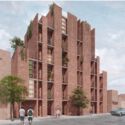
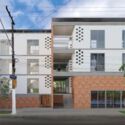
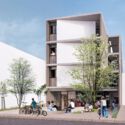
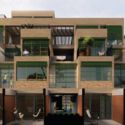
Placing five low-income families from a settlement in southern Lima, Peru, at the center of local and global design. That is the vision behind CIUDADES [en] VISIBLE.
The competition focuses on designing homes for five low-income families within the 3 de Diciembre settlement in Lurín. The Acarraz, Huamán, López, Salazar, and Teccse families will be the protagonists of this architectural challenge.
The Mirador La Cocha Botanical Garden proposal by students Germán López, María Echeverry, and Julián Villescas was awarded second place in the ninth edition of the steel design competition for architecture students in Colombia (Alacero Colombia), which focused this year on a greenhouse pavilion for a botanical park.
Under a unified structural concept, the project is divided into three blocks—an entrance building, a circulation ring, and greenhouse pavilions—and aims to establish itself as "a space of high educational and research value that seeks to promote the preservation and conservation of representative and threatened botanical species" in the Colombian department of Nariño.
Cristóbal Caro presents a photographic exhibition titled "Chairs: Micro-Architecture in Public Space," which seeks to link objects scattered throughout the urban fabric with the implicit symbols and traces they hold.
As we contemplated the vestibule of the Laurentian Library, I distinctly remember paraphrasing Giorgio Vasari: I thank God for being born in the time when Álvaro Siza is alive and for being worthy of having him as a master on such friendly terms. A much more eloquent version was dedicated to the "divine" Michelangelo Buonarroti in the original Lives of the Most Excellent Painters, Sculptors, and Architects (1568), yet it rang just as true in the presence of the "mystic" Siza – an epithet bestowed by Eduardo Souto de Moura. At that moment in Florence, the architect of sculpture and the sculptor of architecture met metaphysically face to face in the form of a staircase, whose silhouette would outlive time, transformed by the Baroque and reinterpreted by many authors – from Charles Garnier to Alvar Aalto – yet perhaps by none with more enthusiasm than Álvaro Siza himself.
Javier Reverte once said that "the adventure of travel consists of being able to experience the daily lives of other people in places far from your home as an extraordinary event." It is precisely within those extraordinary events that, upon arriving in a new country, we undergo an adaptation process that transforms the extraordinary into the everyday. Whether you share a language with your host country or face an unfamiliar tongue, the first few months are a crash course in absorbing countless new concepts—from discovering you can buy cigarettes at pharmacies to distinguishing the distinct calls of trucks selling tacos, tamales, or sweet potatoes. We learn new terms to define daily life, while simultaneously relearning familiar words that take on entirely new meanings.
The team comprising Diego Concha, Tomás Aguirre, and Trinidad Hermosilla (Universidad Finis Terrae) has won first place in the XXXII CAP Chile Competition. Designed for the Quillayes tailings of the Los Pelambres mining company (Coquimbo Region), the project seeks to "recover and reuse mining waste through the use of highly mineral-resistant plants for the reduction and future mitigation of environmental risks on the site," according to the authors.
The competition jury explains that the project proposes "a new way of conserving, actively addressing environmental issues frequently present in the territory. It takes existing elements as a starting point and combines them with a series of contrasting geometries resolved using steel."
Joaquín Vaquero Palacios (Oviedo, 1900—Madrid, 1998) was an architect, painter, and sculptor. He studied at the Madrid School of Architecture (1921-1927), where his professors introduced him to the architecture of the Modern Movement. There, he witnessed firsthand how industrial architecture served as a rich source of inspiration for architects like Walter Gropius and Le Corbusier, offering a promising arena for the application of rationalist principles and concepts.
In April 2018, the inaugural edition of the Provincia Festival was held, aiming to create an open forum for dialogue and the discussion of civic interest topics, with an emphasis on responsible engagement in regional architectural development.
The festival took place in the city of Tuxtla Gutiérrez in Chiapas, México—a region currently lacking high-quality urban spaces, planning, and a clear vision regarding the impact of architectural projects. Meanwhile, there is a constant drain of local talent, driven by a combination of factors that foster the belief that professional success can only be achieved through large-scale projects in major metropolises. We want to reaffirm the idea that architecture is everywhere, and that the true success of the profession lies in serving everyone, regardless of their gender, social background, or economic status.
Listed as a World Heritage Site, the Historic Center of Salvador, Bahia, in the heart of the Pelourinho neighborhood, is home to the city's Cathedral Basilica, which dates back to the 17th century. One of Brazil's most significant sacred buildings, the basilica underwent a three-year-and-eight-month restoration process. Beyond returning its celebrated features to public view, the intervention revealed spaces and artifacts previously unknown or long thought lost.