-
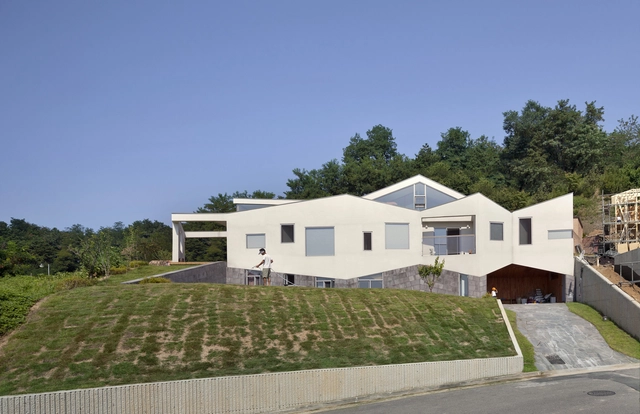
Architects: jhy architect & associates
- Area: 294 m²
- Year: 2012
-
Professionals: Timetech, Homesys Korea, Moa Engineering


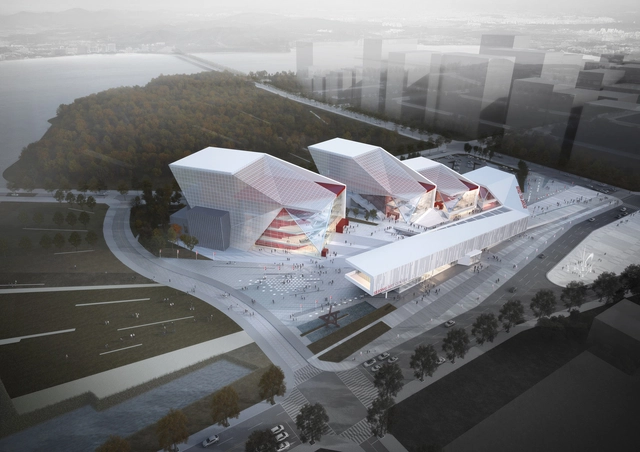
The new cultural hub of Sejong city, the proposal for the Sejong Art Center features a 700 seat theater for classical concert, ballet and musical, a 300 seat black box theater, a cinema, gallery spaces, and a 1,500 seat opera theater as an extension. Designed by H Architecture + Haeahn Architecture, the project aims to embrace the polarity of the city and nature. It was initiated from a scrupulous speculation concerning the dichotomy between them since the site is located at the edge of the city. More images and architects’ description after the break.


Taking place at the Seoul Museum of Art, the 'Total Theatre: Interspace Dialogue' exhibition is featuring the Plushscape installation by Max Kuo of ALLTHATISSOLID. Curated by Regina Shin, the exhibition, which is also a film festival, borrows Gropius and Piscator’s concept of a new kind of theatre to realize a cinema inside of the white cube of a museum. In response to the curatorial agendas of Interspace Dialogue, Plushscape seeks to agitate and amplify the somatic conditions of the viewers’ bodies providing more spatial possibilities in their haptic response to the screening films. More images and architects' description after the break.

Constructed for the Changwon Suclpture Biennale 2012 held in Changwon city, South Korea the Brick-Pod Pavilion defines architecture as ‘a sculpture with interior space’, and attempts to create a dome with black bricks which has been used for traditional architecture here in Korea. Designed by Kazuya Morita Architecture Studio, you can enjoy the breezing air, moving leafs, and sparkling sunshine through its numbers of the openings, feeling much more sensitive than when we are outside. More images and architects' description after the break.
-01.jpg?1367443039)


Designed by Tomoon Architects & Engineers, in collaboration with Ison Architects, their second prize winning proposal for the Sejong Art Center is a cultural center for opera, music, dance, drama, art exhibitions, cinema, and all types of formal and informal performances. With a total program area of approx. 11,000 square meters, the architects proposed that all of the program elements be brought together into a single mass made as compact as possible, maximizing functionality and efficiency, while conserving open space. More images and architects’ description after the break. The center is composed of an opera house with 800 seats, a flexible black box theater with 300 seats, a cinema theater with 400 seats, an art gallery, a cultural center, a VIP lounge, a cafe and a restaurant. In addition there are other necessary spaces such as rehearsal rooms and administration offices, as well as parking. All of the major public spaces are accessed by a single common lobby which acts as an elevated platform and frame, providing views on one side to the city, and on the other, to the central park and the landscape beyond. The walls of the common lobby are glazed from floor to ceiling and sheathed in a metal mesh, so all of the pre-concert and concert activities can be seen from inside and outside, creating a visually rich dynamic environment for both audience and passersby. Also, because the art gallery, cultural center, café and restaurant are in close proximity, this ensures that the common lobby and all foyer areas will be used all throughout the day and into the evening. The compact building mass means that a variety of open and green spaces can be designed around the building. The northwest facing main entry plaza contains water features to attract people coming from the city. In addition the main entry stairs form a grand backdrop leading to the magnificent view of the opera house, the black box theater, and the cinema behind the glazed common lobby wall. The east facing rear plaza is more informal and park-like and is designed so that it can accommodate a wide variety of outdoor performances in addition to providing wide scenic views of the park and surrounding landscape. The north entry plaza is conceived as a vibrant café / cultural plaza. The opera house is in the shape of the classic horseshoe which provides excellent acoustics and good sightlines from all areas of the hall. The black box theater has been designed for good acoustics and for maximum flexibility in stage and seating configurations to accommodate a variety of performance settings and events. The Sejong Art Center is a culture center for the 21st century, bringing a state-of-the-art cultural facility to Sejong City that is a new symbol for the new city. It is a place to enjoy and contemplate culture, the city and nature, and provides a wonderful place for relaxation and enjoyment for all people and citizens. Architects: Tomoon Architects & Engineers, in collaboration with Ison Architects Location : Nasung-dong, Sejong, South Korea Project Architects: Cha Yong-wook, Son Jin Project Manager: Choi Jae-won Project Team: Shin Eun-ho, Choi Jong-bae, Peter Oh, Lee Joon-ho, Lee Doo-hyeong, Lee Woo-joo, Choi Min-wook Acoustics: OSD Engineering & Consulting Stage: TSD STAGE Structural Engineers: Hyung-sang Engineering Mechanical Engineers: Sahm-shin Engineers Electricity / Telecommunication: Young-Kwang Enginneering CG: 3D Focus Architectural Model: OPUS Site Area: 43,493㎡ Building Area: 11,009㎡ Gross Area: 15,205㎡ Structure: Reinforced Concrete + Steel Structure Material: White Tile, Metal Fabric, Wood, Stone Total Stories: 4 Floors Parking: 354 Project Period: December 2012 – March 2013

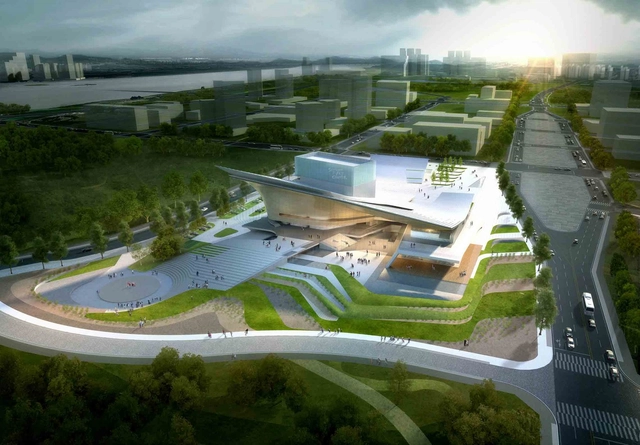
Designed by DMP Partners, their winning proposal for the Sejong Art Center (SAC) is composed of two theaters, a main theater with more than 800 seats, a medium sized theater with 300 seats, a film theater with 250 seats, and an art gallery. Located in the international cultural area between nature-scape and urban-scape, the building combines nature and city through its straight, linear shape. This form is applied in accordance with the city and its curvature shape is in accordance with nature to create a comfortable feeling. More images and architects’ description after the break.





-09.jpg?1367443169 "© Youngchae Park")


-01.jpg?1367443039)
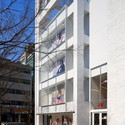
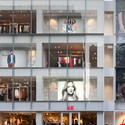

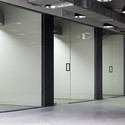
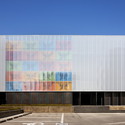
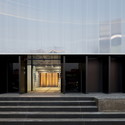
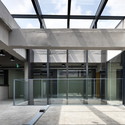

.jpg?1366386904&format=webp&width=640&height=580)
.jpg?1366386568 "© Kim Yong Kwan")
.jpg?1366386687 "© Kim Yong Kwan")
.jpg?1366386751 "© Kim Yong Kwan")
.jpg?1366386778 "© Kim Yong Kwan")
.jpg?1366386904)