IE University, in collaboration with All Things Urban, would like to invite you to our "Cities and Jobs Series". A series of webinars are being hosted by the two organizations, for the launch of IE’s new Bachelor program in Urban Studies (for which applications are now open). The multidisciplinary program examines urban issues in a holistic way to prepare the future generation of urbanists to tackle the pressing challenges of our cities.
Cities only occupy 2% of the planet’s surface, but they accommodate more than 50% of thepopulation. They consume 75% of global energy, produce 80% of global CO2 emissions, and generate more than 80% of the global GDP today.These numbers put cities at the center of any discussion about global warming, urbanization, progress, and social issues.
The three online webinars will tackle conversations from “Urban Artificial Intelligence: how can we urbanise technology?” to “Urban Green Infrastructure: How can nature save cities” and “Urban social inequalities: How can cities include people?”
The façade is the only part of the building that can be seen from the outside and has the function of communicating a message derived from its design. It therefore deserves special attention in every detail. A façade that is well proportioned in terms of colours and materials, which facilitates the connection between the interior and the exterior, will generate an initial attraction for pedestrians, inviting them to enter.
From a small house clad in classic tiles, to big brands such as Apple or Louis Vuitton, façades are used as an architectural expression to give us a glimpse of the first elements that we will later find inside the premises. In interior design, the entrance hall of a home concentrates many clues as to what we will find next. The effect of this first impression would be even more positive if the façade included a design that leaves the user hungry for more.
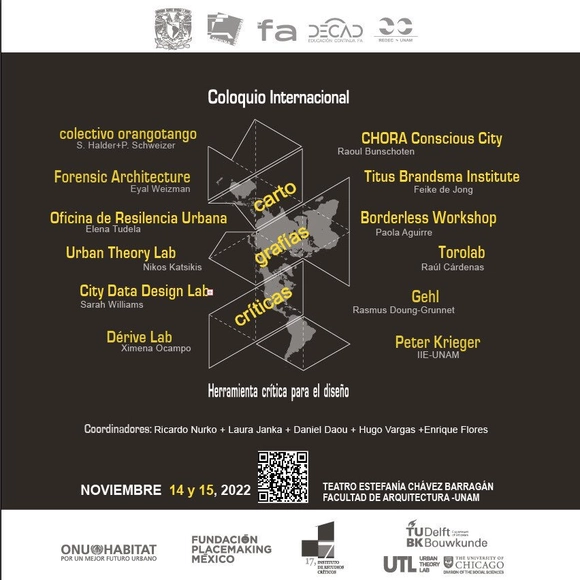
The International Colloquium: Cartography, a Critical Tool for Design, brings together internationally renowned speakers in critical cartography from various disciplines to present diverse perspectives and visions of mapping. The event is structured around three interrelated themes: creative mapping, descriptive mapping, and critical mapping. The first segment explores various approaches to mapping through innovative processes and methodologies in critical cartography; the second group analyzes cartography as an intersubjective and interdisciplinary medium in the current Anthropocene era; finally, the third group presents counter-mapping, participatory cartographies, and spatial practices as critical processes aimed at highlighting and emancipating other realities.
The Power of Air by Sidnie Ancion, Meg Kalinowski, Anabella Acevedo Peña – UD Spring Semester 2022. Image Courtesy of City College of New York
The Spitzer School of Architecture at the City College of New York has been challenging the strictures of traditional design education for decades. Now, the esteemed school’s revamped Master of Urban Design program continues this trend of innovative education by reframing the urban environment as a laboratory where students play active research roles.
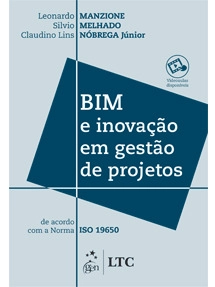
Featuring exercises in every chapter, this book introduces the ISO 19650 standard, recently implemented in the country, and contributes to industry discussions both conceptually and practically. Furthermore, it offers a variety of supplementary materials, such as:
BIM technology, now a mandatory requirement for engineering services within federal public administration agencies and entities, has become a reality in Brazilian universities and firms.
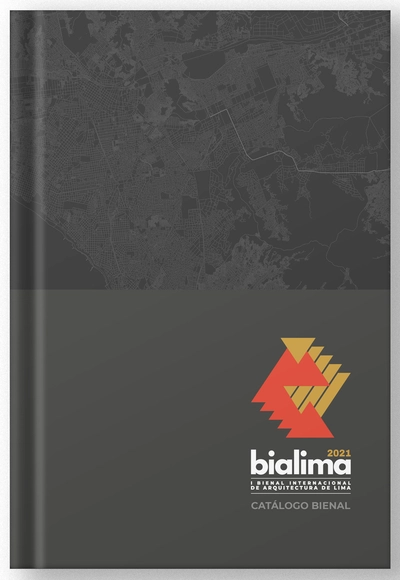
After months of rigorous compilation and editing, the BIALIMA 2021 CATALOG is now a reality. Spanning 437 pages, it documents the inaugural International Architecture Biennial of Lima (BIALIMA 2021)—an event supported by the Ministry of Housing, Construction, and Sanitation and the Bicentennial Project, and officially recognized as the Bicentennial Architecture Biennial.
Rethinking Ergonomics: From Building to Urban Space presents theoretical and practical aspects in harmony within the built environment and their importance in architectural projects.
- Learn about the career path of architect Natan Bueno and discover how they grew their presence on social media - How to showcase your work and identity through Instagram - Best practices for attracting clients through social media - How to balance social media with your office routine - Success tips for growing your architecture and design firm
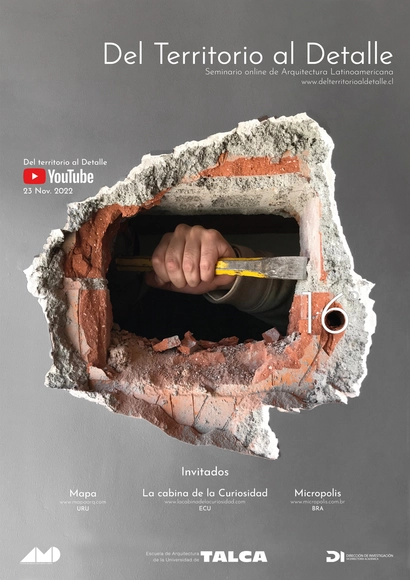
The 16th edition of the international architecture seminar "From Territory to Detail" serves as a space for dialogue and reflection, bringing together students, academics, and professionals in the field alongside renowned Latin American architects. These practitioners share a common approach: balancing teaching with professional work across diverse areas, ranging from editorial projects to artistic experimentation.
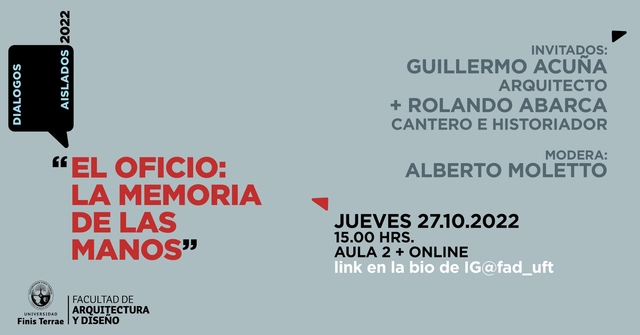
A conversation between architect Guillermo Acuña and master stonemason and historian Rolando Abarca will be part of a new session of "Diálogos Aislados" (Isolated Dialogues), a series organized by the School of Architecture at Universidad Finis Terrae. The series began during the pandemic to foster discussion on various topics, debates, and new ideas through multidisciplinary online dialogue.
The 2nd CIRCULAR Architecture Conference in La Nucia (Alicante) will take place on November 9. This second edition focuses on people, adopting a more humanistic approach that transcends the field of architecture to reflect on its implications for sports and gastronomy as pillars of a healthy lifestyle.
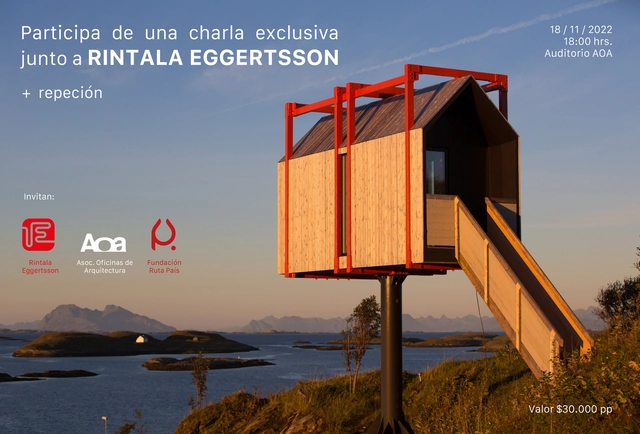
Photography: Kathrine Sørgård - Editing: Fundación Ruta País
The renowned architecture firm Rintala Eggertsson will present the most notable projects of their career, as well as their ongoing work in the town of Chimbarongo, Chile.
The Ciudades Cómo Vamos Forum (FCCV) is a space for discovery and discussion regarding the present and future of cities in Peru. The forum aims to share and disseminate new approaches, evidence, and proposals from civil society, academia, and the government, with the goal of influencing improvements in the country's urban quality.
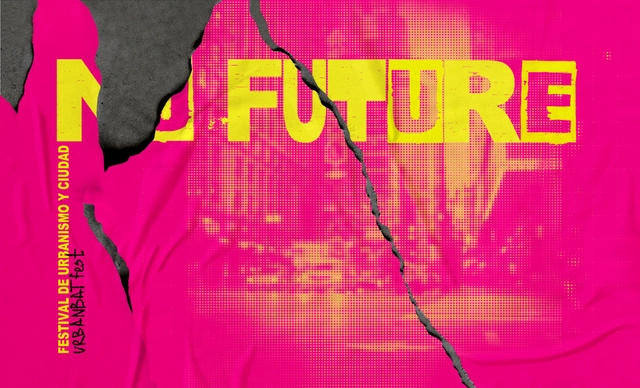
URBANBATfest is a festival that functions as a laboratory—or a laboratory that evolves into a festival. It is a research process focused on urban transformations and an environment for learning, experimentation, and collective creation designed to drive urban innovation.


![SO WHAT [three architects, three discourses] - Featured Image](https://snoopy.archdaily.com/images/archdaily/media/images/635a/7148/8e83/fd08/6792/c9a6/slideshow/so-what-tres-arquitetos-tres-discursos_1.jpg?1666871661&format=webp&width=640&height=580)