We stumbled across this fantastic video, by Mindrelic on Vimeo, capturing the endless movement of Manhattan. The maker behind Mindrelic spent a little over a month hotel hopping around Manhattan to shoot this time lapse. I was particularly mesmerized by the constant play of light and shadow throughout the entire city. Enjoy!
Karissa Rosenfield
BROWSE ALL FROM THIS AUTHOR HERE
↓
Video: Manhattan in Motion
https://www.archdaily.com/238530/video-manhattan-in-motionKarissa Rosenfield
Bicycle Club / NL Architects

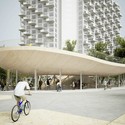
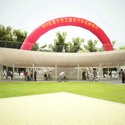
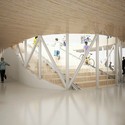
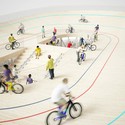
Amsterdam-based NL Architects have been asked to design a Bicycle Club for a large resort in Hainan, China. They have proposed a glass enclosed pavilion capped with a rooftop cycling arena that embodies curves reminiscent of the traditional and functional pagoda. Visitors can rent a bike and join the fun in the open-air velodrome or simply visit the club’s cafe and be entertained while sitting on the large staircases found in the middle of the oval structure.
Continue after the break for more images.

https://www.archdaily.com/238384/bicycle-club-nl-architectsKarissa Rosenfield
Finalists of the 100 Mile House Competition

The Architectural Foundation of British Columbia (BC) has announced the five finalists of the 100 Mile House Competition. Similar to the well-known 100 Mile Diet, the 100 Mile House challenges participants to design a 1200-square-foot home using only materials and systems that are made, manufactured and/or recycled within 100 miles of the City of Vancouver. Many have questioned whether the 100 Mile House is a plausible solution in today’s modern cities (check out: The 100 Mile House: Innovative ‘Locatat’ or Just Plain Loca?). Be your own judge and review the finalists after the break.
https://www.archdaily.com/238365/finalists-of-the-100-mile-house-competitionKarissa Rosenfield
Construction begins on OMA-designed G-Star RAW Headquarters

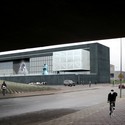
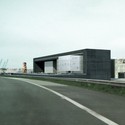
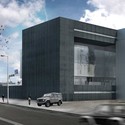
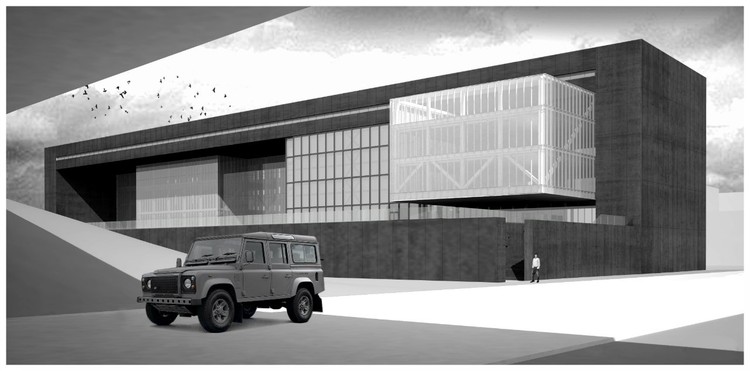
Today, in the industrial Zuidoost area of Amsterdam, construction begins on the new OMA-designed headquarters for the fashion brand G-Star RAW. Led by OMA partners Reinier de Graaf, Ellen van Loon and Rem Koolhaas, the project will consolidate G-Star RAW’s existing disparate facilities into a single 27.500m2 horizontal building.
Continue after the break to learn more.

https://www.archdaily.com/238268/construction-begins-on-oma-designed-g-star-raw-headquartersKarissa Rosenfield
Video: Gehry Residence, 2012 AIA Twenty-five Year Award Recipient
The AIA sat down with famed architect Frank Gehry - recipient of the 2012 Twenty-five Year Award - to discuss his eccentric Santa Monica home that has enormously influenced both theory and practice over the last 25 to 35 years. In the late 1970s, Frank Gehry transformed an existing Dutch colonial home in a quiet Southern California neighborhood into a controversial symbol of deconstructivism by surrounding it with an unconventional new addition. As the AIA describes, “The exposed structure, chaotic fusion of disparate materials, and aggressive juxtaposition of old and new communicate a sense of real-time formal evolution and conflict, as if the building were dynamically, violently creating itself with found objects.”
https://www.archdaily.com/238247/video-gehry-residence-2012-aia-twenty-five-year-award-recipientKarissa Rosenfield
Kanye West’s seven-screen pavilion / OMA

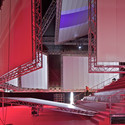
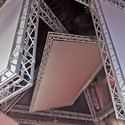
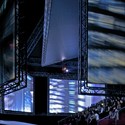
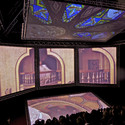
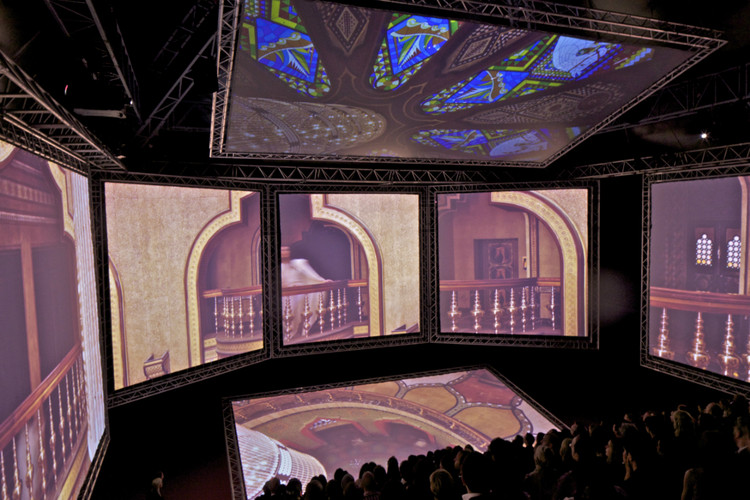
An OMA-designed temporary pavilion at the 2012 Cannes Film Festival was inaugurated today with a screening of Kanye West’s debut short film Cruel Summer. The pavilion, with a design led by Shohei Shigematsu, is a raised pyramid containing a seven-screen cinema invented by West’s creative team, Donda.
Continue after the break for more.
https://www.archdaily.com/237841/kanye-wests-seven-screen-pavilion-omaKarissa Rosenfield
Pentominium / Murphy/Jahn

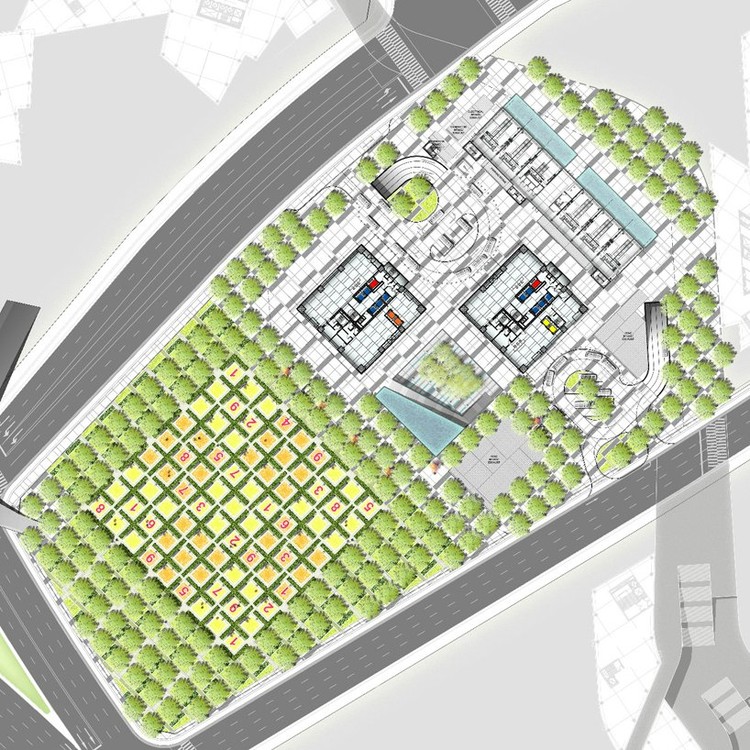
Chicago-based architects Murphy/Jahn have unveiled their design for a 320-meter-tall skyscraper in the Yongsan International Business District of Seoul. Designed as two-towers under one roof, the steel and glass lattice structure is one of fifteen skyscrapers planned for the global city that was master planned by Daniel Libeskind and commissioned by South Korean developer DreamHub. Consisting of mostly high end residential units, the two Pentominium towers will provide residents with exclusive city views and four-storey skyparks, while attempting to recreate the spacious and private feel often associated with detached housing.
Continue reading after the break for the architects’ description.



https://www.archdaily.com/237820/pentominium-murphyjahnKarissa Rosenfield
Video: Moby Talks LA Architecture
Best know as a musician, Moby is quickly gaining lots of attention for his “weird architecture blog” that is centered around his fascination with Los Angeles architecture. In this video published by 1883 Magazine, Moby discusses his thoughts on some his personal favorites, starting with Frank Lloyd Wright’s Ennis House, which Moby depicts as an Incan spaceship from 100,000 years ago.
https://www.archdaily.com/237551/video-moby-talks-la-architectureKarissa Rosenfield
Winner announced for Seattle’s Urban Intervention Competition
A jury of internationally recognized design professionals and Seattle civic leaders has declared a winner among three semi-finalists in Urban Intervention: The Howard S. Wright Design Ideas Competition for Public Space. The winner is ABF, of Paris, France, for its design, In-Closure, which envisions an interactive wall around a forested landscape that is both flexible and dynamic, embracing social life in the city at multiple scales.
The ABF team consists of Etienne Feher, architect; Paul Azzopardi, urban engineer; and Noé Basch, climate engineer. Continue reading after the break for more details.
https://www.archdaily.com/237520/winner-announced-for-seattles-urban-intervention-competitionKarissa Rosenfield
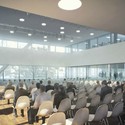
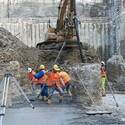
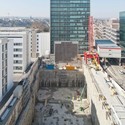
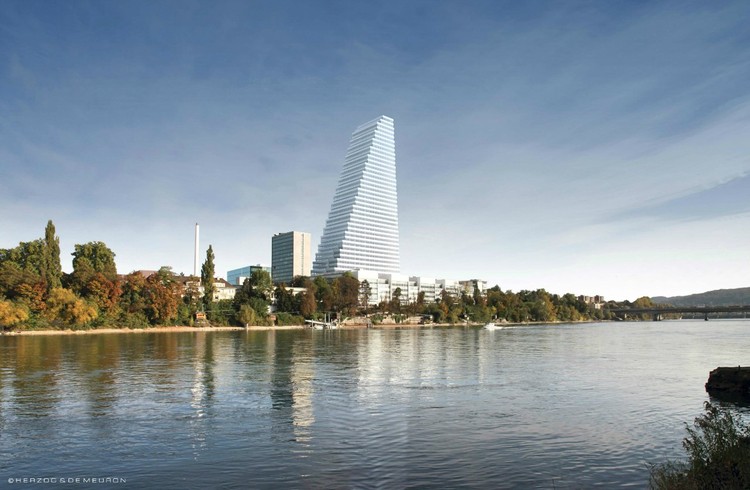
In Progress: Roche Building 1 / Herzog & de Meuron

Earlier this month, Roche held a foundation stone-laying ceremony for their new office building that is currently being constructed in Basel, Switzerland. Designed by the Basel-based architecture practice of Herzog & de Meuron, the 178-meter-tall tapering structure will be formed by superimposed floor slabs that narrow as the high rise ascends. Its simple shape and predominantly white color scheme will anchor itself within the urban setting of Basel and become one of the few high rises scattered throughout the city’s skyline.
Continue after the break for more images and information.
https://www.archdaily.com/237427/in-progress-roche-building-1-herzog-de-meuronKarissa Rosenfield
ArchDaily takes on the National Mall by Bike

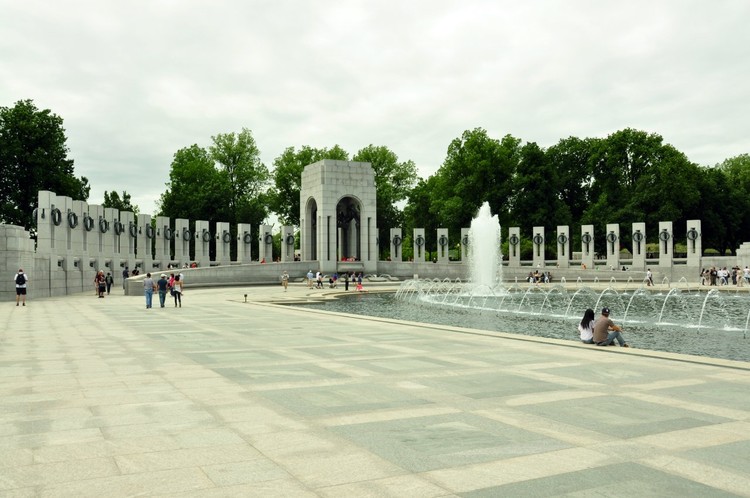
Partially cloudy with a high in the mid-seventies, this was weather we couldn’t say no to on the Sunday after the 2012 National Convention. Therefore we took advantage of the Washington D.C. Capital Bikeshare and set off on a self-guided tour of the National Mall. Although the National Mall was packed with graduates and tourists, we managed to weave in and out of pedestrian traffic quick enough to visit many of the historic buildings and memorials before heading off to Eero Saarinen’s beautiful Dulles International Airport. What a perfect way to wrap up an eventful week in the nation’s capital.



https://www.archdaily.com/237164/archdaily-takes-on-the-national-mall-by-bikeKarissa Rosenfield
World’s Tallest LEGO Tower Constructed in Seoul
In celebration of LEG0’s 80th birthday, Danish Crown Prince Frederik unveiled the world’s largest LEGO tower in South Korea last week. Nearly 4,000 children stacked 50,000 bricks in five days to help build the 105-foot-tall tower in front of Seoul’s Olympic Stadium. The structure surpassed the previous records set last year in France at 103-feet and in Brazil at 102-feet. As reported by The Daily Mail, the record has been broken more than 30 times since the first LEGO tower was constructed in London in 1988 at a height of less than 50-feet.
https://www.archdaily.com/236638/worlds-tallest-lego-tower-constructed-in-seoulKarissa Rosenfield
AIA 2012: Architects of Healing

After three days of inspirational keynote sessions, informative seminars, exclusive tours, invaluable networking opportunities and an impressive expo, the American Institute of Architects concluded the 2012 National Convention with a special tribute to the architects responsible for the post-9/11 memorials and rebuilding efforts. These “Architects of Healing” tirelessly worked together to transform the darkness of grief brought on by the 9/11 attacks into the triumph of hope in the wounded areas of Shanksville, Pennsylvania; the Pentagon; and the World Trade Center site.
https://www.archdaily.com/236471/aia-2012-architects-of-healingKarissa Rosenfield
AIA2012: An Optimistic Future

AIA President Jeff Potter welcomed everyone this morning by restating his promise that the 2012 convention would inspire all who attend. With a consistent theme focusing on the architects commitment to service, President Potter welcomed Shaun Donovan – the 15th United States Secretary for Housing and Urban Development (HUD) – as today’s keynote speaker. However, before Secretary Donovan took the stage, the 2012 AIA Vice President and 2013 President-elect Mickey Jacob invited the crowd to come, stay and explore the mile-high city of Denver for the 2013 National Convention.
https://www.archdaily.com/236320/aia2012-an-optimistic-futureKarissa Rosenfield
AIA 2012: Opening Discussions

Thousands of architects crammed into the grand ballroom of the Walter E. Washington Convention Center this morning to kick-off the 2012 National Convention hosted by the American Institute of Architects. Invigorating speeches, led by AIA President Jeff Potter, urged architects to re-envision the profession and question the role of today’s architect. Although the economic downturn has caused many hardships, it presents a unique opportunity for architects to reshape the profession.
https://www.archdaily.com/235987/aia-2012-opening-discussionsKarissa Rosenfield
Construction begins on SOM’s newest Supertall Skyscraper

Today, Skidmore Owings & Merrill LLP (SOM) broke ground on yet another supertall building in China. The 96-story-tall CTF Tianjin Tower is subtly defined by undulating curves that shape its three programmatic elements while presenting a bold monolithic presence on the TEDA district skyline outside Tianjin. The 1,740-feet (530-meter) tall tower houses offices, 300 service apartments and a 350-room, 5-star hotel beneath its boldly arched top.
According to the Council on Tall Buildings and Urban Habitat (CTBUH), the CTF Tianjin Tower will be the fourteenth tallest skyscraper built by 2020. Continue reading for more.
https://www.archdaily.com/234709/construction-begins-on-soms-newest-supertall-skyscraperKarissa Rosenfield
Architecture: Work/life/work balance by Andrew Maynard

Australian architect Andrew Maynard, co-director of Andrew Maynard Architects, has shared with us his article “Work/life/work balance”, published first on Parlour. “Many women leave the profession due to the difficult combination of poor work cultures, long hours and low pay. But these conditions affect everyone – women and men – as well as the viability of the profession as a whole. Andrew Maynard sets out the issues and challenges the profession to end exploitative and exclusionary working practices.”
It is time for architectural work practices to grow up. We must stop deluding ourselves that architectural employees are anything other than a contemporary exploited labor force.
Epicurus argued that humans needed only three things in life to be happy – friends, freedom and an analyzed life. All evidence indicates that Epicurus had a rather good time while he was around. Now he is dead. I wonder if Epicurus became a senior associate at Philosopher & Associates Pty Ltd before he died? Surely this was a priority. Does contemporary architectural employment deny us our happiness; our friends, freedom and the opportunity for an analyzed life? Many would argue that being employed in architecture and the pursuit of happiness are irreconcilable. It can reasonably be argued that most architects, and almost all recent graduates, are working in conditions that are unhealthy, unsustainable and exploitative.
Continue reading after the break.
https://www.archdaily.com/234633/work-life-work-balance-by-andrew-maynardKarissa Rosenfield
Downtown LA Hotel / XTEN Architecture

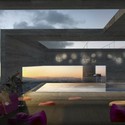
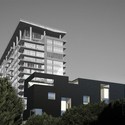
XTEN Architecture is planning a new, 65,000-square-foot hotel in downtown Los Angeles, California. The monolithic concrete structure will be carved by a system of slots and slices that bring light, air and views deep into the building. Equipped with a performance-based lobby, two subterranean bars, restaurant and a rooftop terrace featuring an infinity edge pool, this mid-rise hotel will surely attract some attention.
Continue after the break to learn more!

https://www.archdaily.com/234370/downtown-la-hotel-xten-architectureKarissa Rosenfield