Spanish cities are clear examples of the overlapping of historical periods. Medieval urban layouts coexist with modernist urban plans, and their buildings show traces of Roman, Arab, Gothic, and Romanesque architecture. Moreover, in the era of Maritime Expansion, Spanish architecture was exported from the Iberian Peninsula to much of the world, especially the Americas. It is also difficult to speak of Spanish architecture without mentioning the Catalan genius Antoni Gaudí, whose distinctive style remains unparalleled in architectural history – inspiring and unsettling, without fitting into any particular single stylistic movement. In recent decades, Spanish architects have remained highly respected throughout the world. From the complex structures of Calatrava and the virtuosity of Enric Miralles, to the respect for context of Rafael Moneo. There are many others that should be noted, such as Ricardo Bofill, Alberto Campo Baeza, and the recent Pritzker winners, RCR Arquitectes.
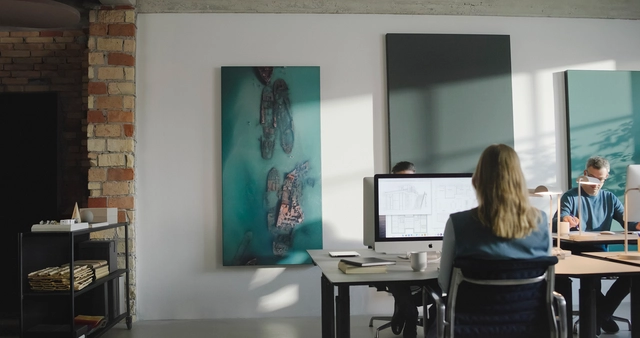
The noisier the environment, the harder it is to concentrate on the sounds we really want –and need– to hear. We spend about 90% of our time indoors, either at home or at work, often with little concern for acoustic qualities, making our body remain in a constant warning state. In offices this is an even more critical issue. While traditional open plan working spaces encourage teamwork and effective communication, many professionals face the challenge of being able to concentrate with the frequent noises, whether from a nearby conversation, the construction site next door, or a noisy espresso machine. Among the problems that noise pollution can cause in the human body are stress, accelerated heartbeat, increased blood pressure, insomnia, and a constant state of vigilance. Studies also show that poor acoustics negatively affect productivity.
This can be further amplified by the environment itself, often composed of "hard" surfaces (masonry, concrete, glass) that reverberate sound several times over, making it necessary for people to raise their voices to be understood. Furthermore, acoustic devices are generally perceived as accessories that are not very aesthetically pleasing, often with clumsy designs and with little or no flexibility.
From the first traces of a sketch to the ribbon cutting at the official inauguration, a building and its construction process goes through numerous steps. From understanding client demands, complying to local regulations, staying within budget, getting the necessary approvals for development and construction details, a lot of time, resources and decisions are involved. To this end, it is essential to have a workforce that knows and understands the correct processes inside-out, are well informed and have experience and availability. Finding and training this workforce isn't always easy though, and this is where Aligned Studios comes in: a service that creates and manages teams composed of qualified designers for US architectural and construction companies.
Although we usually think of climate change as something that should be addressed by research institutes, governments or official reports, private companies also play a key role in affecting change, as they are on the front lines of production and innovation. This is especially true in the field of construction, as it is an industry that moves a significant amount of resources and people, but also exerts a huge impact on the environment. Unfortunately, not all companies take on this challenge, although this is slowly changing and can be seen in a number of successful examples. One of these is the case of Rieder, which embarked on a journey to become “Climate Positive” by 2030 and, more notably, set the example when building its new headquarters.
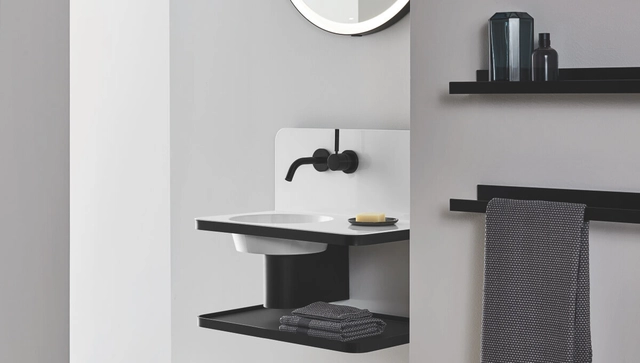
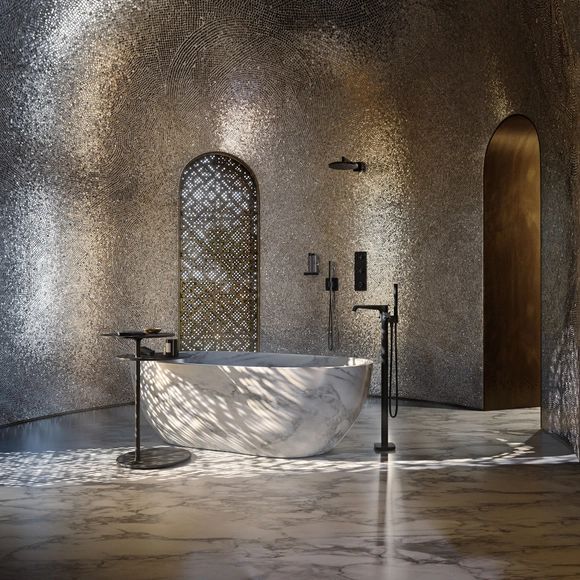
Much more than a merely utilitarian and functional space, the bathroom can be a relaxing place of privacy, solitude and self-care. It can be approached as an oasis of tranquility within one's home, a space to create bold combinations and highlight originality, or even as a room to surprise visitors and escape the usual designs, with different textures, colors and accessories. To achieve the desired effect of each project, specifying the most appropriate parts for each bathroom accessory is essential, which includes toilets, storage devices, walls and fittings such as taps and showers.
Square shapes convey a sense of reliability and safety, while triangles represent stability, balance and movement. Circular forms, in turn, tend to be more "friendly", as they encompass all other shapes. This is known as the psychology of shapes, a science that studies the influence of shapes on people and their meaning and effects on our minds. In fact, geometric shapes are almost naturally familiar to us, even if we have no formal studies or mathematical references specific to them, as this study showed. In architecture, basic geometric shapes are also widely explored through playing with volumes, subtractions and intersections in floorplans and façades. The shapes may also appear in their truest forms, in interior elements and accessories. This is the case of AXOR Universal Accessories, which comprises three product lines, each representing a basic shape: rectangular, round and with rounded corners, reinterpreted into bathroom accessory products.
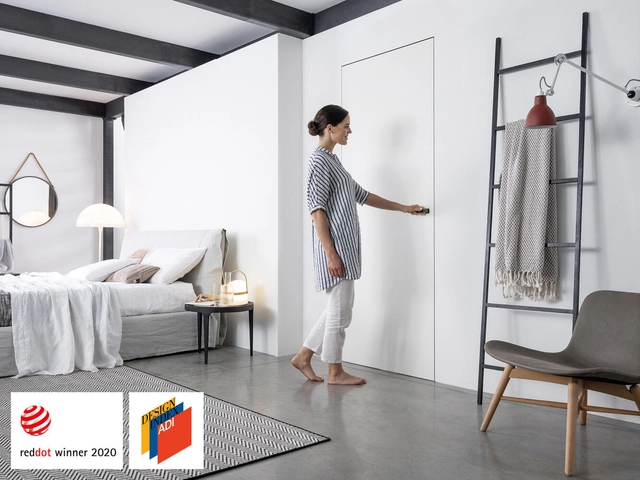
Bob Dylan's “Knockin' on Heaven's Door” is about arriving to heaven, but it also speaks of the element of the door, which allows one to enter paradise (or not). There is a lot of symbolism related to this constructive component, such as opening, limits, transitions and transformations. Doors have been around since the time of the Egyptian tombs and we can hardly think of architecture without them. While doors play a prominent role and have an unquestionable function, they can also be seen as visual obstructions in certain interior projects, which can be at odds in some spaces, without really fitting in aesthetically.
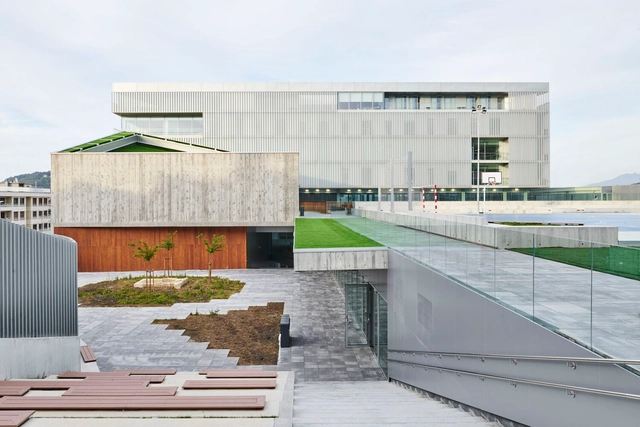
Wooden elements have the power to add warmth to a space or building. Through their shades, textures and rustic look, wooden surfaces tend to stand out, especially when used alongside more neutral and sober materials. In the Aldapeta María Ikastetxea School, a project developed by IDOM in the city of San Sebastian, Spain, the architects used the material in a particularly interesting way. Wood panels brought visual comfort and warmth to the building, whose material palette is limited, focusing especially on the use of glass, steel and exposed concrete.
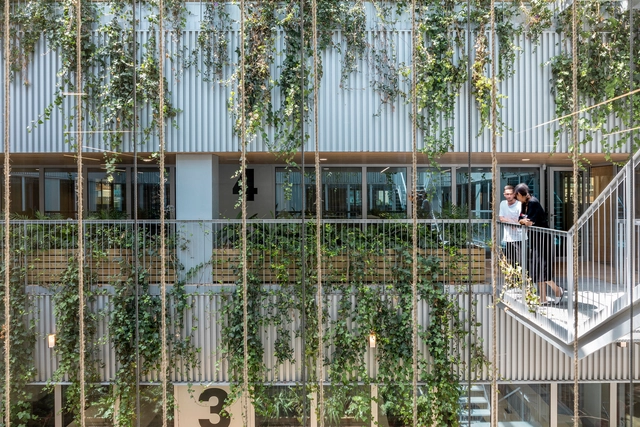
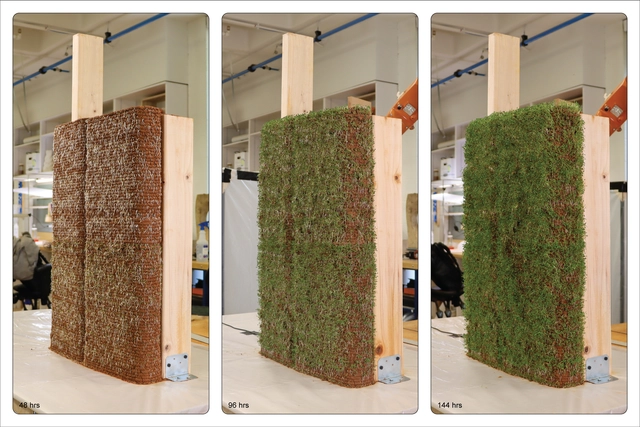
The relationship between architecture and nature is complex. If, on the one hand, we enjoy framing nature as art in our homes; on the other hand, we try at all costs to avoid the presence of obstructive "real" nature in our walls and structures, which can be damaged by roots and leaves. At the same time, we use green roofs, vertical gardens and flower boxes to bring cities closer to nature and improve people's wellbeing; but we also construct buildings with materials that are completely dissociated from fauna and flora. Although the advancement of biomaterials and new technologies is gradually changing this, we should nevertheless ask ourselves whether the structures and buildings we occupy need to be separated from the nature that surrounds them. This was the question that led researchers at the University of Virginia (UVA) to develop geometrically complex 3D-printed soil structures on which plants could grow freely.
Sanctuary House / Tai Ikegami. Image Cortesia de Western Window Systems
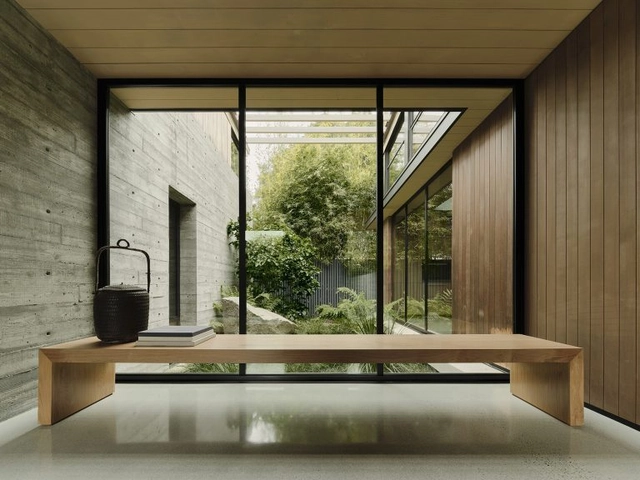
Interior courtyards can be found in various types of traditional architectures around the world, especially in warmer climates. They can be classified as introverted, safe, and even sacred spaces in some cultures. They can also be gathering places and, above all, provide greater contact with nature while providing light and ventilation to home interiors. To properly design these spaces and create a functional relationship between the inside of a house and its courtyard, it is important to use appropriate doors and openings. In this article we highlight 5 projects that use sliding glass doors for the seamless integration of both spaces.
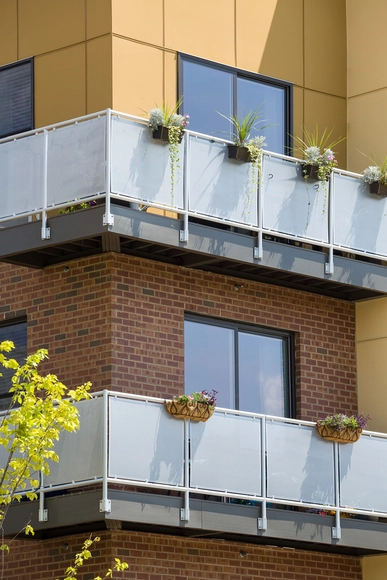
There is an unusual story involving railings during World War II. To meet the demand for ammunition, ships and vehicles for battle, various fences and railings in the city of London were removed for repurposing. The real fate of these pieces, however, is unclear: some say they ended up being dumped into the Thames river or became ballasts for ships, as they couldn't be recycled. The reason was that they were all made of cast iron at the time, making them difficult to reuse; unlike the large amount of materials and designs available today. Their functions, however, have not changed: railings provide protection to occupants and can be prominent elements in architecture. In this article, we explain how to specify and design different types of railings, according to the different materials available.
Next to a wall or in the corner of a room, most sofas seem relegated to lean against the only available wall in a space, preferably with a TV in front. As they are usually very large pieces of furniture, they can be complicated pieces to integrate into a room. In consequence, a sofa might end up "stiffening" a space, restricting movement and compromising flexibility – an increasingly important aspect for interiors – in a room. This is why the sofa can be considered an anchor piece in interior design; an element whose placement will probably not change throughout time, and that will certainly have an impact on the other elements within a space.
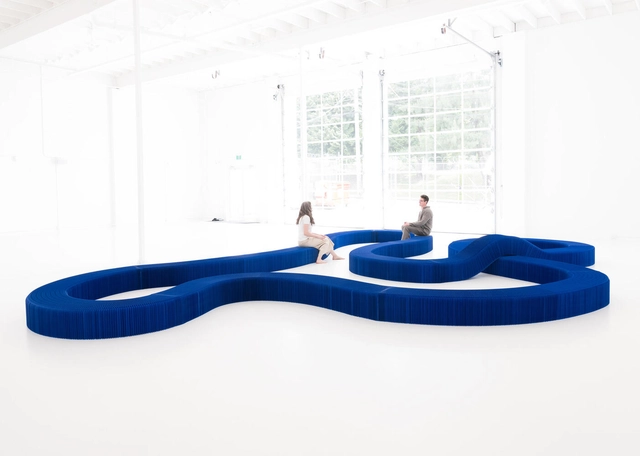
Modular sofas, however, give flexibility and versatility to an otherwise rigid piece. Made of separate parts, they can adopt several shapes and sizes, creating different ambiances and completely changing the layout and distribution of an environment. In this article, we showcase some modular sofa options – and how they can add dynamism to interior spaces – with product examples from the Architonic catalog.
Bees are perhaps the insects that most arouse our fascination and curiosity. With the exception of Antarctica, they are found on all continents, in all habitats that contain insect-pollinated flowering plants. Representations of humans collecting honey from wild bees date back to 15,000 years ago, and pots of honey have even been found in the tombs of Egyptian pharaohs like Tutankhamen. Although we generally have a fixed idea about what cartoon bees look like, there are thousands of species around the world, with different sizes, colors and behaviors. There are even several examples of solitary bees, many without stingers, and even some species that survive by plundering other weaker colonies. But something that has consistently impressed researchers is the organization of their hives, which are truly highly populated cities with an efficiency to make any urban planner envious.
“Counting sheep” is a well-known mental exercise that people use when trying to fall asleep. It is thought to have been popularized by Miguel de Cervantes in Don Quixote, who is said to have been inspired by a twelfth-century Spanish tale. Whatever its origin, it is curious to think that falling asleep has been a problem for so long, even long before the invention of electric light or social networks on smartphones. In the early 2000s, the University of Oxford developed a study to prove the effectiveness of this sheep-related method. The conclusion: this tactic does not work.
Something thatis scientifically proven, however, is the relationship between the body's production of melatonin and the feeling of sleepiness at the end of the day, which can in turn lead to a restorative night of sleep. This is directly related to the circadian rhythm, our daily biological clock. This inner "clock" synchronizes our body's functioning and is highly influenced by the wavelengths and intensities of natural and electric light we are exposed to during the day. As we continue to spend more and more time indoors, typically with inadequate visual stimuli from electric lighting during the day, and too much stimulation from electronic devices and overhead lighting after dark - it is essential to focus on the study of lighting in architecture and how it affects people and their well-being.
Videos
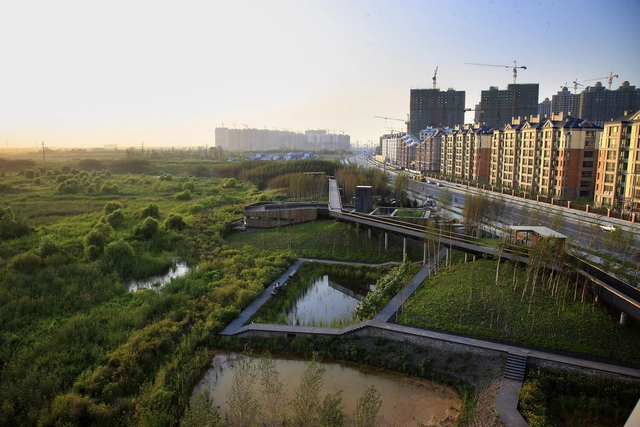
Qunli Stormwater Wetland Park / Turenscape. Image Cortesia de Turenscape
Eucalyptus forests in Australia are known to burn periodically. It is the trees' way of ensuring propagation, as its fruits – known as gumnuts – have an insulating layer breaks down with the heat of the fire. Once they open, the burnt soil is covered with seeds, initiating a process of forest renewal. Glenn Murcutt, an Australian architect, has created a body of work rooted in the country's landscape. His innovative houses embrace the possibility of frequent fires, including elements that allow for fire control with the least possible loss. In short, the houses are built with very non-flammable materials, always have huge water reservoirs, and a “flood system” that allows the building and its immediate surroundings to be spared in the case of a forest fire.
Concrete can be found in almost any type of construction around the world. But how is it made?
During manufacturing, once in contact with water, concrete’s main ingredient, cement, binds to any aggregates present and goes through a number of complex chemical reactions. That eventually turns it into concrete, a material that is very durable and easy to work with. Despite this reliable durability, concrete can go through a number of internal processes that can lead to serious structural concerns. One of these is alkali-silica reaction (ASR), which can cause cracks in concrete and even put structures in danger of collapse over time.
The expression "a perfect storm" refers to an event (typically an unfortunate one) which is exacerbated due to a confluence of negative or unpredictable factors. It is widely used when describing meteorological phenomena, but can also be applied to other contexts, such as the economy. The analogy can also be used to describe the relationship between the climate crisis and the world's dependence on concrete. As demonstrated in the Chatham House report, while cement (an essential element for concrete manufacturing) is extremely detrimental to the greenhouse effect and climate crisis –representing about 8% of global CO2 emissions–, its global production is nevertheless expected to increase over the next 30 years. It is said that this increase will stem from the demand for rapid urbanization in regions such as Southeast Asia and sub-Saharan Africa. At the same time, the last IPCC report warned that we only have 11 years to reduce emissions and prevent irreversible damage due to climate change. In other words, the cement industry is facing a significant expansion at a time when emissions need to fall rapidly – a perfect storm.
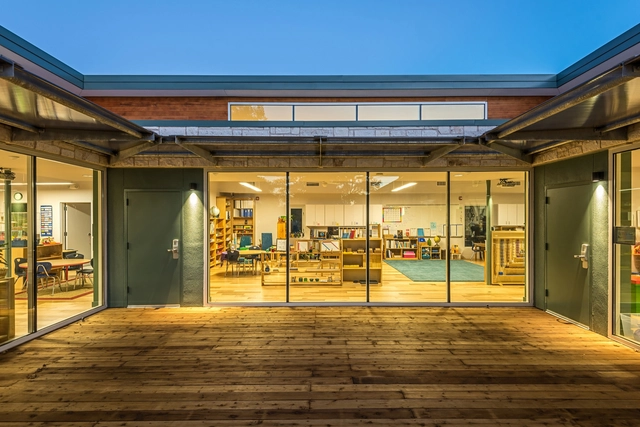
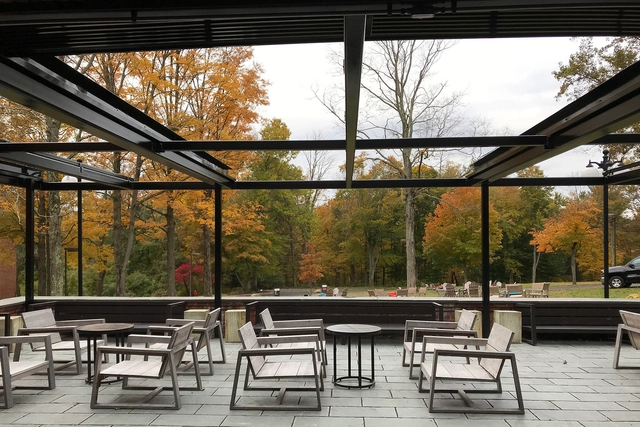
The primary function of architecture, and possibly the most important and basic, is to protect against the weather. Whereas our ancestors would stack tree trunks and animal skins to create rudimentary shelters against the sun and rain, the emergence of architecture took on impressive proportions, creating temples and captivating spaces that fulfill many other functions. The purpose of sheltering people from the outdoors, however, remains an important one and can turn an outdoor area into a functional and engaging space. With all the innovations that currently exist, there are also numerous improvements emerging for their mechanisms and functions.