Check out this small dwelling located in the countryside of Switzerland. Designed by FOVEA Architects, the residence boasts a strong aesthetic with a sharply angled facade. The titled upper volume (it is inclined at 40 degrees) faces south, and its geometry balances the need for privacy and light. The lower level is a simple rectangular floor plan with a patio; an outdoor area that seems contained by the angled volume above. Large windows allow natural light to illuminate the interior, and also provide great views of the surroundings. The home was prefabricated and is clad in painted pine planks that allow it to blend in with the rural architecture of the area.
iki, a practice based in Ankara, Turkey, have shared with us their competition proposal for a Concert Hall and Art Center for Ankara, capital city of Turkey. Additional renders, plans, sections and a brief architects description after the break.
The recent recipient of the 2010 AIA Chicago Unbuilt Design Award, the Culver House Development sparks the conversation of sustainable design within the private sector of the prestigious Gold Coast neighborhood, Chicago, Illinois. A mixed-use development, the building was designed to achieve LEED Gold status. Both the office space and eight dwelling units capitalize on the thoughtful design of the energy efficient and ample day-lit spaces.
The jurors are quoated as descirbing the Culver House Development plan as “very smart” and the scheme “handsome.” In reference to the varied floor plans of the residential units jurors claimed that “it breaks the typical pattern of every floor being the same” and continuing stating, ”it is like a jigsaw puzzle.”
More about this award winning design following the break.
French architects Oglo + PPil shared with us their project ‘Dark Rift’, for which they received 2nd Public Prize in the Ponte de Lima International Garden Festival in Portugal. More images and architect’s description after the break.
https://www.archdaily.com/87143/dark-rift-oglo-ppilAmber P
Mass Architectuur and Joep Van Der Veenwere selected as one of six first prize winners for a competition organized by ‘Stichting de Stad’ to research potentials for the development of infrastructural nodes around Dordrecht, the Netherlands. Tijland, or Tidelands, was selected by Prof. ir. Kees Kaan, with Koen van Velsen and Prof. ir. Joost Schrijnen, among others.
Read on for more images and information after the break.
Amidst a block of more traditional houses in Bilzen, Brussels-based Bassam El-Okeily, in collaboration with Karla Menten, has squeezed a contemporary three storey residence. From the street, the project’s vastly unique façade screams for attention, yet the crazed internal geometry is contained by a flat piece of glass – a move that allows the project to assimilate better into its context. In the evening time, the façade is lit in different colors allowing the house to act as “a pubic light sculpture by night.”
Jimenez Lai of Bureau Spectacular shared his residential project for a warehouse loft. The 1400 sf space is conceived as a house within a house where all the material possessions are compacted into one oversized briefcase, which the subject sleeps inside. The project focuses on engaging two architectural issues: the inside/outside and S/XL.
More information, including Lai’s illustrated storyboards after the break.
Great projects from USA, Canada, India, and China. Here’s our 5th selection of previously featured educational architecture. Check them all after the break.
Becton Dickinson Campus Center / RMJM The Campus Center at BD (Becton Dickinson and Company), a medical technology company that serves healthcare institutions, life science researchers, clinical laboratories, industry and the general public, is a 38,500-square-foot facility that bridges and blurs the boundaries between building/landscape, indoor/outdoor, roof/earth, figure/ground, and the two local business cultures of management/production (read more…)
The 2011 TED Prize-winner is the artist who goes by the tag, JR. His enormous photographic installations obscure the facades of buildings, overlay streets, and sometimes collage to cover clusters of buildings in one massive broken image.
While some shy away from calling his work “street art,” I don’t see any shame in this—especially given the clear social justice objectives inherent in the imagery. It presents the faces, literally but never as cliché, of invisible and overlooked peoples. In this way, it is street art in the best sense of the term. You walk into the street and there it is and it has something to tell you. It takes buildings and turns them into indexes of shame, embarrassment, nobility, hope—whatever you might associate with the everyday struggles of the displaced lower-classes.
Why would this building be abandoned when at one point it was such a significant symbol for the country? Buildings such as this that have been left to stand alone are calling out for architects to intervene and come up with well thought out solutions while being sensitive to its historical significance. At one time, the Buzludzha Monument, designed by Gueorguy Stoilov, was the most celebrated monument dedicated to the sociopolitical movement of communism. Now, in the mountains of Buzludzha National Park in Central Stara Planina, Bulgaria, stands an abandoned communist concrete structure right in the middle of the country taking on a “flying saucer” in appearance. What should be done with buildings that have been abandoned all over the globe? Now is the time to think critically and discover the possibilities. More images and after the break.
While in Miami for the 2010 AIA Convention we had the chance to visit Chad Oppenheim, founder of Oppenheim Architecture + Design.
The firm specializes in world class hospitality, residential and mixed-use design, with a focus on sustainability. Some of these works include a villa in Dellis Cay for Mandarin Oriental, Villa Allegra, the COR Tower (featured next in AD), Starwood’s DC 1 Hotel in Washington, the Campus Center, the Enea Headquarters and smaller projects suchas the Simpson Park Hammock Pavilion, among several others. Oppenheim’s designs in the Miami area stand out in a developer-driven market.
In the next few days we are going to feature several of his recent projects so you can have a better idea about the firm. Please find the rest of the interview below:
The Architectural Association is organizing a visiting school in Mexico City titled, “Recovering Waterscapes”, which focuses on the challenges created by the changing city on this scarce resource. The event is scheduled to take place on the 5th-14th of January 2011 at Universidad Iberoamericana. More event description after the break.
This past Tuesday marked the much anticipated 2010 midterm elections in the United States. In a switch of power the Republic party gained control of the U.S. House of Representatives while the Democrats maintained control of the U.S. Senate. You may be asking yourself what do the results of these recent political changes have to do with me? Well here is the scoop:
For the most part lawmakers who have previous backed design-related policies survived. This includes the Congressional High Performance Building Caucus chairpersons, Judy Biggert (R-IL and Russ Carnahan (D-MO).
A supporter for the tax incentive of green buildings, Rep. Dave Reichert (R-WA) was re-elected. Previously assisting the AIA to expand access to credit, Reps. Scott Garrett (R-NJ) and Mike Coffman (R-CO) won their races. Livability champion Rep. Earl Blumenauer, Hon. AIA (D-OR) and Reps. Ed Perlmutter (D-CO) – author of the GREEN Act for green affordable housing and the Livable Communities Act – and Allyson Schwartz (D-PA), a leader on green buildings and historic preservation, all won re-election.
A couple weeks ago, we featuredSTL‘s proposal for the Kaohsiung Competition. Now, Sun & Schrempp Associates have shared with us their design for a Marine and Pop Music Center driven by the wave motion of the water experienced at Kaohsiung’s marine port. More images and architect’s description after the break.
Please join the committee and the winning teams at the Center for Architecture (536 LaGuardia Place), November 11 at 6:00 pm, for the opening party to celebrate the competition winners and the launch of the competition publication, HB:BX, Building Cultural Infrastructure. The exhibition will be on view at the Center for Architecture through March 27, 2011.
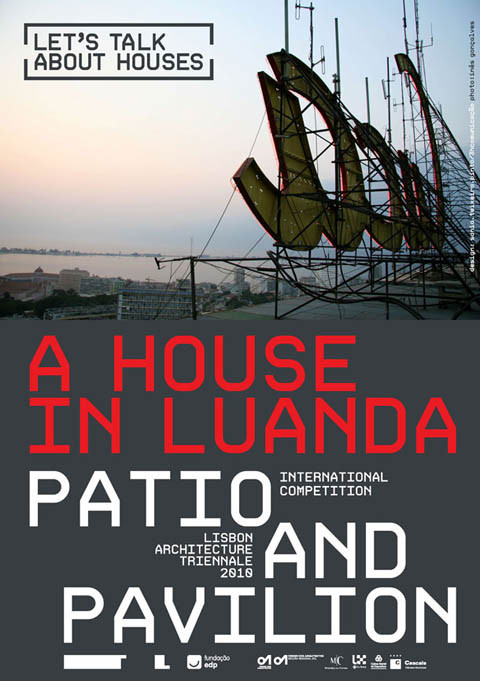
The International Competition A HOUSE IN LUANDA: PATIO AND PAVILION, promoted by the Lisbon Architecture Triennale together with Luanda Triennale, with the goal of selecting the best proposal for the conception of a family unit house in Luanda, was the most participated International Competition of Ideas ever to take place in Portugal, thus showing that the Lisbon Architecture Triennale completely fulfills its international calling.
The competition received 599 proposals, 588 of which were accepted to the competition, from 44 countries and 5 continents. ArchDaily has recently featured the 2nd prize winner of this competition. 1st prize as well as all others after the break.
While in Chicago earlier this year I had the chance to interview an amazing architect: Michael Graves.
Michael Graves has played an influential role in architecture, often credited as moving the profession in America from abstract modernism to post-modernism. His designs communicate a clear point of view reflecting a sense of playfulness with sophistication. The balance of traditional elements (typically through arches, columns, and pediments) and exploration with color convey the lessons of modern architecture while referring to historical details.
ETB Studio shared with us their proposal for a new guesthouse in in Villafranca de los Barros, Spain. Their complex was awarded with second place in the competition. More images and architect’s description after the break.
The CDR-CDU Master plan by Nabito Arquitecturais directed by the desire to create self-sufficient enclosures in the proposed Blocks in order to fight against the abusive urban texture that has developed over the past 50 years on the site. The architects have tried to create an operational space within each of the Blocks in the master plan in hopes that future development of each individual Block will link with one another.
If you’re in the Los Angeles area, the Architecture + Design Museum is launching its latest exhibition – a retrospective honoring Stephen Kanner. Kanner, in addition to being the founder and president of the A+D, was also a third generation architect and principal of Kanner Architects. Some of his most notable projects include PUMA retail stores worldwide, in addition to his contributions to his native LA environment. The exhibit, which will run from November 4th through January 16th, will display sketches and models of his work. As Sam Lubell reported for the AN Blog, “Many will be surprised by the depth of Kanner’s talents—he could sketch almost any building or neighborhood with exact precision, his cartoons were artful and hilarious, and he excelled at painting, model-making, and even carpet design— or even the breadth of his architecture, so this show is a must-see.” The museum is set to establish a Stephen Kanner Memorial Fundto ensure the future of the museum. A+D explained, “Kanner envisioned a museum dedicated to progressive architecture and design, celebrating not only the design breakthroughs of the city but also the accomplishments of the national and international design scenes.”