

Produce personalized presentation boards that distill complex concepts into simple visual representations with a few helpful tools and effects.
Articles
How to Create Architectural Presentation Boards
| Sponsored Content
https://www.archdaily.comhttps://www.archdaily.com/catalog/us/products/37234/how-to-create-architectural-presentation-boards-lumion
Health & Sports Education Center of Kang-won National University / Idea Image Institute of Architects

Designed by Kang Chul-Hee and Idea Image Institute of Architects, the Health & Sports Education Center attracts local residents’ participation and heightens its value as a community sports center. Located on the eastern part of Kang-won University’s Choon-Chun Campus, it is somewhat secluded from its surroundings. So in order to adapt to the steep landscapem, the center’s swimming pool and education facility are designed with multi-level entrances, emphasizing a diverse entryway and an adventurous space. More images and architects’ description after the break.
https://www.archdaily.com/134897/health-sports-education-center-of-kang-won-national-university-idea-image-institute-of-architectsAlison Furuto
Architecture City Guide: Portland

This week our Architecture City Guide is headed to Portland, Oregon. As one of the greenest cities in the world, it is a leader in sustainable architecture. Even though Portland is only the 29th most populous city in the U.S., it has the second highest number of LEED-accredited buildings. Only Chicago, a city more than four times the size of Portland, has more green buildings. Beyond its contemporary and green architecture it has a good variety of historic buildings that are worth visiting. We have put together a list of 12 contempory buildings to visit, but since we limited it to 12, it is far from complete. We would like you, our readers, to suggest other “must not miss” in the comment section after the break.
Architecture City Guide: Portland list and corresponding map after the break!
https://www.archdaily.com/135553/architecture-city-guide-portlandChristopher Henry
Senate Legislation Calls for Zero-Net-Energy Buildings by 2030

A recent Bi-Partisan Congressional effort has landed the 2030 Challenge back on the Senate Floor, where the Energy Savings and Industrial Competitiveness Act of 2011 was introduced by Senators Rob Portman (R-OH) and Jeanne Shaheen (D-NH). The bill places meeting the 2030 Challenge target of zero-net-energy for new buildings by 2030 as the first item in a comprehensive strategy for U.S. energy reductions in the building and industrial sectors.
https://www.archdaily.com/135310/senate-legislation-calls-for-zero-net-energy-buildings-by-2030Kelly Minner
Living Roof / NAU

NAU is an international, multidisciplinary design firm, spanning the spectrum from architecture and interior design to exhibitions and interactive interfaces. As futurists creating both visual design and constructed projects, NAU melds the precision of experienced builders with the imagination and attention to detail required to create innovative exhibits, public events and architecture.
The Living Roof is a living environment boiled down to its most essential elements: a refuge to recover, plan excursions into the city, or simply stare into the stars. Offering you the essence of the city, it condenses all the functions of daily life into a compact and self- sustaining capsule, intended for urban rooftops, but ready to be airlifted into the savanna at short notice. The minimal interior allows for concentrated thought and recuperation, while the highly efficient enclosure helps resolve one of the paradoxes of modern life: the contemporary citizen seeks mobility, but also wants to tread softly on the environment. For just this sort of traveler, NAU has designed the Living Roof, the first short-term housing unit to produce more energy than it consumes.
https://www.archdaily.com/134296/living-roof-nauKelly Minner
AD Round Up: Retail Part VII
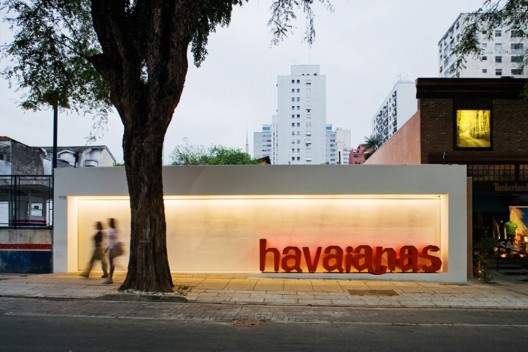
Five projects from 2009 for our seventh selection of previously featured retail projects. Check them all after the break.
Havaianas Store / Isay Weinfeld Havaianas Sandals, created in 1962, drew their inspiration from the “zori”, traditional Japanese slippers made of rice straw. A product of extremely low cost, for many years they were just rubber flip-flops, a long way from the fashion icon they are today (read more…)
https://www.archdaily.com/135569/ad-round-up-retail-part-viiSebastian Jordana
New Doctorate's Building, National University Bogota / Steven Holl Architects

The importance of the National University of Colombia campus began with its enlightened master plan by the architect Leopold Rother in the 1930s. With its green center, classical axiality, and layered concentricity, the campus contains some wonderful examples of architecture.
Architects: Steven Holl Architects Design Architects: Steven Holl, Chris McVoy, Garrick Ambrose Senior Partner in Charge: Chris McVoy Project Architect: Garrick Ambrose Project Team: Johanna Muszbek, Scott Fredricks, Dimitra Tsachrelia Location: Bogota, Colombia Project Area: 70,000 sqf
https://www.archdaily.com/135544/new-doctorates-building-national-university-bogota-steven-holl-architectsKelly Minner
Graphisoft ArchiCAD 15

Last week, we attended the AIA 2011 National Convention in New Orleans, where Graphisoft presented ArchiCAD 15, the latest version of its premium design software for architects. ArchiCAD 15 enriches architectural forms available for designers to unleash their creative minds. The new version also expands the scope of the BIM workflow to include renovation & refurbishment projects.
The evolution of forms has always walked hand-in-hand with the evolution of structures. From the simplest barrel vaults to the most sophisticated rib vaults, the architect has always aspired to combine durability, utility and beauty (Vitruvius). These very principles can be seen in the finest examples of modern architecture as well. ArchiCAD 15 expands the design capabilities of its BIM tools, including new Shell structures, to support the broadest spectrum of architectural shapes and forms found in both classical and modern architecture.
- ArchiCAD introduces the new Shell tool – enabling designers to unleash their creative minds and to create enriches architectural forms.
More features after the break.
https://www.archdaily.com/135413/graphisoft-archicad-15Sebastian Jordana
ResilienCity / map-lab

The International Living Future Institute launched the Living City Design Competition in 2010, seeking designs for our cities in the year 2035. map-lab’s submission was ResilienCity. ResilienCity seeks to set the vision for the future of Boston’s Innovation District, a new neighborhood built on grey field and brownfield sites that will provide residences and workplaces for over 300,000 people.
We have reached the tipping point where we need to think of the whole, not the self. We have arrived at a time when we need to stop behaving selfishly and begin to explore how we can all come together as a community to create environments that are culturally enriching, healthier, and equitable. We come back to nature to do this. Additional images of map-lab’s submission and a continuing narrative can be seen after the break.
https://www.archdaily.com/134895/resiliencity-map-labHank Jarz
Practice 2.0: BIM is an opportunity, not a problem

by David Fano
Practice 2.0 is a regular series of posts guest authored by CASE (@case_inc), focusing on technology and innovation in the building industry.
At CASE my efforts focus on the strategic implementation of new technology, software development and learning. As a regular contributor to ArchDaily, I hope to touch on how firms of all sizes are dealing with change and how I think embracing new technologies will enable new forms of practice and create opportunities. If there is interest, I can also chime in on how to start a consulting firm and alternative forms of practice in the building industry.
I give a lot of presentations on BIM. Understandably, there is a certain level of anxiety that comes along with any new process. But I’m frequently confronted with the same set of fears, which really have no solid footing in reality. In this article, I would like to address those fears and in the process debunk three commonly held myths about BIM: that a firm’s size should be the deciding factor in whether or not to implement BIM; that the size and type of project limit opportunities for BIM; and that BIM requires a wholesale change of tools and processes. BIM adoption is making its way through the industry at an amazing pace and I hope to ease some of the unrest around taking the plunge and point out where we can capitalize on the value it provides.
More after the break.
https://www.archdaily.com/135486/practice-2-0-bim-is-an-opportunity-not-a-problemCASE
Top 100 Architecture Firms

Architect Magazine‘s third-annual ranking of American architecture firms takes a look at three factors: profitability, sustainability, and design quality. This whole picture approach provides an opportunity for small and large firms to go head to head, with a result of the best architecture firms, not necessarily the biggest.
Some of these practices have been featured on ArchDaily like Perkins + Will, Skidmore Owings & Merrill, Cannon Design, and Frank Harmon Architect.
Take a look at the complete rankings after the break.
https://www.archdaily.com/135414/top-100-architecture-firmsKelly Minner
AD Internship

Summer is around the corner, and many of you are wondering what to do with all that precious free time you didn’t have until now. What about spending it doing your internship at the most read architecture website, working with a highly motivated group of architecture lovers, contributing to keep the architecture community informed about projects and news around the world?
If you live in USA (London is also a possibility), please follow the break for all the details on what we are looking for (and what you can expect from us). More information after the break.
https://www.archdaily.com/135456/ad-internshipSebastian Jordana
Linda a Velha Primary School/ CVDB Arquitectos

CVDB Arquitectos has shared with us their proposal for the Linda a Velha Primary School in Oeiras Portugal. Follow after the break for additional images and a brief narrative from the architects.
https://www.archdaily.com/134872/linda-a-velha-primary-school-cvdb-arquitectosHank Jarz
AA Summer DLAB 2011

Summer DLab experiments with digital design tools and rapid prototyping techniques as integrated systems of design development. Taking advantage of its unique location within the AA premises in the heart of the London, the workshop will create a vibrant atmosphere not only through its rigorous studio work, but also by its public lecture programme that will share the diverse expertise of professionals from London’s leading offices in the areas of digital design and fabrication techniques.
https://www.archdaily.com/135035/aa-summer-dlab-2011AD Sponsor
SOM Wins 2011 AIA Institute Honor Award for Regional and Urban Design

The Beijing Central Business District (CBD) plan by SOM can now add 2011 AIA Institute Honor Award for Regional and Urban Design to its list. The ongoing 4,200,000 sqm project is the winning design from the international design competition expanding the Beijing CBD
The plan calls for the establishment of three new districts anchored by signature parks and green boulevards. New modes of public transportation are proposed, including express commuter rail service between the Beijing Capital International Airport, the CBD, and high speed rail service at Beijing South Station. A new streetcar system is proposed to conveniently link all areas of the CBD, and every street would be bicycle friendly. To establish a pedestrian-friendly scale for development, the plan calls for a network of small, walkable blocks.
https://www.archdaily.com/135377/som-wins-2011-aia-institute-honor-award-for-regional-and-urban-designKelly Minner
Karoo Wilderness Center / Field Architecture

The Karoo Wilderness Center represents a significant shift in perspective and practice, sponsoring and provoking the learning, dialogue, and action necessary to redefine the consequence of human inhabitation on the land. The Center aims to re-establish the connection between the built and natural world as one that is mutually beneficial. Forming an exemplary model of sustainability, the Center generates its own energy, harvests its own water, processes its own waste, and provides thermal comfort using no municipal water or power. Learning from the continuum of life in the Karoo, the architecture of the Center provides a lasting connection to the landscape, and fosters an understanding of the interdependence of ecosystem health, and human well being.
Architect: Field Architecture Location: Karoo, South Africa Project Team: Stan Field, Jess Field (Design Principals), Andy Lin, Erik Bloom, Chris Graesser Structural Engineers: Arup Conservation Management: Wilderness Foundation South Africa Environmental Impact Analysis: Integrated Environmental Management Project Area: 21,800 sqf
https://www.archdaily.com/135314/in-progress-karoo-wilderness-center-field-architectureChristopher Henry
AD Recommends: Best of the Week

One theatre, two houses, a classic motel and a mikve! All great posts you may have missed from last week. Check them all after the break.
Almonte Theatre in Huelva / Donaire Arquitectos The building is located on the site of an old winery. It has the challenge of integrate the existing old buildings, declared as cultural interest, and being part of a cultural complex of a total of three buildings and a common space. This space turns into the main place of the town and an important meeting area (read more…)
https://www.archdaily.com/135415/ad-recommends-best-of-the-week-58Sebastian Jordana
Best Green Projects: Case Studies in Sustainable Design Success Webinar

Architects with diverse and interesting green projects in North America will present their work, illustrating best practices for achieving high performance design with exceptional aesthetic and sustainability standards. The panelists will discuss three projects – small, medium, and large — to share how sustainability concerns were integral to the design process. Topics to be covered include selecting appropriate materials and technology, deciding on energy saving strategies, balancing aesthetics with performance, meeting and managing client expectations, achieving eco-friendly buildings on time and within budget, utilizing building information modeling (BIM), and applying post-occupancy lessons learned.
https://www.archdaily.com/135398/best-green-projects-case-studies-in-sustainable-design-success-webinarSebastian Jordana
Rennes Metro Station / Atelier Zündel & Cristea

Paris based architects, Atelier Zündel & Cristea, have shared with us their design for the new Saint Germain metro station in Rennes, France. Additional images and a brief description from the architects are available after the break.
https://www.archdaily.com/134862/rennes-metro-station-atelier-zundel-cristeaHank Jarz
Firm Identity in an Age of Mergers and Acquisitions

In the current economic climate, the business of architecture is undergoing fundamental change. One accelerating trend is mergers, acquisitions, and strategic partnerships: these new practice configurations are affecting company identities, business development strategies, and communications. Moderated by James Russell, this program will be a conversation among representatives from three firms with recent M&A.
https://www.archdaily.com/135255/firm-identity-in-an-age-of-mergers-and-acquisitionsSebastian Jordana
“Angels' Dance” - XXI Century Theater in the former Sant' Anna's Church / Silva & Roth Architects

The XXI Century Theater which is located in the former Sant’ Anna’s Church in Prague, Czech Republic is a choreographed spatial strategy that begins with the translation of words into actions, and is followed by the manifestation of actions into spaces. Silva & Roth Architects developed the “Angels’ Dance” through the notions of actions and motion, spontaneous behaviors and the architectonic space.
More on this project after the break.
https://www.archdaily.com/134783/%25e2%2580%259cangels-dance%25e2%2580%259d-xxi-century-theater-in-the-former-sant-annas-church-silva-roth-architectsIrina Vinnitskaya
Update: New Amsterdam Pavilion Opens / Ben van Berkel

Last summer, we had the opportunity to discuss Ben van Berkel’s design ideas behind his New Amsterdam Pavilion for New York (see our past coverage here). At that time, while the pavilion’s sleek sculptural form was complete, the interior the pavilion was still under construction. Now, with the interior and landscape complete, the pavilion has opened for public use. Situated outside the South Ferry terminal in Peter Minuit Plaza, the pavilion will serve as a new cultural hub in the middle of an intersection crossed by more than 150,000 residents each day. Conceived as a contemporary “outdoor living room”, the project will provide visitor information, locally grown gourmet food, and a space for spontaneous and schedule activities. Plus, at 12:00, the pavilion will glow with an array of colors in tribute to Peter Minuit whose name translates to ‘midnight.’
More about the pavilion after the break.
https://www.archdaily.com/134805/update-new-amsterdam-pavilion-opens-ben-van-berkelKaren Cilento
Henry Gifford Files Opposition to USGBC’s Motion to Dismiss Amended Complaint

The USGBC continues to be in the headlines as last week Henry Gifford filed opposition papers to the USGBC’s motion to dismiss the pending lawsuit in New York.
Mr. Gifford’s attorneys argue in their opposition. “If the USGBC website were password protected for professional members only, that assertion would be more convincing,” Mr. Gifford’s attorneys write. “But the USGBC website is aimed at giving the general public an overview of LEED, with ‘What LEED Is’ on the masthead. USGBC’s website explains to the layman consumer: ‘By using less energy, LEED-certified buildings save money for families, business, and taxpayers. . . It’s absurd to think USGBC is not directing its marketing at the tenant-consumer.”
https://www.archdaily.com/134475/henry-gifford-files-opposition-to-usgbc%25e2%2580%2599s-motion-to-dismiss-amended-complaintKelly Minner
Art and Archeological Museum / CVDB Arquitectos

The Art and Archeological Museum in Vale do Coa, Portugal by CVDB Arquitectos is an entry for an International Public Competition hosted by the Portuguese Archeological Institute. The project is located on a relatively secluded landscape and creates a establishes a strong connection between the natural and built forms on the site.
More on this project after the break.
https://www.archdaily.com/134796/art-and-archeological-museum-cvdb-arquitectosIrina Vinnitskaya
'$H!T HAPPENS': An innovative traveling exhibit curated by Juergen Mayer H.

Why Berlin? Once an industrial center and later a city divided, Berlin’s walls fell years ago, and its gates have since remained open for experimentation. The city attracts artists and designers from around the world to its former factory buildings, transformed into studios and galleries. Berlin’s streets foster potential for what is new, perhaps more than any other place today. It has become an avant-garde capital for design in an unlikely locale, inviting international talent in the overlapping disciplines of art, architecture, industrial and product design.
https://www.archdaily.com/135136/ht-happens-an-innovative-traveling-exhibit-curated-by-juergen-mayer-hSebastian Jordana
Oops! We don't have this page.
But you can browse the last one: 417