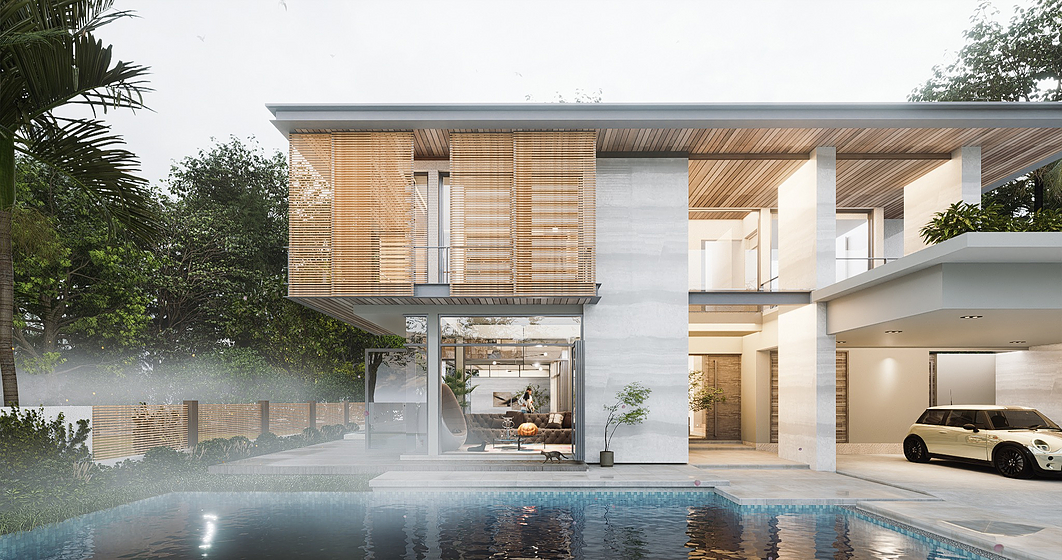
This guide shows how to use a D5 Render a free live-sync plugin to improve SketchUp workflow.


This guide shows how to use a D5 Render a free live-sync plugin to improve SketchUp workflow.
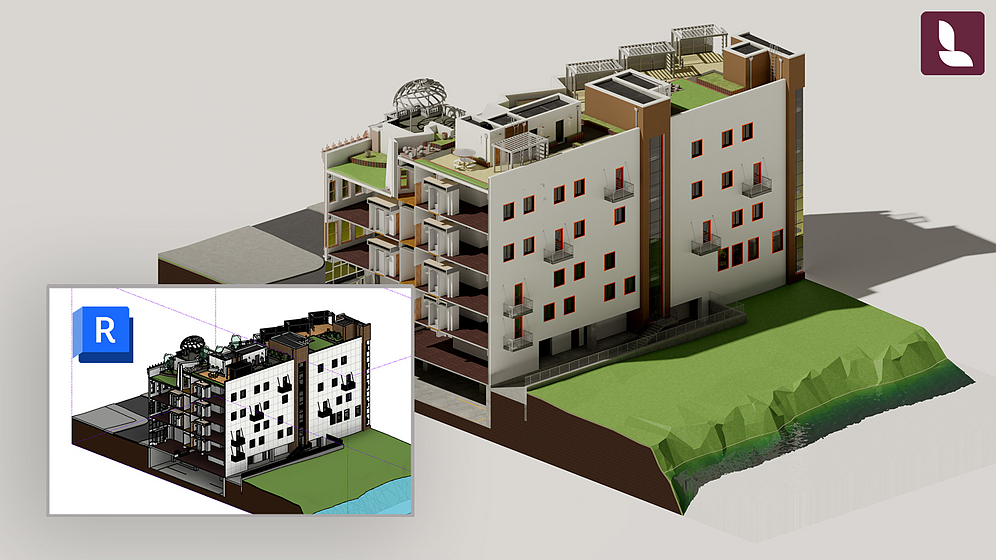
A real-time visualization, providing a realistic, immersive view of your model within your familiar BIM environment.

Rice University’s School of Architecture shared with us their current lecture series that started on September 1st and runs until November 17th. Each year, the Rice School of Architecture pulls big names in the architecture world to its lecture series. This year’s main topic is JUDGEMENT in Architecture, with Neil Denari and Ben van Berkel on the list to speak among others. More information on the series after the break.

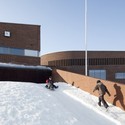
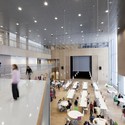
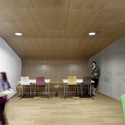
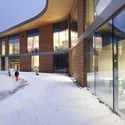
Architects: Verstas Architects Location: Espoo, Finland Client: City of Espoo Project Year: 2010 Project Area: 10,280 sqm Photographs: Rauno Träskelin, Tuomas Uusheimo

Atlanta Mayor Kasim Reed, Wal-Mart representatives and officials from the Office of Sustainability and Sustainable Atlanta announced today a competition to design an urban farm on a vacant lot across from City Hall. The Trinity Avenue Urban Farm Design Competition was launched to support the city’s effort in establishing an effective and inspirational model for urban agriculture and furthering the city’s pursuit of becoming a Top 10 sustainable city. In addition, as part of Wal-Mart’s initial funding, there is a $25,000 award to the winning submission.
The contest is open to students, educators and professionals across Georgia in fields related to urban agriculture and landscape architecture. Interested competitors must register online here by October 15 and submit proposals by November 1. Once the winning design is chosen, the preparation of the land and design installation will begin immediately, with the farm scheduled to open to the public by the spring of 2012. More information the competition after the break.
In this July 2011 TEDGlobal talk, physicist Geoffrey West argues that mathematical laws of networks and scalability govern the properties of cities. West demonstrates how wealth, crime rate, walking speed, and other aspects of a city can be predicted based on a city’s population–universally, and with startling accuracy.

By Steve Sanderson
My inbox was hit recently by a couple of posts painting a bleak picture of the impact of BIM on the AECO industry. Thoughtful and objective criticism of BIM is helpful and necessary to counter vendor marketing overreach and fanboy zealotry. Unfortunately the criticisms I read are neither thoughtful nor objective. Instead they rely on sensationalist titles, sources outside of the building industry, and nonexistent relationships between cause-and-effect.
The first, A Cautionary Digital Tale of Virtual Design and Construction published in Engineering News-Record (ENR), describes the construction of an undisclosed building at an undisclosed university that resulted in an undisclosed contractor suing the undisclosed owner, who then sued an undisclosed architect, who brought an undisclosed MEP engineer into the mix. The lawsuit was settled out of court for an undisclosed amount by an insurance company. Tellingly, a VP at the insurance company is the only source for the article. The point seems to be that if you use BIM you could be sued.

Growing demand for green products, new standards, and continuing economic shifts are transforming business practices at Steelcase, O Excotextile, and others reports Tristan Roberts in the Greensource feature “Green Manufacturers Examine Their Impacts.”
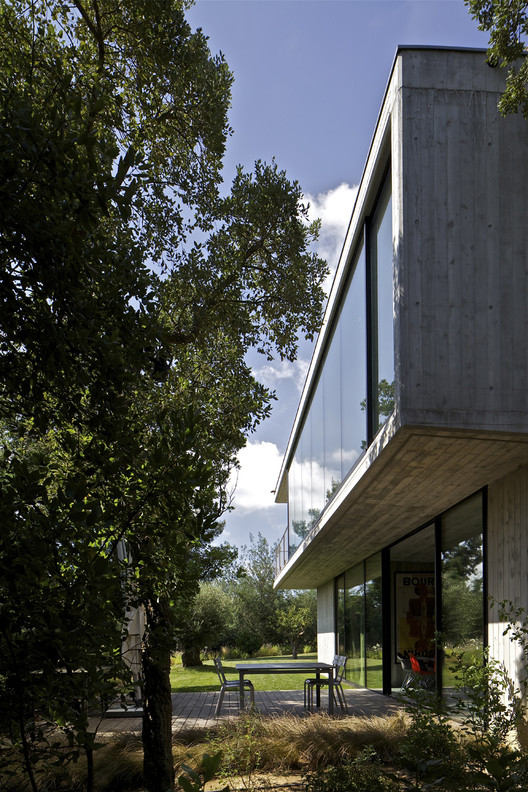
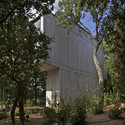
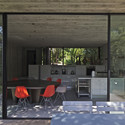
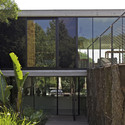
Architect : Raphaëlle Segond Architecte Location: Domaine de Beauvallon, Township of Grimaud, France Project Team: Jonhattan Inzerillo, Project Manager Concrete & masonry : Paul Ciotta & Fils, maçons Windows crafters : Maria Aluminium Electrician : Nicolas Espitalier électricité Project Area: 250 sqm Project Year: 2011 Photographs: Philippe Ruault

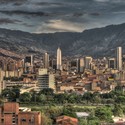
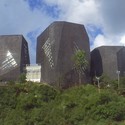
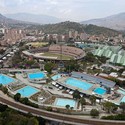
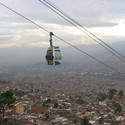
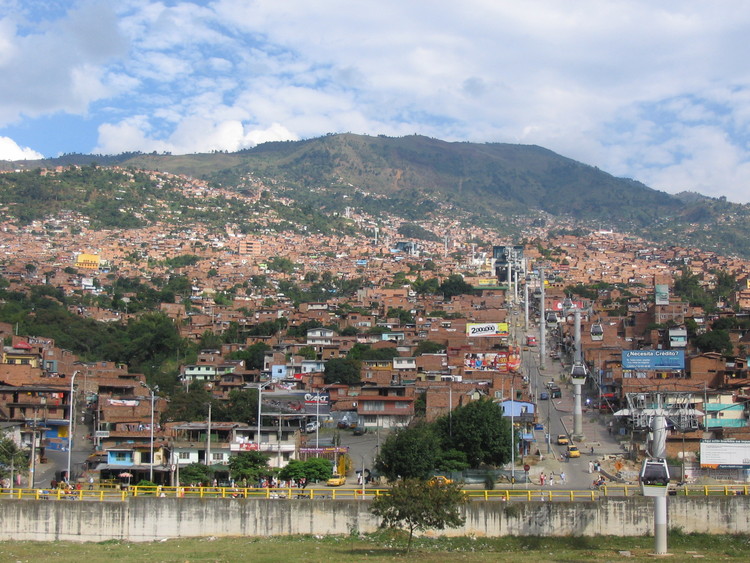
A renaissance through architecture has been unfolding throughout the past several years in Colombia’s second largest city – Medellin. Home to 3.5 million inhabitants it was plagued by violence in the 1980’s and 1990’s. However, through an ambitious plan headed by former mayor Sergio Fajardo, the cityscape has undergone a dramatic shift since his election in 2003. One of the defining principles of this initiative that invested millions into civic architecture and public infrastructure was to build in some of the roughest districts of the city. More details after the break.
There is a lot of attention being paid to the New York skyline these days – and rightly so, as the Freedom Tower rises about 1 story a week. Yet, a little farther up the Island, an elegant faceted tower has caught our attention since its completion in 2008. Designed by New York-based Cook + Fox, the conceptualization behind the sleek volume, which rises gracefully from its base at One Bryant Park, is rooted in ideas of biophilia – the innate relationship between nature and man. Constructed to respectively take its spot as the second tallest building in NYC , the sustainable tower marks the first LEED Platinum commercial skyscraper in the world. Check out this short click featuring Principal Richard Cook as he offers a deeper explaination of how biophilia informed not only the formal attitude of the architecture, but also shaped the experiences and atmosphere of this 2,200,000 sqf skyscraper.

The Gulating Museum proposal by LETH & GORI is a design for a new museum building for the historic Viking thingstead Gulating in Norway. The museum building is situated in the middle of the grandiose mountainous landscape as a natural portal for visiting the historic site. The circular building provides an overview of the area and information about the rich history and culture of Gulating. More images and architects’ description after the break.

A large tree, whose leaves are drawings, a pond from which photos of projects arise, a large installation which recreates the mental landscape of Alberto Campo Baeza: this is CAMPO BAEZA. THE CREATION TREE, the third of the monographic exhibitions of NATURE, the series of four monographic installations in which MAXXI Architectura explores different interpretations of contemporary architectural investigation.
Co-produced by MAXXI Architectura and Acción Cultural Española (AC/E) with the special collaboration of TOTO GALLERY MA of Tokyo, the show, dedicated to the work of one of the masters of Spanish architecture, is curated and designed by Manuel Blanco. More information on the event after the break.


Personeni Raffaele Schärer Architects shared with us their competition proposal for an AquaPark in the Swiss Alps where they won the second prize. Located in an exceptional geographical context, the quality of the alpine setting was decisive in shaping the design of this particular water park. More images and architects’ description after the break.

The Kilcreggan Competition ‘A future for rural communities’ intended to produce ideas which could be replicated in other rural areas to help areas keep families and businesses and attract young people to live and work. The small village competition, Kilcreggan is 40 miles outside of Glasgow, recieved 56 entries and chose Konishi Gaffney Architects as the winning design. Focusing on designing a blueprint for the survival and growth of rural communities. Konishi Gaffney Architects’ proposals provided “some particularly innovative and well considered events along a new foreshore promenade, which could form a template for other rural communities to reinvigorate their communities by improving the amenity of their settlements and making them attractive as a destination for others”.

“If implemented, the material would take care of most of construction’s attempts at carbon reductions in one fell swoop,” says Material ConneXion Vice President Dr. Andrew H. Dent of the company’s selection for 2011 MEDIUM award. The selection, Novacem‘s Carbon Negative Cemement, replaces calcium carbonates used in typical cement formulation with magnesium silicates and uses a lower-temperature production process that runs on biomass fuels.

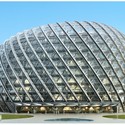
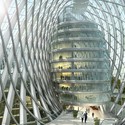
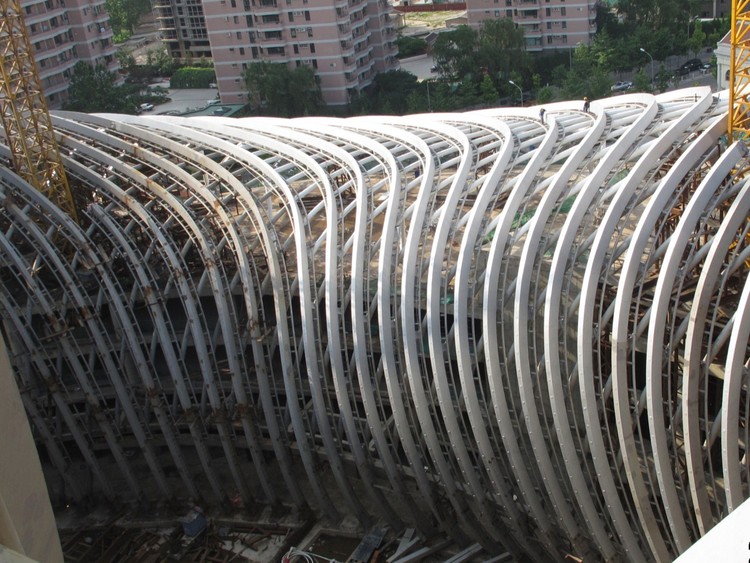
Architects: BIAD UFo Location: Beijing, China Client: Phoenix Satellite Television Project Year: 2009-2012 Project Area: 64973 sqm Photographs: Courtesy of BIAD UFo

The proposal, by design team Diana Q. de Saul and Alejendro Munevar, consists of an organic building-scape which allows for a variety of recreational and educational activities while creating a cultural icon for Busan. The building is organized around three principal wavelengths generated parametrically based on the pre-existing local tensions: a stunning ocean view to the west, a bustling city to the east, and a thriving cultural district to the south. More images and project description after the break.

When the Taiwan Tower competition in Taichung asked participants for an iconic skyscraper, Visiondivision responded with a cluster of over 100 slender towers that challenges the expected experiences within and aesthetics of a 21st century tower. Tower Town, a result of examining the traditional skyscraper and questioning its spatial offerings, creates a dense urban environment with its fragmented massing.
More about the project after the break.

The Architectural Association (AA) Visiting School, which provides an opportunity for visiting students, young architects, recent graduates and other creative individuals to participate in a form that emulates the school’s famed ‘unit system’ – that is, through a highly-focused short course pursuing a shared agenda of collaborative design, study, research and performance, will be holding an event at the German University of Technology, Muscat from September 10-22.
In order to develop theoretical, as well as practical, contributions to their discourse, the workshop will have as its methodological focus the form and idea of the pattern – patterns are seen as a means of translating the performance, as well as the appearance of historical structures into new concepts. More information on the event after the break.

Fentress Global Challenge is an annual international competition created by Fentress Architects to engage students worldwide in the exploration of future design possibilities in public architecture. The competition theme changes each year to reflect current issues. For 2011, students around the globe are invited to envision the Airport of the Future.
Winning students will receive cash prizes and gain international exposure. Top design concepts will be exhibited online and in the Airport of the Future section of the international touring exhibition Now Boarding: Fentress Airports and the Architecture of Flight, which will offer a multi-media immersion into the past, present and future of airport design. It will open in North America in the summer of 2012, and will travel internationally through 2015. More information on the competition after the break.

Ludwig Mies van der Rohe was born in Aachen in 1886. On the occasion of the 125th anniversary of his birthday, Aachen Fenster e.V. and the Department of Theory of Architecture at RWTH Aachen University, will jointly host an international conference.
By determining new, yet sustainable ties between technology and aesthetics, as well as between ideas and artifacts, Mies van der Rohe defined a path leading to architectural modernity. The works of Mies have been documented, published, and displayed in countless exhibitions. As major references they stand apart from the rapid change of attitudes and stylistic preferences.
The Aachen symposium on Mies is not meant to be a hagiographical laudation on the person, the work or its reception. ‘Rethinking Mies’ will rather provide opportunities to understand the essence of Miesian thought and its relation to the modern movement as well as to contemporary practices of architecture. More information on the event after the break.
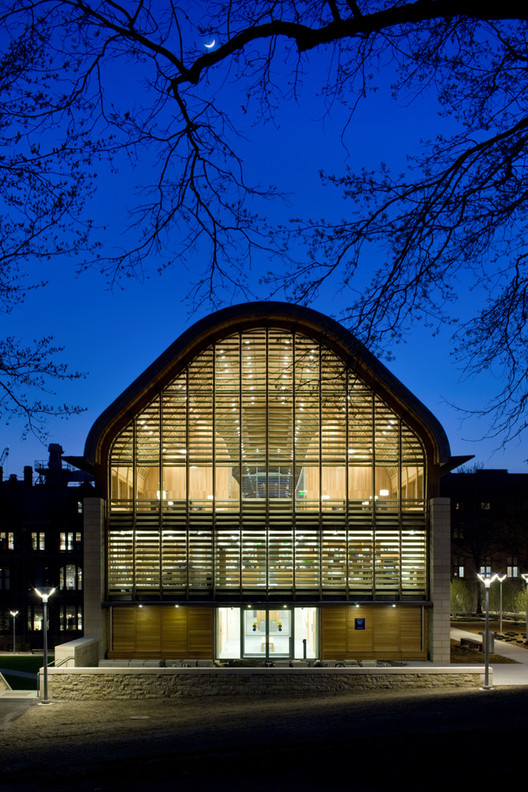
Tensions mounted between modernist and traditionalist camps earlier last month when Paul Finch, UK Chairman for the Commission for Architecture and the Build Environment, praised the fact that modernists had won bids to design buildings for the 2012 Olympics. In response, Robert Adam, member of the Traditional Architecture Group, and Michael Taylor, senior partner at Hopkins, the firm that designed the Olympic velodrome, met for a discussion on hegemony, timeliness, and pastiche moderated by Guardian staffer Lanre Bakare.
This video, produced by Maike Acosta and Javier Cuevas of Florida International University (FIU), was awarded the Grand prize for the AIA Florida Committee on the Environment’s (COTE) 2011 Video-Arch Competition. The competition asked for short video clips that emphasize the architect’s primary role in designing sustainable and energy resourceful environments, leading the state of Florida and the nation their sustainable potentials. The theme of Architecture Controlling the Future of Sustainability was required to carry through to the video, intending to be a public service announcement touching on the subjects of the entrants’ choice: energy, water, public health, economics, or land use.

The greenway is a modern twist on an outdated concept. Ancient cities sprung up around trade routes. Many modern US cities were originally formed according to access to a local train station or navigable river. Today’s metropolises were brought to success by an advanced highway system. All of these circumstances were brought about by two prevailing factors, location and traffic. In a post-modern world however, when the infrastructure has been laid and a consumer society comes to live for a variety of new reasons how can these concepts be applied. The answer lies, partially at least, within the recent push for a developed greenway system.
But you can browse the last one: 417