

This guide covers a workflow for generating multiple style variations, testing material and furniture options, and assembling a visual presentation package, all from one photograph of the existing room.
Articles
How to Show Multiple Concepts from a Single Photo
| Sponsored Content
https://www.archdaily.comhttps://www.archdaily.com/catalog/us/products/39064/how-to-show-multiple-concepts-from-a-single-photo-ideal-house
Power Stations Bjornstokk and Ovre Forsland / Stein Hamre Arkitektkontor As

Stein Hamre Arkitektkontor As shared with us their design for new hydraulic power stations in northern Norway. The main idea is that the power stations should adapt to the site. More images and architect description after the break.
https://www.archdaily.com/228668/power-stations-bjornstokk-and-ovre-forsland-stein-hamre-arkitektkontor-asVictoria King
Developer Plans for New York's Next Iconic Building

Boxy replicas of high-end offices dominate New York’s Park Avenue skyline, with only two modernist exceptions breaking the mold – Mies van der Rohe’s Seagram Building and Skidmore, Owings & Merrill’s Lever House. As the static skyline has remained largely untouched for nearly four decades, New York City developer L&L Holding Co. has announced plans to replace the aging tower of 425 Park Avenue with a new state-of-the-art, LEED-certified skyscraper. Norman Foster, Jean Nouvel, Zaha Hadid and Richard Meier are just a few of the eleven distinguished architects that L&L has invited to join in a competition for the redevelopment of the 65 year-old tower.
Continue reading for more.
https://www.archdaily.com/229116/developer-plans-for-new-yorks-next-iconic-buildingKarissa Rosenfield
Acadia Parish Conference Center / Trahan Architects

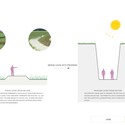
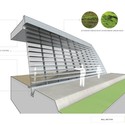
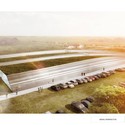
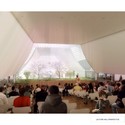
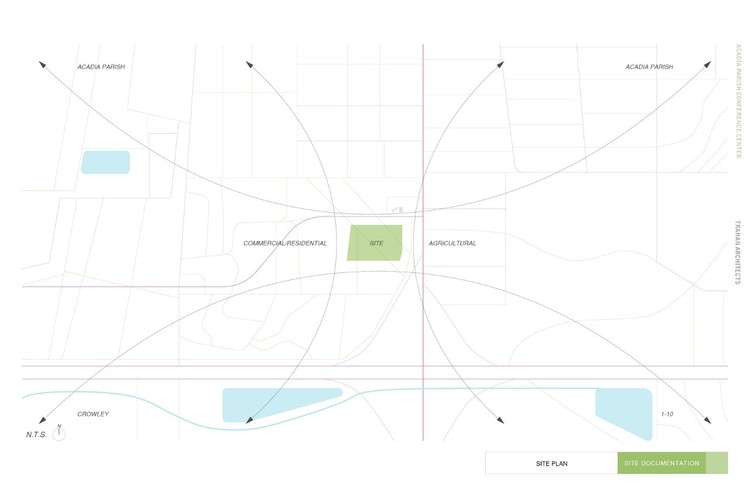
Located to the north-east of Crowley, a small town in Louisiana known to be the “Rice Capital of America”, the Acadia Parish Conference Center by Trahan Architects will mediate the threshold between the urban development to the west and the agricultural fields to the east. Envisioned as an extension of the landscape, the center creates a harmonic balance between the two environments, expressing the importance of local agricultural.
Continue after the break for more on the Acadia Parish Conference Center.
https://www.archdaily.com/229005/acadia-parish-conference-center-trahan-architectsKarissa Rosenfield
AIA Selects the 2012 COTE Top Ten Green Projects

The American Institute of Architects (AIA) and its Committee on the Environment (COTE) have selected the top ten examples of sustainable architecture and green design solutions. Now in its 16th year, the COTE Top Ten Green Projects program is one of the profession’s best known recognition program for sustainable design excellence.
The highlighted projects are the result of a thoroughly integrated approach to architecture, natural systems and technology. They have made a positive contribution to their communities, improved comfort for building occupants and reduced environmental impacts through strategies such as reuse of existing structures, connection to transit systems, low-impact and regenerative site development, energy and water conservation, use of sustainable or renewable construction materials, and design that improves indoor air quality.
All the projects will be honored at the AIA 2012 National Convention and Design Exposition, next month in Washington, D.C. Continue after the break to review the top ten green projects.
https://www.archdaily.com/228323/aia-selects-the-2012-cote-top-ten-green-projectsKarissa Rosenfield
Green Architecture Competition Proposal / Lijbers Architect

With the aim of the Green Architecture competition to stimulate and collect innovative proposals on how architecture, urban design & planning, and landscape architecture could contribute to maintain and improve our biodiversity, Lijbers Architect looked at the decline of natural biodiversity from the perspective of complex human dynamics. By investigating the organized but fundamentally unpredictable behavior of human systems and its consequences for the natural environment, they find that the highly dynamic reallocation and changing of the earth’s habitat by human action falls short in providing vulnerable species of plants and animals with sufficient time to recover. More images and architects’ description after the break.
https://www.archdaily.com/228889/green-architecture-competition-proposal-lijbers-architectAlison Furuto
"Lost" Le Corbusier Building Sparks Preservation Movement in Iraq

In Upstate New York, residents are clamoring to raze down their Government Center, Paul Rudolph’s classic 1970 example of brutalist design. Ostensibly, this is due to flood-damage. But it can’t hurt that, as one resident was quoted in The New York Times as saying, it’s “a big ugly building.”
In Minnesota, city officials would rather tear down M. Paul Fiedberg’s Peavey Plaza, a “Modernist gem” completed in ’73, than spend the time, money, and effort to revitalize it.
In Baghdad, on the other hand, a gymnasium completed in 1982, suffering the signs of decades of violence, poverty, and ill-executed renovation, has sparked a small preservation movement, reawakening a country to its neglected cultural heritage.
The architect behind this Iraqi endeavor? None other than Le Corbusier himself.
Read More on the “forgotten” Le corbusier in Baghdad, after the break…
https://www.archdaily.com/228601/lost-le-corbusier-building-sparks-preservation-movement-in-iraqVanessa Quirk
'HOME' International Open Design Competition

With the support of Habitat for Humanity and the YMCA, Building Trust International seeks to find well designed homes for the elderly or homeless within some of the World’s richest countries though their ‘HOME’ competition. The growing rate in single occupancy households has led to increased numbers of young and elderly people affected by poverty being forced to live in substandard living conditions and in the worst cases sleeping rough. They are asking designers, engineers, architects and house builders to provide a solution to the housing crisis by offering sustainable, affordable small homes that give those that are alienated or marginalized within society a safe place to live. ask contestants to site their proposals in an urban area of a developed country, develop single occupant designs that are sensitive to the local context and keep to a budget of £20,000 ($30,000). Proposals are due no later than July 31. For more details on the competition and how to register, please visit here.
https://www.archdaily.com/228316/home-international-open-design-competitionAlison Furuto
2012 Architectural League Prize Winners Announced

The Architectural League just announced the winners of No Precedent, the thirty-first annual Architectural League Prize for Young Architects + Designers (formerly known as the Young Architects Forum). The League Prize is one of North America’s most prestigious awards for young architects. The program exemplifies the League’s longstanding commitment to identifying and nurturing the development of talented young architects and designers. This year’s winners are: Jorge Arvizu, Ignacio del Rio, Emmanuel Ramirez, and Diego Ricalde, MMX Studio, Mexico City; Jimenez Lai, Bureau Spectacular, Chicago; Sean Lally, WEATHERS / Sean Lally, Chicago; Seung Teak Lee and Mi Jung Lim, STPMJ, Brooklyn; Michael Szivos, SOFTlab, New York; and Koji Tsutsui, Koji Tsutsui & Associates, San Francisco and Tokyo. More information on the awards, including exhibition and lectures, after the break.
https://www.archdaily.com/228331/2012-architectural-league-prize-winners-announcedAlison Furuto
19th Annual Canstruction® Raises Hunger Awareness with Food Drive Exhibit

At this year’s 19th annual Canstruction: Exhibition, a Food Drive and Design Contest at the World Financial Center in New York City, 26 design and architecture firms have built gigantic, gravity-defying sculptures from thousands of cans of food. Over 100,000 cans were turned into works of art to help City Harvest feed hungry New Yorkers. The exhibition, free to the public, is up now until November 21, and encourages visitors to donate high-quality non-perishable foods, such as tuna, beans, and canned vegetables. More information on the exhibition can be found here. More images after the break.
https://www.archdaily.com/228303/19th-annual-canstruction-raises-hunger-awareness-with-food-drive-exhibitAlison Furuto
Video: Bjarke Ingels Exposes His Roots
As we have shared with you earlier, CNN’s The Next List has profiled the young, Danish architect Bjarke Ingels. Originally aspired to be a cartoonist or graphic novelist, Ingels quickly became fascinated with architecture when a Fall storm rolled through his hometown in North Copenhagen, knocking over trees and leaving him a surplus of lumber. It was then that he was inspired to design his first project, the ultimate childhood “fantasy fort” with a moat, drawbridge and all. In Ingels first experience with value engineering, he quickly learned that “unless you really begin with the perimeters of reality you’ll end up sort of amputating your ambitions quite quickly.” Enjoy the video and be sure to check out CNN’s recent video focusing on the bold ideas behind BIG.
https://www.archdaily.com/228599/video-bjarke-ingels-exposes-his-rootsKarissa Rosenfield
Chameleon Restaurant / Za architects

Chameleon is a design of a dynamic interior which adapts to changing environment and can serve various purposes. The interior of the restaurant adapts to changing environment in the same way as the chameleon changes its color depending on its mood. The created space of the restaurant constantly resorts to mimicry and adaptation.
https://www.archdaily.com/228441/chameleon-restaurant-za-architectsVictoria King
AD Recommends: Best of the Week

https://www.archdaily.com/228593/ad-recommends-best-of-the-week-80Sebastian Jordana

Kulturcampus Frankfurt / Adjaye Associates

The Kulturcampus designed for Frankfurt, Germany by Adjaye Associates rests on the idea of grouping a city’s most important cultural institutions into the heart of the city. The focus is on creating a micro-city on the city that is currently occupied by the University of Frankfurt, which will be vacated in 2014. This micro-city is intended to be diverse collection of uses that will provide a space of gathering for the adjacent neighborhoods of the campus.
Read on for more after the break.
https://www.archdaily.com/227769/kulturcampus-frankfurt-adjaye-associatesIrina Vinnitskaya
AD Interviews: Winy Maas / MVRDV
We had the incredible opportunity to interview Winy Maas, the M in MVRDV, one the most influential contemporary practices, which has been able to push the boundaries of our field in different scales, from buildings to master plan, from construction to theory. In this interview Winy shares interesting thoughts on the role of the architect and how he runs this design/research practice.
https://www.archdaily.com/210344/ad-interviews-winy-maas-mvrdvDavid Basulto
Finalists for the Masterplan of Tirana, Albania / Grimshaw Architects

Grimshaw Architects is one of two finalists selected in a competition for the master plan of central Tirana, Albania. The competition brief called for a comprehensive strategy that built upon the international identity of the city – particularly its waterways and the major boulevard running between them. It also called for an integration of transportation links – a city-wide transformation to streamline the infrastructure and bring vitality into the experience of the city.
Read on for more on Grimshaw’s strategy to enrich Tirana.
https://www.archdaily.com/227771/finalists-for-the-masterplan-of-tirana-albania-grimshaw-architectsIrina Vinnitskaya
Citylights / Dominique Perrault Architecture

Dominique Perrault Architecture shared with us their winning proposal in the international architecture competition launched by General Electric Capital Real Estate for the requalification of the Pont de Sèvres Towers. Their design response, which could at first appear minimalist, proposes a luminous landmark for one of the most ambitious programs in the service sector of the Western Paris area. More images and architects’ description after the break.
https://www.archdaily.com/224252/citylights-dominique-perrault-architectureAlison Furuto
Where is LEED Leading Us?...And Should We Follow?

At this point, it’s fairly uncontroversial to say that the Earth is under siege. From us, from our resource-consuming ways, ultimately, from our thoughtlessness.
Green Design is not just a catch-phrase, but a mindset. As Architects, implementing the principles of Green Design means putting thoughtfulness back into our actions, conscientiously considering our built environment, and reversing the havoc we have wreaked on our resources.
To do that, we need to know what Green Design means, and be able to evaluate what it is and isn’t. Using Earth Day as our excuse then, let’s examine the single most influential factor on the future of Green Design: LEED.
To its credit, LEED has moved a mountain: it has taken the “mysticism” out of Green Design and made Big Business realize its financial benefits, incentivizing and legitimizing it on a grand scale.
But as LEED gains popularity, its strength becomes its weakness; it’s becoming dangerously close to creating a blind numbers game, one that, instead of inspiring innovative, forward-looking design, will freeze us in the past.
Read the 10 Pros & Cons of LEED, after the break…
https://www.archdaily.com/227934/where-is-leed-leading-us-and-should-we-followVanessa Quirk
MeasuringUP Symposium

Presented by the Department of Architecture at Portland State University, the MeasuringUP symposium is dedicated to advancing regional knowledge and efforts for environmentally responsive architecture. Taking place May 10-11 on the Portland State University campus, the event sets out to discuss the following questions: Are green buildings in use measuring up to their targets? What role do building occupants play in the discussion of performance? How can research in buildings inform and improve design practice? And how can successful strategies be replicated at a larger scale? More information on the event after the break.
https://www.archdaily.com/228300/measuringup-symposiumAlison Furuto
Museum of Modern Art in Warsaw (MMAW) / Camilo Rebelo

The design proposal for the Museum of Modern Art in Warsaw (MMAW) by Camilio Rebelo results from the fusion of two themes always present in the history of Art expression: nature’s figurative and abstract representation. The museum demonstrates an amalgam of distinct realities, diverse cultures, and simultaneously a neutral setting as well as hold a unique and magnetic identity: Mutant Nature. More images and architects’ description after the break.
https://www.archdaily.com/228287/museum-of-modern-art-in-warsaw-mmaw-camilo-rebeloAlison Furuto
The Siege of Sarajevo Museum - The Art of Living 1992-1996 Fama Collection / Studio Zec + ahA + Filter

A collaborative work by Studio Zec + ahA + Filter, The Siege of Sarajevo Museum – The Art of Living 1992-1996 project is launching a new way of interacting and learning about the phenomenon of the Siege of Sarajevo. Regarding urban survival, Sarajevo has become a powerful symbol and a lesson for current and future generations. The museum will be a unique depository of human knowledge – where human ingenuity, creativity and intelligence will be captured amidst the urban post-cataclysmic realm. It is a heritage snap-shot of faces and voices that have shaped the longest siege in the modern history of mankind. More images and architects’ description after the break.
https://www.archdaily.com/227965/the-siege-of-sarajevo-museum-the-art-of-living-1992-1996-fama-collection-studio-zec-aha-filterAlison Furuto
Kickstarter: Cosmic Quilt – Interactive Installation + Student Workshop / The Principals
The Principals, a Brooklyn-based practice that work on industrial design and interactive environments, are posing a question to the design community: What would it be like if the environment we inhabit responded to our present in an active way? What if we shift the scale of the way in which our devices operate to the way our buildings function? The questions posed by The Principals are the considerations of a project called Cosmic Quilt that is planned to be exhibited on Design Week 2012 on May 19-21. In order to create a mock-up of this type of space, the group is enlisting the help of 20 students from the Art Institute of New York and the help of financial backer’s through Kickstarter.
More on the planned project after the break.
https://www.archdaily.com/227781/kickstarter-cosmic-quilt-interactive-installation-student-workshop-the-principalsIrina Vinnitskaya
D.I.Y Urbanism: Almere Oosterworld / MVRDV

MVRDV‘s proposal for an urban development in Almere Oosterworld, the Netherlands, is a template for a D.I.Y. project that puts power into the hands of neighborhoods and communities. This development strategy is bottom-up, inclusive and very intuitive to the needs of individuals and their communities. It allows the design to develop organically and over a stretch of time as needs change and neighborhoods grow. MVRDV writes that the proposal “is a revolution in Dutch urban planning as it steps away from governmental dictate and invites organic urban growth in which initiatives are stimulated and inhabitants can create their own neighbourhoods including public green, urban agriculture and roads”.
Find out how it’s done after the break.
https://www.archdaily.com/227503/d-i-y-urbanism-almere-oosterworld-mvrdvIrina Vinnitskaya
Unveiling Exhibition of VCU Institute for Contemporary Art / Steven Holl Architects

Steven Holl Architects invites you to join them in the unveiling exhibition of their Institute for Contemporary Art at Virginia Commonwealth University. The event will take place at the Meulensteen gallery in New York on April 26 from 6-8pm. The 32,000 square-foot building will provide gallery spaces for traveling and school exhibits, classrooms, offices, art storage spaces and an auditorium, and accommodate a sculpture garden and a café. Joseph H. Seipel, Dean of the VCU School of the Arts, exclaimed, ”We are honored to have Steven Holl, internationally recognized as one the most inspired and significant architects of our time.”
https://www.archdaily.com/228051/unveiling-exhibition-of-vcu-institute-for-contemporary-art-steven-holl-architectsAlison Furuto
Oops! We don't have this page.
But you can browse the last one: 417