British-American architect and historian Kenneth Frampton has been confirmed as this year’s winner of the Theory Prize of the Schelling Architecture Foundation. The jury is honoring Frampton for his “fundamental studies on tectonics and the architectonic large-scale form as predominant elements of urban landscapes. His theoretical range encompasses a vastness that no other prominent thinker in architecture has yet achieved. In addition, he will be honored for his accurate studies in which he has been analyzing current construction processes as well as the history of modern architecture since the early 19th century”.
As the winner of the 2012 Theory Prize, Frampton will now participate as a jury member in the selection of the Schelling Architecture Prize winner. Given that of the ten winners of the Schelling architecture prize four of them have already won the Pritzker Prize – most recently Wang Shu and Lu Wenyu – the nomination for the Schelling Architecture Prize is in itself a distinction.
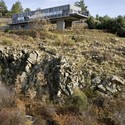
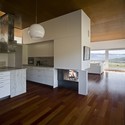
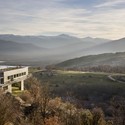
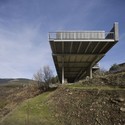
The three nominated practices for the €20,000 Schelling Architecture Prize are:
The outcome of the 2012 United States presidential election will have global economic implications. In the midst of one of the most severe global recessions in history, policymakers around the world are waiting to see which way the United States will go this coming November. Will it stay the course of potential recovery—as yet incomplete—set by President Barack Obama? Or will it veer to the right into the still vague and undefined policies of challenger Mitt Romney?
For architecture specifically there is much at stake in this, the most expensive presidential race in history, where two contrasting visions of government’s role in the economy are boiling over. The Democrats advocate a course of continued federal investment and regulation to steer the country through rough economic waters they say were created by eight years of Republican policies. The Republicans point the finger and say Obama’s policies have not succeeded. They prioritize bringing down the deficit, reducing the size of the federal government and less regulation. Both sets of policies claim to be the answer to get the economy growing again.
Regardless of who wins the chances that economic growth will magically spring back to pre-recession levels are slim to non-existent. But whose policies would be more likely to at least make the long climb out of the well more tolerable?
Vote in our Presidential Poll after the break
https://www.archdaily.com/285321/archdaily-u-s-election-poll-where-do-architects-standAD Editorial Team
Germany’s Leuphana University Lüneburg is venturing into global online learning with the launch of the Leuphana Digital School, a “cost-and-barrier-free” academic platform that offers collaborative web-based learning led by distinguished scholars and experts.
So-called social learning systems are radically changing the field of academic education and setting new standards for the communication of knowledge. Internationally distinguished scientists from the Columbia University New York, the Arizona State University, the London School of Economics, the Goldsmiths University of London, the Hebrew University of Jerusalem, the ETH Zurich, the Collegium Helveticum and the University of Zurich, the Sun Yat-Sen University Guangzhou and the City University Hong Kong, as well as leading experts from politics, media and economy will be advising students participating in Leuphana’s online-University, starting with the prototype course: “ThinkTank – Ideal City of the 21st Century”.
Thanks to the courtesy of ACME Studio, we are giving you the possibility to win a pen and card case based on Le Corbusier’s 1947 Modulor theory. Le Modulor, accentuates Le Corbusier’s theory on a black background with silver imagery and Ronchamp, an architect’s pencil features his signature drawing of a hand, a sign of “peace and reconciliation”.
For the second time in our section, we propose a Peter Greenaway film. This one has not an obvious architectural name, however the way in which the director works with space results very attractive from an architects’ point of view.
The story occurs within no more than five locations and it is full of allegories through a strong use of lighting and colours. Enjoy a classic and let us know your comments!
Last year, thanks to a photo essay by architecture photographer Iwan Baan featured in the New York Magazine, the world became aware of a dramatic urban context in Caracas, Venezuela, the result of a lack of available housing: The Torre David (David Tower). The tower, built as the headquarters of the Confinanzas Group during the economic boom of the 90s, was left unfinished after the company went bankrupt in 1994, placing the building in a murky legal void where its ownership was put into question. Since 2000, the tower has suffered looting and decay; the public take-over culminated with the occupation of the tower by more than 2,500 people in 2007.
For over a year, Urban-Think Tank studied how the tower’s mixed-use occupation worked, with improvised apartments, shops, and even a gym on the terrace. The community operates under the strict rules imposed by the informal tenants, who have been accused by many Venezuelans of being nothing more than criminals.
Invited by curator Justin McGuirk, Urban-Think Tank recreated ‘Gran Horizonte’, a restaurant in the Torre de David, at the Arsenale of the Venice Biennale. The restaurant serves the same traditional food as the original, while photos by Iwan Baan reveals tenants’ day-to-day lives, immersing visitors into the tower.
The installation explores how the informal settlement works in ways the building’s architect never would have conceived, and posits that the informal dynamics found in emerging countries could serve as a vital source of innovation and experimentation for urban problems in our hyper-urbanized world.
The project has been highly controversial among the Venezuelan architecture community, as shown by the letters and articles in local newspapers reproduced at the installation, and on the Internet. Most of these letters’ authors claim that the project supports the illegal occupation and depicts a distorted image of Venezuela’s reality. But, on the other hand, the Venezuela Pavilion at the Biennale showed only cheerful paintings and images of propaganda, avoiding its purpose: to critically observe and stir debate. The controversy between the two visions only further highlights the current polarity in Venezuelan society, particularly on this issue of urbanization.
Breadtruck Films shared with us their seven minute documentary on architect Jonathan Segal‘s ‘the charmer’. The project consists of a 19 unit residential complex in San Diego’s Little Italy neighborhood and recently won a 2012 project of the year award. By building on the tradition of the California courtyard apartments, he shows how architecture can create community and add a little charm to the neighborhood. The outdoor spaces at complex carry just as much importance with Segal as the buildings themselves. He believes that beauty and livability are crucial, and often overlooked, components of environmental design.
Co-sponsored by The Irwin S. Chanin School of Architecture of The Cooper Union as part of the program put on by the Architectural League, Mike Taylor of Hopkins Architects will be delivering a lecture on his current work at the Cooper Union in New York. Taking place on Tuesday, October 30th, the leader of the design team for the London 2012 Velodrome, and a senior partner at Hopkins Architects is “guided by deeply-rooted architectural, environmental, and social convictions.” Widely lauded for its elegant carefully engineered form, the Velodrome’s sustainable and flexible design has won awards for its architecture and engineering, as well as its civic presence from the RIBA, the Architects Journal, and the BCI, among others. For more information, please visit here.
The ‘Forest Corridor’ proposal has won one of the 2nd prizes (Professional Category) in the Open International Competition for Noise Barrier/Enclosure organized by the Hong Kong Government. Designed by BREAD Studio, the project gives an alternative insight to the noise mitigation structure design in the dense urban environment of the city. More images and architects’ description after the break.
WORK Architecture Company (WORKac) has won an international competition to design new Assembly Hall in Libreville – the capital city of Gabon – for the 2014 Summit of the African Union. The New York City firm impressed the jury with their proposal L’Assemblée Radieuse, which offers a self-shading, circular structure that maximizes active and passive design while incorporating the vibrant ecology of the Gabonese Republic.
The new landmark is scheduled to break ground in February 2013 and will be completed in June 2014. Continue reading for the architects’ description.
SCI-Arc Masters of Architecture graduates Liz and Kyle von Hasseln have been awarded the inaugural Gehry Prize for developing an interruptible 3D printing method, dubbed Phantom Geometry, that allows designers to make alterations to the design while it is being printed. The Phantom Geometry method is a convenient alternative to the conventional, static 3D printing systems available today. The system’s main components includes a UV light projector, a special photo-sensitive resin, and controlled robotic arms from SCI-Arc’s Robot House.
Architects: COOKFOX Client: Bank of America at One Bryant Park, LLP, a joint venture between The Durst Organization and Bank of America Location: New York, NY Completion: 2009 Size: 50,000 SF
On November 15th-17th leading architects, artists, scholars, and industry leaders from all over the Globe will meet up in Aarhus, Denmark to shape the media architecture of the future and discuss how media architecture is about to change our cities.
What happens when heat sensitive concrete ‘freezes’ the shadows of passers-by, or when a façade turns into a screen by means of thousands of tiny LED lights? What happens to architecture, people, and cities, when buildings turn into a type of digital media and allows citizens to communicate with each other in completely new ways?
Questions like these are increasingly relevant, as media architecture gains ground in cities all over the World. And they will be top of the agenda when these media architecture experts meet up in Aarhus in November.
“Media Architecture is changing the way we relate to traditional architecture,” General Chair of the biennale, Dr. Martin Brynskov, said. ”It is a field in rapid development, and we’re very much looking forward to hearing top experts’ take on how media architecture affects our perception of buildings and cities.”
Designed by architects Ângelo Lopes, Helena Gomes, and Lara Plácido, the CASALATA (Tin House) project started with a short film in Mindelo, Cape Verde. The film focuses on the issue of the shortage of housing and on the problems that cause suffering in the tin house neighborhoods. The CASALATA film then evolved into a wider project with the intention of providing a viable strategy to improve the housing problems of Cape Verde. The result is an architectural proposal with the potential for effective implementation. More images and architects’ description after the break.
Our friends from UNStudio shared their latest completed residential project, a villa nestled on the outskirts of Stuttgart that offers amazing vistas over country vineyards which are juxtaposed with cityscape panoramas. The sinuous curves of Haus am Weinberg are governed by the idea of creating a “twist” which organizes the programmatic flow of the residence. Ben van Berkel explained, “The Haus am Weinberg adopts a stereovisual spatial effect, acting almost as an optical instrument, whereby not a parallax view, but a parallax experience is created. Moments of parity with the surrounding landscape from inside the house form a constant experiential connection and awareness of its immediate context.”
More after the break, including a great photography set by Iwan Baan.
As part of the Sukkahville Design Competition in Toronto, organized by the Kehilla Residential Programme, Craig Deebank and Gina Gallaugher were selected as one of the finalists for his ‘Embryonic Canopy’ exhibition. The project re-images the Sukkah as both a temporary shelter and permanent fixture within the agricultural ecosystem. It challenges the notion of the traditional static Sukkah while creating a sense of wonder, intrigue and connection to the natural environment. More images and designers’ description after the break.
Designed by Mjölk Architekti, a high seat was installed on the main square in České Budějovice where it stayed for a month. It is situated high up so that it does not interfere with everyday life on the ground and offers sufficient privacy to its occupants. Over the month of the exhibition, this space with a floor area of 6.25 m2 hosted several inspiring personalities, the so-called “urban hunters”. They are the masters of their time and space. All the necessities needed for comfortable living are provided. More images and architects’ description after the break.
As an entry for the Land Art Generator Initiative Competition 2012 – Freshkill Park New York, ‘Wind Fountain’ is based on an adaptation of the piezoelectric effect – a well known property of certain materials to produce electrical power when they undergo strain and stress. Designed by Gembong Reksa Kawula, the project is shaped as an artificial tree, with each unit consist of 450 flexible thread 30 meters high made of carbon fiber reinforced resin pole that will sway in the wind. More images and architects’ description after the break.
Last September 25th, at Bartlett School of Architecture, the Graduate Program Exhibition was inaugurated. The same day, Peter Cook gave by himself the “Multicoloured Ear”, (the physical icon coming from the fact that exhibition was taking place at the former Ear Hospital building) for the Special Peter Cook Prize of this year, to the postgraduate student Maj Plemenitas with his research project 10⁻⁹ ]LINK[ 10⁹.
MenoMenoPiu Architectshave shared their submission for the Daegu Gosan Public Library Competition in Daegu, Korea. This project focuses on creating a community with Daegu’s Metropolitan Center with consideration for urban flows and social trends. Join us after the break for more.
ArchDaily’s previous coverage of Herzog & de Meuron‘s 56 Leonard Street was around the time when construction was just about to begin. Now four years later, construction seems about ready to restart, according to bdOnline. Join us after the break for more details.
King’s Grove, an elegant new house squeezed behind two Victorian terraces in Peckham, has been awarded the Royal Institute of British Architects’ (RIBA) Stephen Lawrence Prize 2012 – an architecture award that recognizes “fresh talent and smaller construction budgets”. The project, designed by London-based practice Duggan Morris Architects, was selected over four other contenders and was awarded last week, along with the 2012 Stirling Prize-winner, in Manchester. As you may remember, Duggan Morris Architects won last year’s RIBA Manser Medal.