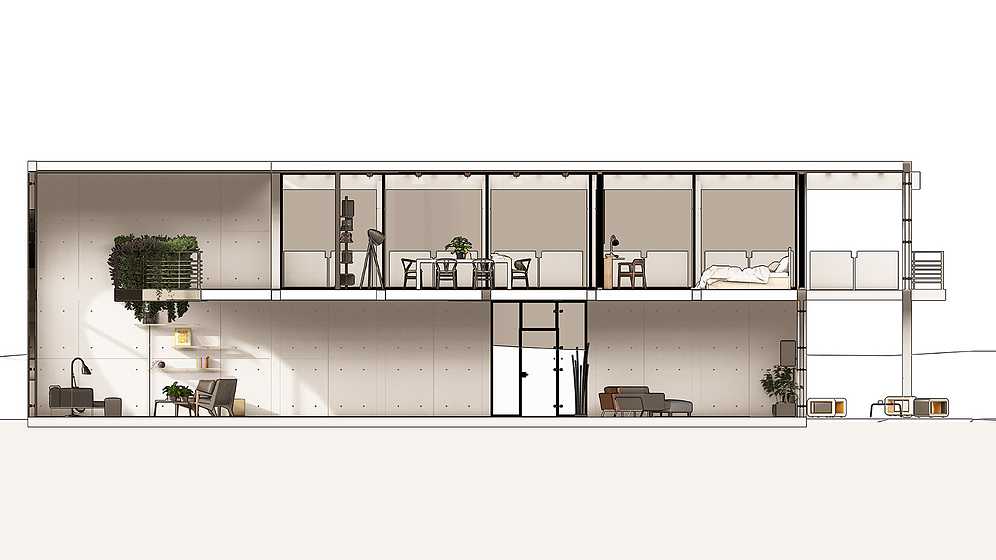
Produce personalized presentation boards that distill complex concepts into simple visual representations with a few helpful tools and effects.


Produce personalized presentation boards that distill complex concepts into simple visual representations with a few helpful tools and effects.
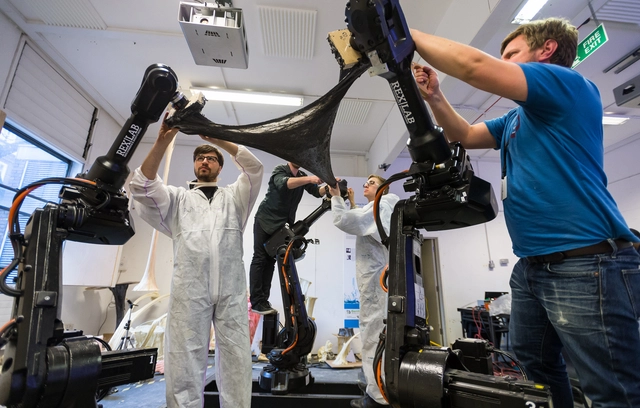
by: Daniel Davis & David Fano of CASE
This year marks Smartgeometry’s tenth anniversary. For architects it’s been a decade of breathless innovation and listless stagnation. In this article we look back at the success of SmartGeometry and ask why the building industry isn’t keeping up.
The original instigators of Smartgeometry – Lars Hesselgren, J Parrish, and Hugh Whitehead – worked together at YRM (now part of RMJM) in the late 1980s. Together they helped shepherd parametric modeling and associative geometry into the field of architecture, and witnessed how early-stage three-dimensional structural analysis and late-stage clash detection might change practice. Yet in 2003 they found themselves disillusioned and asking, “Why is it that ten years have passed, and we still cannot even get close to the kind of capability that we had then?” [1]. In other words, why is the building industry failing to keep up, or worse, falling behind. It was a question that would inspire the first Smartgeometry conference, and it is a question that still lingers a decade later.

“So you want to be famous?".Peter Murray shares his 7 rules of message design for architects. “Co-designing Workspace". Oliver Marlow explains the TILT Method, his vision about the past, the present and the future of workspace, and how it’s all about people.

The following article, by Michael Mehaffy & Nikos Salingaros, originally appeared in Metropolis Mag as "Why Green Often Isn't"
Something surprising has happened with many so-called “sustainable” buildings. When actually measured in post-occupancy assessments, they’ve proven far less sustainable than their proponents have claimed. In some cases they’ve actually performed worse than much older buildings, with no such claims. A 2009 New York Times article, “Some buildings not living up to green label,” documented the extensive problems with many sustainability icons. Among other reasons for this failing, the Times pointed to the widespread use of expansive curtain-wall glass assemblies and large, “deep-plan” designs that put most usable space far from exterior walls, forcing greater reliance on artificial light and ventilation systems.
Partly in response to the bad press, the City of New York instituted a new law requiring disclosure of actual performance for many buildings. That led to reports of even more poor-performing sustainability icons. Another Times article, “City’s Law Tracking Energy Use Yields Some Surprises,” noted that the gleaming new 7 World Trade Center, LEED Gold-certified, scored just 74 on the Energy Star rating — one point below the minimum 75 for “high-efficiency buildings” under the national rating system. That modest rating doesn’t even factor in the significant embodied energy in the new materials of 7 World Trade Center.
What's going on with these supposedly "sustainable" buildings? Read on, after the break...
A version of this essay was originally published in Thresholds 40: “Socio-” (2012)
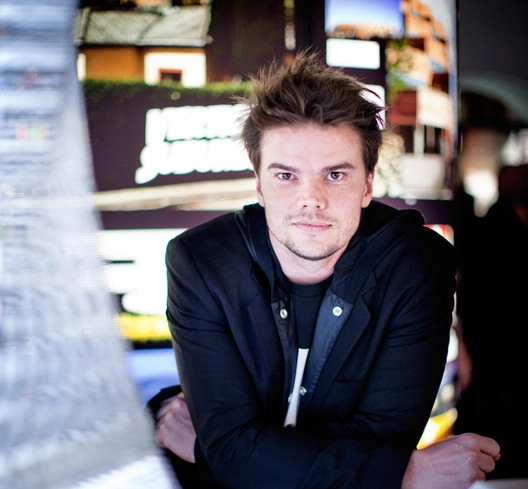
Few architects working today attract as much public acclaim and disciplinary head-scratching as Bjarke Ingels. Having recently arrived in New York, this self-proclaimed futurist is undertaking his own form of Manifest Destiny, reminding American architects how to act in their own country.
While his practice is often branded by the architectural establishment as naïve and opportunistic, such criticism is too quick to conflate Ingels’s outwardly optimistic persona with the brash formal agenda it enables. In the current economic climate, there are any number of gifted purveyors of form languishing in New York City. Despite this, Ingels has somehow managed to get away with proposing a pyramidal perimeter block in midtown New York, a looped pier in St. Petersburg Florida, and an art center in Park City, Utah massed as torqued log cabin while maintaining a straight face. Why, then, is his mode of operation considered unsophisticated by so many within the discipline?
Clearly, Ingels has figured something out about harnessing and transforming “the social” that American architects would do well to identify. So, in the manner of any good conspiracy theorist in search for the hidden method, let’s go to the chalkboard, or rather, the diagram...
Part of the answer may lie with Ingels’s brand of populism, which is as much about being social as it is about the social.

President Obama’s ambitious goals to curb the United States’ greenhouse gas emissions will get a fortuitous assist from an incipient shift in American behavior: recent studies suggest that Americans are buying fewer cars, driving less and getting fewer licenses as each year goes by.

On April 12, 2013, the Board of Health of the Commonwealth of Virginia approved new laws deploying building codes and architectural regulations sanctioning that clinics offering first trimester abortions meet the same building specifications as newly-constructed, full-service surgical hospitals. Mandating compliance within about 18 months, these standards will entail significant and costly alterations to existing facilities that may bankrupt many clinics in the state.
The political maneuvering which occurred to achieve these architectural arrangements, and the responses of concerned professionals in Virginia, were well documented in the press. The Health Commissioner resigned in protest. The chair of the Department of Obstetrics and Gynecology at the University of Virginia’s School of Medicine called these building codes “arbitrary and capricious.” A director of the University of Richmond School of Law wrote an editorial challenging the legislation on legal grounds. Almost 200 physicians took a public stand, denouncing the politicians and urging the state to reject the architectural alterations.
Health policy analysts, social workers and advocates for low income women - who will be greatly impacted when these local clinics close - continue to speak up and organize. We have heard from just about everyone with a stake in the impending architectural arrangements.
Except architects.
.jpg?1372283662&format=webp&width=640&height=580)
It’s hard to imagine an entire category of architecture slipping off history’s grid, and yet that seems to be the case with India’s incomparable stepwells. Never heard of ‘em? Don’t fret, you’re not alone: millions of tourists – and any number of locals - lured to the subcontinent’s palaces, forts, tombs, and temples are oblivious to these centuries-old water-structures that can even be found hiding-in-plain-sight close to thronged destinations like Humayun’s Tomb in Delhi or Agra’s Taj Mahal.
But now, India’s burgeoning water crisis might lead to redemption for at least some of these subterranean edifices, which are being re-evaluated for their ability to collect and store water. With any luck, tourist itineraries will also start incorporating what are otherwise an “endangered species” of the architecture world.
Learn more about these stepwells' curious histories, after the break...

By its very nature, architecture has an obvious, and powerful, public presence. No matter who commissions buildings, they form the material backdrop of public life; the design of every building impacts towns and cities and the experience of those living and working in them. Architecture, though, is more than a stage-set. While, all too often, designed “iconic” buildings are indeed objects, and often vanity projects designed to show off the aspirations and egos of certain clients and architects, the space both inside and around these buildings, like most others, is public space: shared space, space used by communities of people, and space that often has psychological and emotional effects on very many of us. Think of shops, department stores, banks, offices and the many other buildings that, privately owned, play important roles in everyday public life.
It’s this internal aspect of public buildings that has been increasingly marginalized as architects and clients work together to maximize the external impact and character of buildings. After all, the public life of a public building, be it a court house or shopping-mall, does not cease once you are inside.
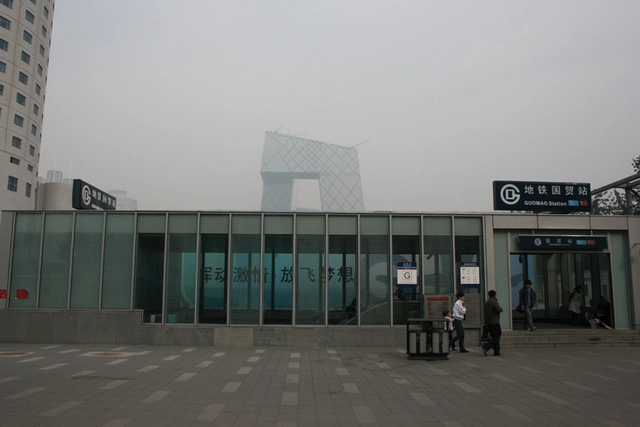
The problem with articles like “China’s Great Uprooting: Moving 250 Million Into Cities”, recently featured in The New York Times, is that they contribute to a misleading and simplistic narrative about China’s economic development, casting it as a story of “good” versus “evil”.
This was recently highlighted by a critique authored by the NYU Stern Urbanization Project in which The New York Times article in question was called out for being overly sensational and reductive in how it covered China’s policies concerning internal migration from the countryside to urban areas.

Scheduled for completion later this year, Bosco Verticale, by Boeri Studio, will be the world’s first vertical forest. The project’s inspired many supporters, but also many detractors. Speaking to its controversiality, Lloyd Alter, the architect, sustainable design enthusiast, and managing editor of Treehugger, called it “the rendering that launched a thousand blog posts.”
And perhaps no blogger caused more stir in the architecture community than Tim De Chant, who implored “can we please stop putting trees on skyscrapers”? De Chant’s article set off a maelstrom of comments from ArchDaily users, who vigorously debated both for and against the idea of putting trees on buildings.
To get to the bottom of this, we talked with Lloyd Alter himself about vertical forests and the real challenges and benefits they present. Lloyd is a regular contributor to Inhabitat, The Huffington Post and numerous other publications; he also teaches at Ryerson University School of Interior Design. Read on for Lloyd’s take on this controversial trend, after the break.
This article, by Michael Mehaffy and Nikos Salingaros, originally appeared in Metropolis Mag as "Science for Designers: The Meaning of Complexity."
Today’s designers seem to love using new ideas coming from science. They embrace them as analogies, metaphors, and in a few cases, tools to generate startling new designs. (Computer algorithms and spline shapes are a good recent example of the latter.) But metaphors about the complexity of the city and its adaptive structures are not the same thing as the actual complexity of the city. The trouble is, this confusion can produce disastrous results. It can even contribute to the slow collapse of an entire civilization. We might think that the difference between metaphor and reality is so obvious that it’s hardly worth mentioning. And yet, such confusion pervades the design world today, and spreads from there into the general culture. It plays a key role in the delusional expectation that metaphors will create reality.
Psychiatrists speak of this as an actual disorder known as “magical thinking”: if our symbols are good enough, then reality will follow. In the hands of designers, this is very dangerous stuff.
More after the break...
This article, by David Gensler, co-CEO of Gensler, originally appeared in Fast Company.
Those of us associated with the building of cities are often asked to do tricky things. Build a 632-meter-high skyscraper and give it the world’s tallest and fastest single elevator, traveling at speeds of more than 40 mph so folks can soar to the top in fewer than 40 seconds with no transfers. Build a data center in Houston that makes its own electricity (handy during a hurricane) and turns rain water into an asset. Design an office building that makes people happy to come to work.
But one of the biggest challenges facing us today requires, perhaps, one of our best magic tricks of all time: Creating open space when there seems to be none left.
How do we give people in cities public spaces (parks, gardens, squares, even wide tree-lined streets) to gather and room to breathe in our increasingly built-up and built-out urban environments?
More on David Gensler's thoughts on reutilizing public space, after the break...
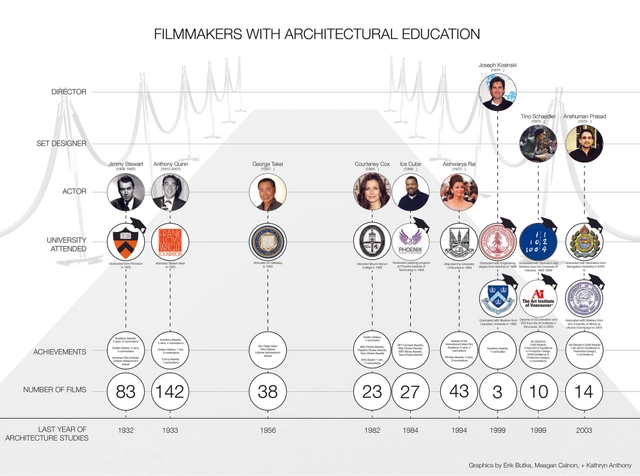
In recent years, high profile news outlets like The New York Times and CNN have featured architects’ struggles by citing the dire unemployment statistic of 13.9% for recent graduates, the highest of any college major. Many architecture firms are still reluctant to hire new full-time members to their team, and all too often students and recent graduates remain without work. Since approximately 40% of architecture graduates pursue work outside of the architectural profession, and the National Council of Architectural Registration Boards (NCARB) currently reports 26,850 students enrolled in accredited architecture programs, we can assume that over the following years 10,000 students trained as architects will forge their own path in a variety of other occupations.
One of the most creative, high profile fields that can offer an architect a wide range of positions is the film industry. And, in fact, those with architectural backgrounds have been making the transition into the filmmaking industry for decades. Our timeline showcases a sample of those with an architectural education who have enjoyed enormous success in the filmmaking industry over the last 80 years as actors, set designers, or directors.
You can read more about their stories (including how Jimmy Stewart went from architecture to acting), after the break...
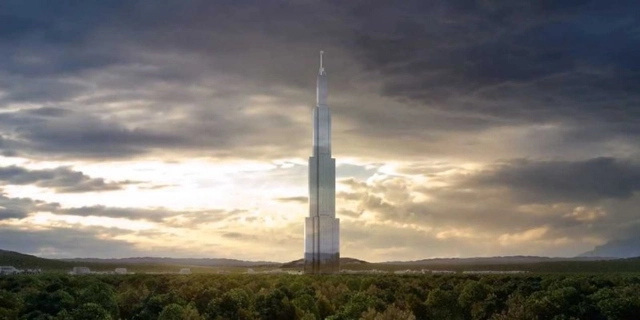
The architecture world has been abuzz over news that aChinese construction company plans to build the world's tallest building— and to do it in just 90 daysusing a proprietary prefabrication technique.
Construction on the 838-meter highrise in Changsha, called Sky City One, is expected to begin this month.
After the project was announced, we reached out to Christian Sottile, the Dean of the School of Building Arts at the Savannah College of Art and Design,who gave us his takeon why the project is a terrible step for architecture and urban living.
But not everyone is skeptical about Sky City One.Stan Klemanowicz,an architect and planner in Los Angeles with Project Development Associates, reached out to tell us why the project is actually revolutionary. He has allowed us to publish his response to Mr. Sottile's critique.
Read Sottile's and Klemanowicz's conflicting opinions, after the break...

City officials have selected OMA’s “stripped-down design” as one of two final projects for the Pont Jean-Jacques Bosc international competition in Bordeaux, France. Stretching over the Garonne River, the OMA-designed proposal seeks to rethink the civic function and symbolism of a 21st century bridge by designing a multimodal “platform that can accommodate all the events of the city.”
“We wanted to provide the simplest expression – the least technical, least lyrical, an almost primitive structural solution,” stated Clement Blanchet, the project architect working alongside Rem Koolhaas. “This simplicity allowed us to create a generous platform for pedestrians and public programs, as well as flexibility in accommodating the future needs of various types of traffic.”
More from the project description after the break…

A better workplace can foster better social dynamics, more creativity, an increase on production, and of course, improve the quality of life of the ones using it on a daily basis.
We have partnered with HP to recognize the projects that are pushing the boundaries in this area, creating remarkable spaces for work, and also to foster experimentation among students to think about the workplace of the future.
We have therefore divided the competition into two categories: for professionals and for students.
Professionals
Architects from around the world are invited to submit their recently completed workplace projects. The jury will award entries that are able to demonstrate innovations in this area in the form of sketches or diagrams.
Use your power of synthesis to show us why your project introduces innovation to the workplace!
Students
Students from around the world are invited to design an innovative workplace within a given generic floor of office space. This constrain will force students to operate on actual market conditions.
Unleash your imagination within a delimited space to show us how innovation can be made possible in today’s structures, to foster tomorrow’s ideas!
Schedule, eligibility, prizes, and general rules after the break.
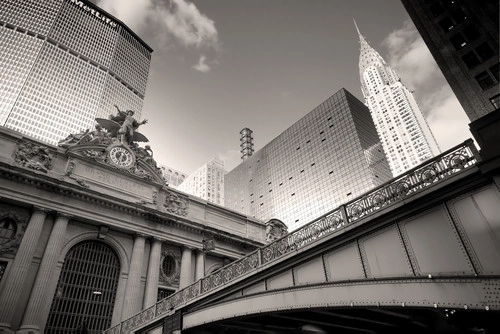
This article, by David Brussat of The Providence Journal's editorial board, first appeared at providencejournal.com.
In a rating of energy efficiency by the Environmental Protection Administration, New York's venerable Chrysler Building scored 84 out of 100 points; the Empire State Building, 80; but the modernist 7 World Trade Center scored 74 (below the cutoff of 75 for "high efficiency"); the Pan Am Building, 39; Lever House, 20; the Seagram Building, 3. The New York Times reported this story last Dec. 24 under the headline "City's Law Tracking Energy Use Yields Some Surprises."
It was no surprise to Nikos Salingaros and Michael Mehaffy, who have investigated why modern architecture thrives despite its inability to live up to any of its longstanding promises -- aesthetic, social or utilitarian.
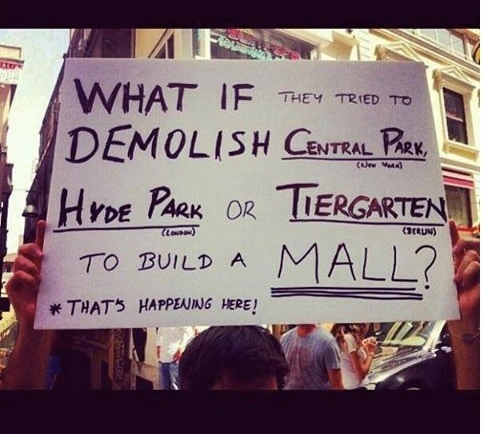
Over the last two weeks, the world has witnessed history unfold in a small park in the heart of Istanbul, Taksim Square. What started out as a peaceful protest to save Gezi Park and its trees from destruction has turned into a country-wide (and, to some degree, worldwide) movement that rejects the ever-increasing autocratic tendencies of Prime Minister Recep Tayyip Erdogan.
The urban policies and projects that PM Erdogan and his government have been loutishly implementing in Istanbul offer only a few examples of the way this government has manifested its undemocratic attitudes. In that regard, it would be misleading to consider the protest over Taksim and Gezi Park as an isolated incident. Instead, development over Istanbul’s quintessential square constitutes the last straw in a series of neo-liberal policies, themselves the result of a century of history, that have shaped Istanbul over the course of the last decade.
More after the break...
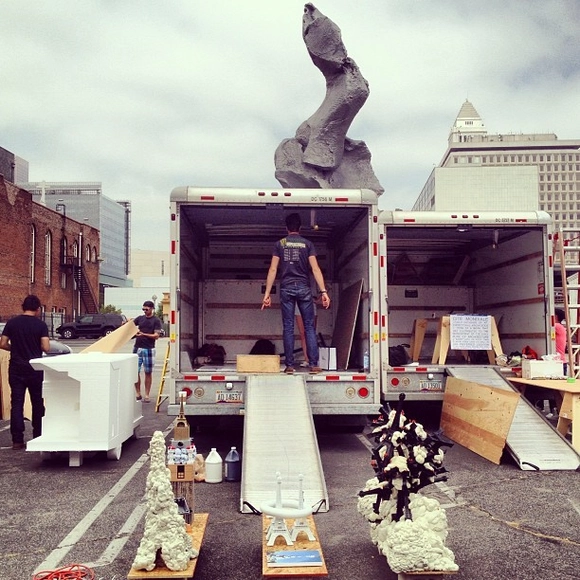
I see a convergence of sorts. It might be a coincidence but, then again, I think not. The wheels of “Pacific Standard Time”, the Getty’s juggernaut architectural assault on and about Los Angeles, have been turning for what seems like months now with exhibit after exhibit and symposium after symposium.
Is it just me or is “Pacific Standard Time” fatigue setting in? I’m not complaining. It gives me a lot of material to write about so I don’t have to just make stuff up. It corresponds with something called history, after all. But where is the self-reflexive, self-effacing, ha-haExit Through the Gift Shop wink about it all? It’s all so damn serious, isn’t it? It seems cooked up to be so monumental and deterministic. So Grand Narrative from the get-go, right out of the institutional blocks, like a marketing campaign.
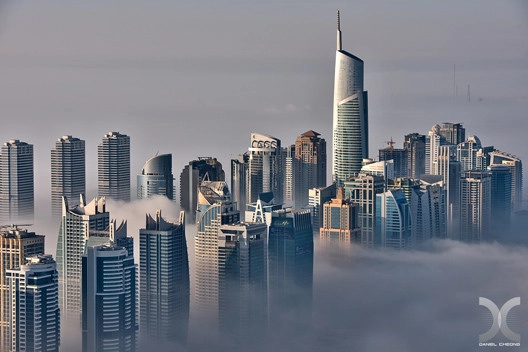
We have entered an era of ‘modernization’, led by the Western world. In our times of unprecedented demographic expansion, infrastructural development is racing to meet demand with supply. As architects and designers, we have been pressured to embrace consumerism. Globalization has been adopted as a solution to the problem. Developing countries have equated economic prosperity and success to the adoption of ‘contemporary architecture’ in a bid to demonstrate leadership and innovation. And voila, we have a palette of sleek buildings to meet the population’s needs, as well as to “modernize” our landscape. Surely, mimicking the formula of technologically advanced countries will project us into the public eye.
Well it certainly does, but not necessarily in a positive way. It is creating a global architectural uniformity as designs promoted by Western ‘architectural gurus’ are being replicated around the world. We are neglecting vibrant contextual elements and hence constructing a generic world lacking humane facets of design. Would it not be a tragedy if Paris, Venice and Barcelona all looked similar? Would we not mourn the vibrancy of Parisian streets around the Eiffel Tower, the romanticism of Venetian waters and the monumental Sagrada Familia that dominates the skies of Barcelona? Do we really want a world that is basically a mirror image of the US?
More after the break...
In a crowed auditorium in central Los Angeles on Sunday, Swiss architect Peter Zumthor sat down with the Los Angeles County Museum of Art (LACMA) director Michael Govan to kickstart the opening of The Presence of the Past: Peter Zumthor Reconsiders LACMA. The hour-long discussion, captured in the video above, began with an insightful overview of Zumthor’s most famous works before moving to an in-depth conversation about the underlying ideas that drive Zumthor’s design for the highly anticipated LACMA overhaul.
The project – already six years in the making and yet still in its schematic phase – plans to replace LACMA’s aging cluster of three pavilions with an elevated, 21st century facility. A detailed project summary, alongside images captured from Zumthor’s 6 ton, concrete exhibition model, is available for you to review here on ArchDaily. Enjoy!

CASE is working with HP to embark on the task of investigating the future of how the Architecture, Engineering, and Construction (AEC) industry manages information and they want YOU for their survey. Help them out by answering a few harmless questions on what tools you're using to help manage your building practices and feel free to forward this along to fellow building and design industry folk since you’re being so awesome about it. You will also have the option to sign up at the end of the survey to have our findings emailed to you.

For me, university was about finding the confidence to explore creativity, the notion of self, and determining my own measurements of expectation. Last year I wrote an article entitled “10 things you don’t get taught in architecture school,” which provided advice on how to succeed in an academic setting. Having now graduated, the following article is reflective of my first 2 years working full time in architecture.
My experience in the office so far has required another round of self-configuring: repositioning the value of free thinking, redetermining the notion of self within the larger context of someone else's expectations, and managing my objectives with those of others. The measurement of success is no longer determined by me, but by various organisational objectives and requirements.
Essential to the journey of finding my current job, I have initiated substantial life changes that include establishing a career strategy, reevaluating how I position myself in the field of architecture, and questioning who I am as an individual and what I want to contribute to the profession.
After the break, the 10 things most responsible for my obtaining a job in architecture...

The title “intern” should be banished from the profession of architecture. It’s about time. It has run its course. It’s outmoded and contributes to a culture of exploitation in the guise of opportunity. Frankly, it makes us look so nineteenth century.
More importantly, I’m tired of seeing articles decrying the state of interns every summer when “intern season” kicks in. Can we just be done with this? It’s depressing. Don’t exploit the interns! Pay the interns! No free labor! Class action lawsuit! Solidarity! FU pay me! All very well and good. However, if labor laws and ethics have not fixed the problem, maybe getting rid of the title will. It’s just a title, but it sets a bad precedent.
.jpg?1372283651 "Rudabai Vav, Adalaj. Image © Victoria S. Lautman")
.jpg?1372283874 "Dada Harir Vav, Ahmedabad. Image © Victoria S. Lautman")
.jpg?1372284281 "Neemrana Baoli, Neemrana, Rajasthan. Image © Victoria S. Lautman")
.jpg?1372284239 "Mukundpura Baoli, Narnaul. Image © Victoria S. Lautman")
.jpg?1372283662)