IE School of Architecture and Design announces its fifth IE SPACES FOR INNOVATION PRIZE for young architects and designers worldwide. This award recognizes talented young designers by offering scholarships to our world-class Master’s Degree, and facilitating full-time, paid internships in some of the world’s top design firms.
The Seoul Metropolitan Government, in an effort to overcome the current spatial and functional limits of Gwanghwamun Square and to restore historical and cultural symbolism of Gwanghwamun area, is opening this international design competition. All experts or firms that are interested in this opportunity are strongly encouraged to register and submit a proposal.
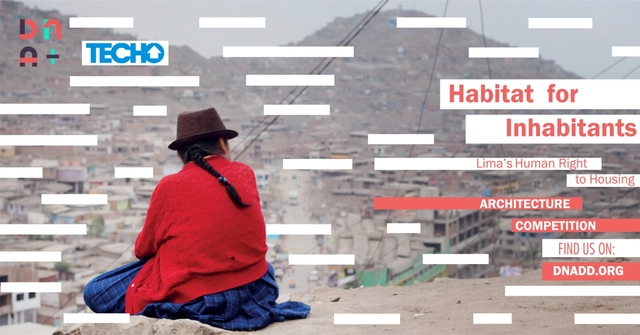
Lima is undergoing a continuous change even though its biggest contradiction remains unchanged: a three meters wall that runs over ten kilometers separates people of different social states. Thus, on one side of the wall, the barren landscape dominates, showing no green areas and only a few streets. This area is barely/rarely reached with water supply and electricity, and many small houses have been manually built, up to the top of the mountain. Conversely, on the other side of the wall luxury residences can be seen surrounded by thriving vegetation, in addition to pools, high rises and many infrastructures for the population. The division is strong.
In today’s chaotic world, simplicity grows virtuous. As an operational directive, simplicity forces the pursuit of the essential, where what matters is retained and what doesn’t is tossed overboard. Simplicity is at once classic and trending; ambitious and naive; utopian and pragmatic. A decade after 2008, the feeling is baked into current trends of austerity, with economic realities influencing aesthetics and ethics within architecture in deep ways. The value of simplicity lies not just in the luxury of a representational project, but more powerfully in methods of practice—in understandings of how architects make decisions in realizing their work. Simplicity in communication matters, as related professionals require information, clients want to know what they’re paying for, and various publics are curious about what architects do. Lately, simplicity is a conceptual survival tactic: A sharable, legible understanding of a piece of architecture, even as image, is needed if it is to endure in our fast-paced, media-soaked environment. PLAT suspects that this conciseness leaves work open for continued engagement, and that simplicity is not the opposite of complexity, but instead exists as its complement: Complexity is built out of simplicities, and vice versa.
The Ken Roberts Memorial Delineation Competition (KRob) has celebrated the best in architectural delineation for 44 years. A Dallas classic that has received international recognition, KRob honors hand and digital delineation by professionals and students throughout the world. Averaging over 400 entries from 25 countries in the past several years, the competition’s visibility continues to grow.
The City of Poznań invites to participate in an open international architectural competition on development of architectural conception for seat of the Musical Theatre in Poznan.
Interior Design Awards 2019, courtesy of FuturArc, BCI Asia
The BCI Asia Interior Design Awards seeks to recognise great interior architectural designs that stand out aesthetically, functionally and ergonomically.
The City of Philadelphia’s Department of Public Property is requesting qualifications for the redesign of the Municipal Services Building’s Paine Plaza.
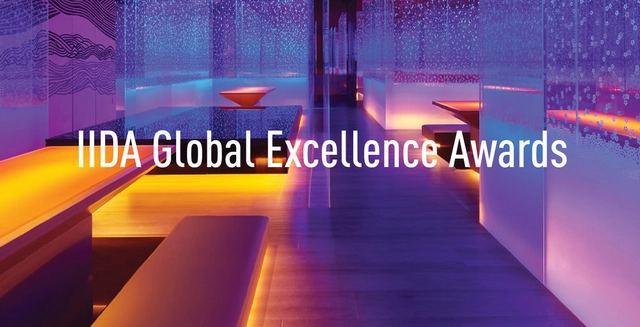
2017 Global Excellence Awards Best of Competition Winner - Setsugekka Japanese Cuisine by Shanghai Hip-pop Architectural Decoration Design Co.. Ltd., Shanghai, China
The 9th annual IIDA Global Excellence Awards honor and celebrate outstanding originality and excellence in the creation of international Interior Design/ Interior Architecture projects in 15 categories.
Reimagine the primitive hut for Volume 4, Issue 6 of Yale's weekly journal, Paprika!
In the spirit of Virgil Abloh we put quotation marks around the word "vernacular." Then we replace the word with a blank and ask you to fill it in. What do they build with where you're from? What do indigenous houses look like? What methods do they prefer and who actually uses them? This issue of Paprika!, a weekly journal at the Yale School of Architecture, will probe the architectural vernacular, a concept increasingly in vogue but equally undefined.