Installed in Sony Square in Tokyo and on display until January 14, the ‘Crystal Aqua Trees’ is a crystal work of art inspired by the concept of a fountain that can be seen as a spray of water as well as a Christmas tree. Designed by Torafu Architects, the project was inspired by the Trevi fountain in Rome, the “Ai no Izumi” (Fountain of Love) charity drive, which has been held by Sony every year since 1968. For this edition, the architects proposed a new embodiment as an interactive installation. More images and architects’ description after the break.
The competition for the ‘Ito Jakuchu Inspire’ pavilion is focused on the great celebration throughout the world of Ito Jakuchu’s work, a milestone in Japanese art history. Taking on a symbolic meaning, the competition effectively corresponds to a cultural phase of our existence. Designed by architects Đordje Alfirević and Sanja Simonović, this second prize winning proposal creates a dematerialization of boundaries between Ito Jakuchu’s perception of the reality in which he lived and the appearance of our modern world. More images and architects’ description after the break.
Open to all young creative minds from all parts of the world from the ages of 18-33, the Fenn Young Designers Award competition recently announced the judges and winners. Organized by Fenn Designers, based on interpreting “Organic”, they received a total of 280 participants, from 59 countries. The main question was, ‘How do you interpret “Organic” if you are designing a building, a piece of furniture, a fabric, a dress, a painting or any other form of art?’ More images and a complete list of the judges and the winners after the break.
Including well-known speakers such as Peter Eisenman, Reinhold Martin, Joan Ockman, and Bernard Tschumi, the “Ruins of Modernity: The Failure of Revolutionary Architecture in the 20th Century” event will be taking place in New York City February 7th from 7:00pm-10:00pm. Free and open to the public, the event is part of a larger series of panels and events centered around the theme of the death of art that will take place during the month of February 2013 in NYC. The modernists’ project consisted in giving shape to an inseparable duality, wherein the role of architecture was deduced as simultaneously a reflection of modern society as well as an attempt to transform it. The event highlights and debates the thoughts proposed by architectural theorists such as Victor Hugo, Colin Rowe, and Reyner Banham while looking at how the the last century influences architecture today. For more information, please visit here.
Located on the corner of 84th Street NW and Jasper Avenue, on the northern bank of the North Saskatchewan River and just east of Edmonton’s downtown core, the W12 – Real Time Control Building building, playing a crucial role in punctuating open public space along the river’s edge. Designed by gh3, the building will be highly visible from the north, south and east, seen from a series of vantage points ranging from distant to near. The project is an opportunity to invest in the design of the plant enclosure while celebrating the importance of municipal infrastructure and recognizing the role infrastructure buildings have in shaping the built fabric of the city. More images and architects’ description after the break.
Construction has exploded along the High Line ever since it opened: condos hover over the rehabilitated track and look out onto the Hudson, while the new location of the Whitney Museum is making headway on the southern end of the park as Google moves into its NYC headquarters to a building just a few short blows away. Now, the historic Chelsea Market may be looking at a facelift following approval from the New York City Council for increasing density in the building by developers, Jamestown Properties. The proposed vertical extension, which has made a brief appearance on a few architecture blogs, will provide the additional in demand office and retail space in the Chelsea neighborhood.
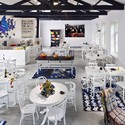
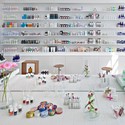
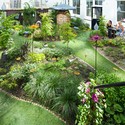
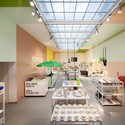
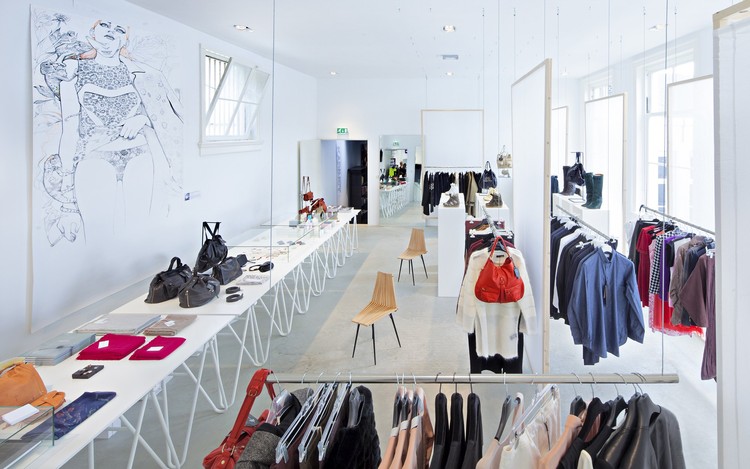
Hotel Droog, a new place of hospitality in Amsterdam by design studio Droog, challenges the notions of a hotel. Within its hospitable walls are housed myriad programs that aim to entertain, engage and elaborate on the experience of visitors to Amsterdam where the hotel is located. The programs vary from restaurants to retail store, exhibitions, beauty parlors, a garden, lecture halls and of course, hotel rooms. Hotel Droog is a 700 square meter cornucopia for tourists in the heart of a 17th century building and aspiring to become its new cultural home.
During the past few days, we have received many e-cards from the offices, architects and photographers that are part of the ArchDaily network. Images from their offices, new buildings, ongoing projects, and even a video, are part of the many xmas greetings we selected to share with you.
After the break, 85 architectural ways of saying: Merry Christmas!
HHF & Burckhardt + Partner shared with us their second prize winning proposal for the Zoo Basel Ozeanium, which is embedded in the city and used as a park by residents and visitors. The proposed Ozeanium accommodates the scale of the surrounding buildings, such as the Rialto swimming pool, the market hall and the tall buildings on the city ring. The striking, confident construction volume is a clear indication of what an attraction this will be, enriching the city in a central location. The redesigning of the green area Nachtigallenwäldeli and the construction of the new Ozeanium, an ocean aquarium, on the Heuwaage are bringing the zoo and the park area even closer to the city center, to form an attractive living environment and recreational area. More images and architects’ description after the break.
Shining in the heart of New York City at 57th Street and Fifth Avenue, the UNICEF Snowflake is a special symbol for the world’s most vulnerable children. It hangs as a reminder of UNICEF’s commitment to reach a day when zero children die from preventable causes. Hanging at its location in the big city, throughout the winter season, the largest outdoor chandelier of its kind is designed by German lighting and industrial designer Ingo Maurer, along with leading French crystal manufacturers Baccarat. The iconic UNICEF Snowflake has 12 double-sided branches adorned with 16,000 dazzling crystal prisms handcrafted in the small village of Baccarat, France. Names can be engraved upon the New York City landmark while helping children around the world in need. For more information, and to find out how you can donate, please visit here. A video of the symbol of a beacon of hope for children can be viewed after the break.
modeLab will be holding a free webinar on the introduction to processing on December 28th from 2:00pm-4:30pm EST. Processing is a light-weight programming sketchbook for designers offering an easy entry point for creating rich graphics, developing interactive applets, and researching complex systems. Through a series of short presentations and “live” exercises, learn the basics of writing programs in Processing’s Java-based syntax while experimenting with user input and drawing output. This webinar will last 2.5 hours including multiple open Q & A sessions. A video of the webinar as well as instructor files will be uploaded after the broadcast. For more information, please visit here.
Launching January 14, RIBA‘s London Vauxhall – The Missing Link Competition is open to registered architects, landscape architects, urban designers and students of these disciplines worldwide. The Vauxhall area of London is at the heart of an area of huge new opportunity and Vauxhall One, the new Business Improvement District (BID) for Vauxhall are seeking design ideas to improve and enhance the public realm in Vauxhall, providing the ‘Missing Link’ between the New US Embassy Quarter and London’s South Bank. With multi-disciplinary design teams also encouraged, the intention is all entries will be exhibited during April 2013 at both the Garden Museum and an outdoor cultural trail through the parks and railway arches of Vauxhall. For more information, please visit RIBA Competitions here when the competition goes live next month.
Yazdani Studio of Cannon Design and Gruen Associates have shared with us their second place proposal for the highly anticipated design-build competition for the new United States courthouse in Los Angeles, California. Envisioned as an icon within the city skyline, the triangular monolith provides a sustainable, 21st century courthouse that embodies the democratic qualities of dignity, stature, transparency, openness and accessibility.
Located at a pivotal node connecting the Los Angeles Civic Center, the Broadway Historic District and Bunker Hill, the 550,000 square foot courthouse is surrounded by a lush civic space that plays an important role in the existing cityscape.
Democratic By Design is a short film, produced by the General Services Administration and narrated by Luke Russert, that tackles the issue of federal architecture. Buildings designed for the government typically have a familiar aesthetic. Washington, DC, is dominated by Neoclassical Architecture, building on the connotations of ancient Greek and Roman fora and temples as a symbol of democracy. But they perpetuate a sense of dominance and formality. Most of these buildings – city halls, courthouses, agency headquarters – were built in the 18th and 19th century, yet they leave behind a legacy and association in the architecture of the federal government.
On the contrary, government buildings built in the mid to late 20th century, specifically after 1962, have a more varied vernacular. This can be credited to Daniel Patrick Moynihan, aide to President John F. Kennedy. His one page document outlined guidelines for public architecture – an effort to contextualize and modernism government buildings. This video brings his words to life via well-known architects who have have designed federal buildings.
Join us after the break for a look at some of these buildings.
Designed by JaK Studio Architects, their second prize winning proposal for the RIBA International Competition to Re-imagining York’s Giuldhall Complex: Connecting River and City re-energizes the area by focusing on its history while embracing the future. When the Romans settled in this outpost of their empire, they were still keen to establish some of the rigor and grandeur of Rome. To echo this we cleared the open ground around the guildhall and reclaimed two large plazas cascading down to river providing unique and accessible public spaces with direct relationships to the river. More images and architects’ description after the break.
Think Space Programme recently announced the winners of all three competitions within the Past Forward 2012 Cycle, an annual cycle of conceptual architectural competition within the Think Space programme. This cycle of competitions aimed to hold a mirror to the discipline to reflect the changes of the last thirty years by re-visiting three competitions that radically transformed architectural culture: The Peak (Hong Kong, 1982), Yokohama Port Terminal (Yokohama, 1994) and Blur Building (Swiss Expo, 1999). The renowned architects, winners of the original competitions – Zaha Hadid and Patrik Schumacher, Alejandro Zaera-Polo, Charles Renfro and Ricardo Scofidio – were jurors in this year’s Competition Cycle. Their upcoming events – Exhibition at Storefront for Art and Architecture, New York and the Unconference at Lauba House for People and Art, Zagreb in 2013 were also recently announced. More images and information on the winners after the break.
CLOG recently announced their call for submissions for their upcoming SCI-FI issue, which has been inspired by a the recent rise of a number of designs from significant international offices exhibiting a striking resemblance to science fiction icons, such as the Death Star. In doing so, they are demonstrating the impact this genre has had on the creative imagination of a generation. As science fiction continues to both draw upon historic and contemporary architecture while simultaneously influencing future design, it is time to critically examine the improbable made possible: SCI-FI. Submissions are due no later than January 21. For more information, please visit here.