Water Harvesting: The Ancient Typologies That Sustain Us

Subscriber Access

The 22nd of March 2022 saw the twenty-ninth commemoration of World Water Day – as a worldwide water crisis continues to leave populations vulnerable. It is an extremely multi-faceted issue. Governance sadly determines water accessibility, with marginalized people disproportionally affected. Urban typologies are another factor. The over-pumping of groundwater sources to meet the water demands of Hanoi, for instance, has resulted in arsenic being drawn into Vietnam’s village wells.

Water Harvesting: The Ancient Typologies That Sustain Us - Image 2 of 10Water Harvesting: The Ancient Typologies That Sustain Us - Image 3 of 10Water Harvesting: The Ancient Typologies That Sustain Us - Image 4 of 10Water Harvesting: The Ancient Typologies That Sustain Us - Image 5 of 10Water Harvesting: The Ancient Typologies That Sustain Us - More Images+ 5

Interlinked with policies at the governmental level are the many examples of traditional water infrastructures that have sustained communities for generations. These ancient water harvesting, water conservation, and water management techniques realized into built form across cultures offer useful frameworks towards cultivating a more water-accessible future. 

Content Loader

Image gallery

See allShow less
About this author
Cite: Matthew Maganga. "Water Harvesting: The Ancient Typologies That Sustain Us" 28 Mar 2022. ArchDaily. Accessed . <https://www.archdaily.com/978837/water-harvesting-the-ancient-typologies-that-sustain-us> ISSN 0719-8884

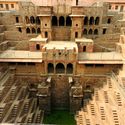
Chand Baori stepwell in the village of Abhaneri near Jaipur, state of Rajasthan. Image © Anton_Ivanov via Shutterstock

古老集水设施,影响当代建筑

You've started following your first account!

Did you know?

You'll now receive updates based on what you follow! Personalize your stream and start following your favorite authors, offices and users.