Picture this. You're in a restaurant and you can hear the conversation of the person in the table next to you better than the person you're sitting with. Then, everyone begins to speak louder, making the environment chaotic. Absorption, reflection, reverberation, frequency, decibels, etc. Although acoustics is a complex science that can render buildings almost uninhabitable when not properly thought out, architects do not always possess the theoretical resources nor have the necessary concern to develop acoustically comfortable spaces.
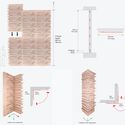

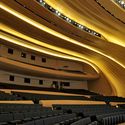
Upon reaching a surface such as a wall, object or ceiling, part of the sound energy is absorbed, some of it passes through the surface and another part is reflected back into space. An acoustically adequate space is one which achieves a balance between absorption and reflection, according to the needs of its use. There are spaces where it is important to absorb most sounds, such as in a restaurant, while in others the balance between reflection and absorption is most desirable, such as in concert halls and theaters.