Browsing:

The Indicator

The Indicator: Zombies

By — Filed under: Editorial , ,

Back from the grave, the first post from The Indicator series by Guy Horton, published in 2010 at AD.

This town, is coming like a ghost town.

- The Specials, “Ghost Town”

When I look back at the events leading up to being laid off, I think of zombies. Of course zombies aren’t real so what I’m really thinking of are movies about zombies. I haven’t seen them all—there are hundreds—so the zombies I’m most familiar with are the pop-locking ones from Michael Jackson’s “Thriller” or the funny ones from “Shaun of the Dead”. I never thought that that part of my subconscious that identifies with zombies would get triggered. But, then again, I never thought I would get laid off. There is a first for everything.

So, how does one identify zombies? As I learned from “Shaun of the Dead”, by the time you know, it’s too late. Remarkable as it seems, the people you least expect to become zombies are suddenly shuffling along shedding limbs and trying to eat you. They are, as it turns out, usually your close friends and colleagues.

When the economy began to falter back in 2007, architecture was one of those fields that began to experience a steady increase in zombie population. There were many rumors about which firms they worked for, whose softball teams they were playing on, whether they were more likely to be associates or principals. What about that Arch II with the mysterious limp and the foreign accent? Then there was the designer who always looked like he had had too many late nights out. Maybe those strange interns.

read more »

The Indicator: Modus Extremis

By — Filed under: Featured ,Misc ,

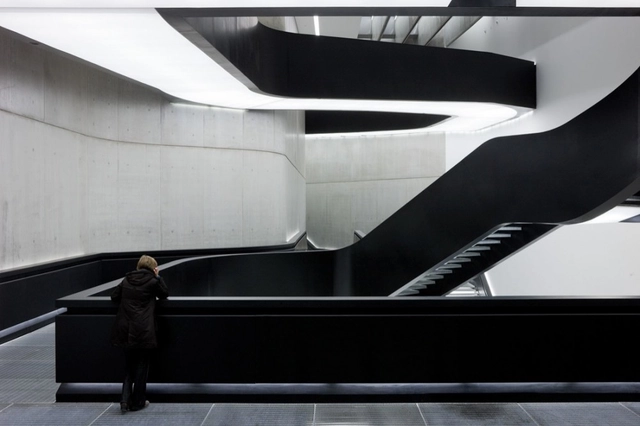
Architecture sans tourists. Photo by Guy Horton

I am constantly amazed by the extremes architects go to to realize their “vision” or to impress or even merely serve a client. Clients demand so much and architects seem to willingly bend to insane schedules that tax their people to the maximum. In the age of extreme everything, architecture is extreme working.

Of course sometimes good things can emerge from the pressures of compressing schedules. There are synergistic flows that can magically occur when people are working under the pressure of an impending deadline. Granted, sometimes pressure is a good thing that allows creativity to emerge. read more »

The Indicator: Terra Vague

By — Filed under: Featured ,Misc ,

Sustainable Cenotaph for Isaac Newton – Boullée, 1784. Courtesy Star Strategies+Architecture as cited in The Architect’s Newspaper, AN Blog

Sustainability and Form have dominated architectural discourse, trapping the discipline between utopian play-acting—promising what it cannot deliver—and computerized “gaming” of design extremism.”

– Mark Jarzombek, “ECO-Pop” in Cornell Journal of Architecture 8:RE, January 2011.

In what he calls ECO-POP, Mark Jarzombek, associate dean of the School of Architecture and Planning at MIT (i.e. someone with credentials), draws attention to how sustainability is deployed as an ideology and visual trope more than as a repertoire of achievable, well-thought-out strategies. This is my unabashedly biased interpretation of his manifesto-like article—in fact, let’s just call it a manifesto. read more »

The Indicator: Iwan Baan…On Photography

By — Filed under: Arch Daily ,Featured , ,

© Iwan Baan

Nobody ever discovered ugliness through photographs. But many, through photographs, have discovered beauty. Except for those situations in which the camera is used to document, or to mark social rites, what moves people to take photographs is finding something beautiful.

-Susan Sontag, On Photography

Julius Shulman was best known for photography that envisioned architecture as art. His images distilled architecture as paeans to its central function in society. As such, Mr. Shulman created a photographic trope that either ignored people altogether or portrayed them as props that highlighted architecture’s mastery. It is thus fitting that the winner of last year’s inaugural Julius Shulman Photography Award went to a photographer whose focus some might arguably say is people.

read more »

The Indicator: Living Sustainability

By — Filed under: Arch Daily ,Featured , ,

Courtesy of Mark English

Sustainability can be associated with wildly expensive technological advances. Which not coincidentally can immediately turn off clients.

So how do we define it? What does it mean, from a resource-conservation standpoint, as well as from a business one? For one viewpoint, we turn to Mark English, AIA. He has promoted sustainability efforts on several different levels for years. That means that not only does he incorporate sustainable strategies in his designs, he also helps other firms implement them in their work. He has been involved in programs including the California Solar Initiative, Green-point Rating, and he is also a Director on San Francisco’s AIA Board. He also edits two online publications including “Green Compliance Plus” where articles explore such topics as Passive Houses and the debate on Green Certification, and which also assists other professionals in meeting energy-efficient goals. Another publication, “The Architect’s Take,” presents news from an architectural standpoint. In fact one of those articles provided the basis for some of this author’s work.

read more »

The Indicator: Made in China

By — Filed under: Featured ,Misc ,

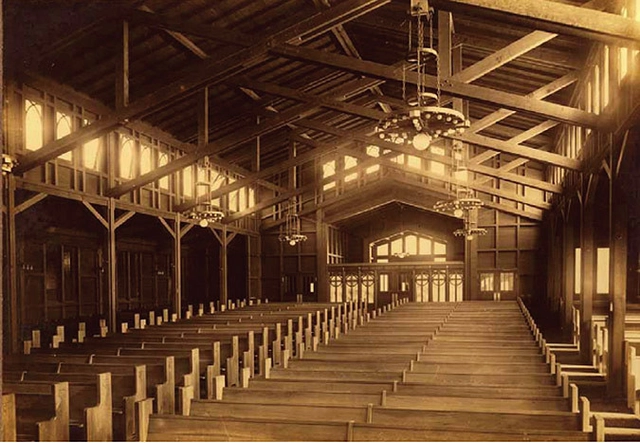
19th Century Confectionary factory, via www.bbc.co.uk

“Made in China.” For so many in Western nations, this phrase conjures up a plethora of horrific images. There is the Human Rights argument: low wages, inhumane working conditions, and so forth. Then there is the issue of quality, as in, there is none.

First let’s talk about human rights in terms of manufacturing. The favored discourse is that Chinese factories exploit their employees and hence the resultant quality of the goods is far inferior. Sensational stories that support this conclusion always seem to cross international lines. Moreover, there are basic protestations of Human Rights’ violations and then the specter of Tibet is raised.

read more »

The Indicator: Learning from IBM

By — Filed under: Featured ,Misc ,

Selective Sequence Electronic Calculator (SSEC), via IBM.com

The Economist has some really interesting articles on doing business. The latest are on the 100th anniversary of IBM and another which measures the success of multinational business vs. philanthropy in changing society for the better. IBM came out the winner in the latter one. Not, however, because it is a multinational corporation but because of the way it does business. IBM treats its employees well which directly shapes its influence on the larger, now global, community. Moreover, while many think of IBM as a “tech” company and its stock is often listed as such, IBM actually categorizes itself as a service company.

There are five major strategies that have ensured IBM’s ability to withstand the vicissitudes of a dynamic business sector, three of which directly apply to architecture firms. First, IBM puts its customers first and foremost. They do this by using a significant number of their employees to foster and maintain client relationships. That makes it more difficult for other companies to poach their customers. Why? Because those other companies don’t think developing and keeping clients happy is a good use of their resources, i.e. employees. IBM knows better. Clients trust them precisely because of their long relationship. So when clients need something, they turn to IBM. That means a steady client-base of loyal customers who in turn recommend IBM to their clients and friends. read more »

The Indicator: It’s Personal

By — Filed under: Featured ,Misc ,

My old firm, the one I got laid off from almost exactly two years ago, has had another round of layoffs. I’ve lost count how many that is (over ten I think), but since it included several principles, I’m guessing that this is either a death knell or time for a major restructuring of that office.

And that got me thinking about my own situation. Again. Because if there’s one thing that triggers intense feelings when you’re unemployed, especially when it’s been a really long time, it’s hearing other people at your old firm have suffered the same sad fate. read more »

The Indicator: Death of a Critic

By — Filed under: Featured ,Misc ,

When a major architecture critic heads for the exit, does anyone care? One would suspect most architects would hold the door open and wave him on through. Critics, after all, can be quite nasty and make one’s life work look like so much poop.

So, it depends. When Herbert Muschamp died in 2007 the collective tissue boxes of the architectural profession were emptied as architects of all stripes, especially those he championed, shed rivers of tears. Mr. Muschamp, it seems, was a critic of consequence. People listened to him. What then of his protégé, Nicolai Ouroussoff? (Hereafter, simplified to N.O.) Will be N.O. missed?

More after the break. read more »

The Indicator: The Next Architecture, Part 8: Inevitability

By — Filed under: Featured ,Misc ,

As the economy staggers through the pre-dawn streets of a slow and agonizing “recovery” – some economists including Robert Reich argue we are not in a recovery – it is important to remember what has been learned.

As far as architecture is concerned, the lessons learned were the same ones as in prior recessions. Maybe this time architects will not suffer from amnesia or lapse into denial when billings tick up once again. It is easy to forget how difficult things have been. People tend to just want to move on and not dwell on the past. Psychologically, people seem to just want the economy to be in a recovery – even if there is evidence to support that it is not necessarily at that stage yet. Recession this, recession that. Everybody is tired of hearing about it. I’m tired of writing about it! But it is still a reality that affects the ranks of our chosen profession. No one has been immune. Professionals at all levels of experience, whether licensed or un-licensed, domestic or international, healthcare or commercial have been impacted.

More after the break. read more »

The Indicator: Distractions

By — Filed under: Featured ,Misc ,

post-it art by Marc Johns

Focus! Focus! Focus! Why are you reading this! You should not be reading this now! Get back to work! You are being unproductive! You are DISTRACTED!

Architecture in an office environment often functions like the opposite of how it was in studio. For one, offices are businesses so there is a need for oversight, management, evaluation, assessment, leadership, discrete task assignments, meetings…the list goes on. Notice that all of these elements to running a firm somehow come down to time management and staffing issues. Leaders have to keep an eye on junior staff, not to be annoying and stand over their shoulders micro-managing them, but to stay aware of what everyone is doing and where the different aspects of complex projects stand. Of course, this also relates to project budgets.

More after the break. read more »

The Indicator: The $5000 House

By — Filed under: Featured ,Misc ,

Via Brockhistoricalsocieties.ca

The best of architects is not that they can use cool software or design buildings, or even that they can help create interesting spaces. If you think back to your school days, the best of architecture was problem-solving. You were given a challenge and then you had to think of good ways to address those challenges. That included addressing social, cultural, racial, environmental, and not least, spatial, needs.

Given the opportunity, architects use a myriad of tools and critical thinking skills to solve many different problems, not just strictly spatial ones. In fact, years ago, Guy Horton and I discussed the possibility of starting a round table or a colloquium, to brainstorm on different issues with others both in architecture and other academic fields, and to offer possible solutions.

More after the break. read more »

The Indicator: Non-Architectural Background

By — Filed under: Featured ,Misc ,

via HOKlife.com

According to Architecture I have what you might call a Past. I never thought I did, but there you go. I do. What I mean precisely is that at one time I had a life that did not revolve around architecture. I’m one of those suspicious Non-Architectural Background types—or a person from the realm of the Non-Architectural Background.

Architecture has found ways to accommodate people like me, but at times it is still an uncomfortable accommodation. Architecture likes to view itself as cosmopolitan, cultured, and intellectual, but when it comes face to face with individuals who have educations and experiences of non-architectural sorts it doesn’t always know what to do with us.

More after the break. read more »

The Indicator: In Praise of Clutter

By — Filed under: Featured ,Misc ,

Worry about what was never said / 2011 / acrylic on canvas / 22" × 28"

In 1933, the eminent, genre-bending Japanese novelist, Junichiro Tanizaki, composed a landmark essay on aesthetics entitled, In Praise of Shadows. It is more stream of consciousness than formal essay, part epic poem, part cultural theory. It revealed something different about the obvious; something deeper about the overlooked qualities of space and light. It led us by the hand back into the value of darkness.

Wendy Heldmann’s paintings also explore the obvious and seemingly unimportant, leading us into the abandoned, post-production, end-of-term architecture studio. This world is heaped with the artifacts of architectural exploration: scraps of paper, foamcore, laser-cut acrylic sheets, cardboard coffee containers, plastic bottles still partially filled with colorful liquids, dusty respirators, demolished models, battered, smudged monitors, chairs overturned onto tool trolleys, the spidery arms of darkened desk lamps. All of this becomes worth looking over again.

More after the break. read more »

The Indicator: Thank God for Mental Illness

By — Filed under: Featured ,Misc ,

Installation by EVOL via dornob.com

Besides being the title of a Brian Jonestown Massacre album, “Thank God for Mental Illness” also represents one dimension to the ethos of contemporary architecture, a discipline often prone to psychological extremes in the pursuit of great, paradigm-breaking buildings. But, is this really necessary? Do we need to be self-destructive and extreme to pursue our dreams?

Now that it is common knowledge that many architects are crazy or dysfunctional “geniuses” I think it’s time to reconsider this paradigm and to possibly overturn it. This image has become so romanticized that it has crossed the line of cliché. When something becomes a paradigm, is canonized, or institutionalized, it needs to be challenged.

More after the break. read more »

The Indicator: The Next Architecture, Part 7

By — Filed under: Featured ,Misc ,

Via sailboat2adventure.com

An article in this week’s Economist about Italian business clusters—that is, where businesses in the same industry form geographic clusters—offered some interesting observations. First, that traditional business models cannot survive global competition. A strategy to deal with global competition includes innovation and building brands. In short, diversification.

This led to a question: how does one approach diversifying architecture firms so that they, too, will be more able to weather economic vicissitudes? For that, let’s turn to Paul Nakazawa. Of course, there is the more “traditional” model of diversification: “many architects have several different kinds of SEPARATE businesses, which serves to diversify dependency on one source of revenue. The time-honored diversification scheme is teaching and practice — we all know lots of people who do that gig.”

More after the break. read more »

The Indicator: The Book by It’s Cover: 2

By — Filed under: Featured ,Misc ,

This week I’d like to introduce you to some books I’ve come across while traveling the city. This first one is CLIP STAMP FOLD, an encyclopedic compendium of radical little architecture mags from the sixties and seventies. More than just clip stamp fold these were also draw cut paste scribble slash ink. This brick of a book is a portable archive and you don’t have to wear latex gloves to handle. These small, independent publications curated the contemporary and collected what may have been the disposable present. The challenged the orthodox historicism of architecture with a hippy slant. I would have stolen some images for you, but alas it was wrapped in protective hygienic cellophane.

More after the break. read more »

The Indicator: The Next Architecture, Part 6

By — Filed under: Featured ,Misc ,

Corey Helford Gallery, image courtesy E4 Architects

An informal poll of recent M.Arch graduates resulted in a very interesting statistic: approximately ½ are either unemployed, working for free, or “working for themselves” though many of these new “firms” have yet to win contracts or projects. Coincidentally, or perhaps not, this statistic mirrors the national unemployment rate in the profession. For those who are fortunate enough to gain paying projects, residential remodels seem to dominate.

More after the break. read more »

The Indicator: The Next Architecture, Part 5

By — Filed under: Featured ,Misc ,

Abandoned building, Cincinnati, via zfein.com

Compensation is, let’s be blunt, a controversial and touchy subject in the architecture profession. It’s taboo to even bring it up. If you are working in architecture there’s a good chance you don’t even want to tell people how little you make because it’s just embarrassing. If you are an employer you don’t want to admit how little you pay your people because it looks bad and is equally embarrassing. So, let’s all be embarrassed together, employees and employers alike. After all, we are all in this together and we all depend on one another.

“What sort of salary range are you seeking?” This was an email a former colleague shared with me. After he sent them his resume and portfolio this is all they asked in reply. What is one supposed to do with a question like that? It used to be that firms would tell prospective employees what they were paying for certain positions. Now, they want you to tell them what you expect. They are banking on you telling them some ridiculously low amount, something way below what you might have been making before the recession.

More after the break. read more »

The Indicator: The Next Architecture, Part 4

By — Filed under: Featured ,Misc ,

Leadership is important in determining the course of a firm’s success. Leadership style determines a firm’s overall culture, how it positions itself in the world, how it will face down difficulties. In addition, the true, long-term ramifications of leadership style become evident during periods like the last two years, when the economy is racked by recession.

The challenges presented by the recession reveal the essence of a firm’s leadership by laying bare all the dormant weaknesses that were most likely put in place when times were good. What are these weaknesses? They are primarily related to the culture of a firm’s day-to-day operation, how its personnel are managed, classified, and compensated.

Keep reading after the break. read more »

Page 1 of 41234

Latest Comments »

why do you let this guy write here?. have anyone gone to his...[+]
I like it.[+]
except for the word “traditional” i do all of the other donts….writer is...[+]
“By focusing his lens on the lesser known cities,...[+]
I am proud of this project realized. Arief Budiman, whether you are an...[+]

Upcoming Architecture Events »

got events? invite us! click here

Architecture Books & Magazines »

Volume 27: Aging

Volume 27: Aging

I never can get enough of Volume. This issue is loaded with provocative articles that stimulate discussion about a pressing reality, the dramatic demographic shift in the age of human populations. Throughout this issue there are articles like Martti…


Passive Solar Architecture / David A. Bainbridge and Ken Haggard

Passive Solar Architecture / David A. Bainbridge and Ken Haggard

David Bainbridge, founder of the Passive Solar Institute, recently sent us his book Passive Solar Architecture. The book is a great introduction for anyone interested in passive solar architecture. The content is kept simple and straightforward. It allows any…


The New Modern House: Redefining Functionalism

The New Modern House: Redefining Functionalism


The New Modern House is a comprehensive look at the emerging trend of architecture that favors substance over style, combining functional design and sustainable processes with a straightforward, honest aesthetic.The New Modern House features 50


Our partners »

AD on iPad via Pulse

Browse by date »

Browse by category »

Friends »