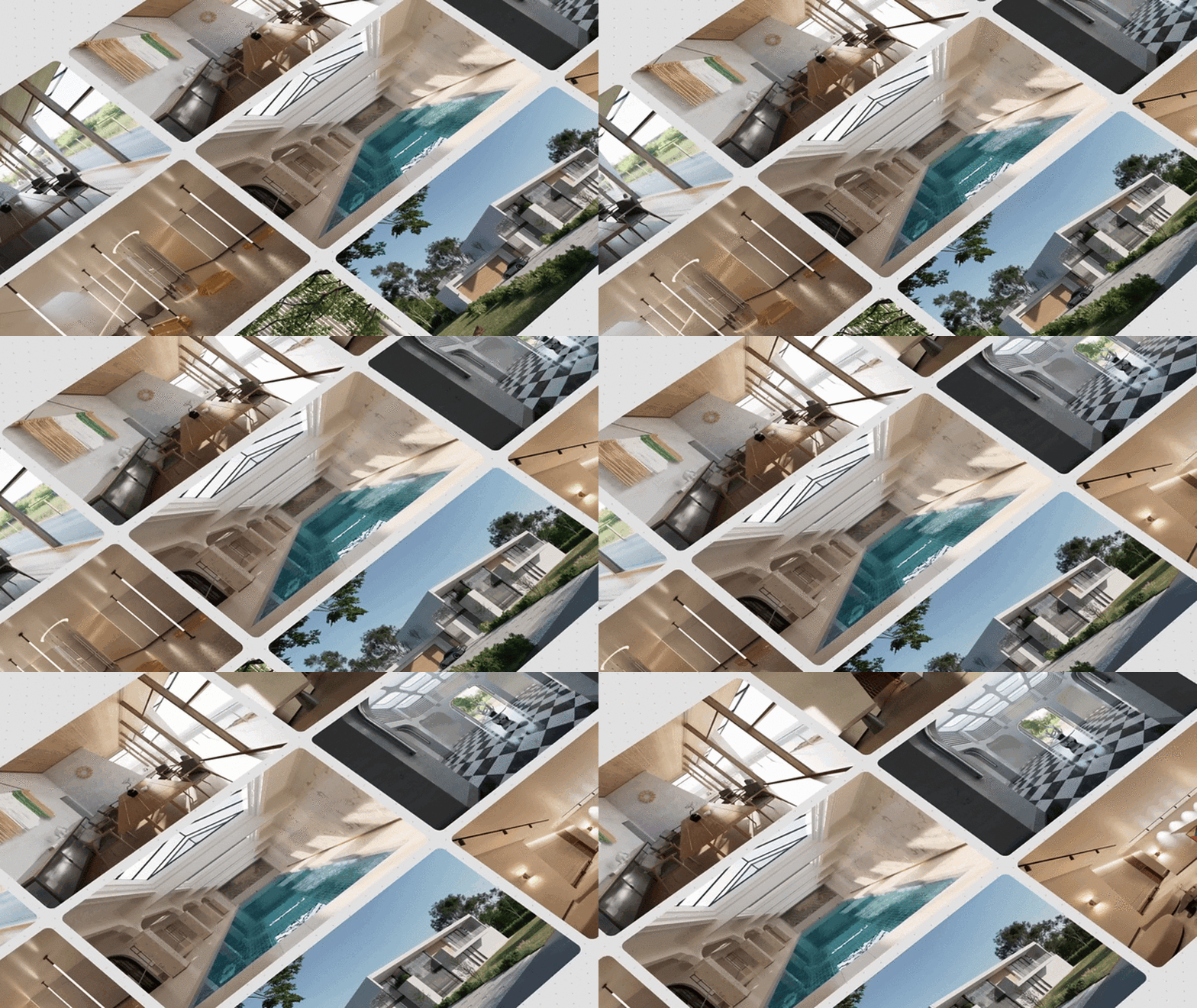
How to visualize architectural concepts in SketchUp using D5 Lite for faster design exploration.
How to visualize architectural concepts in SketchUp using D5 Lite for faster design exploration.

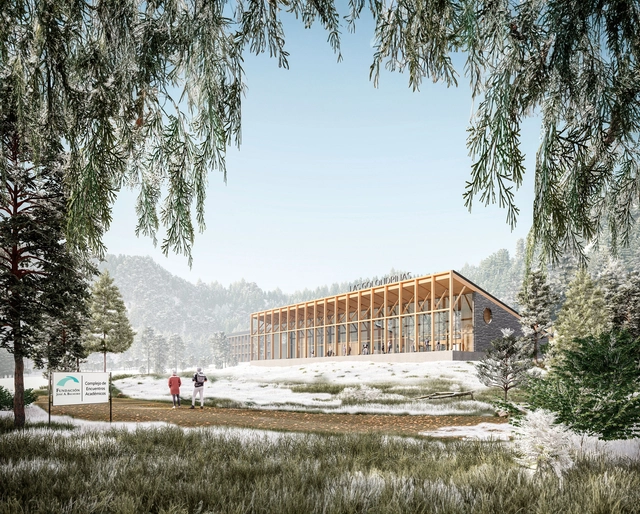
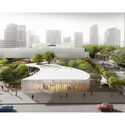
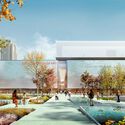
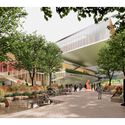
The José A. Balseiro Foundation, along with the Association of Architects of the Province of Río Negro District III (CARN District III) and the Argentine Federation of Associations of Architects (FADEA), launched the National Ideas and Preliminary Project Competition for the "Las Golondrinas" Academic Meeting Complex of the José A. Balseiro Foundation in San Carlos de Bariloche, Argentina. Aiming to strengthen the dialogue among the sciences, culture, education, and the business world, the complex seeks to establish itself as a reference center that positions science as a key driver in generating content and shaping societal decisions.

Sporting facilities can play a vital role in the lives of cities by providing multifunctional public spaces where the people can join in large-scale events providing entertainment and spectacle while also promoting well-being and enhancing community engagement. Additionally, well-designed sporting arenas can become icons for a city, creating a sense of pride and identity and attracting visitors and residents. One such example is the Grand Slam tennis tournaments, which take over cities like Paris, London or New York, attracting fans from all around the world. The Philippe Chatrier and greenhouse transformed into the Simonne-Mathieu Tennis Court in Paris have become architectural landmarks, serving as catalysts for urban development and cultural exchange.
Other small-scale venues also play a role in the lives of communities, acting as gathering places for people with shared interests, fostering a sense of belonging and contributing to the overall health of the neighborhoods. This week's curated selection of Best Unbuilt Architecture highlights projects submitted by the ArchDaily community that showcase both large and small scale sporting venues. From a ‘box in a box’ basketball pavilion in Greece, to a translucent multi-sports arena in El Salvador or a dune-line arena in Morocco, this selection features projects that encourage and celebrate movement, athleticism and fair play competition.
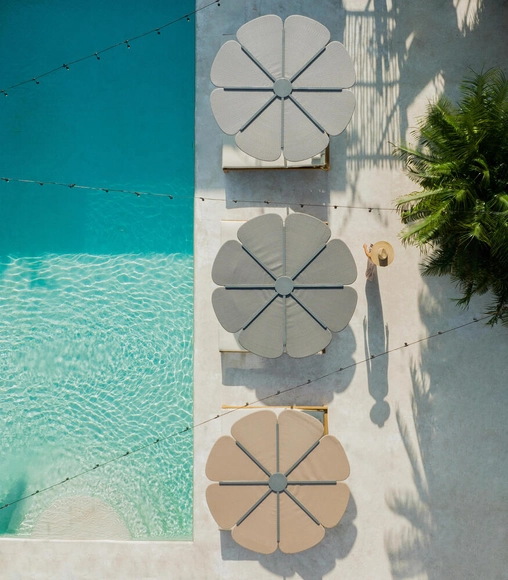
Sun protection is a universal need for human beings. While sunlight benefits our health and mood, it is also essential to protect ourselves from its harmful effects on our well-being and comfort. Throughout history, architecture has provided solutions to this need by offering shelter and comfort in shaded areas. Since ancient Egypt, sunshades made of palm leaves attached to a pole have been used to protect against the sun in open spaces.
Thanks to contemporary materials, we can now develop more durable outdoor structures and furniture than the palm leaves used by the Egyptians 4000 years ago. This has resulted in lightweight and aesthetically pleasing structures that resulted from the designs and materials that emerged in the 20th century. Although these designs are not made from natural elements, they incorporate pieces that replicate their characteristics, providing shade with unique shapes and a distinctive design. In this context, cbdesign has created the Daisy umbrella. This flower-shaped parasol reproduces the colors found in natural surroundings, such as the sea, yellow frangipani, the blue sky, and purple bougainvillea.
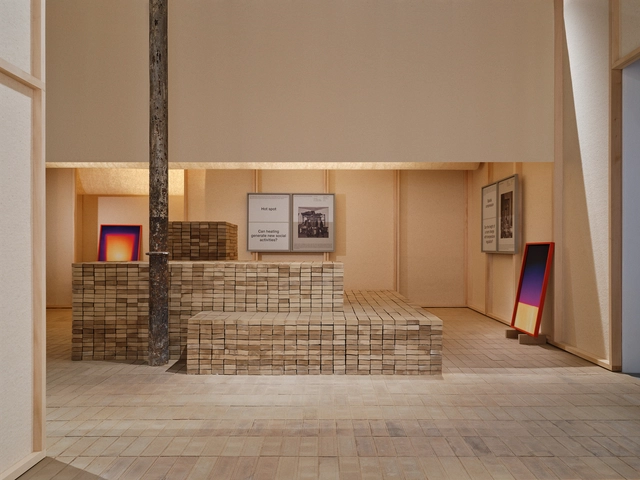
At the 18th International Architecture Exhibition of La Biennale di Venezia, the Pavilion of Slovenia set out to explore the theme of ecology and the paradoxical ways in which architecture relates to it. Instead of understanding it strictly through energy-efficient adaptations like heat pumps or recovery ventilation, the exhibition titled +/- 1 °C: In Search of a Well-Tempered Architecture aims to address the theme holistically. The Pavilion curators Jure Grohar, Eva Gusel, Maša Mertelj, Anja Vidic, Matic Vrabič, together with fifty European architects and creatives, researched and analyzed vernacular buildings from Europe to gain insight into the living example of intuitive adaptations.

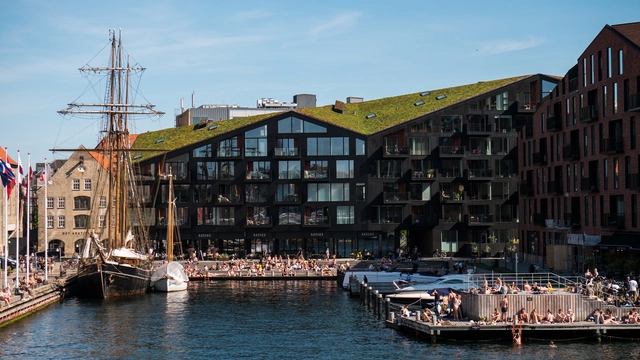
Over the course of five days this week, Copenhagen hosted the largest gathering in the realm of sustainable architecture, bringing together over 6,000 participants from 135 nations. The UIA World Congress of Architects 2023 focused on the theme "Sustainable Futures – Leave No One Behind." This event served as a forum for distinguished researchers and professionals of various backgrounds and ages to delve into methods of creating buildings that address climate change, bolster biodiversity, and foster social inclusivity. As the congress drew to a close, "The Copenhagen Lessons" were unveiled, comprising ten principles intended to facilitate swift and transformative progress in the field of sustainable construction.
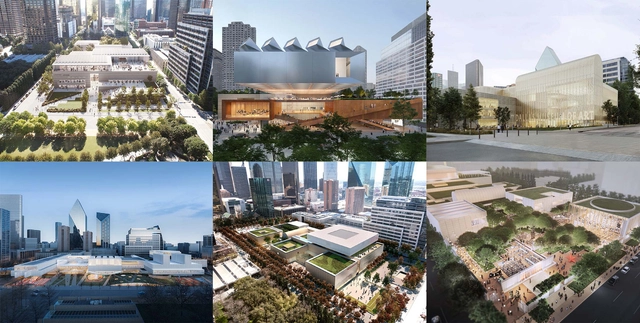
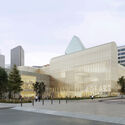
The Reimagining of the Dallas Museum of Art International Design Competition has revealed its shortlisted entries. Announced by the Dallas Museum of Art (DMA), the six finalists selected from a total of 154 submissions worldwide are David Chipperfield Architects, Diller Scofidio + Renfro, Johnston Marklee, Michael Maltzan Architecture, Nieto Sobejano Arquitectos, and Weiss/Manfredi. The museum just released images of the competition finalists’ design concepts, and the public is invited to comment on the different proposals.
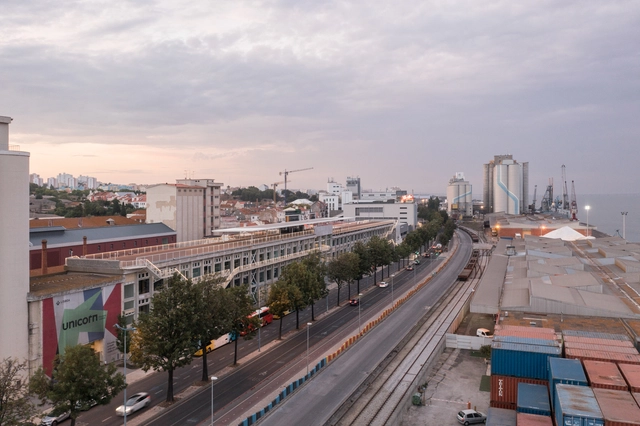
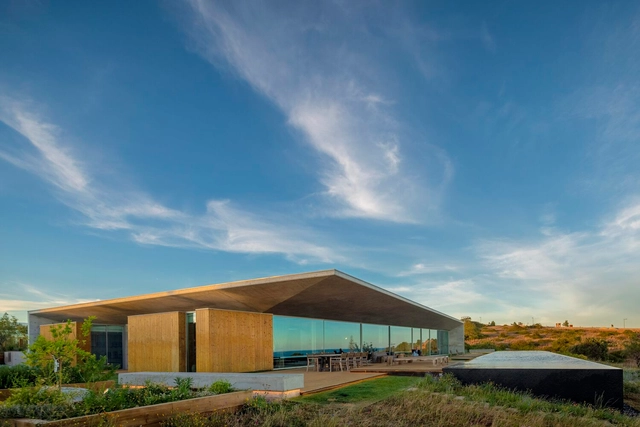
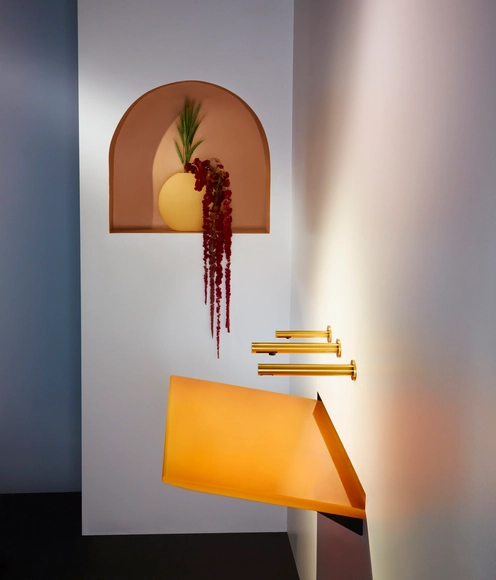
When designing contemporary restroom solutions, for both residential and various commercial settings such as corporate, commercial, public, and hospitality purposes, different approaches can shape the design strategy. In line with the latest ongoing discoveries and styles, the use of disruptive material strategies and the presence of minimal and muted lines and color palettes seem to be predominant when creating cutting-edge bathroom designs. Disruptive design aims to enhance functionality, sustainability, and aesthetics through the integration of different features such as smart technologies or modular units, while minimal strategies emphasize simplicity, clean lines, and a luminous color scheme to create soothing and sophisticated environments.
Transforming how we think about restroom spaces, The Splash Lab reinterprets the restroom experience by incorporating four main principles: inclusivity, innovation, sustainability, and a holistic approach. Combining both disruptive designs with minimal strategies, they have created The Aerofoil, a floating single-plane sink that is characterized by its intelligent elements while maintaining a refined design style.