-
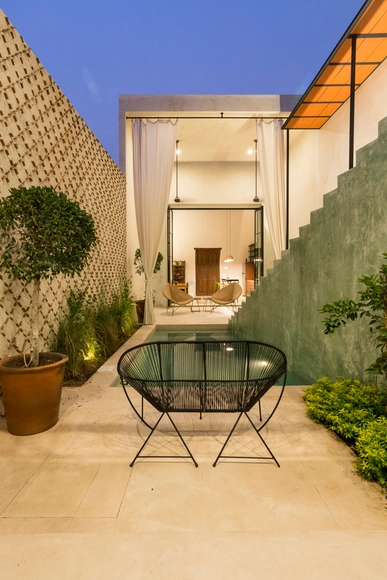
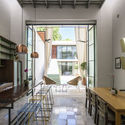
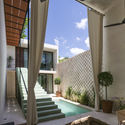
Architects: tHE gRID Architects Research and Design Studio
- Area: 6983 ft²
- Year: 2021
-
Manufacturers: Carpenters, HRS Aluglaze Pvt. Ltd, Local Nursery

A Bench in Venice calls for students around the world to design an upcycled bench using the 17th Biennale Architettura de Venezia's installation leftover construction materials.

COMPETITION INFORMATION
For the 2021 Chicago Prize, the Chicago Architecture Center and the Chicago Architectural Club call for new visions for the State of Illinois Center/James R. Thompson Center.


The intention of the Kurula Varkey Design Forum has been to curate discussions centered around the thoughts of students and young graduates. It has constantly tried to bring the agency which students hold, to forefront; to provide a platform for students to display their opinions to the profession they’ll be entering soon. Writing becomes a tool to examine one’s own thoughts; at the same time it provides an important platform to express one’s voice to a larger community.

The Media Architecture Awards are handed out to the best projects in the integration of displays, interactive installations and other media into architectural structures, such as facades and urban screens. The winners will be announced at the Awards Ceremony on July 2 (15:30-16:30 CEST). The award ceremony will be live-streamed. The coming weeks the three nominations in each of the five categories will be revealed here, on ArchDaily.

PANEL DISCUSSION – BALANCING NATURE AND SUSTAINABLE LIVING
Tuesday 22 June 2021
1630 hrs BST
online via Zoom
AestheticaStudio_VanBurenSt.jpg?1623834247)
Studio Gang and The Community Builders have won the City of Chicago’s C40 Reinventing Cities, a competition that seeks to “transform underutilized sites or buildings into beacons of sustainability and resilience and act as a showcase for future zero-carbon urban developments”. The winning proposal will create 207 residences for the downtown workforce earning as little as minimum wage, revitalize Pritzker Park, and add community spaces and amenities to the Chicago Loop.
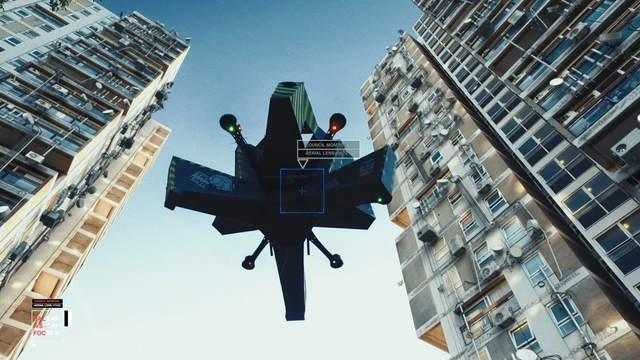
The human scale spans both physical dimensions and sensory perception. Designers create spaces and objects like steps, doorways and chairs that are closely aligned to human measurement and how we see the world. But as we look beyond the human scale, new ideas and typologies emerge that help us rethink how we conceptualize architecture and build for the future.
.jpg?1623754842&format=webp&width=640&height=580)
MVRDV has revealed the design of "De Oosterlingen", a series of seven sustainable residential buildings on Amsterdam’s Oostenburg Island. The proposed buildings are distributed in a 'barcode' composition, forming an apparent unified design but with an animated skyline and unique characteristics such as varying roof shapes and façades of wood, glass, recycled brick, and bio-based composite.
.jpg?1623754916 "© Proloog")
.jpg?1623754848 "© Proloog")
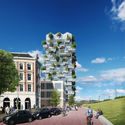
.jpg?1623754842)
.jpg?1622514221&format=webp&width=640&height=580)
The 2021-2022 A' Design Awards are now open and accepting early entires. The A’ Design Award & Competition provides valuable feedback and experience to its contestants. The A’ Design Award winners will proudly display their award trophies and design excellence certificates which grant them a high level of exposure and recognition.

The 17th Venice Architecture Biennale is currently unfolding, and its 60 national pavilions reveal a wide range of answers to the question "How will we live together". This year's edition restates the Biennale's role as a platform for inquiry, prompting a collective re-evaluation of pressing issues such as migration, inequality, climate change or the role of technology. While in Venice, Archdaily met virtually within the Korean pavilion with curator Hae-Won Shin, as the pandemic prevented the exhibition's creators to be present at the Biennale. The conversation explored the thinking behind "Future School" and how it creates a framework for collective learning and exploration.











AestheticaStudio_Aerial.jpg?1623834275 "© Aesthetica Studio")
AestheticaStudio_ViewFromCTA.jpg?1623830118 "© Aesthetica Studio")
AestheticaStudio_NeighborHub.jpg?1623833511 "© Aesthetica Studio")
AestheticaStudio_1.jpg?1623829482 "© Aesthetica Studio")
AestheticaStudio_VanBurenSt.jpg?1623834247)