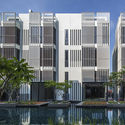
The Architecture at Zero 2016 competition challenge is to create a zero net energy (ZNE) student housing project on the San Francisco State University campus. The competition has two components. First, entrants will create an overall site plan to accommodate the 784 housing units, student services, dining center, childcare facility, and parking. Second, entrants will design one building, in detail, to indicate ZNE performance.
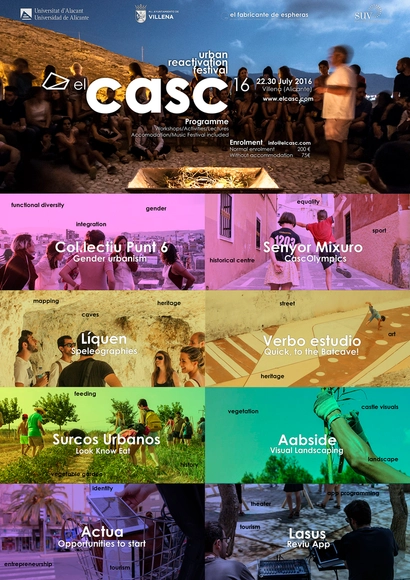
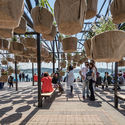
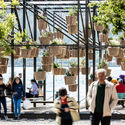
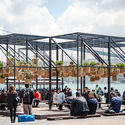
The festival aims for a social and cultural renewal of the Historic Center of Villena, which is stigmatized within the city for several reasons. The event has already received several awards.
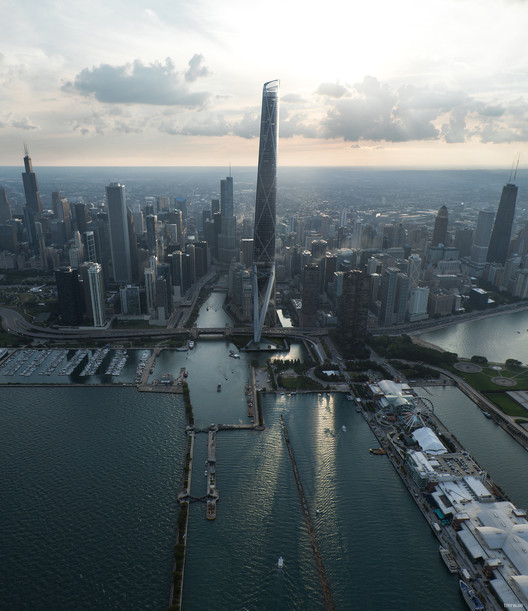
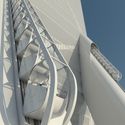
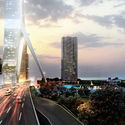
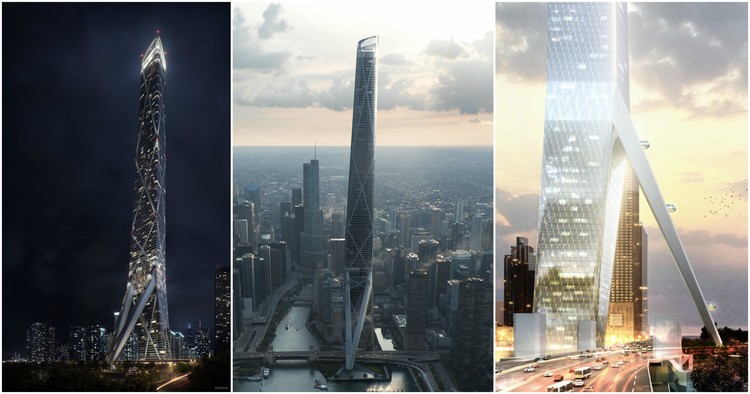
Gensler’s “Gateway Tower” is a 2000-foot (610 meter) conceptual proposal for the Chicago Spire site. The project is the winning entry for a company-wide internal competition to generate a new megatall structure for the 2.2 acre plot at 400 N. Lake Shore Drive. The mixed-use proposal throws out the residential luxury model that drove Santiago Calatrava’s design, with a concept inspired by tourism and public engagement. Gateway Tower’s volume is still largely devoted to residential functions, but now condos and apartments are coupled with a hotel and public attractions that connect to the riverwalk, lakefront, and city. The building would include four unique experiences including riverfront public access at DuSable Park, a Funicular ride of pods ascending the building’s structural “leg” over Lake Shore Drive, a Skylobby with hotel and retail amenities, and a Skydeck with a restaurant and sky-garden at the building’s pinnacle.
For European architects eager to expand their knowledge of contemporary architecture, SCI-Arc, the Southern California Institute of Architecture, has just announced the launch of a full tuition scholarship specifically for citizens of the European Union to study at the SCI-Arc campus in Los Angeles, California.
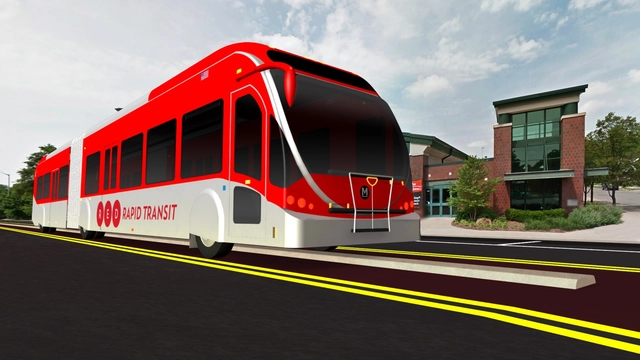
IndyGo is currently in the process of designing the Red Line Bus Rapid Transit (BRT) system. As part of the overall system design, IndyGo is facilitating a design ideas competition to foster creative design solutions for 28 rapid transit stations along Phase 1 of the Red Line BRT route with possible replication of these stations along the two future phases.
MAKING - Alternative design for Factories (www.nonarchitecture.eu)
The aim of the “Making” competition is to develop a design proposal for the factory typology, intended as a place of creation and processing of goods of any kind. It is asked to the participants to create innovative and unconventional projects on this theme, questioning the very basis of the notion of factory. Recently many initiatives, such as fab labs and Makers fairs, have been proposing new interpretations of the functioning of factories, using on demand production and 3D printing to develop extremely successful models.