Chicago was home to a massive elevated walkway dubbed the “pedestrian highway.” It connected buildings on the East Campus of the University of Illinois at Chicago and created a multilevel network of human activity. It was designed by the architect Walter Netsch, the architect of the Air Force Academy Campus and famous chapel in Colorado Springs. The walkway was gigantic and monumental. It was even featured in the horror film Candyman from the early 1990s. But, over time, the walkway fell into disrepair and the decision was made to demolish this piece of iconic urban infrastructure.
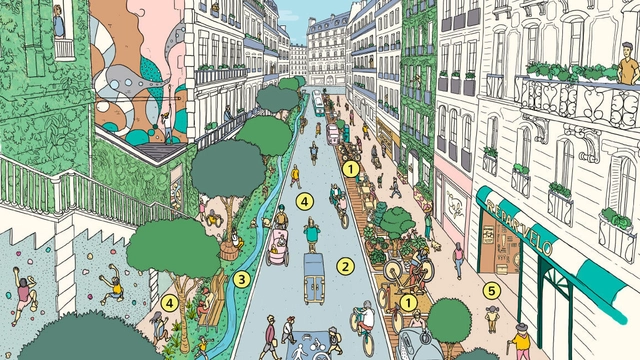
Think about the city or town where you live. How long does it take you to get to the grocery store on foot? Is your school or work close enough to walk to? What about a public park, a doctor’s office, a daycare, or any other places that you visit on a daily basis? While some cities have already considered what it means to live near all of these necessities, others are revamping their urban planning strategies and designing their neighborhoods to be more pedestrian-friendly with the concept of a “15-Minute City”.
I have lived in neighborhoods where you can walk around, to a store, a movie, a restaurant, for 40 years, counting my college days. I grew up in a ranch house with a driveway, but came to adulthood in foot-based parts of cities.
Others have also rediscovered the joys and benefits of walkable places. They have done this first in a trickle, then in a flood. While in total numbers it may still be a minority taste, it’s a fashionable taste now, one heralded in movies and TV shows. Fewer people aspire to live in the big house with the three-car garage.
Go to any medieval European city and you will see what streets looked like before the advent of the car: lovely, small narrow lanes, intimate, and undisputedly human-scale. We have very few cities in the US where you can find streets like this. For the most part what you see is streets that have been designed with the car in mind—at a large scale for a fast speed. In my native San Francisco, we are making the streets safer for walking and biking by widening sidewalks, turning car lanes into bike lanes, and slowing down the cars. We are working with the streets we have; a typical San Francisco street is anywhere from 60 to 80 feet (18 to 24 meters) wide, as compared with a medieval, pre-car street which is more like 10 to 20 feet (3 to 6 meters) wide.
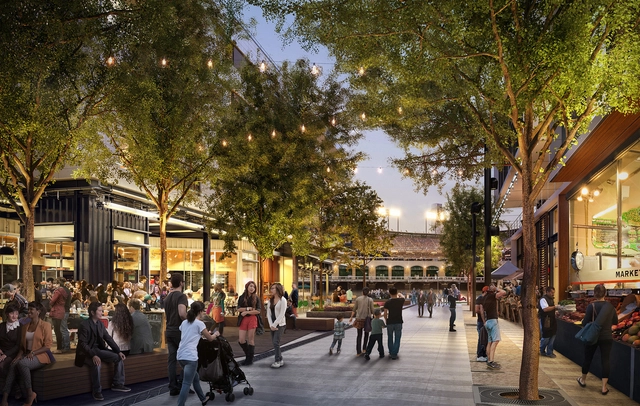
As an urban designer, I work on lots of projects where we take large parcels of land and subdivide them into blocks by introducing new streets. These new streets are a rare opportunity to take a fresh look at the kinds of car-oriented roads that we are used to, and instead try to design streets that prioritize the safety and comfort of pedestrians. These projects give us a chance to design streets that are just for people. Imagine that we made these people-only streets into narrow, medieval-style lanes that are intimate and human-scaled. But even as we try to design streets that might not ever see a single car, we find that the modern street design has become so much more than just places for walking or driving. There are therefore a number of things for socially-minded designers to consider, beyond the commonly talked about pedestrian-car dichotomy.
https://www.archdaily.com/867390/4-important-things-to-consider-when-designing-streets-for-people-not-just-carsKristen Hall
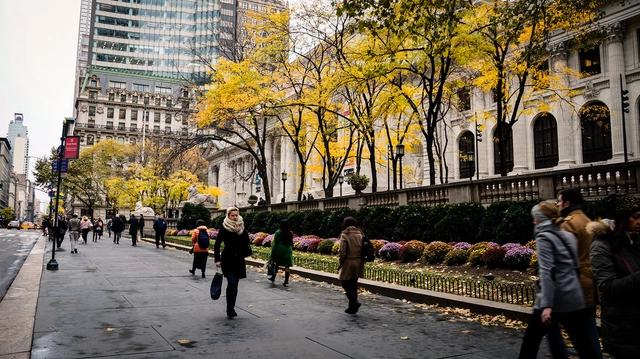
Over the last few years, the way Americans move around has changed remarkably, especially among young people. Previously the automobile was people’s preferred, if not the only, option. Now they are choosing to walk, bike, or use public transport according to recent studies.
This difference in preferred transportation methods has generated many benefits not only for residents but also for cities, in both economic and social terms.