We had the chance to meet and interview principals Florian Idenburg and Jing Liu at P.S.1 while Pole Dance was open. The interview went great. I highly recommend that you check out their response to our question regarding their experience starting and running a firm, just during the financial crisis.
The firm is currently involved in interesting projects abroad, which we look forward in featuring here at ArchDaily in the future.
During the AIA convention in Miami we had the chance to interview Steve Dumez, Design Director at Nola-based firm Eskew+Dumez+Ripple, who received his FAIA during the event.
Steve is the “design guru” at EDR, overseeing the design of all projects from concept to construction documents, and according to the firm “his hand sketches in the early phases of design are invaluable”.
Steve, along side partners Allen Eskew (FAIA) and Mark Ripple (AIA, LEED AP) have been focused their efforts in the NOLA area, not only with their buildings, but also taking part on the initiatives to rebuild NOLA. Steve is also a Past-President of AIA Louisiana and AIA New Orleans.
EDR’s work portfolio includes projects in varies scales, such as the Prospect.1 Welcome Center (AIA Small Project Award 2010) or 930 Poydras Residential Tower, a 462,000 sqf project. On the videos below we discuss with Steve about their experience working on such different scales.
When I visited Chicago, I had to visit one of the key actors on shaping a city that breaths architecture, from big part of the skyline to the Millenium Park: SOM.
I have visited SOM before, to interview Craig Hartman at the San Francisco office, but Chicago was were it all started back in 1936 with Louis Skidmore and Nathaniel Owings, and John O. Merrill who joined in 1939.
This time I interviewed Philip Enquist (FAIA), the partner in charge of urban design and planning. Philip has been involved in development and redevelopment initiatives for college campuses, existing city neighborhoods, new cities, rural districts, downtown commercial centers, port areas and even in a master-plan for the entire nation of Bahrain.
It was amazing to hear from him on different processes that have been shaping the most important cities in the world, such as Beijing’s Central Business District or the master plan for the Millenium Park. But I was also surprised about a project we presented to you earlier, the vision for the Great Lakes area, a project that shows a lot of responsibility as an architect and an example that we still have a very important role in our society.
After the break, the usual questions a bonus with what’s a good city, and some photos of the office.
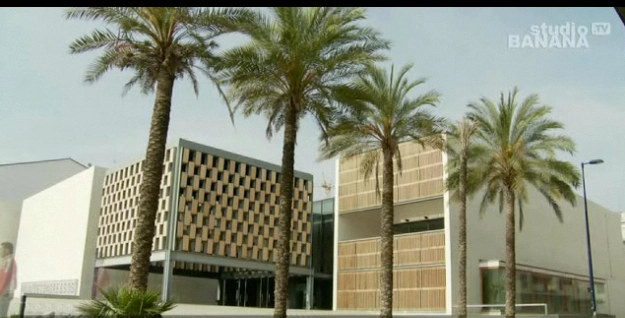
[blip.tv ?posts_id=4142907&dest=-1]In front of the Mediterranean Sea and with close proximity to the Peñíscola Castle, a National Heritage Monument and a park, architects Paredes Pedrosa decided to focus on providing visual connectivity between all inner spaces to both the park and sea in front of it. The result is a building that displays an open front face towards the park, allowing views of the sea from the upper level. Meanwhile, the rest of the perimeter isolates the building from its surroundings.Video: Studio Banana TV
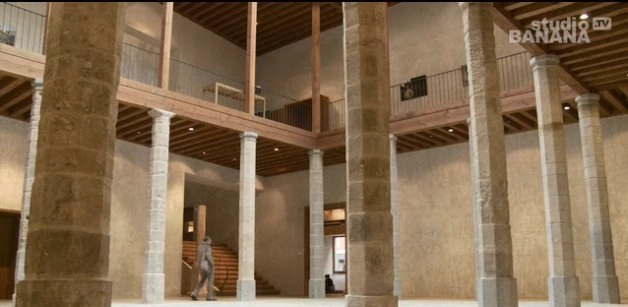
[blip.tv ?posts_id=4142731&dest=-1]The “Casa del Condestable” is a building listed as an Asset of Cultural Interest. It was built from 1548 by Luis de Beaumont, 4th Count of Lerín and Constable of the Kingdom of Navarre. In the year 2000, in a state of ruin, it was acquired by the City Hall to prevent it being demolished and it was then decided to refurbish it for use as a civic centre in the Old Town of Pamplona.Tabuenca & Leache chose to recover as much as possible of the character of the mansion palace in its foundational state, without having to give up the necessary installations to allow it to function. The new elements, though easily recognisable, do not seek contrast but continuity from what was built before, with the natural appearance with which interventions on buildings have historically succeeded each other. The project limits itself to assigning uses to the most suitable available spaces, in the conviction that the new functions will merely represent another episode in its history.Video: Studio Banana TV
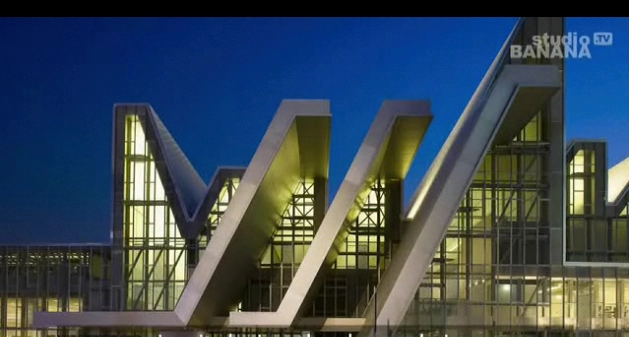
[blip.tv ?posts_id=4133671&dest=-1]The Auditorium and Convention Centre in Expo 2008 located in Zaragoza, Spain was designed by architects Nieto Sobejano. A fractional and varied profile – ascending and descending – the building's exterior expressed the different spaces housed in its interior and introduced a large amount of natural light into the exhibition areas. Three main blocks house an auditorium, a multi-purpose pavilion, and modular halls will be connected to each other via a large common vestibule which links the different areas.Video: Studio Banana TV
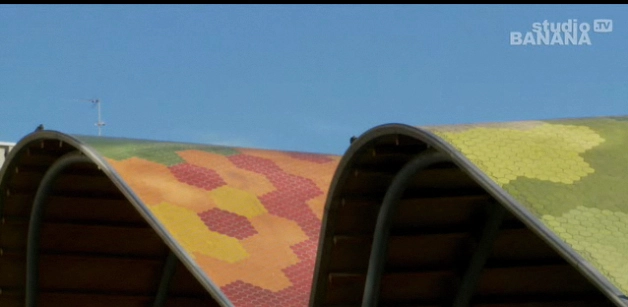
[blip.tv ?posts_id=4151677&dest=-1]The Santa Caterina Market is Barcelona's oldest market, built in 1848. Nearly the entire market was recently renovated by Enric Miralles and Benedetta Tagliabue of EMBT Associated Architects. The very expressive arc roof, mosaic tiled designed by artist Toni Comella, displays vivid colors and figures that represent vegetables and fruit.Video: Studio Banana TV
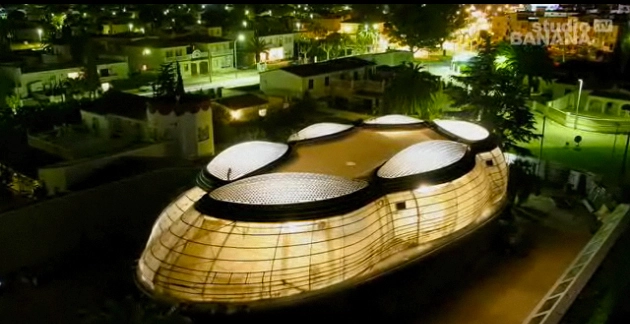
[blip.tv ?posts_id=4151558&dest=-1]Enric Ruiz-Geli created the Villa Nurbs in the coastal town Empuriabrava at the Costa Brava, Spain. The mixture of ceramics and plastics try to optimize the surface and structure, which is important for the temperature regulation inside the house. The wavelike ceramic plates decorate the facade and protect against strong solar radiation.The complex geometry is stabile but adaptable, and the completion of Villa Nurbs will express all Ruiz-Geli's aim to optimize building resources and to harmonize nature with technology. The energy-saving roof consists of inflatable plastic bubbles.Video: Studio Banana TV
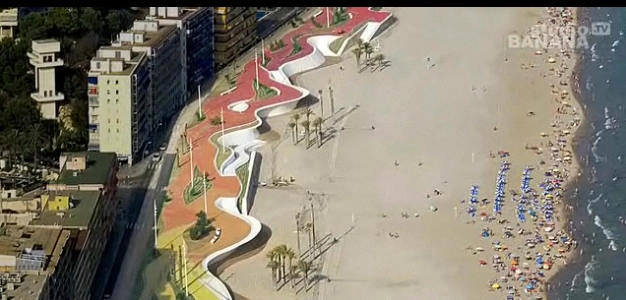
[blip.tv ?posts_id=4142649&dest=-1]Carlos Ferrater and Xavier Martí Galí of OAB designed a promenade as a transit area that would separate the user from the various problems currently arising at its seafront and provide more accessibility to the beaches, creating a place with its own lifestyle. By recreating the shape of cliffs and waves, the project organically developed unusual convex and concave spaces. These honeycombed surfaces generate areas of light and shadow and become a series of platforms and levels for play, leisure, and meditation. The promenade was constructed with only white concrete, incorporating the benches and street furniture in varied shapes, finishes, textures, and colors.Video: Studio Banana TV
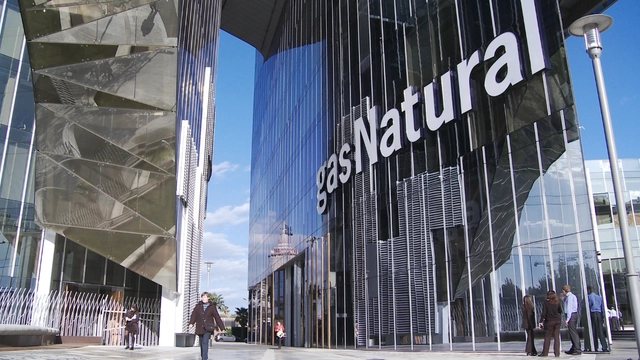
[blip.tv ?posts_id=4071711&dest=-1]Interview with Benedetta Tagliabue on the Gas Natural Building in Barcelona, designed by EMBT (Enric Miralles + Benedetta Tagliabue).Video by Studio Banana.
We’re so happy to share this video BIG passed along to us highlighting their contribution to the 2010 Venice Biennale. Entitled the LOOP City, the exhibition focuses on a new Metro loop that become the catalyst for development for the cross border region as different programs grow around the new stations. The loop will connect areas around the Øresund Strait in a sustainable spine of public transport, energy exchange and electric car infrastructure. The design introduces a new “vein of true urbanity” that will weave it was through the suburbs. This new loop will create a new realm by uniting specific points, yet activating each interstitial segment.
This documentary film explores the fascinating life and complex legacy of architect and city planner Daniel Hudson Burnham, famous for designing the Flatiron Building in New York, Union Station in Washington D.C., and the 1909 master plan for Chicago, among others.
Some of Shanghai’s most revered architecture was designed by a Hungarian, László Hudec (1893-1958), whose works are on display at Shanghai’s Museum of Contemporary Art as 3D virtual reality building explorations.