Curated by Toshiko Mori. All architecture must inevitably contend with history and gravity. These two forces are both fundamental and universal; to confront them is accordingly not only to take the crucial step in any attempt to reinvent the contemporary language of architect but to connect to a vast lineage of historical precedents, creating a platform for developing the discipline’s future as well as reflecting on its past. In Toshiko Mori’s case a series of dialogues with five American masters transpired from projects that required her to work next to, in addition to, or in reference to their creations.
For over a century, the VeniceBiennale (La BiennalediVenezia) has been one of the most prestigious cultural institutions in the world. The avant-garde institution has remained at the forefront in the research and promotion of new artistic trends, while leading international events in the field of contemporary arts that are amongst the most important of their kind. Over the past thirty years, the Biennale has given growing importance to the Architecture Exhibition, which is still a young component of the Biennale considering that its first exhibition was held in 1975. Today, the Venice Biennale captures a multitude of interest from around the globe and attracts over 370,000 international visitors.
Dealing with existing infrastructure has become the most important task facing German architects today. The greatest, most problematic challenge that lies ahead is the downsizing and conversion of postwar buildings, erected from 1950s to the 1970s, which are described as “too unsuitable, too slipshod, too inefficient to serve as housing in the future”. A complete reevaluation of not only of the structures themselves but also the social and historical implications of their unbuilt energy and resources is necessary in order to improve the urban fabric and achieve climatic goals.
The Danish Pavilion for the 2012 Venice Biennale will feature a collaboration between Greenlandic and Danish Architects called “Possible Greenland”. The exhibition will address the current development of the Arctic Region as Greenland undergoes a shift towards political independence and business development in the midst of dramatic climate changes. “Possible Greenland” attempts to look optimistically at the climate changes that are causing ice melts throughout Greenland. The shifting planes result in the exposure of vast mineral resources that can kickstart new industries and allow new urban cultures to emerge.
The pavilion aspires to shed new light onto the status of Korean Architecture allowing the outside world to acquire a deeper and more in-depth understanding of what is currently relevant in the field of architecture in the country. “Walk in Architecture” expresses an idea and at the same time its paradox; it treats architecture as a place or a subject, like “Walk in Venice” or “Walk in a forest”. Walk is a collective action which combines associations: when you walk you think, you meditate, you observe, you dream, you wonder.
Videos
Territorial devices for free management, exchange and production of the city. - Courtesy of Pulska grupa
This year’s Croatian pavilion at the 13th International Venice Architecture Exhibition presents different struggles currently taking place in various Croatian cities. The exhibition, Unmediated Democracy demands Unmediated Space, interprets the topic of common ground by directly asking the protagonists of those collective conflicts how they imagine a common future across and beyond market or state, private or public mediation. The “desires, constrains and potentials expressed in these sites of conflict” are a part of the wider wave of international protests that are demanding a real direct and unmediated democracy. The demands, gathered on the ground through a series of investigative interviews, form the basis for a possible planning strategy, while their resistance tactics become patterns that could shape a common territory.
We visited “Migrating Landscapes”, the installation at the Canada pavilion for the 13th Venice Biennale. This exhibit has been organized and curated by Winnipeg- based 5468796 Architecture and Jae-Sung Chon, who joined together for this project to form the Migrating Landscapes Organizer (MLO). MLO invited, through a national competition, young Canadian architects and designers from a wide range of cultural and educational backgrounds to create scale models of ‘dwellings’ and accompanying videos that draw on cultural memories.
Invited by David Chipperfield, director of the 2012 Venice Architecture Biennale, FAT has contributed an exhibition to the Arsenale titled The Museum of Copying. Responding to the curator’s theme of “Common Ground”, The Museum of Copying explores the idea of the copy in architecture as an important, positive and often surreal phenomenon. The exhibit will be centered around FAT’s installation, “The Villa Rotunda Redux” – a five meter high facsimile of Palladio’s Villa Rotunda that explores the Villa as both a subject and object of architectural copying.
The Estonian exhibition for the 2012 Venice Architecture Biennale investigates the relationship between time and space by discovering how venues once important have been abandoned and how these tendencies may carry on today and in the future. The exhibition poses a question as its title: “How long is the life of a building?”. The answer is sought based on the example of Linnahall – a dignified Modernist legacy in the heart of Tallinn that only a few decades ago was a renowned and requisite construction, yet is closed today. What’s happening to Linnahall speaks volumes in a more general context as well – similar tendencies are becoming prominent everywhere in the world where multitudes of architectural masterpieces less than 50 years old stand unused.
The four main districts of Moscow. - Courtesy of the Strelka Institute
Russia’s leading creative think tank, Strelka Institute, is hosting a series of discussions with preeminent voices in architecture and urban design in the pre-opening days of the 2012 Venice Architecture Biennale. Inspired by the Biennale’s theme of Common Ground, the conversations will focus on how architecture and design can drive the physical, social and economic regeneration of urban environments. Using Russian cities as a starting point, the talks will explore wider issues in urban design around global metropoles. Featured speakers include OMA’s Reinier de Graaf, Teddy Cruz, Stefano Boeri, and more.
Join the authors and editors of Lars Müller Publishers for a rare book signing opportunity with architects Wang Shu, Sou Fujimoto, and Steven Hollon August 28th at the 2012 Venice Architecture Biennale! This event will kick off the exhibition Lars Müller Publishers – Book Fever, which will feature sixty publications – new releases, bestsellers, milestones from the past, and rare treasures – for the public to explore.
AREA Architecture Research Athens, Athens Charting.
The Greek pavilion for the 2012 Venice Biennale will focus on the particular dynamics of Athens during a period of economic meltdown by addressing the deterioration of Athenian urban space, plummeting standards of living, and the need to redefine the priorities of architectural design. Architects and creative groups have already begun to shape a new “common ground” within Athens. With the exhibition “Made in Athens”, the Greek pavilion aims highlight these positive forces emerging during this crucial present moment in an effort to foreshadow a better future for the city and its architecture.
By invitation of Director David Chipperfield, MVRDV and The Why Factorywill participate in the 2012 Venice Biennale. The main contribution consists of the collaborative project ‘Freeland’ forming part of the single exhibition in the Central Pavilion at the Giardini. Further contribution is made by Winy Maas and The Why Factory with ‘Porous City’ to the EU CITY Program, initiated by the European Forum for Architectural Policies (EFAP) representing Europe for the first time at the Venice Architecture Biennale.
Videos
Connecting / Possible Greenland; Courtesy of DAC
The Danish Pavilion for the 2012 Venice Biennale will feature a collaboration between Greenlandic and Danish Architects called “Possible Greenland”. The exhibition will address the current development of the Arctic Region as Greenland undergoes a shift towards political independence and business development in the midst of dramatic climate changes. “Possible Greenland” attempts to look optimistically at the climate changes that are causing ice melts throughout Greenland. The shifting planes result in the exposure of vast mineral resources that can kickstart new industries and allow new urban cultures to emerge. The team of architects that designed “Possible Greenland” were led by internationally renowned Professor in geology at the University of Copenhagen, Minik Rosing and the young Danish architect firm NORD Architectsof Copenhagen.
Representing Brazil at the 2012 Venice Biennale will be StudioMK27 and Lúcio Costa‘s 1964 installation “Riposatevi”. The exhibit takes an intimate look at the lives of multi-generational households in modern Brazilian architecture. Curated by Lauro Cavalcanti, the Brazilian pavilion will investigate the intersections between traditional and contemporary artistic tendencies and will feature the movie installation, “Peep”, by Lea Van Steen and Marcio Kogan, with photography by Cleisson Vidal. The event will take place between August 29th and November 25th in the Giardini and Arsenale buildings in Venice.
Inspired by the great potential of advanced information technology providing architectural solutions, the Russian pavilion of the 2012 Venice Biennale will feature the innovation city of Skolkovo. Skolkovo is one of the largest, most innovative Russian projects of today and has been worked on by many international architects, including Biennale director David Chipperfield. The exhibition will allow visitors to enter into the world of innovation city and use the newest IT-technologies to contribute to the research. Over the Biennale’s three month period, participants will be able to watch the exhibit’s virtual city of Skolkovo evolve as each international visitor leaves their mark.
The Poland Pavilion at the 2012 Venice Biennale will feature a design exploration into the interaction between sound and architecture in creating our environment. The project, by Katarzyna Krakowiak, is a sound sculpture that presents architecture as a primary system of listening. The sculpture collaborates with neighboring pavilions and echos the sounds that reach the Polish Pavilion, highlighting its acoustic qualities. The exhibit will be on view from August 29th through November 29th.
Videos
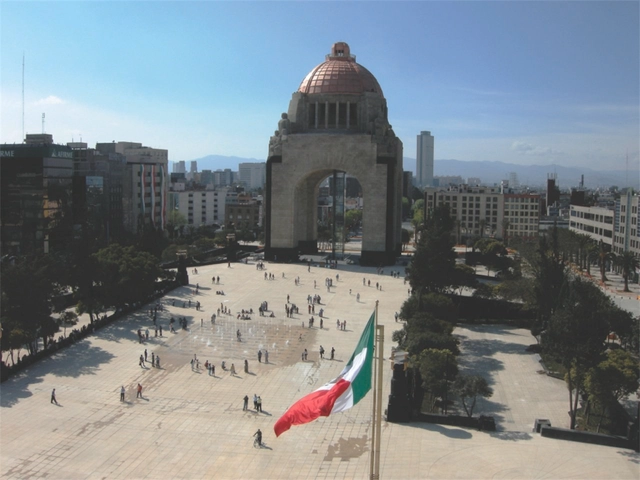
Republic Square / Autoridad del Espacio Público (Felipe Leal + Daniel Escotto)
One of the main idea’s behind the 2012 Venice Biennale’s “Common Ground” theme, as stated by director David Chipperfield, is “to reinforce our understanding of architectural culture, and to emphasize the philosophical and practical continuities that define it”. With the exhibition “Culture Under Construction | The Collectivity of Cultural Space”, Mexico aims to develop an understanding of the distinct contribution that architecture can make to define the collectivity of cultural spaces while strengthening the connection between existing buildings and emerging architecture.