1. ArchDaily
  2. Thin-Shelled Concrete

Thin-Shelled Concrete: The Latest Architecture and News

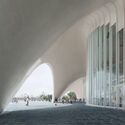
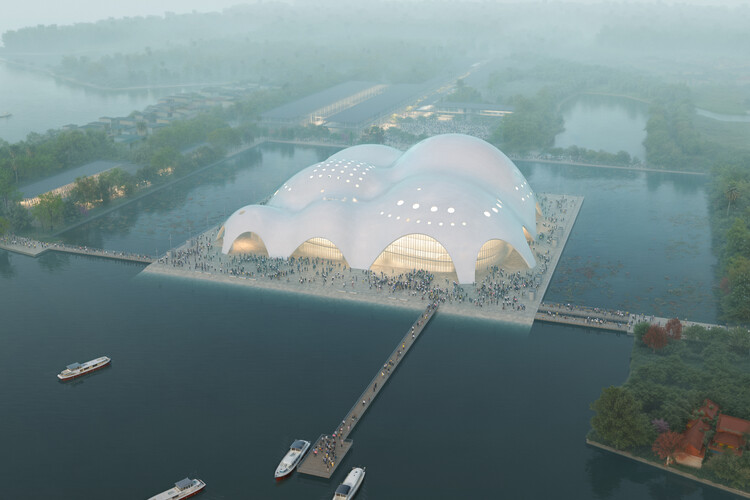
Renzo Piano Building Workshop Designs Curved Concrete Opera Hall Rising from Hanoi’s West Lake

Renzo Piano Building Workshop (RPBW), in collaboration with Sydney and Hanoi-based PTW Architects, has begun construction of the Isola della Musica, a new opera house and convention center in Hanoi, Vietnam. Commissioned by Sun Group, the project was first conceived in 2017 and forms part of a broader masterplan that reshapes the existing boundary between West Lake and Đầm Trị Lake. Inspired by the region's history of pearl cultivation, the building features a series of curved concrete shells whose forms and surfaces evoke the texture and luminosity of mother-of-pearl.
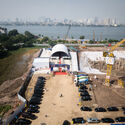

Renzo Piano Building Workshop Designs Curved Concrete Opera Hall Rising from Hanoi’s West Lake - Imagen 1 de 4Renzo Piano Building Workshop Designs Curved Concrete Opera Hall Rising from Hanoi’s West Lake - Imagen 2 de 4Renzo Piano Building Workshop Designs Curved Concrete Opera Hall Rising from Hanoi’s West Lake - Imagen 3 de 4Renzo Piano Building Workshop Designs Curved Concrete Opera Hall Rising from Hanoi’s West Lake - Imagen 4 de 4Renzo Piano Building Workshop Designs Curved Concrete Opera Hall Rising from Hanoi’s West Lake - More Images+ 6

Materials or Labor, What Should Cost More?

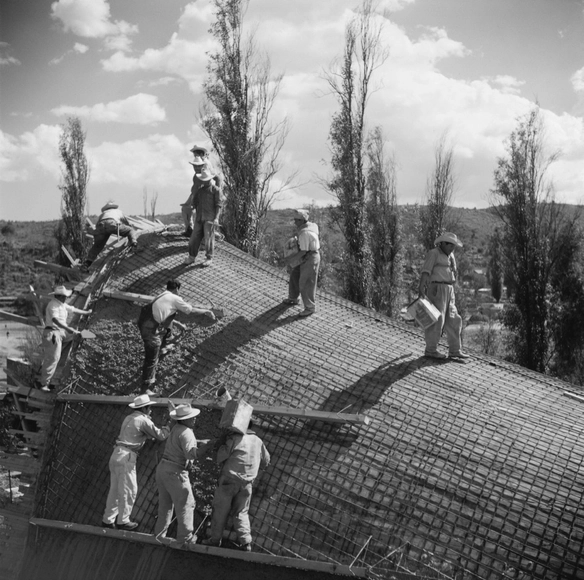
Architecture is often an ambitious profession, with many architects hoping to positively contribute to the social life of the communities, create emotional responses, and add moments of delight and solace to our daily experiences. However, market forces have a way of applying constant pressure on this field, often being the deciding factor in many design choices. Costs and economic value are generally a good indicator of how, when, and to what extent certain materials are being used: the standard rule is the cheaper, the better. But materials are only part of the equation. Site labor, management, and design costs are also considered, depicting a complex picture of the balance between the cost of materials and the cost of labor and its effect on the architectural product.

Materials or Labor, What Should Cost More? - Image 1 of 4Materials or Labor, What Should Cost More? - Image 2 of 4Materials or Labor, What Should Cost More? - Image 3 of 4Materials or Labor, What Should Cost More? - Image 4 of 4Materials or Labor, What Should Cost More? - More Images+ 9

AD Classics: Parish of the Holy Sacrifice / Leandro V. Locsin

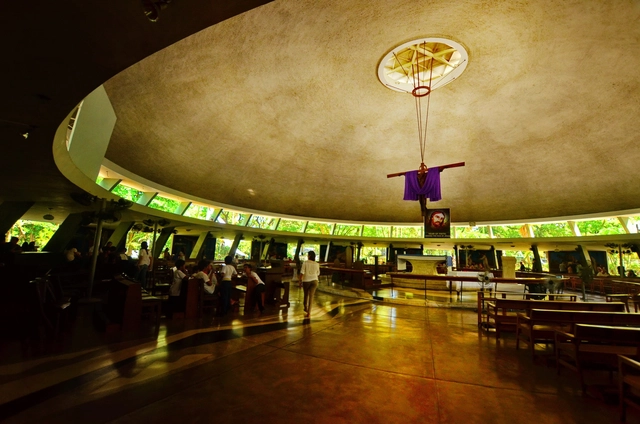
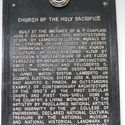
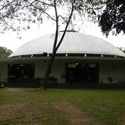
Once dubbed a “flying saucer,” the Parish (Church) of the Holy Sacrifice is a Modernist expression which embodies the complex colonial history of the Philippines. Located on a university campus in Quezon City (formerly the capital of the nation, now a part of the Metro Manila National Capital Region), the domed concrete church was the product of Filipino architect Leandro Locsin, and of three other national artists who contributed to the building’s interior.[1] Locsin’s design, which combines elements of traditional Filipino architecture with postwar International aesthetics, is a potent symbol of a newly-independent nation following centuries of imperial control.

AD Classics: Parish of the Holy Sacrifice / Leandro V. Locsin - Religious Buildings, BenchAD Classics: Parish of the Holy Sacrifice / Leandro V. Locsin - Religious Buildings, Garden, ArchAD Classics: Parish of the Holy Sacrifice / Leandro V. Locsin - Religious BuildingsAD Classics: Parish of the Holy Sacrifice / Leandro V. Locsin - Religious BuildingsAD Classics: Parish of the Holy Sacrifice / Leandro V. Locsin - More Images+ 2

AD Classics: Expo '58 + Philips Pavilion / Le Corbusier and Iannis Xenakis

Subscriber Access | 
AD Classics: Expo '58 + Philips Pavilion / Le Corbusier and Iannis Xenakis - Image 30 of 4
© Wikimedia commons / wouter hagens

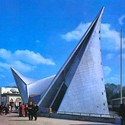
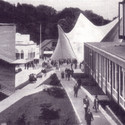
In 1956, preparations had begun for the 1958 World’s Fair in Brussels. This was to be the first World’s Fair held since the end of World War II, the concept behind the Expo was to celebrate the rejuvenation of civilization from the destruction of war through the use of technology. This World Fair is best known for the musical advances that was combined with architecture, creating a gestalt through an experiential encounter where body meets sound and space.

AD Classics: Expo '58 + Philips Pavilion / Le Corbusier and Iannis Xenakis - Image 29 of 4AD Classics: Expo '58 + Philips Pavilion / Le Corbusier and Iannis Xenakis - Image 4 of 4AD Classics: Expo '58 + Philips Pavilion / Le Corbusier and Iannis Xenakis - Image 27 of 4AD Classics: Expo '58 + Philips Pavilion / Le Corbusier and Iannis Xenakis - Image 26 of 4AD Classics: Expo '58 + Philips Pavilion / Le Corbusier and Iannis Xenakis - More Images+ 63