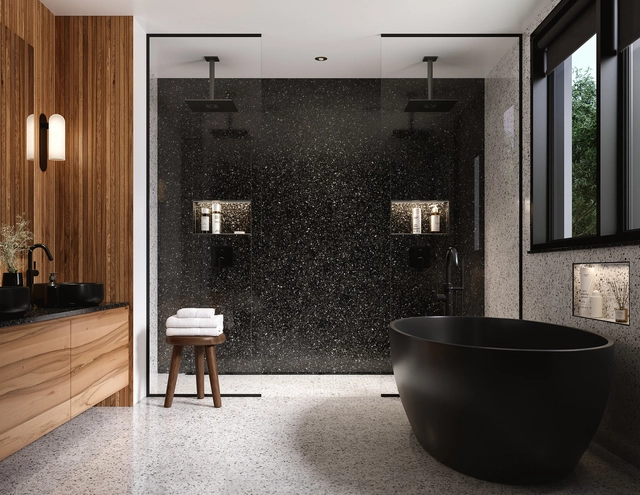
In contemporary bathroom architecture, the drain has evolved from a purely functional component into a design element that guides layout, accessibility, and long-term performance. When drainage, slope geometry, and waterproofing are designed as one system, the tiled surface achieves both visual refinement and reliable function—qualities that are critical for hotels, spas, and residences. Schluter® establishes the essential drain-to-waterproofing connection in a controlled factory setting, rather than relying on field assembly.
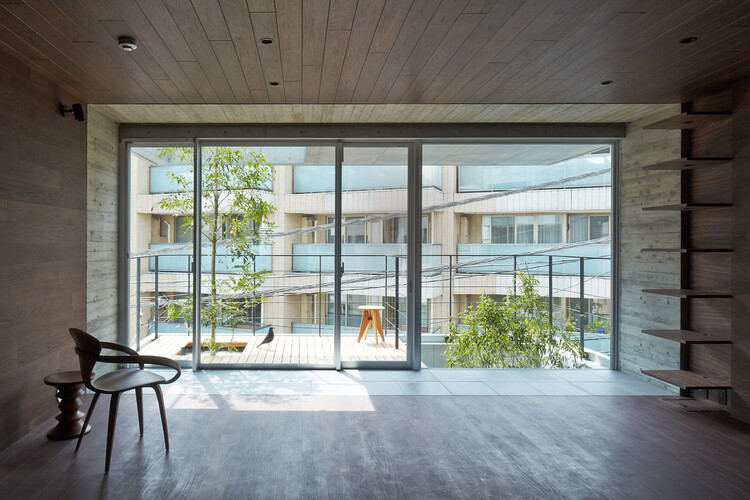
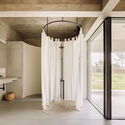
Balcony House / Ryo Matsui Architects. Image Courtesy of Ryo Matsui Architects Inc
We walk on "flat" ground every day and rarely think twice—but how flat is it, really? In the city, curbs are chamfered, sidewalks pitch toward grates, and roadways are crowned to shed water into shallow gutters. In suburbs and on unpaved paths, irregular terrain is the norm. Inside buildings, by contrast, we pursue near-perfect horizontality—structural frames, slabs, and finishes are all disciplined to create level walking surfaces in the name of safety and accessibility. Yet flatness is inherently at odds with water. A closer look reveals a quiet repertoire of accommodations: slight falls at entries, thresholds raised a few millimeters, wet areas with barely perceptible pitches. The floor is read as flat, but it is in fact carefully tuned—micro-topographies masquerading as plane—to manage water without calling attention to themselves.
What are the common ways architects "keep things flat" while actually managing water—the perennial enemy of buildings? A useful way to look at it is by zooming into three recurring conditions: exterior or roof decking, bathrooms and other wet rooms, and exterior ground planes. Each relies on a slightly different toolkit—pedestal systems over sloped waterproofing, micro-gradients to floor traps, hidden perimeter drains, split slopes—to maintain the illusion of a seamless, level surface. Studying these situations side by side reveals just how much design effort goes into reconciling perceptual flatness with the messy reality.
Water is a catalyst for sensory experiences: it manifests through direct contact when touched, through its presence when heard or seen reflected, and through its transformations—whether by temperature, from cold to heat, or by state, from liquid to vapor. It is a key element in designing for the senses, capable of evoking physically and emotionally perceived atmospheres. As Juhani Pallasmaa suggests, architecture does not address the eye alone but involves the whole body and sensory memory. The bathroom, in particular, concentrates much of the physical and emotional experience associated with water, opening up possibilities for creating environments that intensify that sensory connection. Consequently, the question arises: what elements or concepts should shape this space so that the shower experience escapes the ordinary?
https://www.archdaily.com/1030230/the-bathroom-reawakened-contemporary-design-concepts-for-a-sensory-experienceEnrique Tovar
Bathrooms play a significant role in our daily lives, serving multiple functions beyond basic hygiene. Research highlights their importance as relaxation, introspection, and personal wellness spaces. A bathroom's design and comfort can profoundly influence how we begin and end our day, framing our routines with a sense of ease or disruption. When traveling, hotel bathrooms often leave a lasting impression, as a well-designed and thoughtfully executed bathroom can significantly elevate the overall experience of a stay.
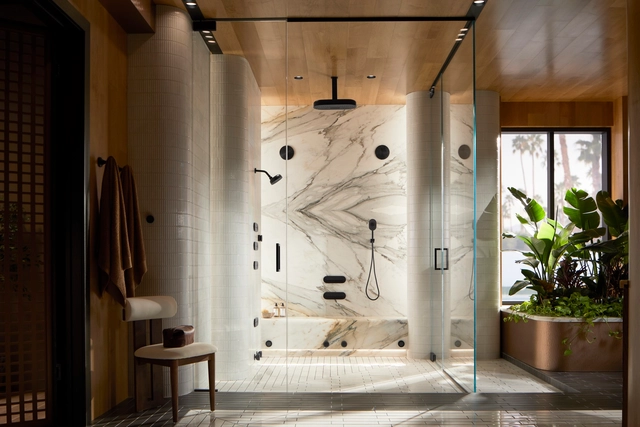
Anthem+™ - Shower environment. Image Courtesy of Kohler
Incorporating technology into architecture has transformed the way we design and experience environments across various scales, spanning from urban development to interior settings. Today, the concept of "smart spaces" embodies the fusion of innovation and design to enhance well-being and quality of life in our daily activities. This is achieved through seamless technological integration, encompassing a range of functions and systems via software, digital tools, and everyday devices like smartphones. As a result, activities like showering are experiencing significant advancements, evolving into a digital multi-sensory experience that offer personalized control over environmental factors, enhancing relaxation and well-being. These innovations enhance the interaction between technology, design, and users, fostering new ways to engage with spaces and subtly enriching our routine activities.
https://www.archdaily.com/1023948/creating-a-multi-sensory-digital-shower-experience-for-well-being-relaxation-and-controlEnrique Tovar
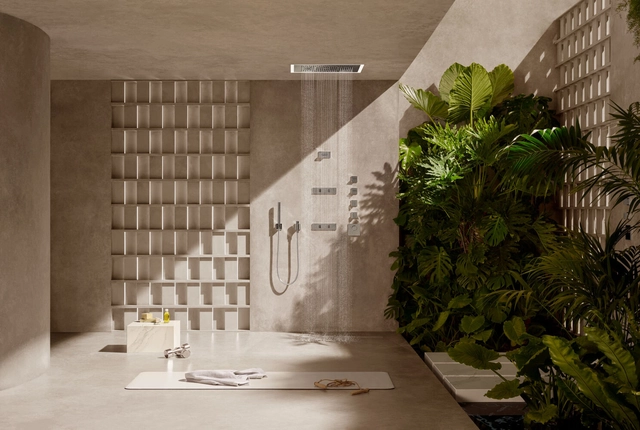
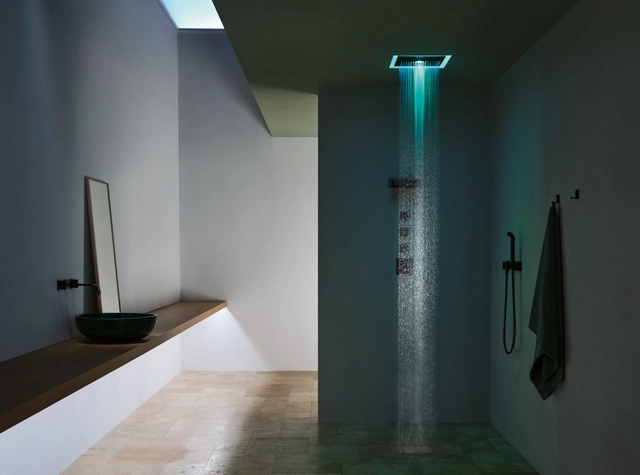
Showering is one of the most physically sensational rituals we commit to on a daily basis—often, when time allows, even multiple times between morning and night. It represents the transformative power of water on the body, offering a cascade of bliss and well-being. It is elemental as much as it is routine and purification. The new Serenity Sky designs from Dornbracht have been developed with a focus on elevating the rainshower experience, maximizing every aspect of it, while also incorporating nuance and options for each user. The new product takes one of the simplest concepts integral to our lives and enhances it with a personalized touch.
https://www.archdaily.com/1022770/follow-your-bliss-the-serenity-of-rainshower-experienceMark C. O'Flaherty
Videos
The fitting collections from Villeroy & Boch impress with their high-quality materials and are ideal for exclusive bathrooms. Image Courtesy of Villeroy & Boch
In addition to elegantly designed ceramics, stylish furniture and practical accessories, Villeroy & Boch's bathroom range also includes elegant fittings. As with all the company's products, the extensive range offers durable quality and reliable functionality, ensuring long-lasting usability through high-quality materials and meticulous craftsmanship. Furthermore, the fittings are perfectly coordinated with the company's own bathroom collections in terms of design and functionality, with the Top-Together label, as presented by Villeroy & Boch, showcasing particularly harmonious combinations for architects and bathroom planners. A total of 13 fitting collections are available, offering a wide range of styles, sizes and shapes.
As one of the smallest spaces in the home, shower rooms often find it difficult to get enough light. While bedrooms are given priority to choose the most favored spots alongside exterior walls – giving them access to the fresh air, natural light, and better views provided by windows – sanitary spaces are often left to feed from the scraps in the aftermath, afforded only a sliver of external wall, if any.
Due to issues with privacy and water damage, meanwhile, when a shower room does have the opportunity to add a window, it’s rarely positioned in the shower itself. But with many using an energizing shower to gently wake themselves up in the morning, and with steam making the shower an environment with extra high humidity levels, a window in the shower can make a big difference, adding natural light to the space itself, while keeping the entire room well-ventilated.
With frames and surrounding waterproof panels in any colour to match or contrast the surrounding decor, shower enclosures like Eterna from Samo are a useful tool in bathroom design. Image Courtesy of Samo
I’ve written before about my preference for showers over baths in the sanitation stakes. An instant hit of hygiene therapy, they’re quicker, cleaner, more energy efficient, and use less water than their horizontal siblings.
Thankfully, I’m not in the minority. Shower popularity means there’s a huge range of shapes, sizes, and types on the market. However, bathroom planning can be exhausting with so many to choose from. Here are six simple questions to ask when looking for the perfect shower enclosure to fit any type of space, lifestyle, or preference.
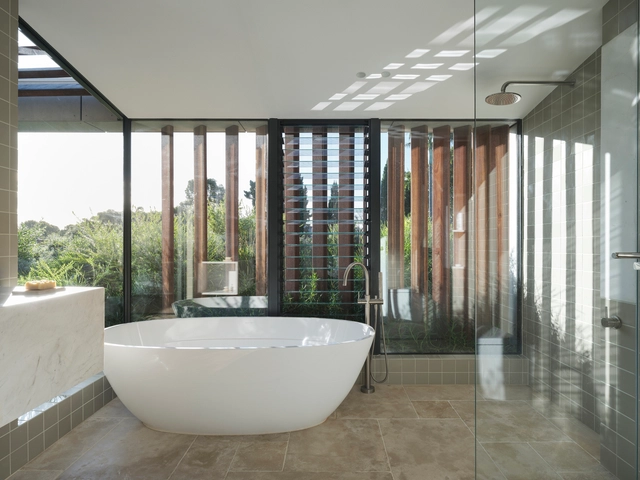
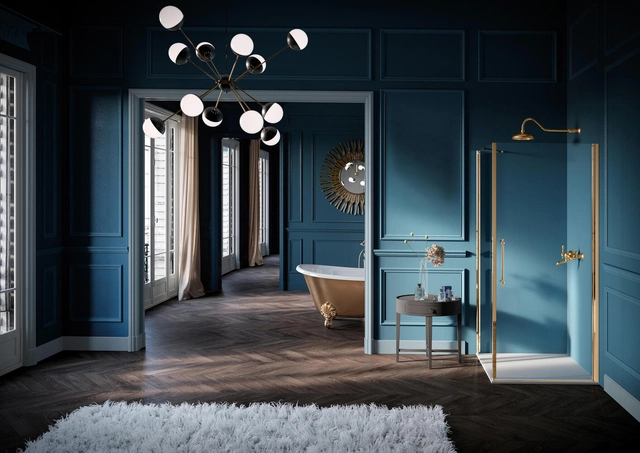
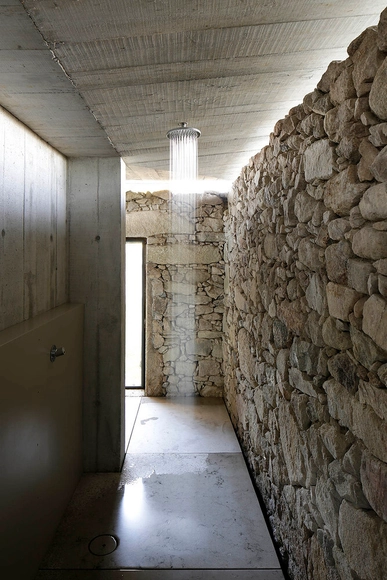
In a world that increasingly demands more from us, for many people the bath goes beyond a moment of hygiene. It can give you a few minutes to relax after a long day at work and recharge your batteries. Therefore, more and more people are looking for spaces that escape the usual when it comes to bathroom design. Showering can become a pleasurable experience that allows a momentary escape from everyday tasks, as the projects selected below can demonstrate.
Taking a good shower can be an extremely relaxing and pleasant experience. Far beyond the simple (and important) functions of removing dirt and sweat and balancing the bacteria present on the skin and body, the feeling of well-being that a bath provides can make us think better, come up with ideas to solve problems and relax our muscles. To make things even better, this experience can be enhanced through a well-designed space, with suitable materials, well thought out lighting, and components that provide a good waterflow.