1. ArchDaily
  2. Public Safety

Public Safety: The Latest Architecture and News

The Role of Urban Design in Women's Safety: Lessons from Four Public Spaces

Subscriber Access | 
Audio available

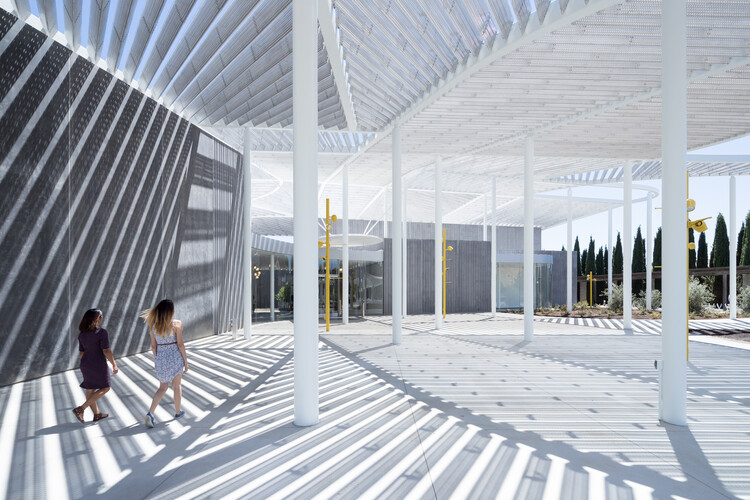
Public space is often intended to be perceived as universal, but access is unevenly experienced. For many women, moving through the city involves a continuous assessment of exposure, visibility, proximity to others, lighting, transport access, escape routes and the likelihood of harassment. These calculations are shaped by spatial conditions as much as social ones. Safety is a question of urban form, maintenance, mobility, governance and the distribution of public investment. While the built environment may not cause gender-based violence, it can intensify vulnerability and normalize unequal access, especially to public spaces.

For architects and planners, there is a critical distinction between designing for security and designing for safety. Security strategies tend to focus on surveillance, control, policing and the management of movement, while safety depends on whether people can see and be seen, if routes are legible, whether public spaces support activities throughout the day, and how long-term maintenance is supported. The role of design is to alter the conditions under which public life takes place.


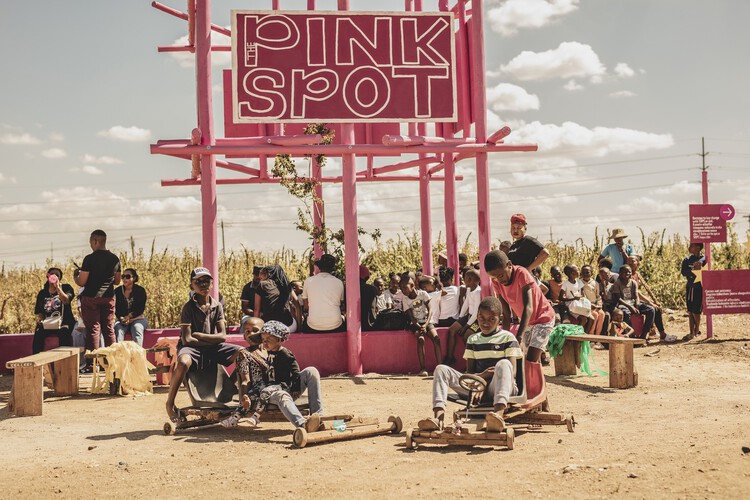
The Role of Urban Design in Women's Safety: Lessons from Four Public Spaces - Image 1 of 4The Role of Urban Design in Women's Safety: Lessons from Four Public Spaces - Image 2 of 4The Role of Urban Design in Women's Safety: Lessons from Four Public Spaces - Image 3 of 4The Role of Urban Design in Women's Safety: Lessons from Four Public Spaces - Image 4 of 4The Role of Urban Design in Women's Safety: Lessons from Four Public Spaces - More Images+ 30

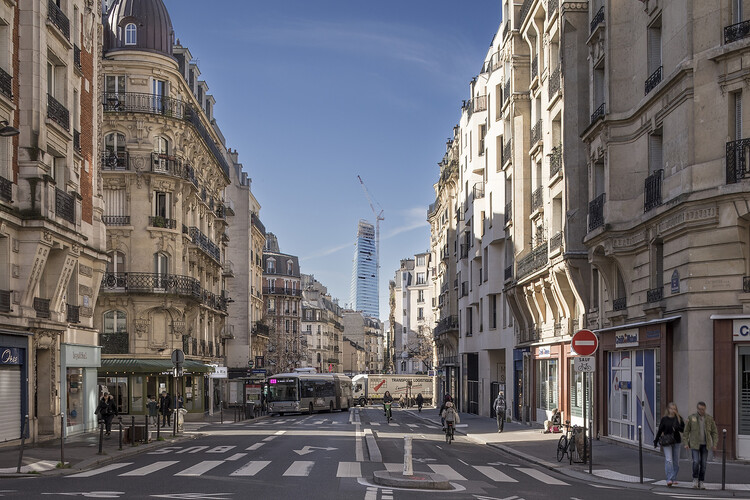
Paris as a Living Laboratory: Proximity, Inclusion, and the School as Climate and Social Infrastructure

Subscriber Access | 
Audio available

ReGreeneration is a Horizon Europe-awarded project working across nine cities to advance urban regeneration through nature-based solutions, participatory governance, and integrated approaches to climate resilience and social equity. The nine cities in the project portfolio span a range of urban typologies, scales, and planning traditions, forming a living laboratory for rethinking sustainable urban transformation in practice. Each city brings distinct challenges and ambitions to the collaboration, and this series of articles explores what each city is doing and what the broader design community can learn from it.

Paris as a Living Laboratory: Proximity, Inclusion, and the School as Climate and Social Infrastructure - Image 1 of 4Paris as a Living Laboratory: Proximity, Inclusion, and the School as Climate and Social Infrastructure - Image 2 of 4Paris as a Living Laboratory: Proximity, Inclusion, and the School as Climate and Social Infrastructure - Image 3 of 4Paris as a Living Laboratory: Proximity, Inclusion, and the School as Climate and Social Infrastructure - Image 4 of 4Paris as a Living Laboratory: Proximity, Inclusion, and the School as Climate and Social Infrastructure - More Images+ 23

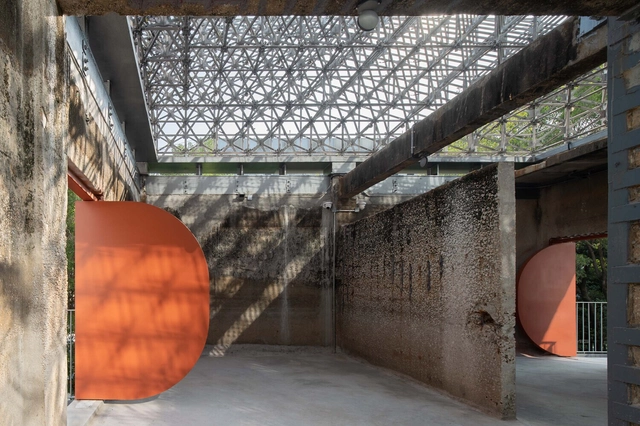
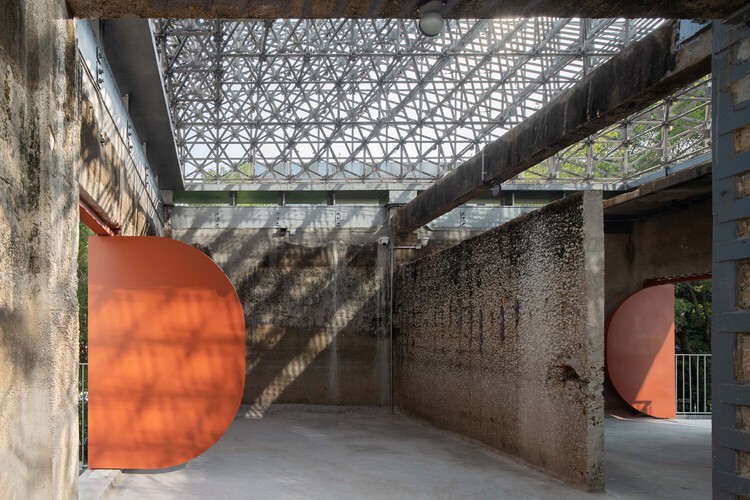
Dialogue with the Code: Calibrating Standards for Adaptive Reuse to Thrive

There is growing awareness around sustainability—and the environmental cost of prematurely demolishing safe, structurally sound buildings only to replace them with new construction. In the broader race to reduce carbon emissions, corporations and institutions are placing greater emphasis on ESG performance (environmental impact, social responsibility, and governance). Many now require carbon accounting, set "carbon-neutral" targets, or purchase carbon credits to offset footprints.

This shift, together with a wave of exemplary adaptive-reuse projects worldwide—Herzog & de Meuron's Tai Kwun in Hong Kong, Powerhouse Arts in Brooklyn, David Chipperfield's The Ned Doha, and Xu Tiantian's transformations of factories, quarries, and rammed-earth fortresses in China—has accelerated serious reconsideration of reuse as a primary development strategy. Yet despite its many benefits, adaptive reuse is still not as prevalent as it could be. Why and what might be the main obstacles and tensions?

Dialogue with the Code: Calibrating Standards for Adaptive Reuse to Thrive - Image 1 of 4Dialogue with the Code: Calibrating Standards for Adaptive Reuse to Thrive - Image 2 of 4Dialogue with the Code: Calibrating Standards for Adaptive Reuse to Thrive - Image 3 of 4Dialogue with the Code: Calibrating Standards for Adaptive Reuse to Thrive - Image 4 of 4Dialogue with the Code: Calibrating Standards for Adaptive Reuse to Thrive - More Images+ 29

On Human Rights Day: Perspectives on Architecture, Equity, Housing Access, and Safety Worldwide

Human Rights Day is observed annually on 10 December worldwide. It commemorates the anniversary of the Universal Declaration of Human Rights in 1948. Drafted by representatives with diverse legal and cultural backgrounds from all regions, the Declaration was proclaimed as a common standard of achievement for all peoples and all nations. For the first time, the document set out fundamental human rights to be universally protected and inalienable, entitling every human being to them regardless of race, colour, religion, sex, language, political or other opinion, national or social origin, property, birth, or any other status. Today, the Declaration serves as a global blueprint for international, national, and local laws and policies. Available in 577 languages, it is the most translated document in the world. The United Nations has set the theme for this year's observance as "Human Rights, Our Everyday Essentials," aiming to "reaffirm the values of human rights and show that they remain a winning proposition for humanity."

On Human Rights Day: Perspectives on Architecture, Equity, Housing Access, and Safety Worldwide - Image 1 of 4On Human Rights Day: Perspectives on Architecture, Equity, Housing Access, and Safety Worldwide - Image 2 of 4On Human Rights Day: Perspectives on Architecture, Equity, Housing Access, and Safety Worldwide - Image 3 of 4On Human Rights Day: Perspectives on Architecture, Equity, Housing Access, and Safety Worldwide - Image 4 of 4On Human Rights Day: Perspectives on Architecture, Equity, Housing Access, and Safety Worldwide - More Images+ 12

Safe by Design: How Architects and Forensics Rethink Security across Scales

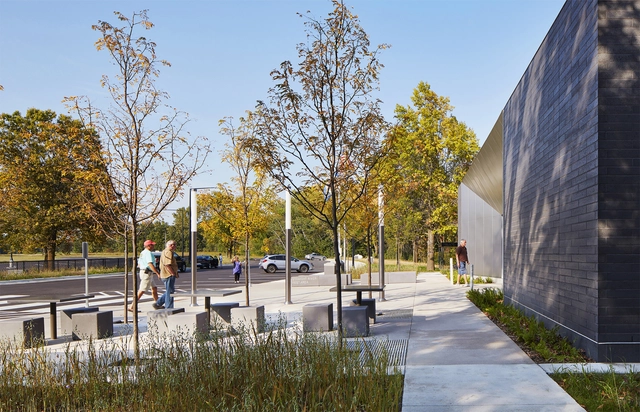
"The public square and civic infrastructure are the front lines against this kind of attack", proclaimed then-President of the American Institute of Architects, Thomas Vonier. The decades since 9/11 and mass violence have pressured cities, in the United States and globally, to reconsider what "safety" means. Is it about barriers, bollards, surveillance? Or is it about trust, visibility, evidence, resilience? Several projects confront these questions at various scales to demonstrate how architecture and forensic thinking can collectively protect communities and civic life.

Safe by Design: How Architects and Forensics Rethink Security across Scales - Image 1 of 4Safe by Design: How Architects and Forensics Rethink Security across Scales - Image 2 of 4Safe by Design: How Architects and Forensics Rethink Security across Scales - Image 3 of 4Safe by Design: How Architects and Forensics Rethink Security across Scales - Image 4 of 4Safe by Design: How Architects and Forensics Rethink Security across Scales - More Images