
-
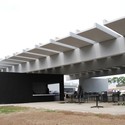
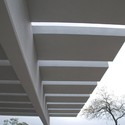
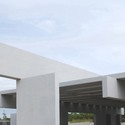
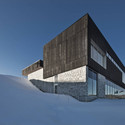
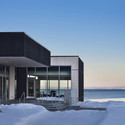
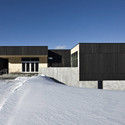
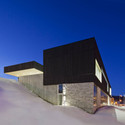
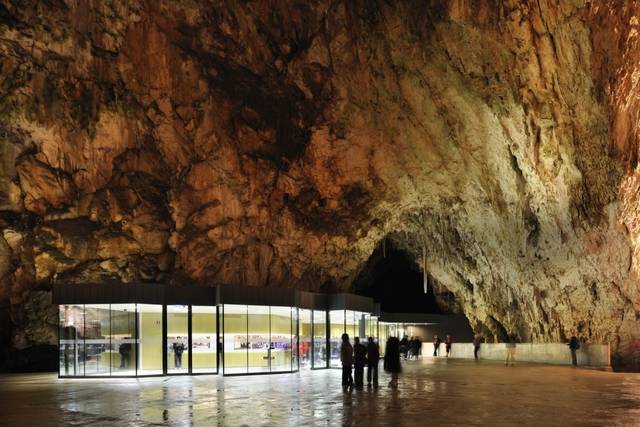
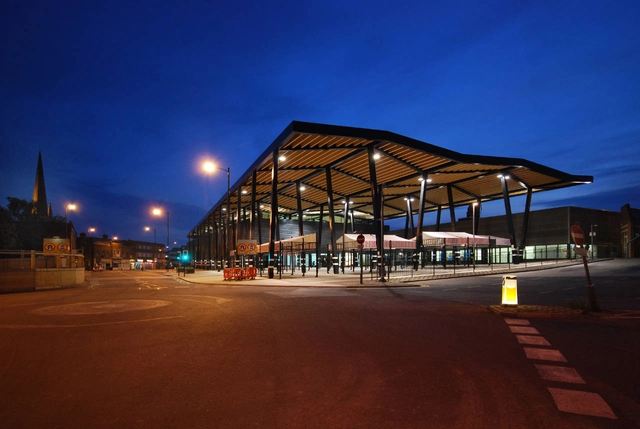
Architects: dosmasuno arquitectos



Walk into the cafeteria at the Googleplex and you are nudged into the “right” choice. Sweets? Color-coded red and placed on the bottom shelf to make them just a bit harder to reach. “Instead of that chocolate bar, sir, wouldn’t you much rather consume this oh-so-conveniently-located apple? It’s good for you! Look, we labelled it green!”
Like the Google cafeteria guides you to take responsibility of your health, Google wants to transform the construction industry to take responsibility of the “health” of its buildings. They have been leveraging for transparency in the content of building materials, so that, like consumers who read what’s in a Snickers bar before eating it, they’ll know the “ingredients” of materials to choose the greenest, what they call “healthiest,” options.[2]
These examples illustrate the trend of “medicalization” in our increasingly health-obsessed society: when ordinary problems (such as construction, productivity, etc.) are defined and understood in medical terms. In their book Imperfect Health, Borasi and Zardini argue that through this process, architecture and design has been mistakenly burdened with the normalizing, moralistic function of “curing” the human body. [3]
While I find the idea that design should “force” healthiness somewhat paternalistic and ultimately limited, I don’t think this “medicalized” language is all bad – especially if we can use it in new and revitalizing ways. Allow me to prescribe two examples: the most popular and the (potentially) most ambitious urban renewal projects in New York City today, the High Line and the Delancey Underground (or the Low Line).
More on “curative” spaces after the break. (Trust me, it’s good for you.)


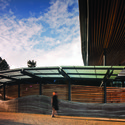
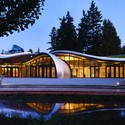
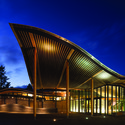
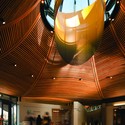
Perkins+Will‘s VanDusen Botanical Garden Visitor Centre in Vancouver, BC is designed to meet the Living Building Challenge, the most rigorous set of requirements of sustainability. Formally and functionally, it encompasses the goals of environmentally and socially conscious design. The building is an undulating landscape of interior and exterior spaces rising from ground to roof level and providing a vast surface area on which vegetation could grow, thus reoccupying the land on which the building sits with the landscape. The building also features numerous passive and active systems that reuse the site’s renewable resources and the building’s own waste.
More photos after the break, including a video about the project!

The public space proposal for the Urban Intervention competition creates a new way of creating a dialog between the park and the city. Designed by PRAUD, each solid and void creates its own topography, and thus the topography of the solid provides different experiences for pedestrians and joggers, while topography of the voids provide different types of functions and landscape fields. More images and architects’ description after the break.

The Department of State’s Bureau of Overseas Buildings Operations (OBO) has shortlisted nine design teams for the New Embassy Compound in Mexico City. The design/bid/build project, scheduled for construction in fiscal year 2015, is the first solicited under OBO’s new Design Excellence program. This holistic approach to project development and delivery seeks to utilize the best methods, technologies, and staff abilities to produce facilities that are outstanding in all respects. The overall strategy focuses on the integration of purpose, function, flexibility, art, safety, security, sustainability, and maintainability.
Continue reading for more information and to review the well-known shortlisted architects.