Entries are open for architects, designers and manufacturers to submit projects for this year's ICONIC AWARDS 2018: Innovative Architecture, organized by the German Design Council.
The ICONIC AWARDS 2018: Innovative Architecture honor superb examples of the interaction of all disciplines in an independent architecture and design competition which focuses on internationally outstanding construction projects, innovative interior and product design as well as compelling communication in an architectural context.
Pocket Seat 2018 seeks to discover and champion fresh designs that can help people recreate a “seat” adaptable to the changing needs of the user within its spacial limitations
In today’s crowded world, the aspect of finding comfortable seating in a public arena is a major part of one’s daily activities. A comfortable seating in public helps one relax and reduce fatigue. This social activity, however, may vary with each individual and the kind of space he/she occupies. Most importantly, the nature of the seat ought to cater to every individual irrespective of their age, size or gender. The act of seating is an opportunity for many to boost inter-personal communication and encourage social and cultural bonding between individuals.
Asia’s leading architecture and design awards show, The A&D TROPHY AWARDS, is now open for entry, welcoming competitors to the 14th edition of the regional architecture and design contest.
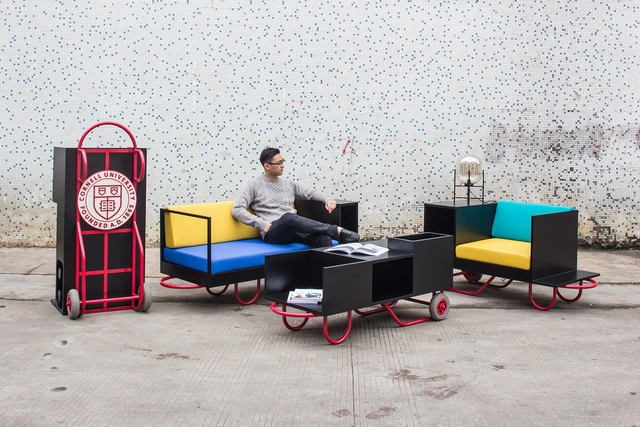
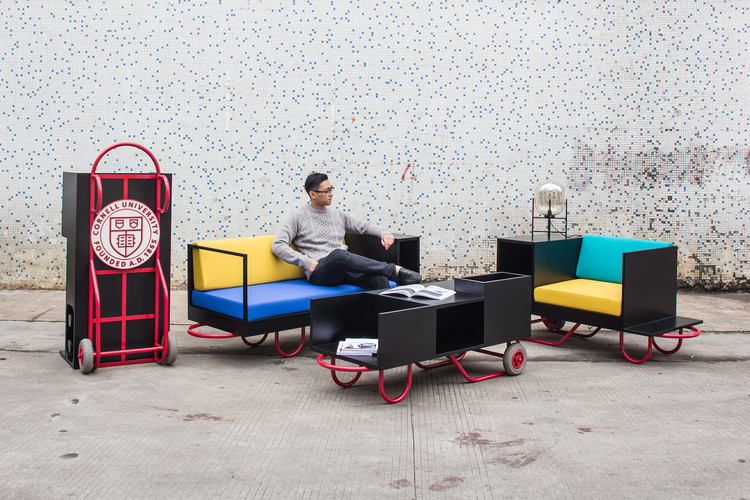
Cornell University's College of Architecture, Art and Planning has unveiled a 12-piece versatile furniture series designed for the school's New York City space in Manhattan's financial district. Created by Hong Kong-based architecture office CL3 and interdisciplinary design studio Lim + Lu (founding partners of which are Cornell alumni), each piece has been inspired both by their New York context and intuitive operation by a global user.
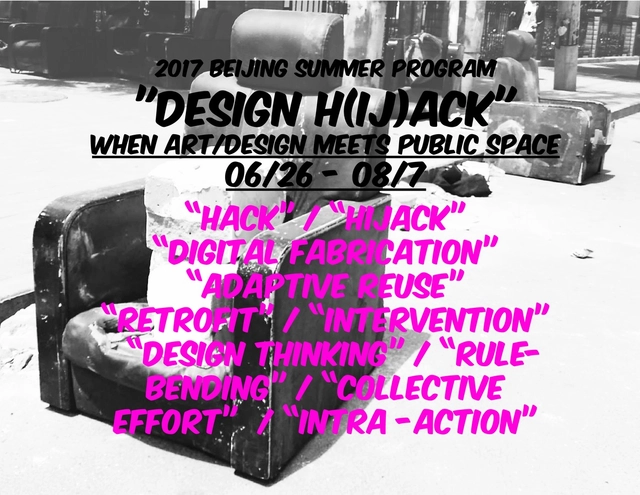
The objective of the program is to generate tangible prototypes and solutions along the theme of "DESIGN H(ij)ACK - When Art & Design Meet Public Space". Cross-disciplinary collaboration is a necessity, combined with strong knowledge integration from research, concepts, design, to execution, “DESIGN H(ij)ACK” encourages all participants to think differently, design efficiently, and work economically, mostly important: collectively.
The AZ Awards for Design Excellence celebrates the finalists and winners at a gala celebration on Friday, June 23 from 6 to 10 pm. Join colleagues and designers from around the world as we celebrate the very best in international architecture, interiors and product design. For more information and to get tickets, please visit http://azm.ag/AZAwardsGala17
New product design contest on Desall.com: Elite invites you to design the new metal Coca-Cola bottle, creating a handy product, suitable for indoor and outdoor use, with an easy to drink system.
The strength of Dutch Design Week (DDW), held annually at the end of October, lies primarily in product design. Although the event has expanded over the past five years to incorporate more fashion, graphics and architecture, small-scale industrial design has retained its preeminence. Many of the designers on show in this year's edition, however, have embraced the challenges of other design disciplines and allowed them to feed into their work. But where does product design meet architecture? Building materials and, most notably at the 2016 event, some really nice bricks. Rotterdam-based architect Alison Killing guides us through her top installations.
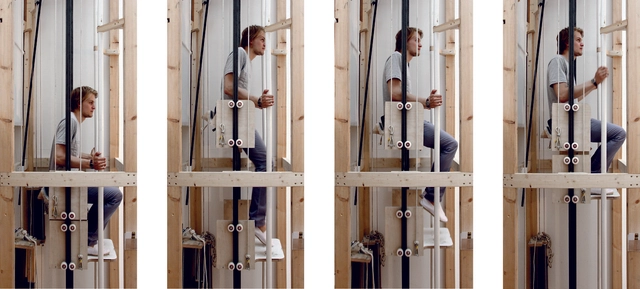
Vertical Walking, an experimental prototype by Rombout Frieling Lab designed "to move ourselves between floors in a building," exploits the potential of the human body, materials and intelligent design to require less than 10% of the effort required by taking a flight of stairs – and without the need for any sort of ancillary power supply. The ultimate aim of the designers is to allow people to "move harmoniously through our vertical habitats of the future."
https://www.archdaily.com/797993/vertical-walking-prototype-aims-to-replace-the-stairAD Editorial Team
Experiences are intrinsically composed by the tangible and intangible architectures that trigger the senses. It is through this delicate exchange of sensory information that we create lasting impressions from space, objects and interactions. What new exchanges can we envision and suggest through meaningful design? We invite design thinkers to envision new modalities for exchange.
Propose an innovative “skin” in which humans could interact with their surrounding environments and everyday activities through the different intertwined senses. The proposed “skin”/ product could be at any scale and serve any function that the designer envisions.
A "National Conference" is organized by School Of Architecture, AMACE. With seminars of architects from all around India. We School of Architecture, AMACE welcome all architecture students to "PROCESS 2k16".
Videos
wall constructed out of the mashu, Photo by Tom Prezman
HAA&D is excited to invite designer, professionals and students of any discipline, to take an active part in our new emerged design community been build around our new product.
"Neither the archaeologist, nor the interior designer, nor the architect, nor the painter, nor the sculptor should furnish our apartment. Who should do it, then? The answer is quite simple: Every man his own interior designer.” The Interiors in the Rotunda (1898) by Adolf Loos
eVolo Magazine is pleased to invite designers around the world to participate in the 2016 VMODERN Furniture Design Competition. The award was born from the desire to create a forum for the discussion, debate and development of innovative design. Our goal is to discover and promote the most creative pieces of furniture that will transform the way we live and interact with our environment. What is the future of furniture design?
The International Marianne Brandt Contest is a juried competition supporting works that ask: What can we and what should we create today? Along with its motto "The Poetry of the Functional" it supports works that aim to explore the potential for poetry and beauty in the sense of an art of living.
Entries are possible in three categories: Product Design Photography Experimental Design
The theme of the 2016 competition — “Material Effects” — draws upon the question of today’s understanding of material – before the overarching background of shifting material topographies through global consumption and transformations of today’s landscapes, it is also suggesting the materials own agency
The 6th annual AZ Awards is now open for submissions!
The competition is open to architects, landscape architects, interior designers, product designers, clients, manufacturers and students for work completed before December 31, 2015. Entries will be juried by a panel of international design experts. (Keep an eye open for the jury announcement soon!)
Winners will be announced at the AZ Awards Gala in Toronto on June 17, 2016 in the presence of 400 attendees, industry leaders, architects, designers and AZ Awards finalists, joining the Gala from all over the world.
Architects love innovation; they are usually on the lookout for the latest innovation in materials and products which they can incorporate into their inevitably innovative designs. And yet, there's one place where they rarely innovate: their own business. This article, originally posted on Archipreneur as "Branching Out: 9 Architects Who Created Innovative Products," explores the world of architects who are innovating in other ways.
For decades the architectural business model has remained unchanged. While other industries have taken cues from the increasingly popular start-up mentality seen in the technology sector, architects have stuck to the outmoded practice of trading time for dollars. In a competitive global economy, this model is highly susceptible to changes in the real estate market and has limited opportunities for growth. These realities have propelled some architecture graduates to consider alternative career paths in which their unique skillset offers them a competitive advantage.
In contrast to the current business model of most architecture firms, we’ve gathered nine examples of architects who have created innovative products and services. These endeavors offer numerous advantages when it comes to growing a business because unlike the consulting model, product creation is highly scalable and has the potential to provide a continuous passive income stream.
A version of this article originally appeared on the Percolate Blog.
In spring of 2009, I graduated from architecture school. At the time, the post-recession economy was rough and not much was happening for architects. With an interest in entrepreneurship and technology, I took a risk and decided to try working at a tech startup. Much to my surprise, I fell in love with the industry and 5 years later, I’m now a Product Designer at Percolate in NYC, a company which produces web and mobile marketing software.
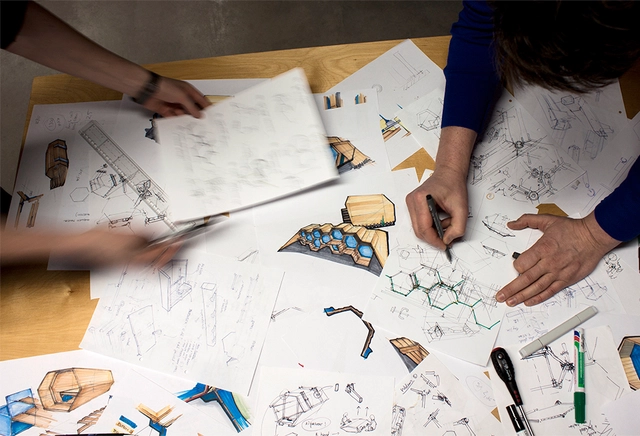
Since my career pivot, I’ve noticed many interesting parallels between architecture and product design. Although the mediums are different, it’s amazing to see how many of the design principles and processes are the same. To some degree, even the tools can be applied to both design industries. In this post, I will discuss hand-drawing, and learn how we apply architecture tools to product design at Percolate.


_quadratisch.jpg?1520955588&format=webp&width=640&height=580)






.jpg?1492648381&format=webp&width=640&height=580)