1. ArchDaily
  2. Pods

Pods: The Latest Architecture and News

Designing Office Spaces for Focus in the Hybrid Work Era

 | Sponsored Content

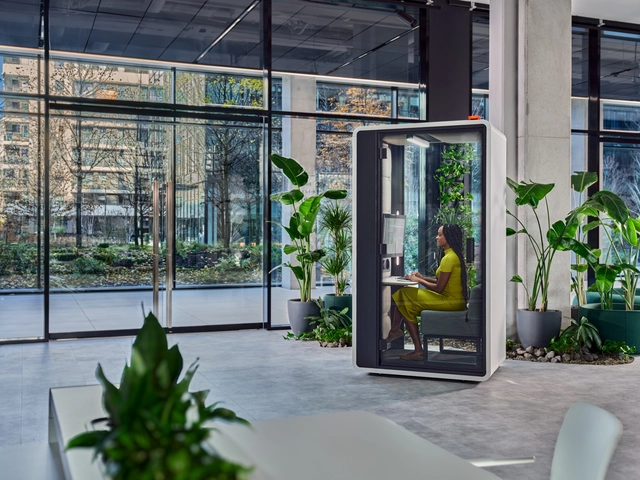
Without dedicated spaces for private focus — a crucial element of effective collaboration — even the brightest idea dims. The office must indeed balance connectivity with personal space most brilliantly, letting employees move between tasks without friction. Booths like hushFree.XS, hushFree.S.Hybrid, and hushFree.S are part of this, together forming a trio of single-person booths that meet the majority of the office's need for individual workspaces.

HushFree.XS, hushFree.S.Hybrid, and hushFree.S work as a complete system, ensuring employees have the right conditions for productive solo work throughout the day, proving to be invaluable tools for architects in designing spaces that completely address varied employees needs. Booths like these make premium refuges for focused calls, impressively immersive video conference spaces, and deep-focus bubbles.

An Eden within the Workplace: Flexible Pods with Biophilic and Human-Centered Design

 | Sponsored Content

Winston Churchill once wisely stated, "We shape our buildings, and in turn, our buildings shape us," a reflection that highlights how architecture, in its dynamic nature, responds to functional needs and molds the experiences of its users. Workplaces have been no exception, evolving with the social and technological changes that have redefined our understanding of organizational interactions. Almost in the blink of an eye, the once-restrictive cubicles and closed offices have made way for open layouts, while hybrid models have transformed offices into destination spaces. Furniture elements like office pods are at the forefront of this change—balancing collaboration and privacy. Designed to adapt, they have continually evolved alongside the shifting demands of modern workspaces and their inhabitants.

Modern Aquatic Architecture: 5 Homes Around the World that Make the Case for Living on Water

Subscriber Access | 

Following findings from a study published in the Nature Ecology & Evolution journal this April, it has become public knowledge that the phenomenon dubbed the Great Pacific Garbage Patch (an area of 620,000 square miles between California and Hawaii) is serving as host to an entire coastal ecosystem. Marine wildlife is using the massive area compiled of human plastic waste as a floating habitat, and scientists are shocked at the number of species that have managed to establish life in this otherwise hostile environment.

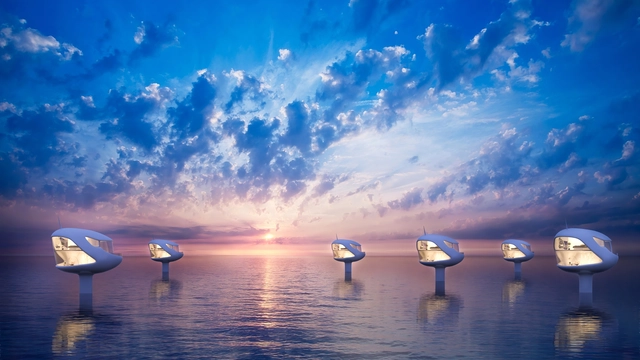
The news once again brings into sharp focus not only pressing issues of climate change and ocean pollution but also the question of environmentally-induced migration, even at a microbial level. Architecture is moving into more and more experimental realms when it comes to considering locations for the communities of our future – and rising sea levels have promoted water to the top of the list. But these deliberations are not as recent as one might think: floating cities have been around for centuries and individual homes on water are common in areas of Benin, Peru or Iraq, among others.

Modern Aquatic Architecture: 5 Homes Around the World that Make the Case for Living on Water - Image 1 of 4Modern Aquatic Architecture: 5 Homes Around the World that Make the Case for Living on Water - Image 2 of 4Modern Aquatic Architecture: 5 Homes Around the World that Make the Case for Living on Water - Image 3 of 4Modern Aquatic Architecture: 5 Homes Around the World that Make the Case for Living on Water - Image 4 of 4Modern Aquatic Architecture: 5 Homes Around the World that Make the Case for Living on Water - More Images+ 7

Living in Pods: The Charm of Minimal and Portable Housing

Subscriber Access | 

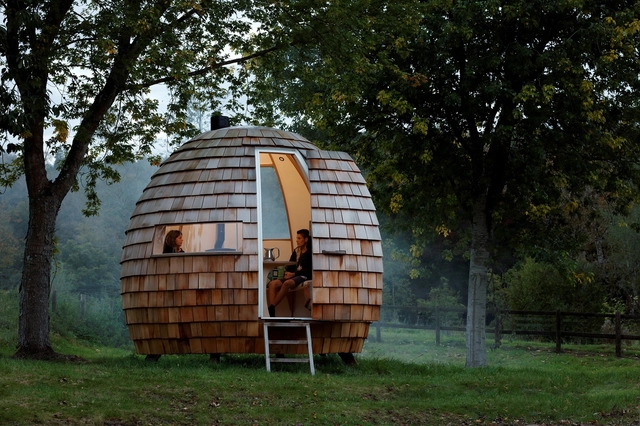
“With the forgiveness of the master [Le Corbusier], the house is a machine to carry with you and the city a machine to which you connect”. That phrase was said almost 60 years ago by David Greene, the founder of the English group Archigram. He was speaking on the presentation of the Living Pod, a capsule house that could be transformed into a trailer. The idea was that the structure could be connected and disconnected from the cities, forming the Plug-In City. Designed as an airtight capsule, the interior was small and comfortable, with multiple compartments. The Living Pod was one of many similarly utopian and daring projects by this group that seemed to have a fixation on nomadic and mutant structures like the Walking City and the Instant City.

Living in Pods: The Charm of Minimal and Portable Housing - Image 1 of 4Living in Pods: The Charm of Minimal and Portable Housing - Image 2 of 4Living in Pods: The Charm of Minimal and Portable Housing - Image 3 of 4Living in Pods: The Charm of Minimal and Portable Housing - Image 4 of 4Living in Pods: The Charm of Minimal and Portable Housing - More Images+ 6