
-
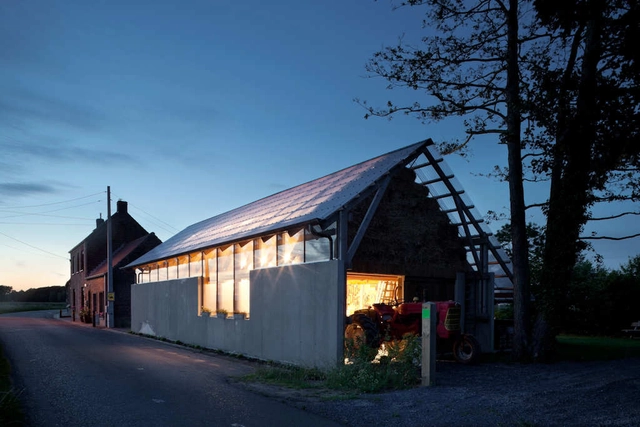
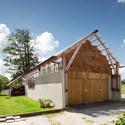
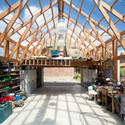
Architects: Atelier Vens Vanbelle



Serie Architects‘ proposal was recently selected as the design for the 2012 Olympic Pavilion for BMW following a sustainable design competition. Their cutting-edge design will represent a significant architectural addition to the Olympic Park, while reflecting the company’s deep commitment to sustainability. BMW’s pavilion, which has a floor space of 800m2, will be built on an elevated site above the Waterworks River, situated between the Olympic Stadium and the Aquatics Center. More images and architects’ description after the break.
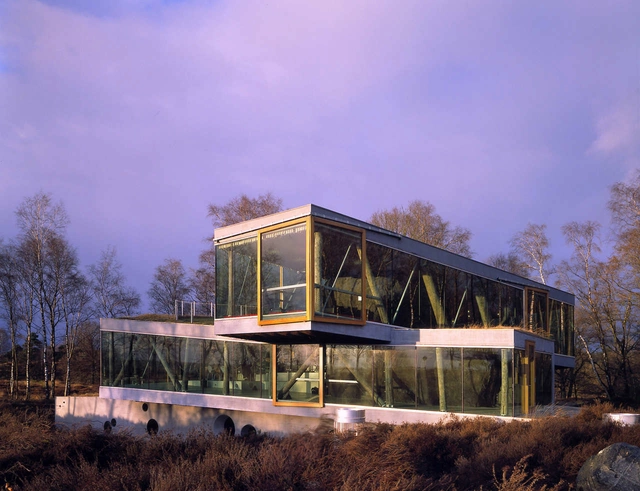


Morris Architects shared with us their Houston Pavilion for the 8th China International Garden Expo in Chongqing, China, which is a showcase for a variety of landscape typologies throughout China and the world. The theme, “Better Garden, Better City”, promotes harmony between landscaped and built spaces. The City of Houston is one of thirty-two international cities invited to participate in the Expo. Morris Architects partnered with SWA Group to design the Houston Pavilion. More images and architects’ description after the break.

The series of a pavilions with different public functions and programs by AWP + HHF Architects are part of a future 113 hectare large public green space along the Seine river, in Carrière-Sous-Poissy, at the end station of the RER line A and close the renown Villa Savoye from Le Corbusier. The Park designed by the Paris based landscape architects Agence TER will be a public park and ecological showcase for local residents and a leisure destination for people living in and around Paris. More images and architects’ description after the break.

Held every five years, the competition for this year’s pavilion called for a temporary building which may be easily disassembled and relocated to another site. The modular pavilion by Prechteck exists of different parts, housing different functions, all singular cells, but the strongest in coexistence with its neighboring parts. The main concept is that during the 5 years, each cell can be assembled in a different German city and serve as an info booth to the next. At the beginning of the next five years, the parts get transported back and get reconnected on site. More images and architects’ description after the break.


The main idea of the Multi-functional Pavilions by Aleksander Wadas is to create public spaces with social functions like culture, recreation, sports. They would be built with temporary pavilions of minor scale that can be easily fitted in the existing urban tissue, would have light components and could be mobile . They could be places where people could take some fitness exercises, take part in workshops or expositions or just rest. More images and project description after the break.