1. ArchDaily
  2. Outdoor Lighting

Outdoor Lighting: The Latest Architecture and News

Architecture in Rhythm with Time: Designing Through Solar, Lunar, and Biological Cycles

Subscriber Access | 

As the solstice marks the shortest day of the year in the Northern Hemisphere, it also draws attention to something architecture has long negotiated but often overlooked: time. Beyond form or function, buildings and spaces are continuously shaped by cycles of light and darkness, seasonal shifts, and environmental rhythms that affect how they are inhabited.

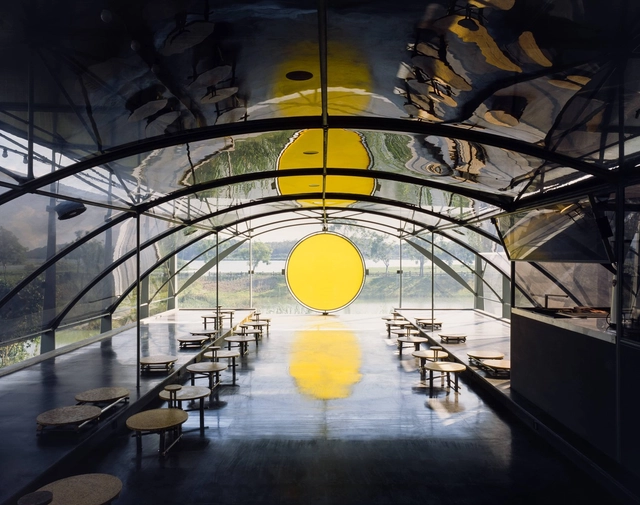
In recent years, a growing number of architectural projects have begun to work explicitly with these cycles. Rather than designing spaces to function in a single, fixed way, architects are creating environments that change throughout the day, across seasons, or in response to natural phenomena such as the sun's path, lunar phases, wind patterns, or circadian rhythms. These projects operate in dialogue with time, appearing, transforming, and activating differently depending on environmental conditions.

Architecture in Rhythm with Time: Designing Through Solar, Lunar, and Biological Cycles - Image 1 of 4Architecture in Rhythm with Time: Designing Through Solar, Lunar, and Biological Cycles - Image 2 of 4Architecture in Rhythm with Time: Designing Through Solar, Lunar, and Biological Cycles - Image 3 of 4Architecture in Rhythm with Time: Designing Through Solar, Lunar, and Biological Cycles - Image 4 of 4Architecture in Rhythm with Time: Designing Through Solar, Lunar, and Biological Cycles - More Images+ 11

The Safety of Light: A Short History of Light in Public Spaces

The simple activity of taking a walk in the evening can easily turn from a relaxing leisurely activity to a dangerous endeavor by removing just one element from the streetscape: public lighting. While not often recognized as defining aspect of urban environments, artificial illumination has played an essential role in defining the character of modern cities. Crime control, the appeal of nightlife, the rise of the shop window, revolutionary movements, utopias, and ideals of social equity are all concepts whose development is tightly linked to the history of public lighting. Technological advancements over the past centuries have continuously shaped the appearance and symbolism of streetlamps. Still, the this element has remains a constant throughout its history.

The Safety of Light: A Short History of Light in Public Spaces - Image 1 of 4The Safety of Light: A Short History of Light in Public Spaces - Image 2 of 4The Safety of Light: A Short History of Light in Public Spaces - Image 3 of 4The Safety of Light: A Short History of Light in Public Spaces - Image 4 of 4The Safety of Light: A Short History of Light in Public Spaces - More Images+ 7

A Light in the Dark: How to Fill Outdoor Spaces With Light

Subscriber Access | 

Modern interior living environments’ fine-tuned lightscapes feature a delicate mix of ambient, task, and accent lighting to perfectly balance performance and pleasure. But one area of a home’s visibility that’s still so easily overlooked is the exterior.

Mood Changers: Why Lighting is The Most Important Design Feature

 | Sponsored Content

Walk into a room bathed in cozy, inviting light and you’ll feel instantly at ease. Walk into the same room buzzing with harsh fluorescents, and your teeth may start to grind.

Why?

In 2014, a Journal of Consumer Psychology study found that the more intense the lighting, the more affected and intense the participants’ emotions were — both positive and negative.

The study included six experiments that examined the link between emotion and ambient brightness. Feelings of warmth increased when participants were exposed to bright light with hints of reddish hues. A sensation of angst increased when bluer light dominated.

And the brighter the light, the more intense the participants’ emotions became. Both the intensity and the color of the light affected people’s moods.