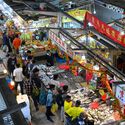
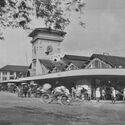
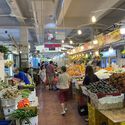
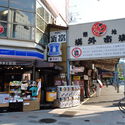
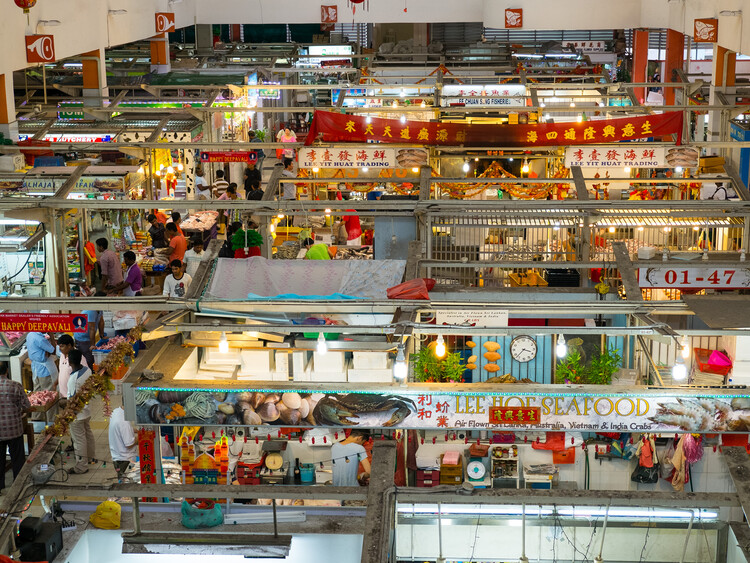
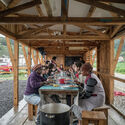
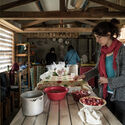
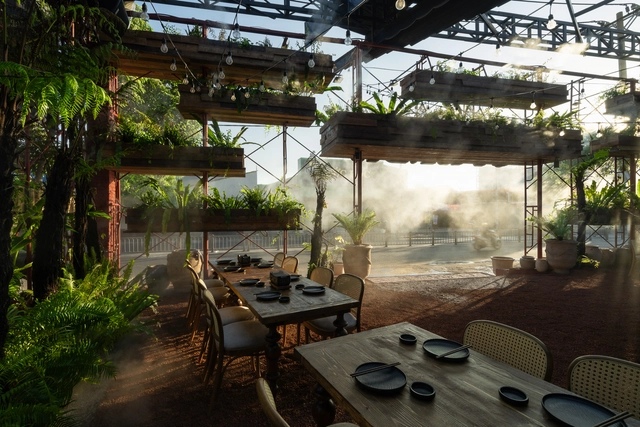
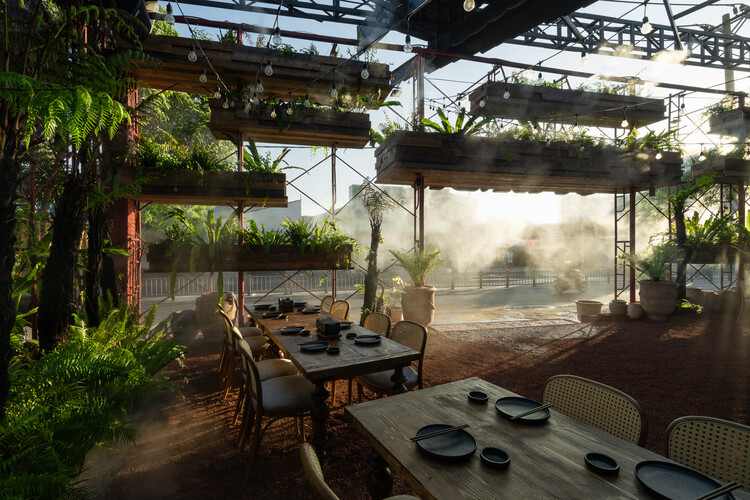
In many Asian cities, eating has never belonged entirely to the private home. It spills into markets, hawker centers, street stalls, and wholesale districts embedded within larger buildings or areas. These are places where the city exchanges information and watches other people pass through. They are not restaurants in the conventional sense, nor are they simply markets. In some way, their vibrancy and usage reflect the society's conditions at that moment. They are public kitchens: shared infrastructures where domestic routines are partially transferred into collective space.
Hong Kong's Municipal Services Buildings and curbside dining are where food is understood not only as culture, but as urban organization. The cooked-food center in the city folds eating into a larger civic machine of wet markets, libraries, and sports halls. The dai pai dong and street-side table, meanwhile, transform the curb into a temporary dining room. Looking beyond Hong Kong, similar questions emerge across the region. How do cities make room for social eating? Where does cooking happen when domestic space is limited? What kind of architecture supports the mess and heat of everyday food?