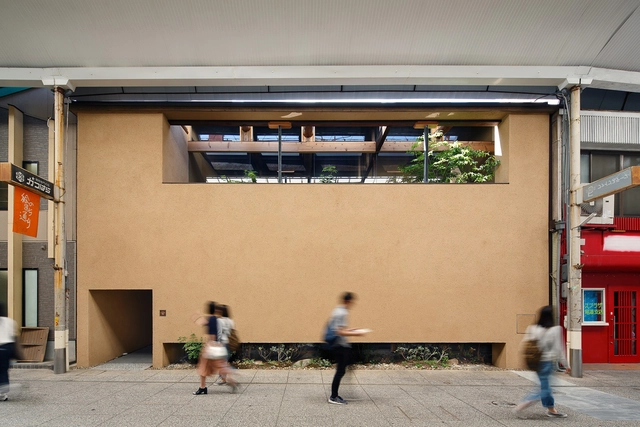
This ‘outdoor goods’ shop, in the heart of Omotesando, the most exciting retail area in Tokyo, was an opportunity to think about two phenomena that developed during the covid pandemic and recent lockdowns. One is people’s sudden desire to reconnect with nature; and second, the thriving of online shopping that is questioning the future of physical retail spaces.
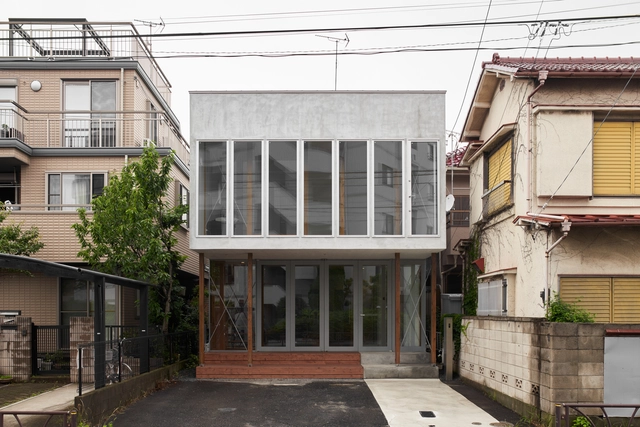
Extension of a house without a “completion inspection certificate”. This property is located a short distance from the Kanamachi station in a low-rise residential area near Mizumoto Park, a well-known park in Tokyo. The client purchased the pre-existing building of 61.27m2 in 2010, this small two-story wooden house had become too tiny for the family of four as the children grew up. When the eldest son started junior high school, they wanted to provide him with his own room, which led them to start thinking about expanding the house.
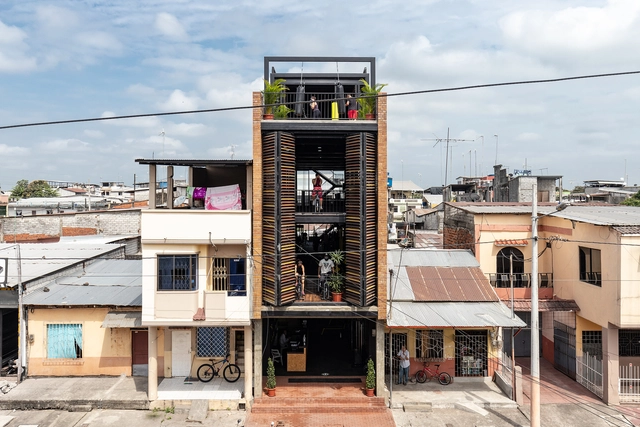
In Latin America, the fundamental role of facilities as the link between citizens and the city has been dispensed. Preventing citizens from exercising their right to it. These spaces represent the principles of collective life and are a tool to produce positive impacts on social groups.
https://www.archdaily.com/946374/bardales-urban-training-center-natura-futura-arquitecturaClara Ott
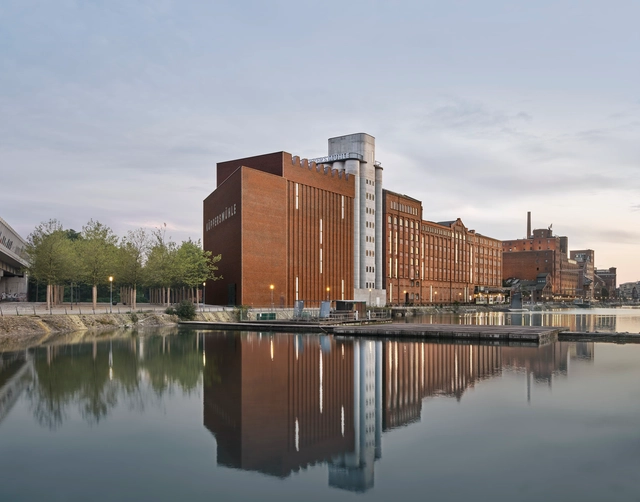
The extension project was activated in 2013, with the Ströher family as clients. A feasibility study undertaken by Herzog & de Meuron explored the potential of the site under current conditions. The resulting project constitutes a radical new start. The original idea of an illuminated cube balanced on the silo towers and visible from afar has been jettisoned. Instead, we propose to erect a building whose dimensions and materials accord with the sequence of historic brick structures lining the dockside. The new structure thus completes the existing museum complex in a visually appropriate way and forms a suitable conclusion to the row of buildings along the dock. At first glance, it might seem as though the new building had always been there.
This project aims to convert an old building into a restaurant. It had undergone constant remodeling and expansion from the Meiji Era through to the Taisho and Showa Era.
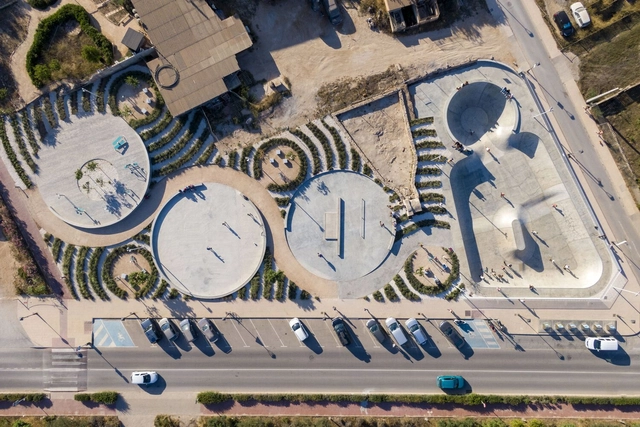
The intervention carried out is located on a plot included within the delimitation of the site of cultural interest of the historical complex of Sant Francesc Xavier and in the surroundings of the Sa Tanca Vella chapel, the oldest on the island and declared an asset of cultural interest in the monument category in 1993. Although the intervention carried out is limited to the implementation of different sports uses, the initially developed arrangement covered a larger area, with the introduction of cultural uses such as the open-air auditorium, the arrangement of the surroundings near the Sa Tanca Vella chapel, and the reorganization of the existing urban gardens on the plot.
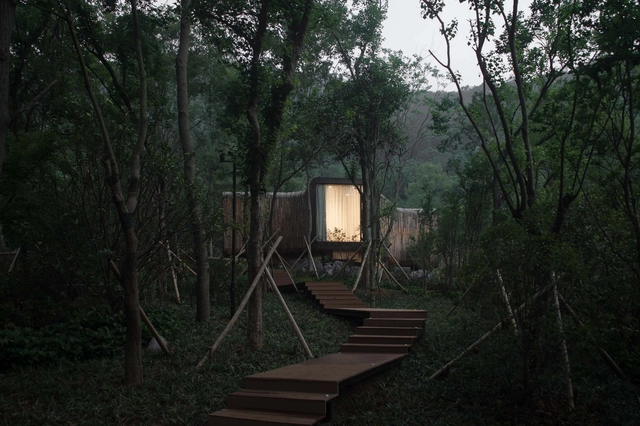
MONOARCHI has completed four hot spring huts in the southeast corner of Tangshan Mountain in Nanjing. The 5,000sqm site is on a hill and has one side of stacked rocks, standing out as a solitary island from the woods. According to the geomorphic features of the site, the architect chose the four most distinctive locations to place the four huts, from hiding in the deep woods, to gradually transitioning into the stone-piled land.
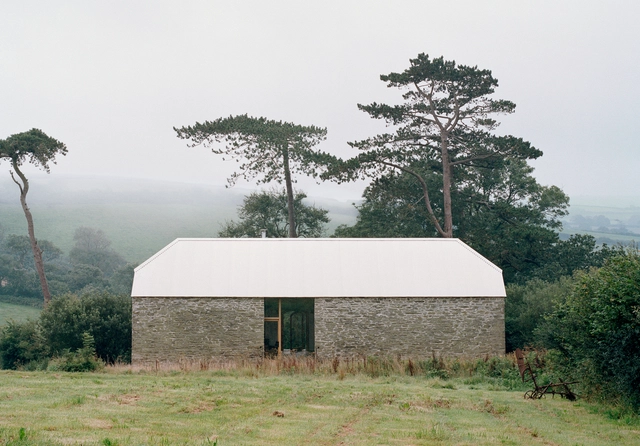
Architectural practice TYPE has reclaimed a dilapidated stone barn in Devon, giving it renewed purpose as a sustainable, contemporary rural family home.
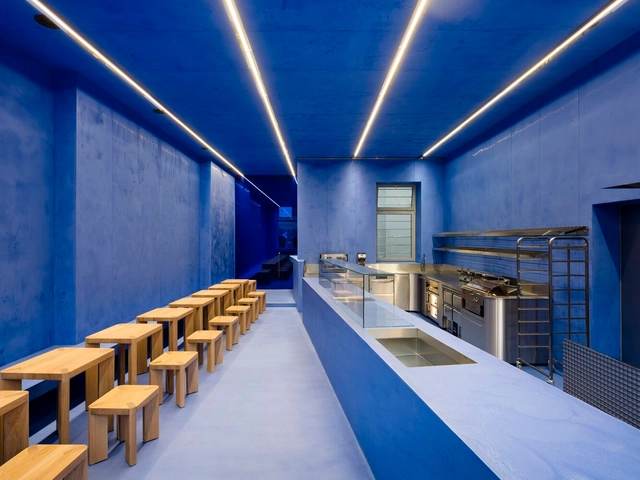
For the second Berlin branch of Aera – a gluten-free bread manufacturer and café located at Rosenthaler Platz – the architecture duo Gonzalez Haase AAS designed a space that takes full advantage of its prominent location by being impossible to overlook. The entire depth of the new store is made visible through a large storefront window, allowing its rich Lapis Lazuli blue interior to take centre stage.
The YPY 1731 building houses a collective housing complex of eleven units located in the San Martin district. The work is located in a typical block of purely residential use in the Province of Buenos Aires. The building takes the neighborhood scale in its front and quiet part, generating a large west-facing patio, solving various common brick planes from screens, to generate gradients that respond to the different uses, private, semi-public and public of the program.
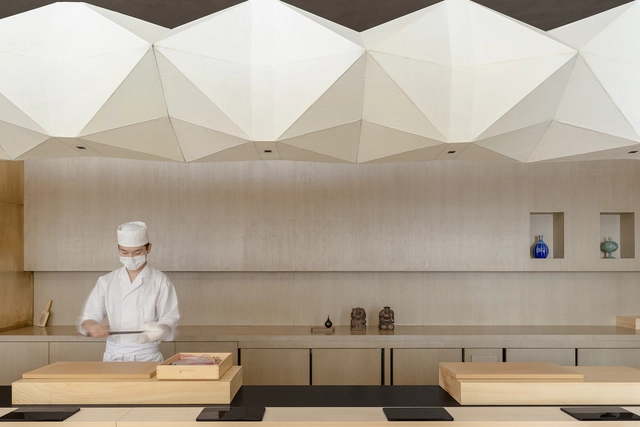
Shoku-tei Sushi, a Michelin-level Japanese cuisine brand, chose Shenzhen as the site for its first restaurant in Mainland China, and entrusted local design practice NATURE TIMES ART DESIGN to conceive the space. The brand commits to serving superior, delicate sushi to customers, and inherits the quintessence of the traditional craftsmanship of Edomae sushi. For the project, the design team tried to combine traditional Japanese cuisine with Oriental visual elements via modern design languages, intending to bring diners fabulous poetic experiences.
https://www.archdaily.com/967213/shoku-tei-sushi-nature-times-art-designYu Xin Li
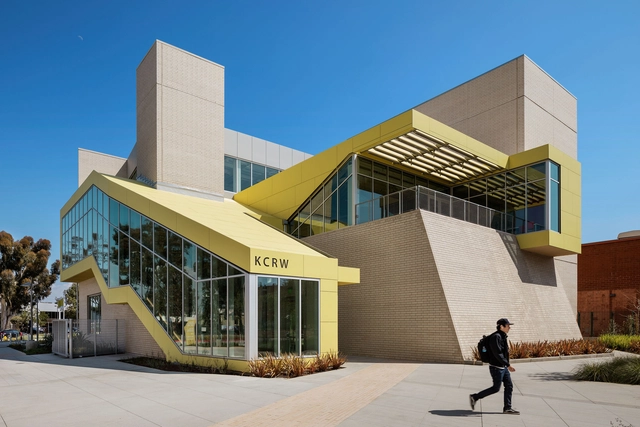
The Santa Monica College (SMC) Center for Media and Design (CMD) is a renovation and expansion of the school’s old Academy of Entertainment & Technology. The 3.5-acre project includes the construction of a 30,000-square-foot instructional wing and renovation of an existing 50,000-square-foot teaching facility; a new, three-story building for KCRW, a public radio station licensed to the school; and a new, seven-level parking structure. A courtyard with water features and a performance stage is showcased in the center of the complex. Located in ‘Silicon Beach’ – home to major media firms and tech startups – the CMD enables the school to unite all of its programs focused on media content development and design on one campus.
The studio was commissioned by Related Companies in 2015 to design a new residential building in Chelsea, Manhattan, beside the High Line at West 18th Street. In contrast to new glass apartment blocks that have sprung up along the High Line, we wanted to create a new type of residence: one that was reminiscent of the area’s existing historical buildings, designed and built for permanency.
https://www.archdaily.com/968598/lantern-house-heatherwick-studioClara Ott
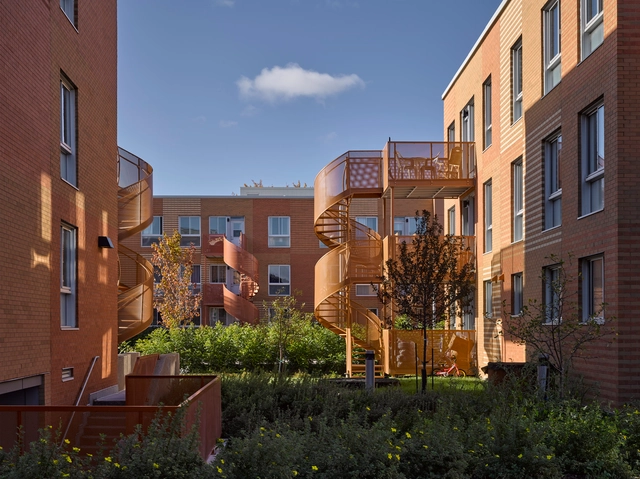
Over the last three years, the architectural firm of Saia Barbarese Topouzanov has revitalized Les Habitations Saint-Michel Nord, a 185-unit social housing complex in Montreal’s Saint-Michel neighbourhood. Designed by Montreal architect Philip Bobrow in the early 1970s, when brutalism was in vogue, the complex now features plenty of light and colour. It has become a joyful part of the landscape, a dignified and respectful environment for all residents. After a study of the housing complex, whose components had reached the end of their useful life, the proposal that was finally adopted entailed a remodelling of the entire complex, including the creation of a street in the centre of the block and the addition of a third floor to the existing two-story buildings. The project brief included the re-use of the buildings’ wood framework and a requirement to maintain the same number of units as before.
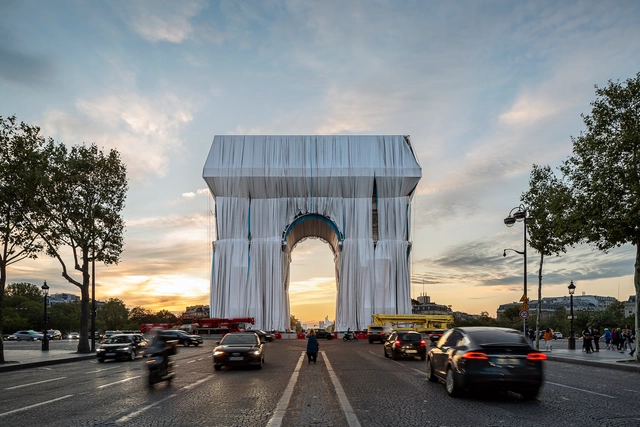
Work has just begun on the late Christo's unfulfilled intervention for the Arc de Triomphe in Paris. The first images by architectural photographer Jad Sylla highlight the wrapping up of the famous monument with 25,000 square meters of recyclable polypropylene fabric in silvery blue, and with 3,000 meters of red rope. Scheduled for September 18 until October 3, 2021, the temporary artwork ‘l’Arc de Triomphe, Wrapped’ will only remain on display for 16 days.
Beginning in June 2019, cn°S has completed the of Changqi Bamboo Corridor project and the Huanglong Waterfront Bamboo Corridor project. In September 2020, commissioned by the Beijiao Town Government, cn°S designed two art installations in the Xianmo Flower Field Landscape Park to improve the environment of the park. After completing the projects from the Changqi Bamboo Corridor to the Huanglong Waterfront Bamboo Corridor, then to the Flower Pavilion and the Embrace Pavilion in the Xianmo Flower Field Landscape Park, cn°S has completed the iteration and evolution of the bamboo structure from 1.0 to 4.0 in terms of form logic and construction details.
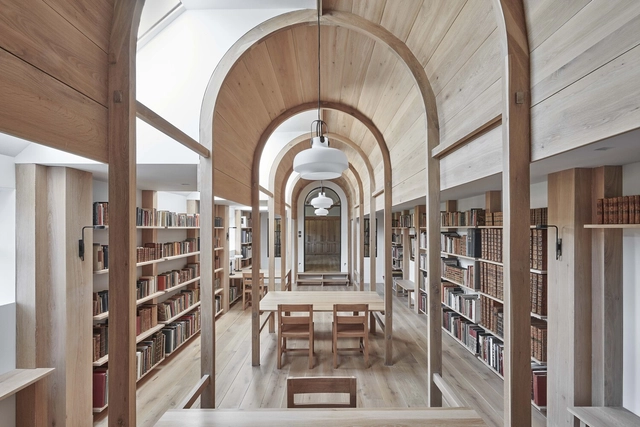
The new library is set in a group of outbuildings within the curtilage of the Grade II listed Stanbridge Mill Farm in Dorset. The main house is a beautifully converted Georgian farmhouse with a shallow river running beneath to turn a well-preserved water mill. The library building was originally a cow shed but had been used for the storage of farm machinery and garden maintenance equipment for over forty years.



![UPI Shop in Omotesando / Happenstance Collective [HaCo] - Interior Photography, Retail Interiors, Facade](https://snoopy.archdaily.com/images/archdaily/media/images/6152/fbef/9f88/b401/642c/a843/slideshow/b0011750.jpg?1632828536&format=webp&width=640&height=580)



.jpg?1631538079&format=webp&width=640&height=580)