Luca Tranchinois a production designer well known for his participation as an art director in Martin Scorsese’s Gangs of New York, the Aviator, Hugo Cabret, and Disney’s Prince of Persia, among many other productions. His work is designed to take us to magical and historical worlds. We recently interviewed Tranchino to look behind the scenes and uncover connections between film and architecture.
Representation of the real world is, without any doubt, in the genesis of cinema, an art originated from photography, by creating a sequence to convey the impression of movement to the viewer. In fact, the earliest known film recording is from 1895, picturing the arrival of a train at Ciolat station in France, a trivial event in the daily life of 19th-century European cities.
However, even though tangible reality plays a big role in cinema, one cannot ignore that the fascination caused by this art comes, to a great extent, from its capacity to create imaginary worlds, to activate mental spaces, and to unleash emotions. In this sense, the real world may often provide insufficient fuel, inspiration, or background for the directors' and screenwriters' storytelling, so the art direction and scenic design teams are required to create other intangible realities that serve as a basis for the narrative.
Black Mirror's 'Striking Vipers' episode (2019), available on Netflix. Image Courtesy of Annie Beauchamp
Production designer Annie Beauchamp contacted me shortly after reading an article about Black Mirror series and what it can teach us about the future of architecture —something exciting for me since she was in charge of the visual look in Striking Vipers, the first episode of the dystopian series' fifth season. Beauchamp who has extensive experience working on major productions such as Sleeping Beauty, The Yellow Birds, Adoration, Top of the Lake China Girl, LEGO's Ninjago Movie, also served as an art director in nothing less than Moulin Rouge.
We've talked with Beauchamp to get to know her thoughts on the connection between films and architecture. The following conversation explores her beginnings and inspirations, her work process, as well as her views on the era of computer visualizations. In addition, we concluded the conversation with a couple of recommendations for a new generation interested in production design.
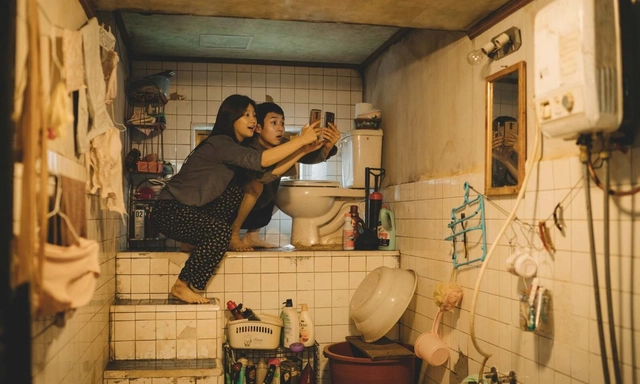
The recent success of Parasite, the award winning film directed by South Korean director Bong Joon Ho, has created a conversation around the emphasis of architecture and interior spaces in movies. This particular film does an excellent job of blurring the boundaries between the two disciplinary fields, to the point where the architecture is not just the background of the set, but it has been placed at the forefront of the storyline, and takes on the leading role in many scenes.
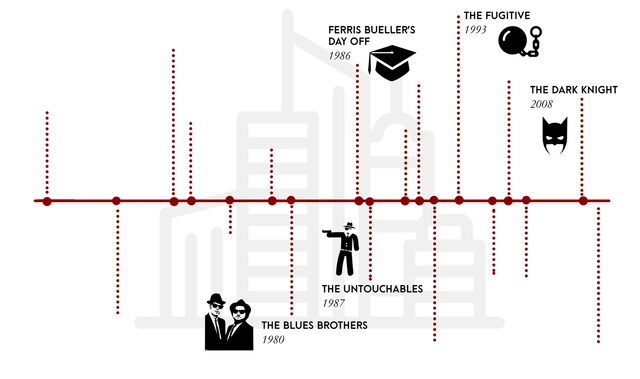
Timeline showing iconic films set in Chicago. Created by the authors. Image Courtesy of Kathryn H. Anthony, Fernando Nebot Gómez, and Yashasvini Rao
Chicago is one of the most photogenic cities in the world. Its sparkling lakefront, dramatic skyline, diverse ethnic neighborhoods, and gritty industrial sites have long captured the attention of locals and visitors alike, including Hollywood movie producers. Here the city often serves as not only a backdrop, but also as a starring role--almost as important as the characters themselves.
https://www.archdaily.com/930654/from-gangster-city-to-gotham-city-the-changing-image-of-chicago-in-hollywood-filmsKathryn H. Anthony, Fernando Nebot Gómez, Yashasvini Rao
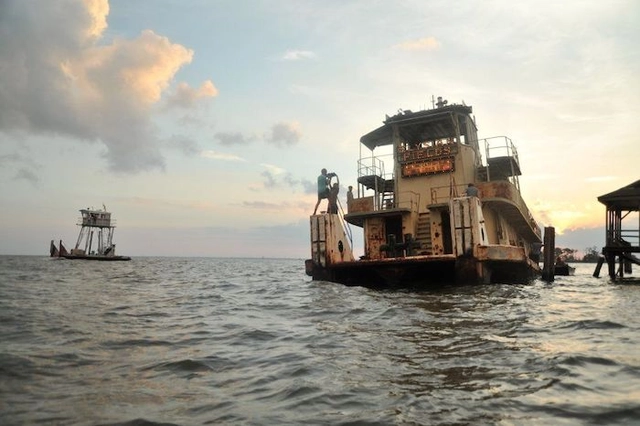
Beasts of the Southern Wild. Image: screenshot do filme
Architecture enjoys a close connection with moving picture, perhaps because of the limitless imagination it allows. Our mind can be taken far away to utopian worlds where we live different realities with our eyes and skin; movies can carry us to new and distant places, where we face new unusual realities.
However, besides carrying us to distant places, movies can also be a vehicle of social criticism. This is not news, as it has been done for almost as long as cinema has existed. The evolution of this role is relative to the topic of critique that has developed over time, as have our habits and ways of living. In this sense, one of the most emerging problematic of nowadays is climate change.from architecture to arts and, clearly, the movies.
The field of architecture is not exactly a hot topic of study for most undergraduate students. The closest they might get to the subject is an art history survey course in which architecture is presented as a parade of styles across the millennia—just another form of visual expression.
https://www.archdaily.com/932965/teaching-an-appreciation-for-architecture-through-filmMichael J. Crosbie
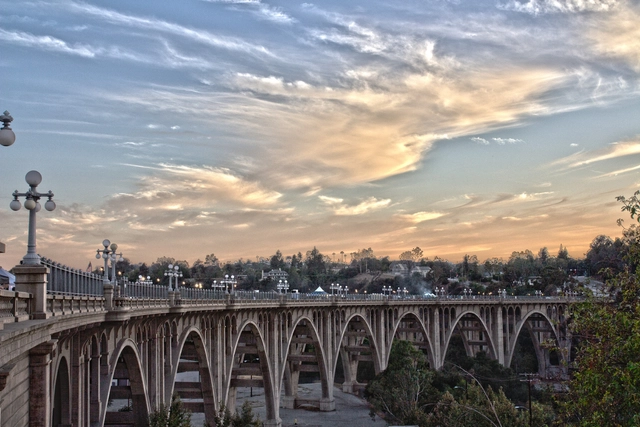
The Colorado Street Bridge, one of the beautiful historic structures in Pasadena that has been used as a film location.
On December 30th, 2019, Pasadena Heritage invites you and your holiday guests to take walking tours featuring some of Pasadena’s unique architectural treasures and/or visit Pasadena Heritage’s 1893 headquarters to see a presentation featuring Pasadena’s historic architecture in the movies! Attendees have the opportunity to participate in two different walking tours and the movie presentation, each with a 10:00 a.m. or 1:00 p.m. start time!
Videos
OMA’s Seattle Public Library serves as the backdrop to a scene from the new film Where’d You Go, Bernadette?. Image Courtesy of Annapurna Pictures
Maria Semple’s 2012 novel, Where’d You Go, Bernadette?, is an addictive, high-octane, hilarious summer read about a retired architect in Seattle entering the next phase of her career. Perhaps unsurprisingly, it has resonated with women architects. One texted me hours after picking up the book recently: “I’ve read about ⅓ of Bernadette in one sitting. I’ve squealed out loud with laughter. I’ve bitten my lip. I am currently reading about Bernadette on the job site getting disrespected by a subcontractor. Someone IS seeing me/us. It’s buried in this book.”
"Films have been studied by architects and other professionals who are interested in the field of architecture and urbanism because they offer a more subtle and responsive perspective of our discipline," Finnish Architect and Professor Juhani Pallasmaa tells us. Through its technical and aesthetical particularities, the cinema can go beyond simple representation to be a powerful instrument for conveying ideas and concepts related to architecture and urban space.
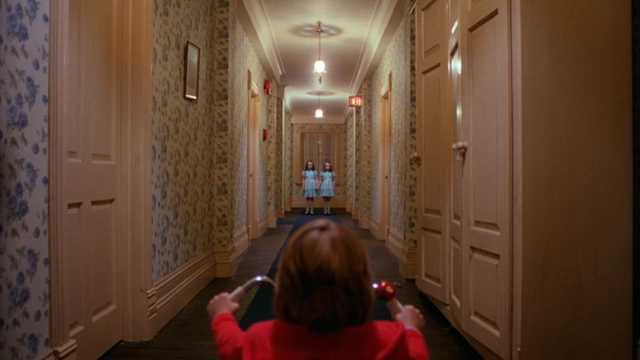
The passion for cinema and TV shows, combined with that for scenography and architecture, led Italian architect Riccardo Masiero to play with the different spaces and dimensions of the elements that make movies in order to create "MAKE IT ISO!", a series of drawings portraying famous movies and TV icons such as Breaking Bad, Twin Peaks, Harry Potter, Star Wars, The Shining and UP in an architectural way.
These illustrations represent iconic scenes of TV and cinema through the isometric illustration method, giving an overall picture of the construction of the scene, as well as providing a different point of view to the observer.
Keep reading to see the full "MAKE IT ISO!" series and the author explaining his work.
How does the built environment--whether fictitious or entirely founded in reality--impact how we experience and process film? From lesser-known indies to blockbuster movies, the ways in which architecture and the built environment inform everything from scene and setting, to dialogue and character development has far-reaching effects on the audience’s cinematic experience. Below, a roundup of everything from recent releases to classic cinephile favorites uncovers the myriad ways in which film utilizes architecture as a means of achieving a more authentic and all-encompassing form of storytelling.
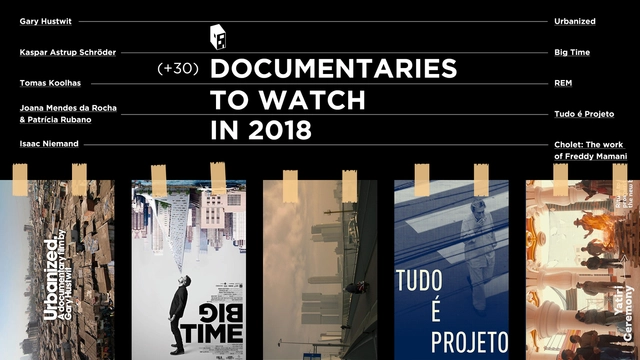
The new year is here! And with it, a new slate of documentaries we're dying to see.
Of all the media forms, film seems to be the most adept at making a personal connection with viewers, offering a behind-the-scenes look into the lives of a great architect, the construction, and performance of a project or an issue that is confronting the entire architecture community. This year's films are no exception, as we get the chance to learn about the daily routines of Bjarke Ingels and Paulo Mendes da Rocha, projects by Tadao Ando and Glenn Murcutt, and the troubles of urbanization and gentrification.
Videos
Screenshot of Wings of Desire, by Wim Wenders
The overlap between cinema and architecture is a topic that has already been debated and even addressed in several articles published in ArchDaily. It is difficult to imagine a film that is not related in any way to the architecture, either through the construction of scenarios, the locations, or even the compositions within each plane and sequence - that make use of light, shadow, varied scales, and characters.
In many films, architecture and the city play a much more decisive role than the mere backdrop or stage for the narrative, acting as crucial elements or even characters. Next, we selected five films in which landscape and urban spaces are essential for the construction of the plot.
Still from "Ghost in the Shell" (2017) directed by Rupert Sanders. Image Courtesy of Strelka Magazine
In this article, originally published by Strelka Magazine and translated into English by Alexandra Tumarkina, Anton Khitrov sits down with Julia Ardabyevskaya to analyse the urban environment and spectacular world that the blockbuster movie Ghost in the Shell creates.
Ghost in the Shell, a new sci-fi blockbusterstarring Scarlett Johansson, is based on a 1992 manga comic and a more famous 1995 anime adaptation. In the film, humans are presented as obsessed with high-tech prosthetics, spending vast amounts of money on “self-improvement”. The story proceeds to show that the next step for humanity will be complete robotization; this new generation of human machines is represented by the movie's heroine – a female cyborg with an organic brain but a synthetic body. The action takes place in a futuristic city in which almost every surface is covered in holograms the size of a skyscraper, each and every one an advertisement.
Following our favorite Architecture Documentaries to Watch in 2015, our top 40 Architecture Docs to Watch in 2014, and our choice 30 Architecture Docs to Watch in 2013, we're looking ahead to 2017! Our latest round up presents a collection of the most critically acclaimed, popular and often under-represented films and documentaries that provoke, intrigue, inform and beguile. From biopics of Eero Saarinen, Frei Otto and Laurie Baker, to presentations of Chinese "palaces" and the architecture of Africa, Cambodia and India, these are our top picks.
https://www.archdaily.com/801891/architecture-documentaries-to-watch-in-2017AD Editorial Team
Update: following the screening period The Infinite Happiness is no longer available to watch on ArchDaily. The full collection of Bêka and Lemoine's films can be viewed on demand, here.
For two days only—between Friday, December 2 and Sunday, December 4—you can watch The InfiniteHappiness, part of Ila Bêka and Louise Lemoine'sLiving Architectures series, exclusively on ArchDaily. The film, shot entirely in Copenhagen's "8 House" designed by BIG, follows a group of residents (and passers-by) as they experience life in a contemporary housing block widely considered to embody new models of living.
https://www.archdaily.com/800425/watch-beka-and-lemoines-the-infinite-happiness-nil-a-documentary-film-on-bigs-8-houseAD Editorial Team
Stories have a way of clinging to places, charging buildings and spaces with an effect only perceptible to those who know what they once staged. Film is the most visual storytelling medium, and their environments often play memorable and vital roles in creating the movie's character and identity. The popularity of film tourism is testament to this phenomena. While the bulk of film tourism stems from blockbuster movies and their exposure and celebrity, the blog Filmap takes a more humble approach in highlighting the stories of everyday places.
For the past three years, the blog has laboriously tracked the locations of hundreds of movie scenes using Google Streetview, pairing stripped-back street views right next to their cinematographic counterparts. The resulting contrast elevates the everyday while also grounding fiction to our very streets, a reminder of the built environment’s role as a vessel of imagination.
A selection of Filmap’s posts are shared below – how many movies can you recognize from their real-life settings alone?








.jpg?1591629903&format=webp&width=640&height=580)