Another “Part II” Round Up to finish this week. This time, we bring back previously featured mixed use projects. And if you didn’t catch our first part, it’s never to late, check it out right here.
Another “Part II” Round Up to finish this week. This time, we bring back previously featured mixed use projects. And if you didn’t catch our first part, it’s never to late, check it out right here.

Danish architectural company schmidt hammer lassen architects + Lund+Slaatto Architects have won a 52,863 m2 mixed-use complex “Konstitucijos Avenue 21” in Vilnius, the capital of Lithuania.
The project is the result of a successful collaboration with Oslo-based Lund+Slaatto Architects, a strategic partner of schmidt hammer lassen architects.
The client had requested cross-scandinavian architect teams for the task which led Lund+Slaatto to invite schmidt hammer lassen to join them. Architect’s description and more images after the break.

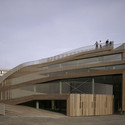
The Jerde Partnership’s Namba Parks, in Osaka, Japan, was just named one of the winners of the Urban Land Institute’s 2009 Awards of Excellence: Asia Pacific competition. When asked to create a gateway to redefine Osaka’s identity, the architects responded with this project that would become a natural intervention in Osaka’s dense and harsh urban condition. The rooftop park offers a sloping park plane that is “bifurcated by a sinuous, open-air ‘canyon’ path that reinforces the connection with nature while forming the primary circulation pattern.”
More about the park after the break.

Resting on the outskirts of Naples, Renzo Piano latest Volcano Buono is a mixed use center that aims to become integrated into the landscape, rather than just occupying it. The central piazza of the Volcano includes a 150 meter-wide space that holds an outdoor theater and market, while a series of concentric rings form the center’s commercial areas. Piano explained that the Volcano is “a contemporary take on a Greek marketplace, a void as a place for events, meetings, dialogue and the gathering of people”.
More about the Volcano and more images after the break.

Renzo Piano‘s latest project, the Shard, has recently moved to the construction phase. The 1,016 ft high skyscraper will be the tallest building in Western Europe and will provide amazing views of London. The mixed use tower, complete with offices, apartments, a hotel and spa, retail areas, restaurants and a 15-storey public viewing gallery, will sit adjacent to London Bridge station as part of a new development called London Bridge Quarter. Replacing the 1970′s Southwark Tower on Bridge Street, the Shard is a welcomed addition to the London skyline, and its central location near major transportation nodes will play a key role in allowing London to expand.
More about the tower after the break.
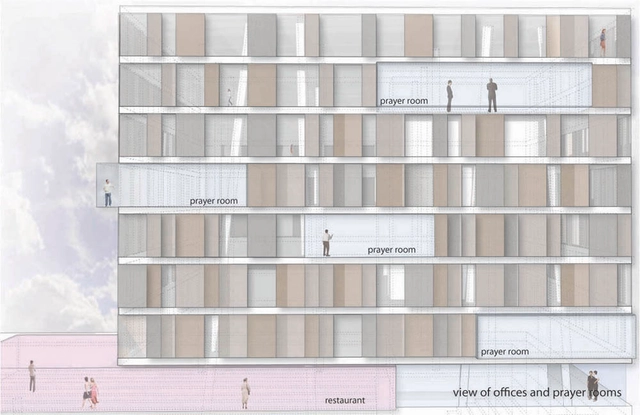

Internationally recognized practice RMJM Architects have recently announced their groundbreaking $1 billon mixed-use complex for the Atasehir district, the growing residential and business area of Istanbul, Turkey. RMJM’s complex will allow the new business center to flourish by serving 20,000 people and providing for a variety of their needs. The project will be revolutionary for Turkey as it will become the country’s first LEED-certified mixed-use development upon its 2011 completion date.
More images and more about the complex after the break.

Bert from Moving Cities (a blog focused on contemporary architecture in China) just told us about a new project by Zaha Hadid in Beijing: Chaoyangmen Soho.
The announcement was made by Pan Shiyi, a real estate mogul chairman of SOHO China. Pan has been working on huge developments, such as the Commune by the Great Wall and several commercial projects in central Beijing.
What’s interesting on SOHO’s developments, is that they invite renowned architects to participate, under heavy budgets restrictions in order to delivery quality projects for the “stylish middle class”. They also have a great corporative culture as you can see on their website.
But back to this project, Bert points us out to a recent interview with Pan Shiyi:
Q: Which development project is your favourite? A: Chaoyangmen SOHO. It is our latest development. I asked British architect Zaha Hadid to design a creative project, and she did. The project is unique, like the Beijing bird´s nest .
Read more about this project at Pan Shiyi’s blog. More images after the break.

Today at 11.00 AM took place the laying of the foundation stone of what will be the new iconic building in the area of Barcelona’s Forum, the Spiral Tower. This university campus will be located at the end of Avenida Diagonal, one of the main avenues of Barcelona, beside the Forum building designed by Herzog & de Meuron for the Forum of Cultures held in 2004.
Zaha Hadid came around 11:15 and the event had an intense political presence (the Mayor of Barcelona Jordi Hereu, mayors from areas like Maresme and Besós and key representatives of the Consorsi). The building, located at the confluence of streets Taulat and Sant Ramon de Penyafort, will have a ground surface of 20,650 sqm.

Hadid’s speech was short, she recalled his first trip to Spain when she was 7 years and then she talked about a competition in which she participated 20 years ago, related to the design and extension of the Diagonal Avenue. At that moment she had the opportunity for a better understanding about the urban development of Barcelona and it has been a big influence on the design of the Spiral Tower.

We just received this from OMA: After almost 12 years in the boards, OMA announced that the De Rotterdam complex will enter construction during December 2009, expecting completion in 2013.
Tree stacked towers with a total height of 150m, will result on a gross floor area of approximately 160,000m2, making De Rotterdam the largest building in the Netherland, with a total cost of €340m.
The mixed-use program (offices, apartments, a hotel, conference facilities, gym, shops, restaurants, and cafes) and the resulting density make this project a vertical city, located in the old harbour district of Wilhelminapier, next to the iconic Erasmus bridge.

Paolo Rosselli
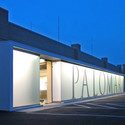
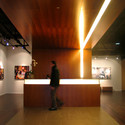
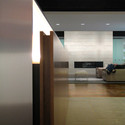
Italian based Stefano Boeri Architetti shared with us their latest project: The requalification and recovery of the ex Military Arsenal on the island of La Maddalena, Italy. This project includes a hotel, a congress centre, a conference building, two large exhibition and commercial spaces and a quay for 700 boats.

Paolo Rosselli
It was conceived as the central point of the G8 summit at Maddalena, event that was recently moved to the earthquaked zone of L’Aquila, and it was developed in only 18 months, thanks to the work of 1600 construction workers, a dozen developers and a large group of professionals and technicians, fulfilling a vision that confirms “the level of distinction of contemporary Italian Architecture”.
The end result is impressive: over 155.000 m2, providing a series of port, receptive, formative and convention infrastructure that will transform the ex Arsenale at Maddalena into one of the principle nautical poles of the eastern Mediterranean. The mixed use project incorporates advanced systems to use solar power and seawater for heating and cooling, reflecting the strong relation of the project with the sea.
Architects description and more photos by Paolo Rosselli after the break.

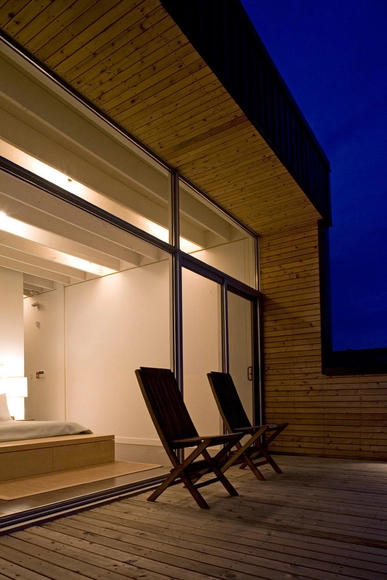
Architects: Jorge Hernandez de la Garza Location: Coyoacan, Mexico Design Team: Rodrigo Ambriz, Michael Smith, Erik Cosio Project Year: 2009 Images: Jorge Hernandez de la Garza