1. ArchDaily
  2. Mixed Reality

Mixed Reality: The Latest Architecture and News

Beyond the Drawing Board: How Augmented Reality is Reshaping Architectural Design Review

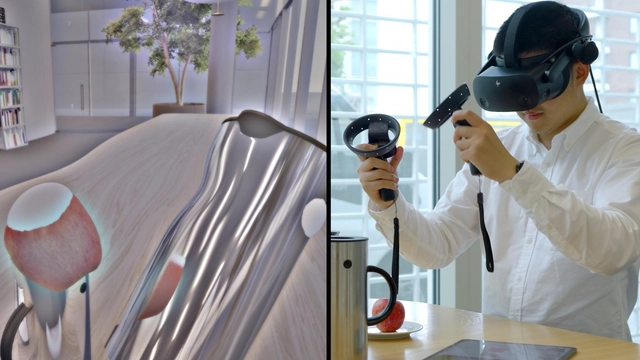
Over the last decade, architectural design has relied on 2D methods of representation, such as elevations, sections, and floor plans, paired with digital renderings of 3D models. While these tools are essential to convey geometry and intent, they remain limited by their two-dimensional format. Even the most realistic renderings, created through programs like SketchUp, Revit, or AutoCAD, still flatten space and distance the viewer from the lived experience of a project. Recently, architects have begun to explore immersive technologies as a way to bridge this gap between drawing and experience, offering new ways to inhabit and assess spatial proposals.

Beyond the Drawing Board:  How Augmented Reality is Reshaping Architectural Design Review - Imagen 1 de 4Beyond the Drawing Board:  How Augmented Reality is Reshaping Architectural Design Review - Imagen 2 de 4Beyond the Drawing Board:  How Augmented Reality is Reshaping Architectural Design Review - Imagen 3 de 4Beyond the Drawing Board:  How Augmented Reality is Reshaping Architectural Design Review - Imagen 4 de 4Beyond the Drawing Board:  How Augmented Reality is Reshaping Architectural Design Review - More Images+ 4

Transformation Generated by the Intersection of Virtual and Reality

As Antoine Picon describes in Architecture and the Virtual Towards a new Materiality? : "An architectural project is indeed a virtual object. It is all the more virtual that it anticipates not a single built realization but an entire range of them. …Whereas the architect used to manipulate static forms, he can now play with geometric flows. Surface and volumes topological deformations acquire a kind of evidence that traditional means of representation did not allow.”