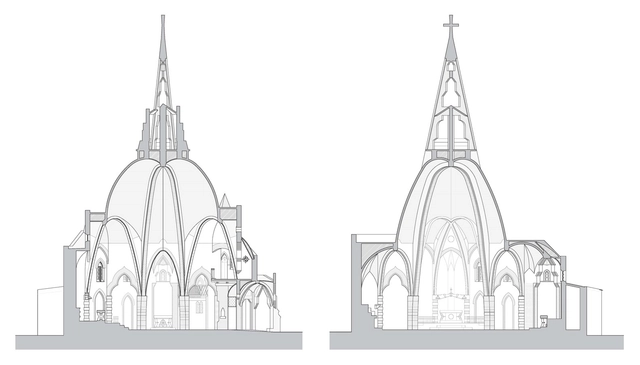
The object of this architectural restoration is the Church of the Sacred Heart of Jesus, in Vistabella, the work of Catalan architect Josep Maria Jujol (16 September 1879 – 1 May 1949). The original design dates from 1917 with the construction completed in 1923. The building is a magnificent and personal work of Catalan architecture.
The simplicity of the materials used—basically brick, mortar, and stone—contrasts with the spectacular formal richness of the structural solutions: columns, arches, and vaults that generate a complex, rich, and surreal interior space typical of the mysticism of Jujol.
https://www.archdaily.com/870840/catalan-church-restored-using-ingenious-tensioning-systemAD Editorial Team
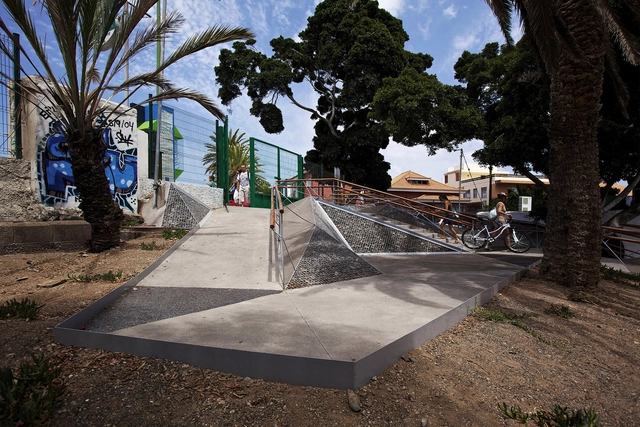
The geometric design from Lab for Planning and Architecture for the Municipality of Las Palmas de Gran Canaria in Spain is a morphological response that conditions Julio Navarro's and Roque Díaz's swimming pools allowing adequate movement of people with reduced mobility.
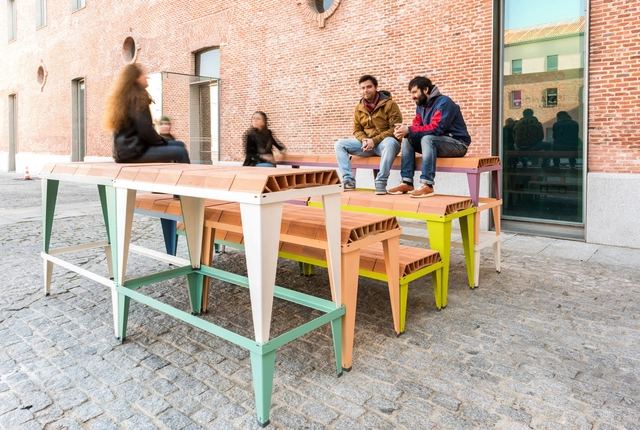
In 1855 the German machinery manufacturer Carl Schlickeysen issued the patent he had recently created, the "Universal Patent Brickmaking machine", the first machine created to manufacture bricks by extrusión as an industrial process.
https://www.archdaily.com/870559/industrialized-ceramic-elements-that-create-a-variety-of-urban-furnishingsAD Editorial Team
Construction of house made of recycled plastic bricks.. Image Courtesy of Conceptos Plásticos
Ten years ago when Colombian Fernando Llanos tried to build his own house in Cundinamarca, he realized that moving the materials from Bogota was going to be very difficult. After mulling it over, he decided to build his house out of plastic, and after a series of trials and errors, he ended up meeting architect Óscar Méndez, who developed his thesis on the same subject, and together they founded the company Conceptos Plásticos (Plastic Concepts) in 2011.
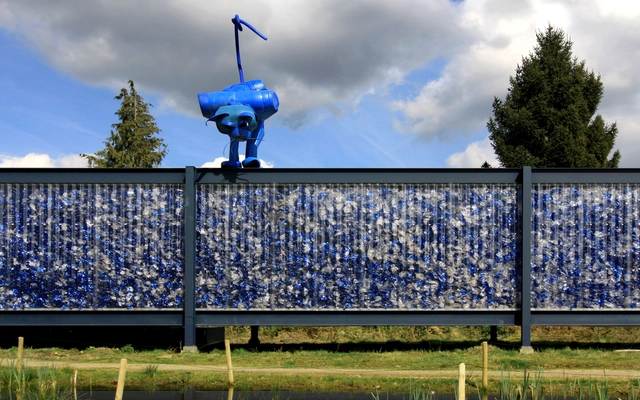
Project.DWG and LOOS.FM have unveiled their PET pavilion, a temporary structure in a community park in The Netherlands that focuses on issues of sustainable building, recycling, and waste by rethinking the ways that buildings are developed, built, and used. Specifically, the pavilion is a study of the use of plastic waste as a building material.
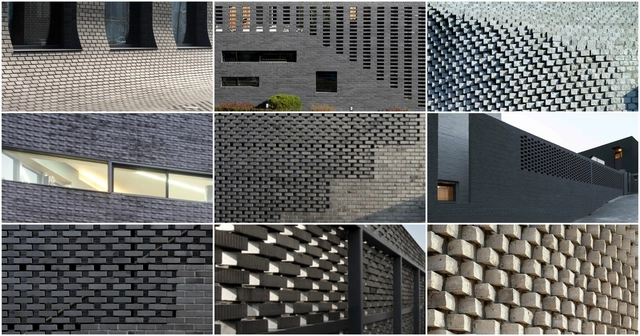
Bricks are as old as the hills. An enduring element of architectural construction, brick has been a material of choice as far back as 7000BC. Through the centuries, bricks have built ancient empires in Turkey, Egypt, Rome and Greece. Exposed stock brick came to define the Georgian era, with thousands of red brick terraces still lining the streets of cities such as London, Edinburgh and Dublin.
This article is part of our series "Material Focus", where we ask architects to share with us their creative process through the choice of materials that define important parts of the construction of their buildings.
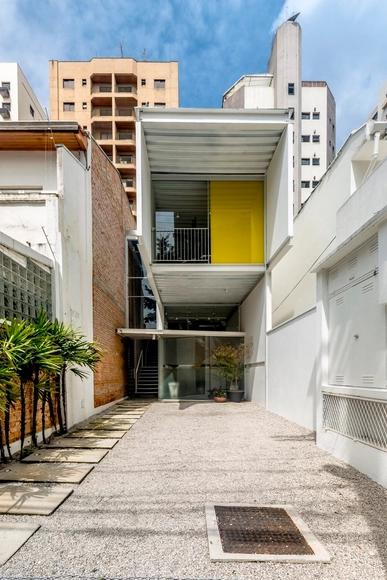
https://www.archdaily.com/869696/rebuilt-travel-agency-receives-a-more-fluid-and-dynamic-spaceEquipe ArchDaily Brasil
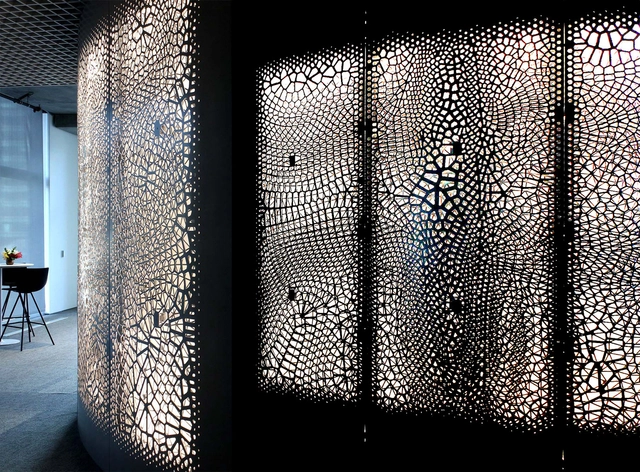
Responding in part to recent debates on how big data will affect our built environments, Synthesis Design + Architecture have teamed up with IBM Watson Analytics to design an interior feature wall for the Watson Experience Center in San Francisco. The project, named Data Moiré after the dizzying patterns created by overlapping sets of lines, uses data from the influence of mobile phones on monthly consumer spending to create a precise screen material that defines the wall.
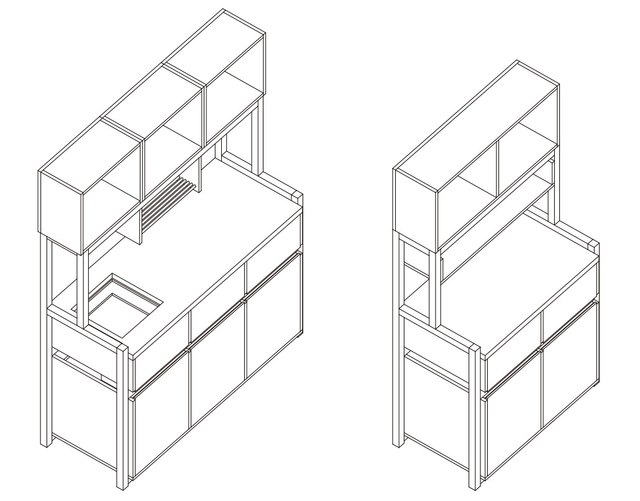
In 2016, Arauco launched a call to rethink the space of the kitchen with the objective of finding simple and attractive solutions for the houses of the Worker's Housing Plan (PVT), located in Constitución, Maule Region, Chile.
The competition developed within the framework of the II Encuentro Espacios Vesto, and it forced participants to consider a simple, low-cost assembly that could be self-constructed and expanded according to the needs of the users. In addition, each project had to consider self-supporting furniture that didn't require support holes on the walls to preserve the acoustic insulation of the dwellings.
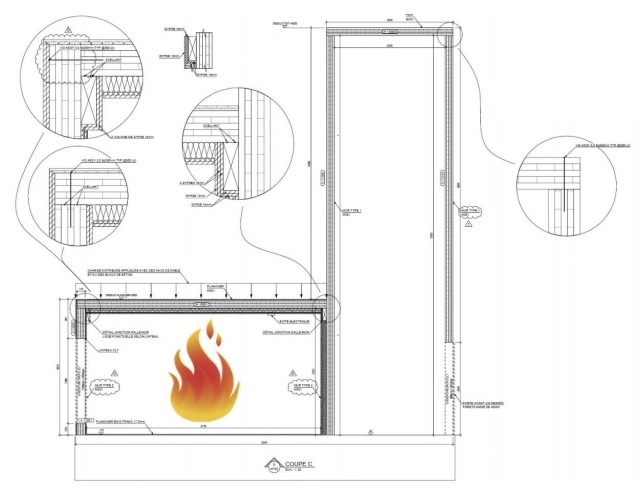
Full-scale Mass Timber Shaft Demonstration Fire. Image Courtesy of reThink Wood
With the aim of raising awareness and expanding knowledge about the advantages of wood in the built environment, reThink Wood has created an online library that collects a series of articles, reports, studies and videos that can be freely accessed right now.
https://www.archdaily.com/869687/5-online-resources-for-learning-how-to-protect-wooden-buildings-from-fireAD Editorial Team
What's behind our current obsession with all things Superheroes, from the Marvel and DC comics spinoffs for TV and Film, to the more eccentric offerings on Netflix from the Wachowski’s Sens8 to the cosmic supernature of The OA? Critics see the classic superhero expressing the desire to re-establish order in the face of chaos (Batman/Joker) but some of our more recent superheroes are about the power of change, of remaking the world through a kind of ‘superempathy’. The power of the superhero depicted as an eccentric group of people reskilling with new forces and energies – think the aerobics-physics of The OA which invents and designs a new collective body and superpower and the transcultural/transtemporal superempathy of Sens8.
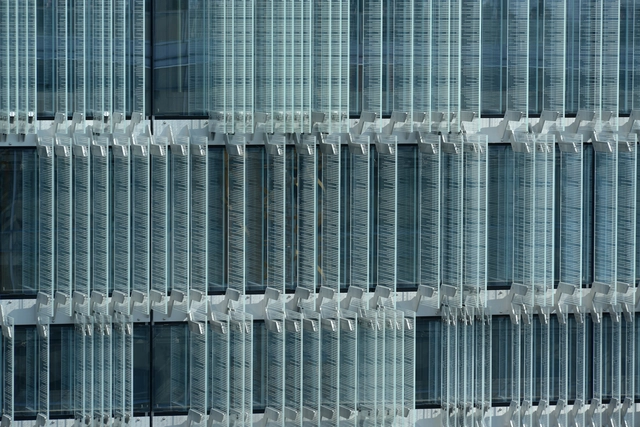
Italian firm Giovanni Vaccarini Architetti has designed the new Headquarters of the Swiss Société Privée de Gérance (SPG), built on Route de Chêne, at the gates of the historical center of Geneva. The work involved the conversion and extension of the existing building, starting with a glass façade that meets the need for solar shading in the interiors while achieving maximum visual permeability.
https://www.archdaily.com/869374/this-building-saves-energy-with-a-pioneering-triple-layer-glass-facadeAD Editorial Team
Videos
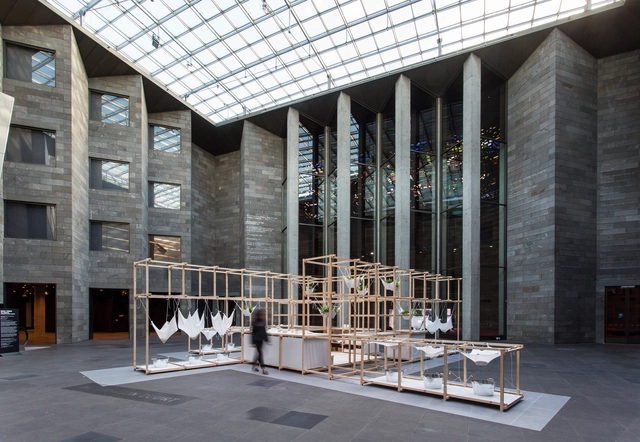
Courtesy of Tobias Titz / National Gallery of Victoria
In celebration of the inaugural Melbourne Design Week, which took place in March 2017, Chilean design studio Great Things to People (gt2P) presented their Catenary Pottery Printer, aimed at exploring the boundaries between digital and analog machines. Throughout the design festival, local designers and students used the pottery printer to create their own custom works, with visitors welcomed to watch the craft in action.
https://www.archdaily.com/869076/this-pottery-printer-explores-the-boundary-between-digital-and-analog-machinesNiall Patrick Walsh
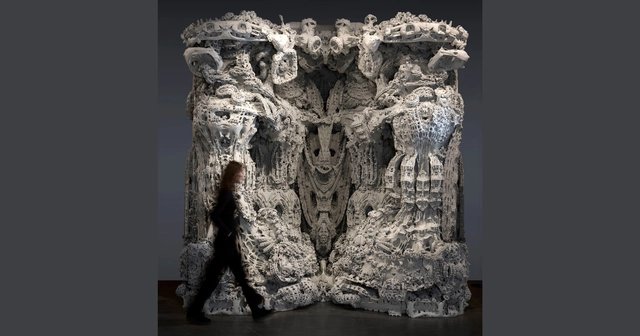
Following the success of their highly intricate Arabesque Wall, Benjamin Dillenburger and Michael Hansmeyer have once again achieved new levels of ornamental eye candy – this time, with a full-scale 3D printed grotto created from seven tons of sandstone. Commissioned by the Centre Pompidou in Paris, the grotto is an example of how the spatial expression of computational technologies can make for remarkable architectural experiences.
https://www.archdaily.com/868540/this-mysterious-3d-printed-grotto-challenges-boundaries-of-computational-geometry-and-human-perceptionOsman Bari
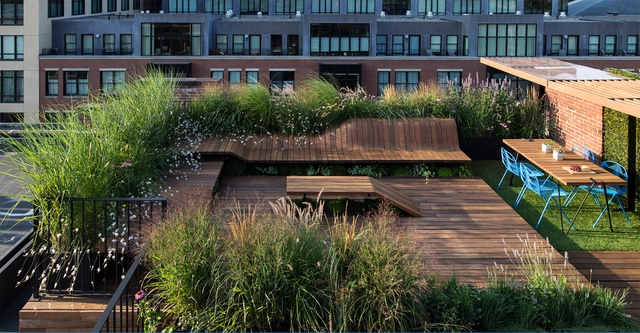
A multidisciplinary design study by J.Roc Design, based in Boston, has developed a proposal using wood to restore value to an underused rooftop at the southern end of the city.
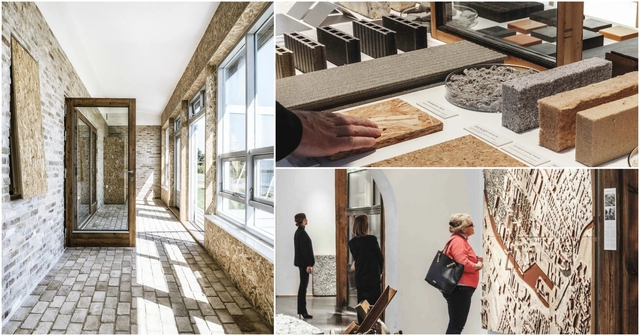
A thorough architectural response towards the growing problems of population, climate, and urban migration is currently on display at the Danish Architecture Centre in Copenhagen, in the form of the upcycled Wasteland exhibition. Curated by Danish architecture firm Lendager Group, the exhibits shown in Wasteland are filled with raw materials, processes, experiments and methods, backed up with a long list of shocking facts about our effects on planet Earth: over 2 million tons of CO2 have been emitted globally this year; over 3.3 billion tons of resources have been extracted from the earth globally this year; over 127 million tons of waste have been dumped globally this year—all totalling a cost of over $14 trillion USD resulting from our failure to act on climate change. These are the live statistics (as shown at the time of ArchDaily’s visit last Friday) which confront visitors in the first room of the exhibition space. They provide context for what is to follow.
Over the years, one unique tradition has been growing among architecture students: building a pizza oven. To help maintain this tradition, we decided to share this small guide for a 1.20m diameter mini-oven. Follow these easy steps and quick tips to build your own crust-worthy oven.
https://www.archdaily.com/867598/build-your-own-pizza-oven-the-crust-worthy-guide-you-didnt-know-you-kneadedEquipe ArchDaily Brasil



.jpg?1485798481&format=webp&width=640&height=580)