When building for a more sustainable world, the materials you choose undoubtedly play the biggest part in minimizing your project's carbon footprint. Building a wall out of plastic bottles, for example, prevents them from adding to the hoard in a landfill. However, there is a material used for centuries throughout the world that tops all the rest when it comes to sustainability: adobe.
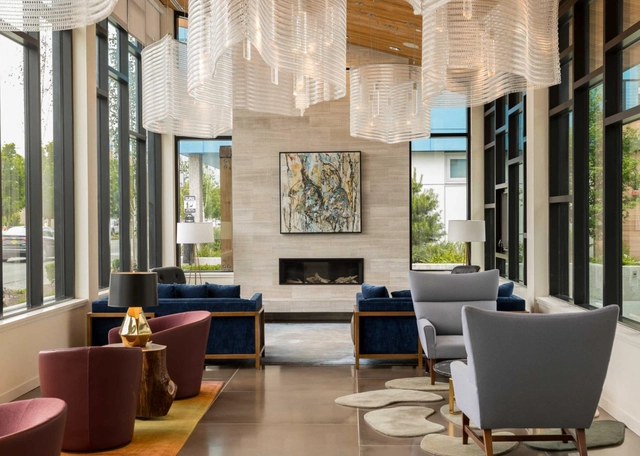
In residential architecture, there have always been central, indispensable spaces and peripheral spaces more easy to ignore. When designing a home, the task of the architect is essentially to configure, connect, and integrate different functions in the most efficient way possible, necessarily prioritizing some spaces over others. And although today many are designing in ways that are increasingly fluid and indeterminate, we could say that the bedroom, bathroom, and kitchen are the fundamental nucleus of every house, facilitating rest, food preparation, and personal hygiene. Then meeting spaces and other service areas appear, and with them lobbies, corridors, and stairs to connect them. Each space guides new functions, allowing its inhabitants to perform them in an easier and more comfortable way.
In the dome of the Pantheon in Rome, several construction techniques were used to allow such a bold construction to stand. One concerns the composition of the concrete (in this case, non-reinforced concrete) with different densities throughout the structure. Closer to the top, lighter stones were used in the mixture, reducing the dome's weight retaining the solidity of the base. Another technique was the inclusion of “coffers”, which are nothing more than subtractions in the concrete, reducing the weight of the dome while maintaining a cross section sufficiently robust to support its own weight. Built almost 1,900 years ago, this building still surprises us with the genius of the solutions. Using a quantity of materials just high enough to fulfill its primary function, and creating intelligent structures as a result, is just one of the lessons that this building provides.
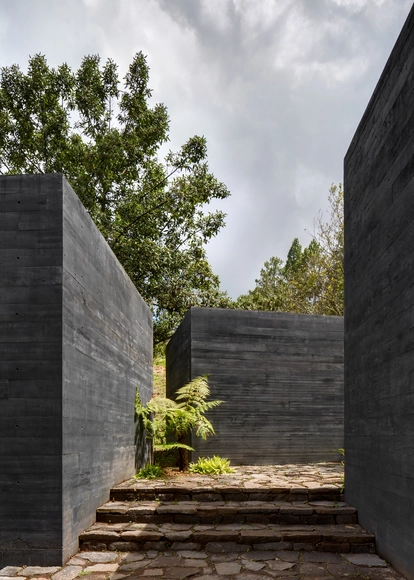
In Yucatan, architects are reviving an ancient Mayan stucco technique for contemporary buildings, merging modern architecture with regional history and culture. The technique is called “chukum,” a term derived from the colloquial name for the Havardia albicans tree native to Mexico. Made with chukum tree bark, the material has several defining qualities that separate it from traditional stucco, including impermeable properties and a natural earthy color. Though chukum initially fell out of use following Spanish conquest of the Maya civilization, it was rediscovered and reemployed by Salvador Reyes Rios of the architecture firm Reyes Rios + Larrain Arquitectos in the late 1990’s, initiating a resurgence of use in the area.
https://www.archdaily.com/946291/the-rustic-beauty-of-the-chukum-in-modern-mexican-architectureLilly Cao
Since at least as early as ancient Roman times, humans have recognized the value of what is now known as controlled environment agriculture, allowing farmers to cultivate plants year-round rather than seasonally. Though they were invented hundreds of years ago, greenhouses continue to be the most popular means of controlled environment agriculture today, with innovations in technology and design having improved both the beauty and efficacy of this typology. Below, we will explore in detail the history and structure of the greenhouse, as well as several examples of innovative and experimental greenhouse design.
https://www.archdaily.com/945828/structure-and-translucent-cladding-how-to-design-a-greenhouseLilly Cao
Isometric study of unitised curtain wall elements from The Shard. Image Cortesia de The Donnies
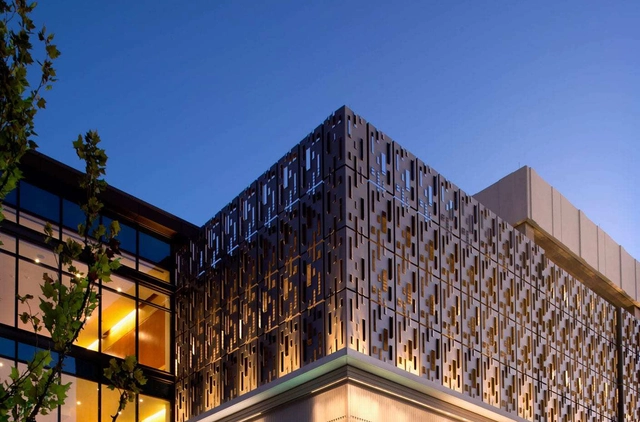
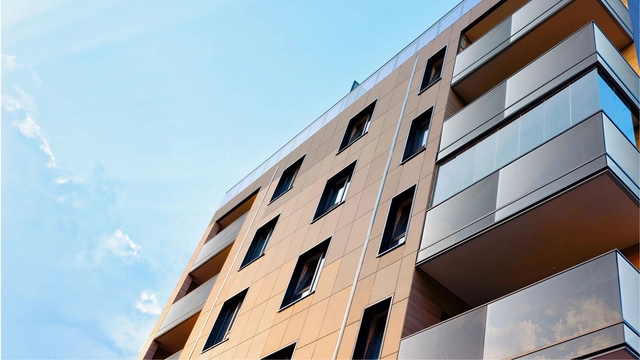
Facades are the first barrier outside a building. They weather rain, snow, winds, sun, and temperature changes. Their primary function is to keep interiors free of water, thermal bridges intact, and internal atmospheres as comfortable as possible. This reality is why the detailing of facades is usually done by experienced architects or specialized companies, who understand materials and construction methods well and are able to select the best solutions for each circumstance. But some projects have facades with such complex detailing, encompassing thousands and thousands of lines, hatches, and dimensions, that they inspire a particularly awestruck response. Making these drawings didactic, technical, and, above all, beautiful, is a task few can achieve to perfection. We spoke with Troy Donovan, the creator of the 188,000 follower Instagram account @the_donnies, who does this job like few others. Read the interview below.
Density has long been an essential consideration for architects and urban planners, yet its importance has only increased as the world’s urban population skyrockets and cities become denser and denser. For much of the history of urban planning, this term has been plagued with negative associations: overcrowding, poverty, lack of safety, and so-called ‘slums.’ The garden city movement, initiated by Ebenezer Howard in 1898, sought to remedy these ills by advocating for greenbelts and anti-density planning. Le Corbusier’s Radiant City is one of the most well-known urban plans building from these ideals. Yet in the 1960’s, sociologist Jane Jacobs famously overturned these long influential urban planning concepts: she pointed out that density of buildings was not identical to overcrowding of people; suggested that some highly dense urban areas, like her neighborhood in Greenwich Village, were safer and more attractive than nearby garden city projects; and highlighted how America’s conception of ‘slums’ were often rooted in anti-immigrant and anti-Black ideologies. Density is not inherently bad, she suggested, but it has to be done well. Today, we continue to grapple with the question of how to design for our increasingly dense cities – how do we keep them open, but simultaneously private? Free, but controlled when necessary? In particular, how do we keep them safe – both from crime and, in the age of COVID-19, disease?
https://www.archdaily.com/945415/the-evolution-of-shared-space-privacy-versus-openness-in-an-increasingly-dense-architectureLilly Cao
Despite a bad reputation in children's stories, straw buildings can be sustainable, comfortable, and, above all, solid and resistant. Several studies and experiments have been carried out with this agricultural waste substance, qualifying it as an potential material for the construction of walls, with good thermal, acoustic, and even structural characteristics. In addition, it is a renewable resource and easily constructed. Below, we'll talk about the characteristics of this material and how much more it would take than the breath of a big bad wolf to bring down a house made of straw.
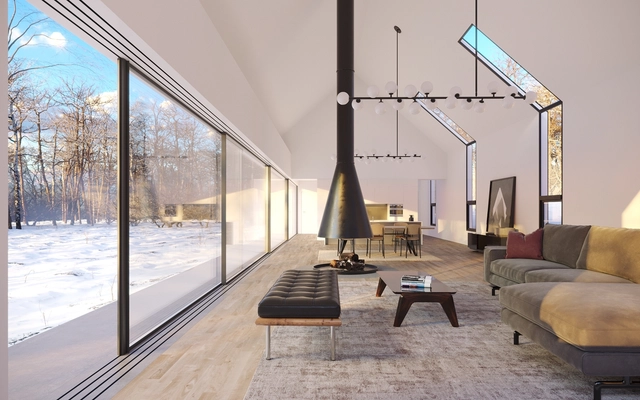
Malibu Crest, a 2019 remodeling of a 1949 International Style home, was a vital undertaking by the architecture firm Studio Bracket that aimed to expand the structure’s square footage and panoramic views of Malibu while retaining over 50% of the home’s original walls. The project was ultimately successful, not only in its refurbishment of the interior rooms and reconfiguration of the space, but in its enlargement of the windows to truly capture views of the surrounding lagoon and mountains. This expansion of the view was done in part through an open corner window scheme and floor-to-ceiling glass, manufactured by Western Window Systems. The uninterrupted glass walls afforded by this open corner technology is one of the most effective ways that architects can open an interior space to the stunning vistas of a natural environment. Yet an even more striking configuration increasingly being employed by residential architects is that of the open corner sliding glass door – a system that can even more completely open an interior space to the unobstructed outdoors. Below, we discuss this technology in more detail, alongside several examples of projects using the open corner glass door.
https://www.archdaily.com/944057/open-corner-sliding-glass-doors-towards-a-light-and-wide-architectureLilly Cao
From its starting to point as a tree to its product form as a beam or piece of furniture, wood used in architecture and interior design goes through several stages and processes. A renewable resource and popular traditional building material, wood is also often cited as a promising construction material of the future, one that is suitable for the new demands of sustainability. But unlike concrete, whose molds can create even the most complex curves, wooden architecture most commonly uses straight beams and panels. In this article, we will cover some techniques that allow for the creation of curved pieces of wood at different scales, some of which are handmade and others of which seek to make the process more efficient and intelligent at a larger scale.
A lot of prejudice and contradictions surround the history of Cannabis sativa around the world. It is estimated that hemp was one of the first plants to be cultivated by mankind. Archaeologists have found remnants of hemp fabrics from ancient Mesopotamia (now Iran and Iraq) that date back to 8,000 BC [1]. There are similar records in China documenting the consumption of hemp seeds and oils, dating between 6 and 4 thousand BC. Upon its arrival in Europe, its main use was for the manufacture of ship ropes and fabrics: even the sails and ropes of Christopher Columbus' ships were made of this material. Likewise, the first books after Gutenberg's invention of the printing press [2] and many paintings by Rembrandt and Van Gogh were made of hemp.
Brick is one of the most popular materials for architects designing with a vintage or rustic aesthetic: exposed brick walls are often touted as highly desirable for apartments, restaurants, and stores, and exterior brick facades can make a building or home feel warmer and more inviting. However, the color and cut of the brick can greatly influence the atmosphere it emanates, with white brick lending itself to more minimalist design and tan brick tending to feel more rustic and earthy. In this article, we will explore some of the most popular brick colors, ways to artificially color brick, and recent projects that use brick facades or interior brick elements effectively.
https://www.archdaily.com/944493/the-colors-of-brickLilly Cao
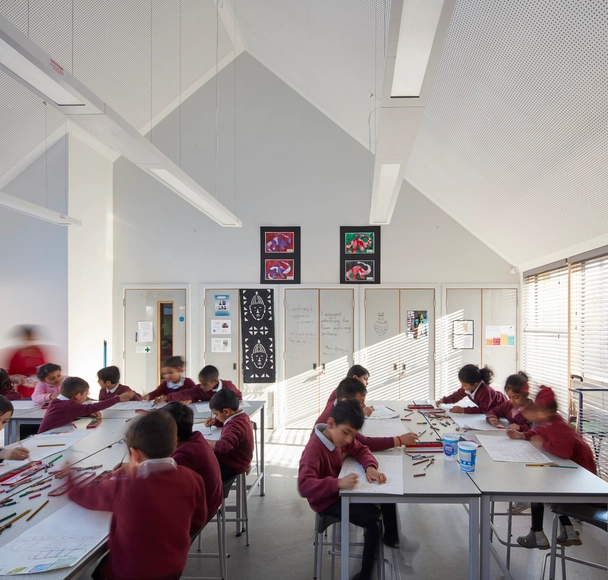
The Reggio Emilia Approach was created in the post-WWII period at the initiative of widowed mothers and under the coordination of journalist and educator Loris Malaguzzi. In a time of postwar urban reconstruction, the group's primary concern was the formation of new schools, where they wanted to create a peaceful, welcoming, and cheerful environment, with a domestic atmosphere where children could stay while their mothers worked. Understanding the children's interests and providing a suitable environment for exploration and experimentation is one of the focal points of this pedagogy. The creation of a safe and stimulating environment is so fundamental that, in much literature, it appears as a third teacher.
Earlier this month, Steven Holl Architects designed and created their project Obolin, a sculpture made locally from a single panel of cross-laminated timber, or CLT. It was made for and is now exhibited in the Art Omi Sculpture and Architecture Park, an art center that seeks to explore the intersection of architecture and art through the production of pavilions, installations, landscape interventions, and built environments designed by architects.
One of the most important design considerations that residential architects have the responsibility to address is accessibility, ensuring that people with disabilities can comfortably live at home without impediments blocking basic home functionality. Accessibility for wheelchair users is a particularly important architectural concern due to unalterable spatial, material, and other requirements necessitated by wheelchair design and use. Because guaranteeing the comfort of all users, including disabled users, is one of the most essential obligations of all architects, designing for wheelchair users must be done with utmost the attention and care, especially in residential environments. Below, we delineate several strategies for designing floors for wheelchair circulation, helping architects achieve this goal of maximum comfort and accessibility.
https://www.archdaily.com/943591/what-types-of-residential-floors-favor-wheelchair-circulationLilly Cao
Some researchers define the Anthropocene as beginning at the Industrial Revolution. Others identify it with the explosion of the first nuclear bomb, and others with the advent of agriculture. Regarding the precise timeline, there is not yet a scientific consensus. But the notion that human activities have been generating changes with planetary repercussions, whether in the temperature of the Earth, in biomes, or in ecosystems, is one that has become increasingly popular. The anthropocene would be a new geological era marked by the impact of human action on planet Earth. This acknowledgement of human impact is particularly disturbing if we consider that if the entire history of the Earth were condensed in 24 hours, humans would only appear in the last 20 seconds. Whether in the massive extraction of natural resources or in the carbon release from vehicles and industries, it is well known that a large part of the fault lies with construction activities, especially in the production of solid waste due to waste and demolition. In Brazil, for example, civil construction waste can represent between 50% and 70% of the mass of solid urban waste [1]. Many will end up being discarded irregularly or thrown in landfills to be buried indefinitely.
Recycling and upcycling of materials and structures have become more and more popular in architecture as alternatives to the production of components in construction, typically associated with increased energy consumption and high levels of pollutants released into the atmosphere. The main difference between these two methods is that, while the former uses a certain amount of energy to process the material before it is reused, the latter does not require this process, but rather reuses it just as it was discarded.
The concept of Design for Disassembly (DfD for short) gained increasing traction in recent years, as it addresses the growing concern around the high consumption of resources and low recycling rate within the construction industry. The following article details on the method and features guidelines for a design process that facilitates the dismantlement of future buildings, with the scope of providing a better understanding of this principle within the broader framework of the current practice and circular economy.